Although he does not show it, Javier Milei closely follows the news of the war in the Middle East. Since the latest war offensive by the United States and Israel against Iran began, the president has already made two trips abroad. The first was bound for Miami and New York and the other was for Hungary, which concluded this Saturday. In both cases the focus was on the war and its impact on the economy and, of course, on the visit of one of the most important allies that the White House has in Latin America. This is how Milei moves abroad, overexposing her relationship with Donald Trump. Doing so has its costs and one of them is the concern of facing any consequences of such alignment. The president and his Cabinet do not lose sight of the fact that Iran has already sent two lethal messages. Last year, the late Ayatollah Khamenei, recently assassinated in a US attack, warned Argentina of the consequences of following the libertarian alignment and this week, the Islamic government, on a war footing, redoubled the bet and announced that Milei’s administration has crossed a line of no return.
The messages come from a Tehran besieged by bombs and were intended for a president who will seek to cling to Washington. Milei is certain that the United States will win the war and that his government will be safe from disaster. Until the war offensive concludes, if that happens soon, the Casa Rosada will multiply its gestures towards the White House. The emissaries of Trumpism recommend nourishing the privileged bond with gestures, even though they are difficult for the country to achieve without economic support from Washington.
This is how the first versions of Argentine military support for US interventions emerged. Milei tried to divert a Navy frigate when it was returning from an exercise with the Southern Command to join the North American deployment in the Caribbean. It was before the January 3 operation, which concluded with the kidnapping and detention of President Nicolás Maduro in Caracas. In ten days it will be three months since that intervention and government officials admit that the current scenario is very different from what they imagined. Milei even said that Argentina was willing to participate in a transitional government and also in the control of Venezuelan oil. It was not the president in charge of Venezuela Delcy Rodríguez who said no. It was Trump officials who advised against giving any involvement to the Libertarian government. Likewise, Argentina appears in every initiative Washington promotes. The intention is to preserve the competitive position compared to other countries in the region that seek the same thing. Milei put the country as a founding partner of the Board of Peace that the United States promotes to replace, with little success, the United Nations Security Council. Later he included it as part of the Shield of the Americas, the other formula promoted by the Pentagon to count on right-wing allies in the region and ask them for help in some regional intervention. The triggering argument is the accusations of links to drug trafficking in any country on the continent, but the common thread is a new model of military cooperation.
From this minuet of diplomatic and warlike gestures arose the idea of participating in the war offensive in the Middle East. There are two limitations. The first is the government’s concern and fear of suffering some retaliation for the renewed presidential commitment to ban Trump at any cost, even when allied countries are running away from such an adventure. The second is that Argentina does not have the technological capacity to participate in any multinational force as Carlos Menem’s administration did in the Gulf War. The only option on the board, as detailed by a military source to Timeconsists of sending a group of soldiers from the three armed forces to join the North American deployment in the Strait of Hormuz or participate under the coordination of the Israel Defense Forces. The Argentine incidence would have more symbolic and political than military weight, but it would face the same risks as the other North American allies in the Middle East area.
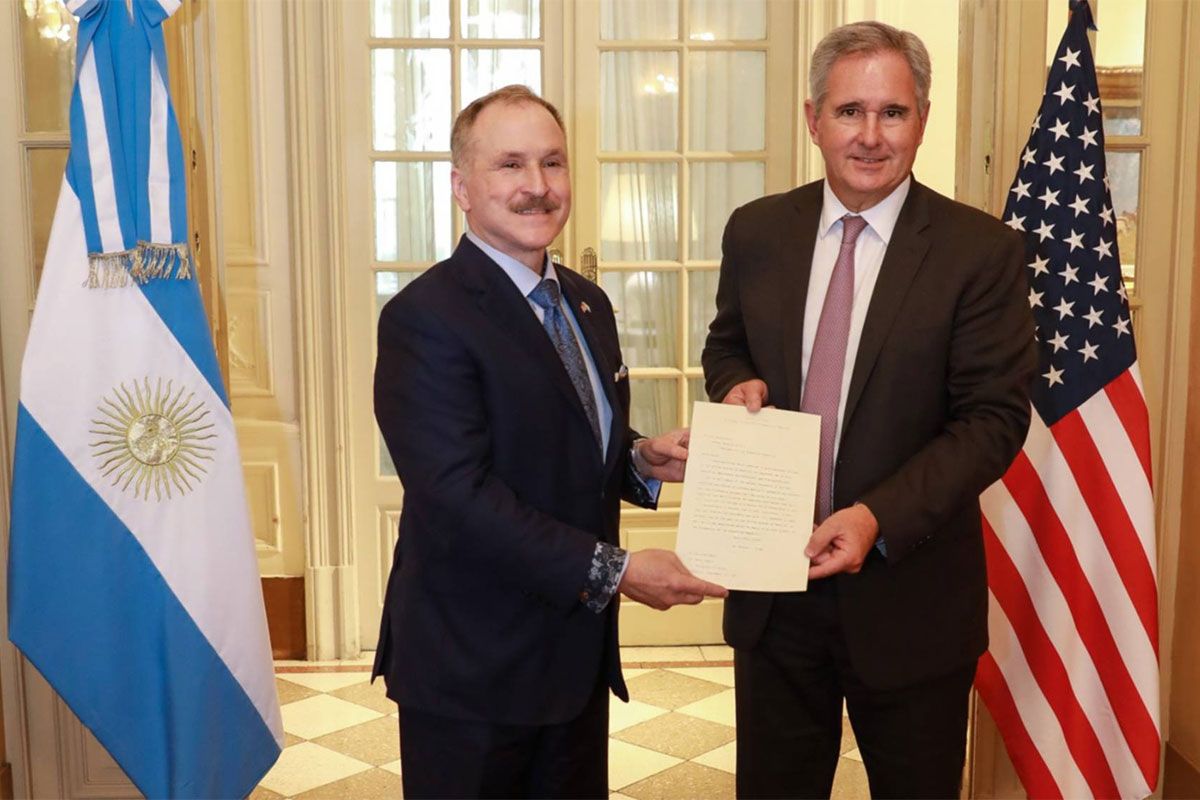
In this context, the US ambassador in Buenos Aires, Peter Lamelas, comes and goes with the positive agenda that Trump entrusted him to develop in Argentina. The political envoy of the Republican magnate has the mission of supporting Milei and playing as a direct interlocutor with the Oval Office, above Secretary of State Marco Rubio. Lamelas doesn’t just admire Milei. It also seeks to be close to power and, as this newspaper reported, to close the presence of lobbyist Barry Benett who, as an informal envoy of Trumpism, supported presidential advisor Santiago Caputo and streamlined the lobbying and business of his strategic guarantor, businessman Leonardo Scatturice.
They are clear about something within the diplomatic world of the star-spangled flag. Bennet will no longer be seen in Buenos Aires and much less in the Casa Rosada speaking on behalf of the United States government. Lamelas stayed with that role and now began to intervene in the local public conversation. “I think so, it is surely the main ally of the United States in Latin America. I don’t want them to waste this unique opportunity,” said the ambassador in an interview with the newspaper’s cable channel. The Nation.
The message for Milei is not to waste time and to take advantage of the economic agenda of the power at war. Lamelas has not stopped talking about investments since he arrived and continues to promise that they will arrive soon. So far they are promises and North American lobbyists advise that Trump should play even harder with Argentina. That is why in Washington some influential observers maintain that only a prolongation of the war could delay a visit to the country by the Republican magnate. To oil it, Lamelas goes back and forth between Palm Beach, Washington and Buenos Aires, but he knows that he needs to show results and so far the diplomatic machinery only repeats promises.