08:02 | 04/17/2025
Scientists from the National University of Quilmes (UNQ) developed a dressing that actively intervenes in the healing of wounds.
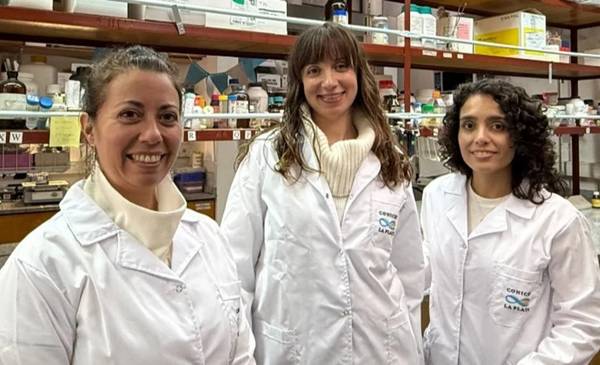
Within the framework of Ayelén Sosa’s doctoral thesis, this novel bandage was obtained at the UNQ Bionanotechnology Laboratory. The results he arrived at were published in the journal Pharmaceutics.
The “smart dressing” can be replaced after a longer period and shortens wound healing times. “Not only does it absorb exudates and allow the wound to breathe, but it also contains active agents that prevent infections and promote cell regeneration,” Sosa explained.
Regarding the way the dressing was obtained, Sosa explained that “a natural biopolymer such as gelatin was used, in which an emulsion with antimicrobial and healing medications was incorporated.”
The appearance of the product is a transparent film that easily adheres to the skin, is resistant and capable of absorbing up to four times its weight in liquids, while allowing the wound to remain free of pathogenic microorganisms.
“The emulsions we use have nanoparticles and silver sulfadiazine, compounds that prevent the growth of bacteria,” said Carolina Martínez, who guided Sosa in his thesis work.
The emulsions contain vitamin A and E that promote healing and lidocaine that acts as an anesthetic. In addition, the bandage is environmentally friendly, since it is developed with biodegradable components.
Now, it remains to evaluate how the dressing will behave in animal models. “If all these results are good, then we can move on to clinical trials. It represents the step prior to making the product available to the population,” explained Carolina Prieto, who currently directs the UNQ Bionanotechnology Laboratory. (NA)