On March 24, the streets of Argentina are filled with white handkerchiefs, the symbol that Mothers and Grandmothers invented by recycling the diapers of those children and grandchildren that they could not find. During these 50 years since the beginning of the civil-military dictatorship, there were voices and, above all, hands that wove the care of memory and those who survived the horror.
Among the family militancy for justice and truth of the 30,000, women created their own strategies. How many women had to raise grandchildren of kidnapped and missing children? How many daughters had to support little brothers who saw the horror of death with their own eyes? The feminist slogan “the personal is political” takes on a painful, urgent and absolutely truthful dimension when you think about it in relation to the cruelty of living without knowing where you are and what happened to those you love. What does it mean to delve into the stories of the women they raised and cared for while searching for the truth?
“They were activists of solidarity”
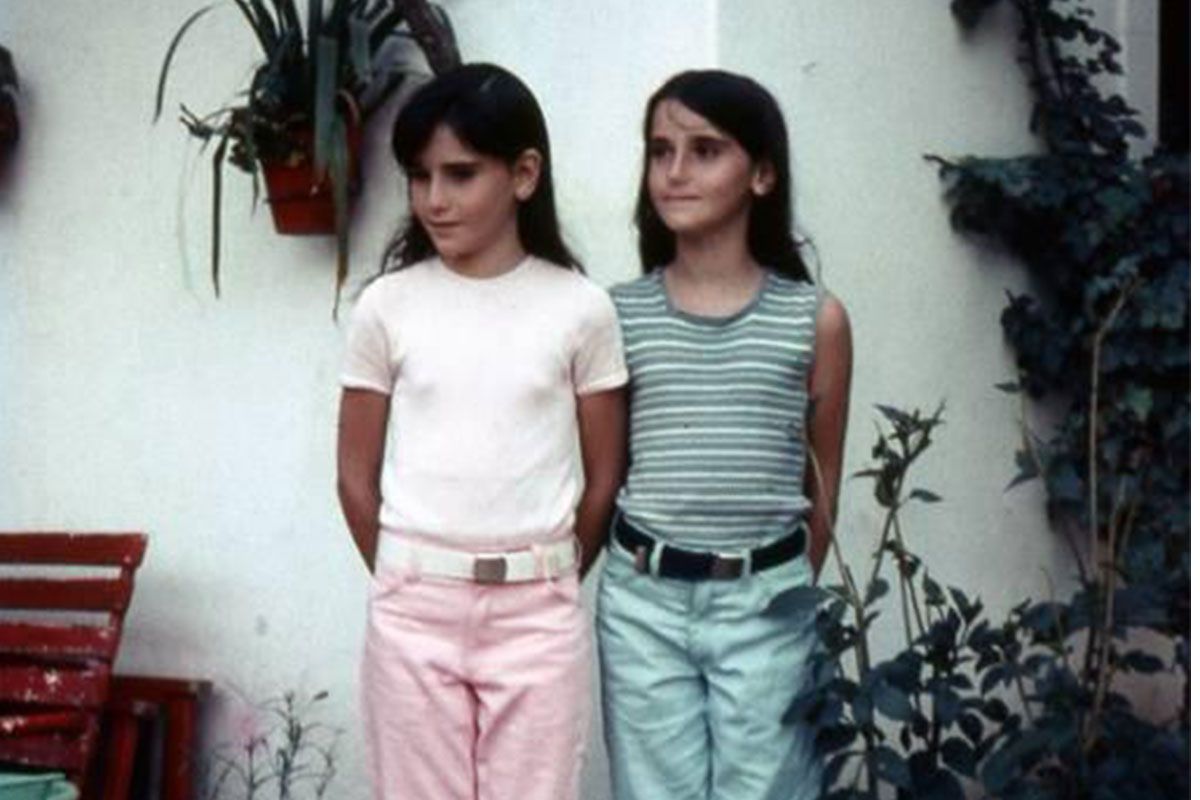
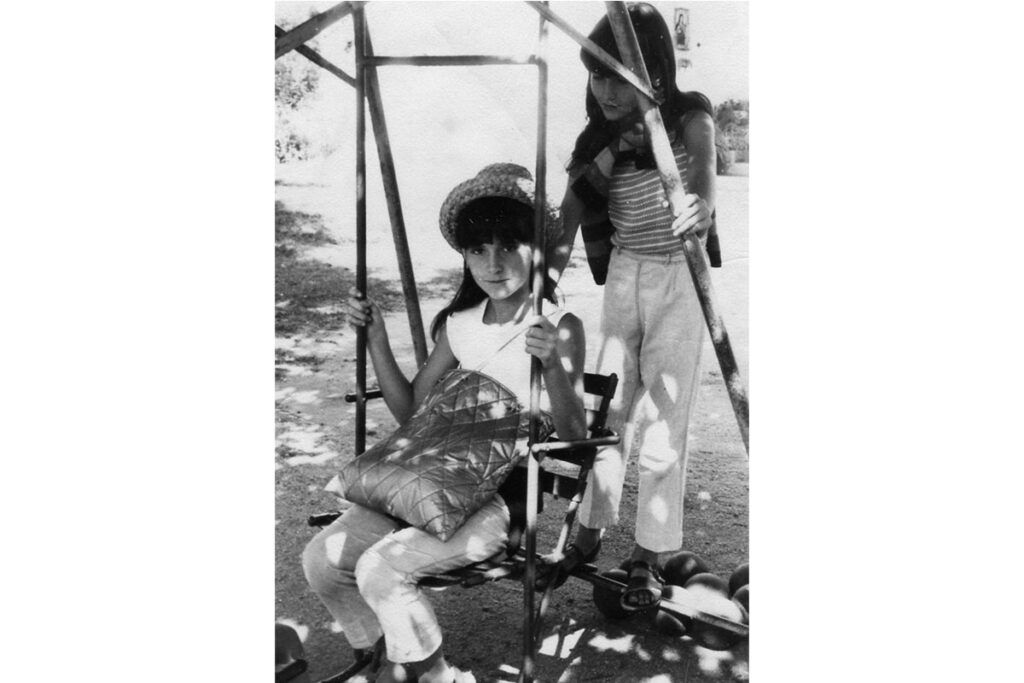
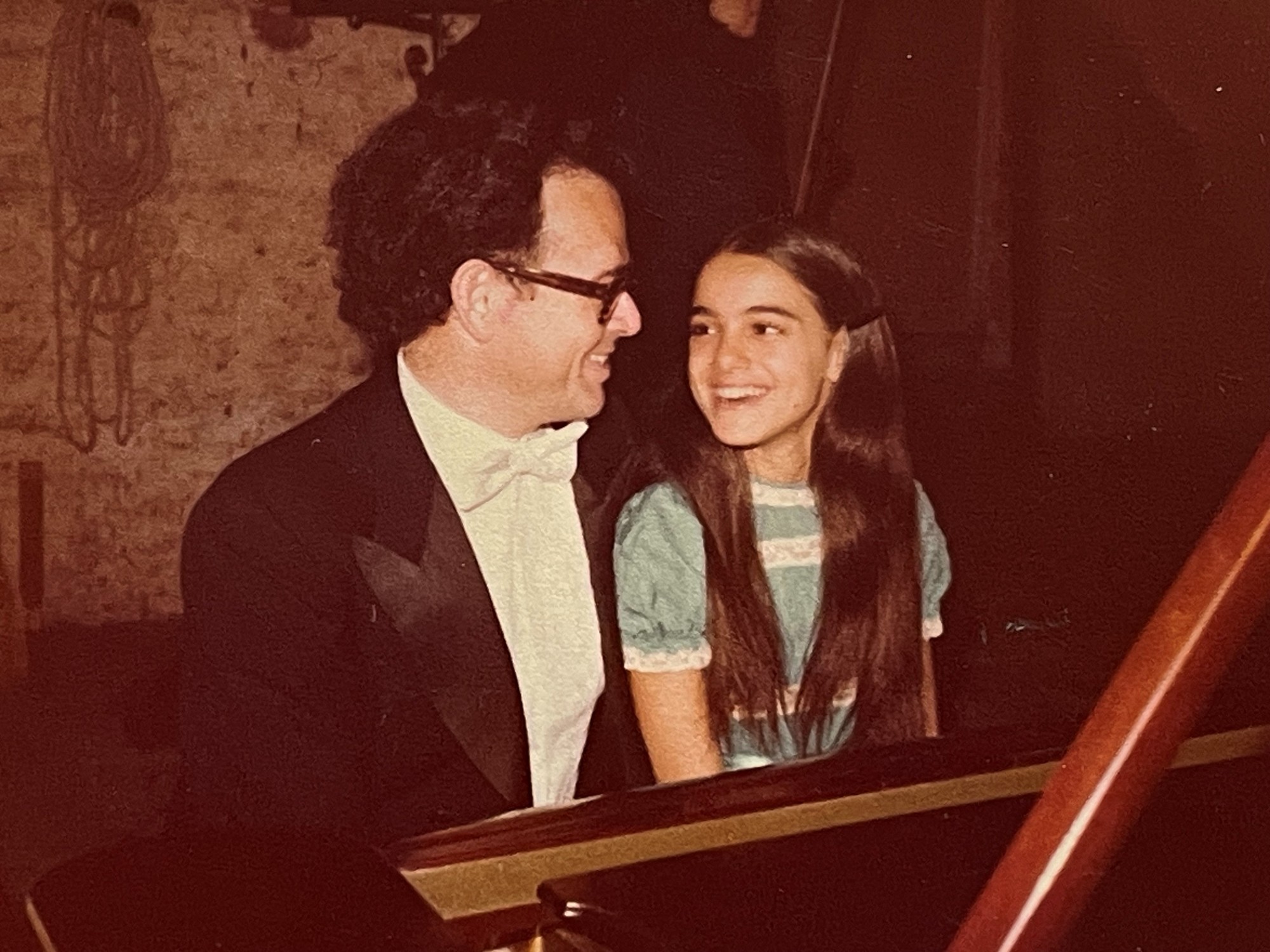
Mariana and Marcela Sanmartino Carranza are nieces of the Carranza twins: Adriana and Cecilia. They were 18 years old when they were kidnapped in the city of Córdoba and until days ago their family did not know what became of them. Based on the work carried out last year by the Argentine Forensic Anthropology Team (EAAF) It was learned in recent weeks that among the 12 people identified in the excavations where the La Perla Clandestine Detention Center operated are the remains of Cecilia or Adriana. By sharing DNA, it is not possible, at least for the moment, to determine who it is.
But if it is about DNA, Marcela Carranza says, in dialogue with Argentine Weatherthat “the DNA of their struggle remained in us. All the women in the family inherited the weaving. We are a weaving family: we weave wool, threads and wires. But many of us also wove nets and I believe that is possible because they existed.” Marcela was eleven years old when her aunts disappeared. They were the youngest of a very large family. “Mom was 20 years old when they were born and my relationship with them was more like cousins than aunts and nieces,” she says. Mariana was barely one year old when no more was heard from her aunts. “I don’t have any memories of myself. I like to weave the memories that my sisters have who were older than me and who were closer in age,” he reflects.
Mariana and Marcela are excitedly grateful for the opportunity to talk about their aunts, whom they have known for fifty years, crossed by pain and absence. “For us It was very meaningful to have such beautiful aunts with all the cool in every way.. Even for those of us who barely knew them. We live our entire childhood with their absences always beating nearby”Mariana reflects.
Marcela created the project in 2018 “30 Thousand Handkerchiefs for Memory”. It is an artistic activism initiative that, through the creation and placement of mosaic and ceramic plaques with the symbol of the white scarf, proposes to sustain collective memory.
When she talks about her aunts’ militancy, she says that they don’t have so many details about her party position but that they are sure that “They were solidarity activists.They were very supportive girls, there is testimony of that in the trials for the truth and it is shocking how they talk about the solidarity and intelligence of two people of that age. We saw them: they went home, asked for clothes for my sister Mariana who was a baby, mom gave them to them and they took her to hospitals and neighborhoods. That was his greatest militancy. That is their spirit that remained in us.”
The Carranza family was one of those that fills tables on Sundays. A family Everything changed when Cecilia and Adriana disappeared. “My grandparents and their siblings did a lot of things at the time: talk, travel, knock on doors, make complaints. Those of us who grew up in that context absorbed all that without being aware of it, but it left a mark on us,” says Mariana and adds, “it’s another of the effects of the dictatorship. They disappear one person but they destroy an entire family”.
The Sanmartino Carranza sisters answer the questions while saying that their mother’s birthday is that same day. That young woman who was thirty-something when her younger sisters disappeared. Marcela says: “I want to add a recital from my mother, who has been repeating it for many years.” It is a fragment of “A thought in three stanzas”, a poem by the Mexican Antonio Muñoz Feijoo: “Life is not the life we live, life is honor, it is memory. That is why there are dead people who live in the world, and dead men who live in the world.”
“The hugs of March 24”
“When my little brother Carlitos stuck his head out of the window, the soldiers shot him and he collapsed on top of me. They hit him in the head. He was 9 years old. I was 4. I couldn’t get him off of me and I still remember how his little head was,” he tells TimeKarina Manfil.
She is the daughter of Carlos Manfil and Angélica Zárate. His parents, along with Carlitos, were murdered and then disappeared by a military commando that entered while the family was sleeping. The apartment where they lived was in the Torres de Villa Corina, a neighborhood of Avellaneda in the Buenos Aires suburbs. Also there were José Vega, his wife Rosario Ramírez and their two children Marcela and Edgardo who had stayed the night.
Karina reflects: “How much of the impossibility of those grandmothers and mothers to be able to act was later reversed with the militancy of their granddaughters or their sons. My grandmother was afraid. Fear of losing someone you love again”.
She, the youngest of the Manfil sisters, says that the contexts determined the experiences of those women who returned to raise children while crying for children. For years, Karina was struck by seeing her father’s name on the wall of a basic unit in the neighborhood. At the age of 12 he began an irreversible path: he began to ask questions. That’s how he entered that place and learned that his father had been a Peronist militant.
But at 17, when she learned that every October 27 (the date of the massacre) a group of people threw a wreath of flowers on the walls of the Avellaneda Cemetery, she did not hesitate and confronted her grandmother. “Why did they do that?” he asked. “Because they say your parents are there,” he told her.
She remembers that she gave her son an upa and with a belly that was several months pregnant, she began to hurriedly walk the blocks that separated her grandmother’s house from the cemetery. “It didn’t come anymore, I remember it was very hot,” he says. Following a pigeon he entered an area where entry was prohibited. He saw weeds and abandoned, dirty land. “My family can’t be here,” he thought and left. He walked crying among the graves asking why there was nowhere to go to mourn their dead. “When I say this I hear the sound of the bird inside the forbidden area. I got scared. I saw a pigeon get in. I followed it, grabbed a ladder to climb a wall and see what was there where the pigeon was. It was a baby box.”
He re-entered, following that pigeon, to the weeds and abandonment sector. She felt there was something there for her. Some of the truths that I had been searching for years. When she entered, someone intercepted her, told her she couldn’t be there. “I looked at him crying and told him: I’m going to go in because my family is here. I am the daughter of disappeared people.” That man was Alejandro Incháurregui, from the EAAF. “I remember he grabbed my hand and told me: I think we have a lot to talk about with you.”
Karina raised her children while active in HIJOS, giving testimony and collaborating with the EAAF. Of the Team he says: “They not only identified my family. They became part of it.”
“Mothers and Grandmothers carried out care among women”
Laura Villaflor Garreiro is the daughter of Raimundo Villaflor and María Elsa Martínez Garreiro. He was 11 months old when his parents, both militants of the Peronist Base and the Peronist Armed Forces, were kidnapped, tortured and disappeared. On the afternoon of Saturday, August 4, 1979, a couple took her and her sister Elsa to the house of her grandmother Josefina Gomez and her grandfather Aníbal Villaflor in Villa Domínico, in the Avellaneda district. Hours before, a gang from the ESMA had taken his parents.
Laura and Elsa were raised by their grandmothers. Women with cane who after decades returned to raise babies. “The one who always took care of me, the one who always told me the truth and took care of me was my grandmother Josefina,” says Laura in conversation with Argentine Weather. “She was a grandmother with a cane, dressing gown and espadrilles. Poor, very poor, who washed clothes outside so we could morph”describes it. “In my house there was a lot of fear in relation to politics and participation, as a result of the disappearance of my parents. It was not fear of politics: my whole family is Peronist and politics was always talked about but there was fear of suffering another loss. I think that “The granddaughters who survived the disappearance of our parents were the finite thread that kept our grandmothers alive.” account.
Laura began military service in high school, with charity activities. In the mid-90s it was organized into the group HIJOS and continues to be part of various spaces. For years she has been reflecting on the role of women who could not organize collectively to claim for their missing children. The ones who toured courts, churches and police stations looking for some truth but who quickly returned home to change diapers or take those little grandchildren to school. “The role of my grandmother Josefina was fundamental, not only for her upbringing, but also because she gave me tools and even prepared me to face her own death. He taught me to take care of myself: since I was little I was quite independent, he taught me to be responsible. And I assumed that role because I knew that she couldn’t do everything, she was already too big. Seeing it now from a distance, I think that as women we supported each other through mutual care..”
She says that since she became a mother she understood that there is nothing comparable to the loss of a child. “Now I understand my grandmother and I wonder how she raised me when I was so small and she was so big. She fought to exist, to be there, to transmit to me who my parents had been. He shared his dreams with me, also his strangenesses. I also learned about her story as a mother and the story of my father as a child. From her I learned the fundamentals of women in caring for life.”
On this topic, Laura reflects that this role, that of caring, also runs through the history of the human rights movement. ““Mothers and grandmothers carried out care among women: they accompanied each other in the unique and immeasurable pain of losing their children.”
The visible thread of memory: the Argentine Forensic Anthropology Team
Silvana Turner has been a member of the EAAF since 1988. She is currently in charge of work in the province of Córdoba, where findings in the La Calera Reserve have allowed, so far, to identify 12 missing people. The La Perla Clandestine Detention Center operated on that property of approximately 14 thousand hectares between March 1976 and the end of 1978. In dialogue with TimeSilvana reflects on the role that the Team plays in the process of searching for the truth of the families. “In any case, what we add is the possibility of completing some things that they did not know about the history of their loved ones and that, based on the possibility of identification, are completed”
The kick, says Silvia, is the unknown. “Then our role is to follow up with the family. Our work has to do with a process that goes from the investigation, the first contact to listening to the story. Then the step of taking a blood sample and in the best of cases our role is also to maintain a bond of trust. We believe that this is part of the restorative effect of this work”
Daniel Brooks is an investigative journalist focusing on accountability, transparency, and public interest stories. His work includes deep research, interviews, and document analysis to uncover facts that impact communities across the United States.… Read More