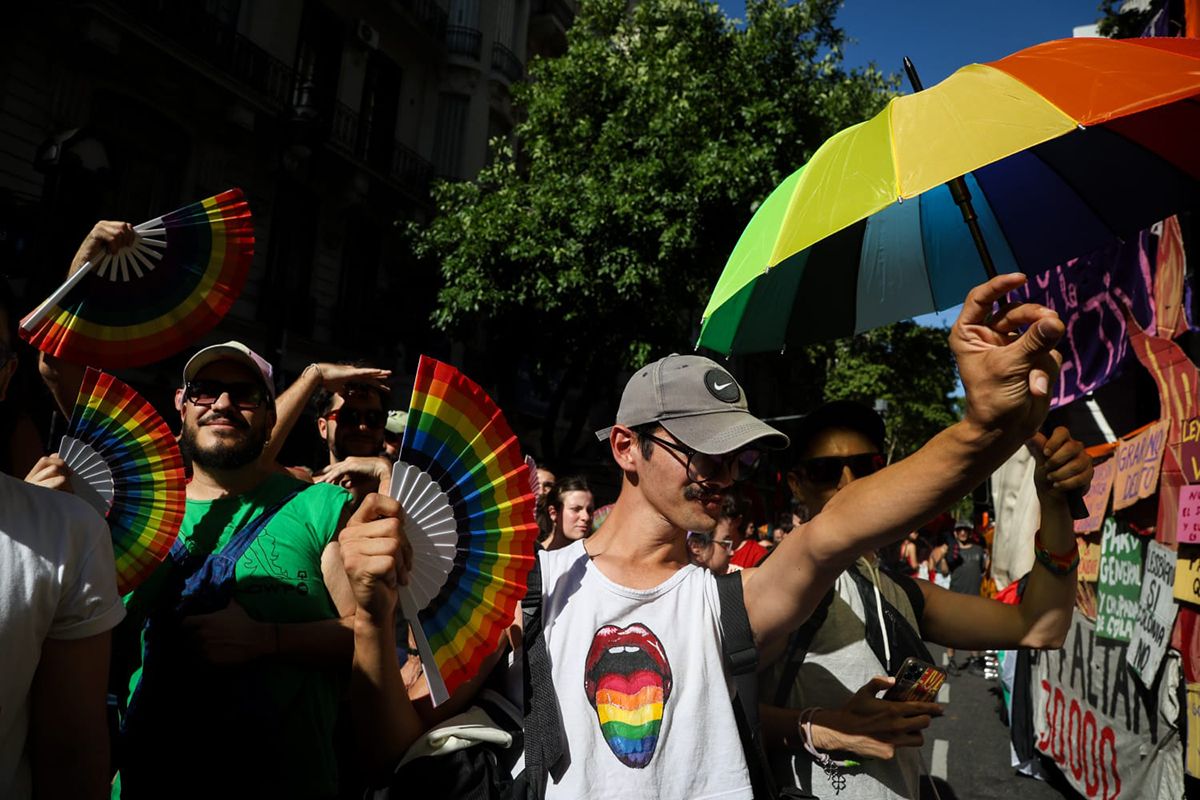
No life is disposable. That is the message that thousands of people from diverse groups gave to the government of Javier Milei during the second Anti-Fascist and Anti-Racist LGBTIQNB+ Pride March. It was the first mass mobilization of the year that brought together numerous demands, in a context marked by actions against the labor reform that will be discussed this week.
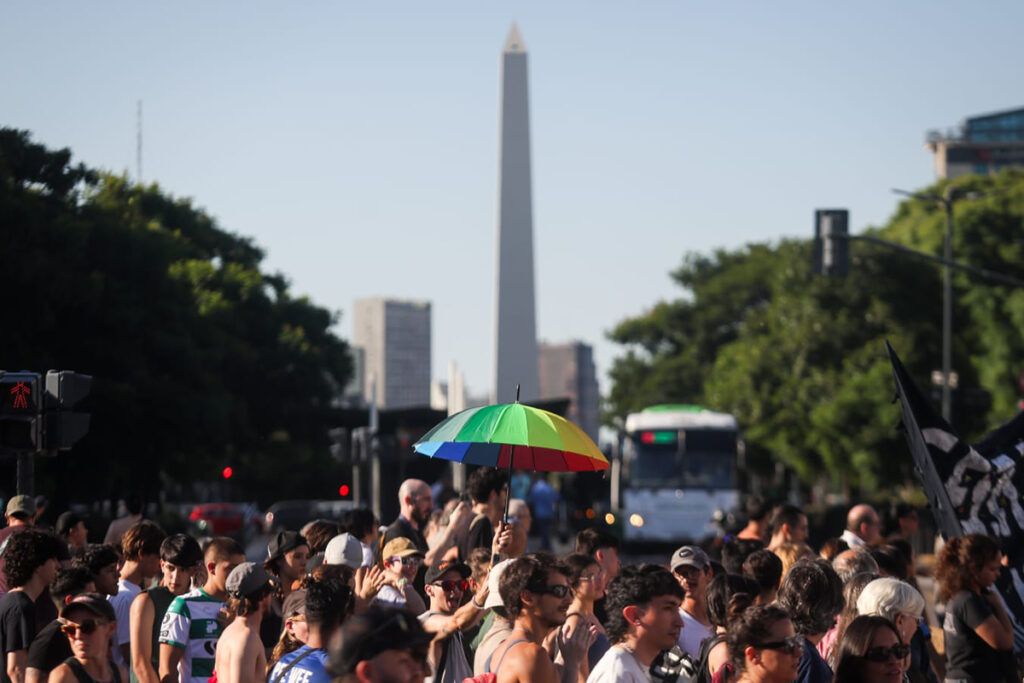
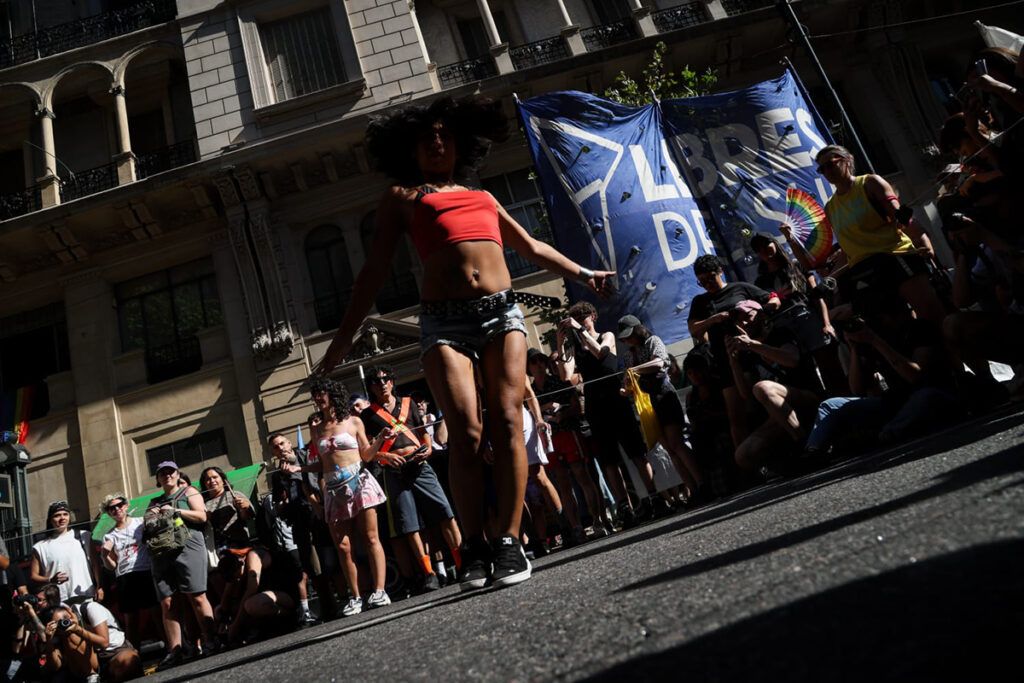
Once again, transfeminism managed to unite and articulate different demands in a single slogan: “There is no one left over here.” In CABA, the mobilization of more than five blocks went from the National Congress to Plaza de Mayo. The cry was also echoed in at least 26 other parts of the country. The most vulnerable sectors of society raised their voices: the LGBTINB+ community, pensioners, people with disabilities, migrants and informal workers.
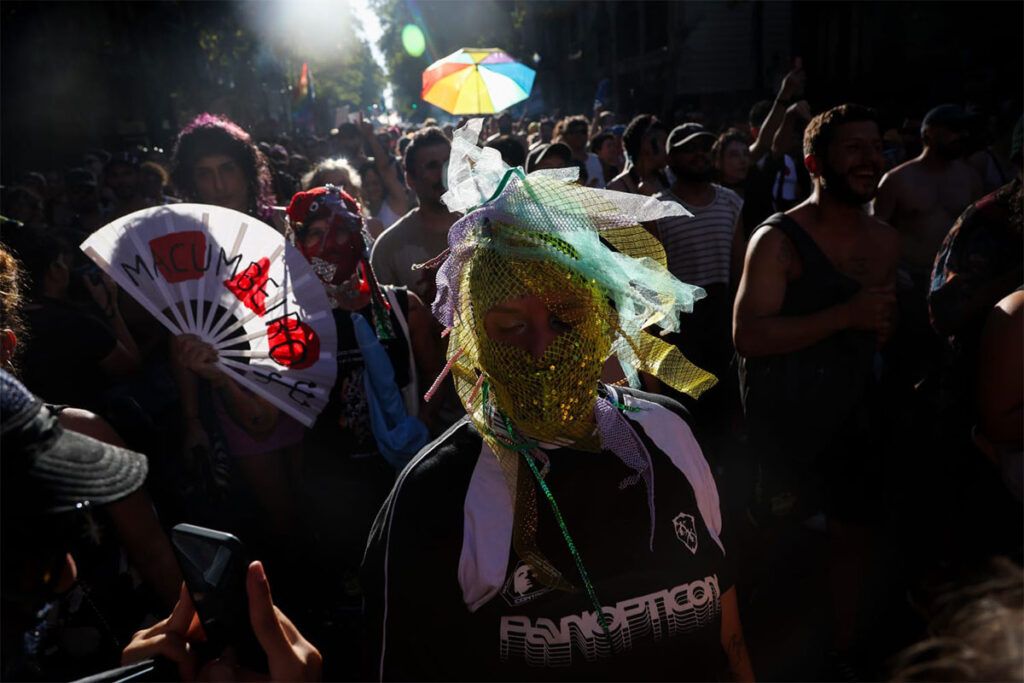
“This march is important to be able to make visible the precariousness, hunger and the worsening of institutional violence towards the groups of sex workers, migrants, people on the street, of diversity. We hope that the social awakening of the groups that resist on the margins, of a society that is exhausted, will happen,” he shared with Time/Presents Georgina Orellano, general secretary of the Sex Workers Union of Argentina (AMMAR).
This is the second edition of a mobilization that had its origins last year, after Javier Milei spoke at the Davos Economic Forum on January 23, 2025 and targeted feminism and sexual diversity. His speech, full of misinformation and lies—he compared homosexuality with pedophilia—gave rise to a historic self-organized mobilization in the City of Buenos Aires, in the rest of the country and in different parts of the world.
“From the National Pride and Struggle Front we promote, together with the anti-fascist and anti-racist assembly, this Second Federal March. Throughout the country we mobilize to repudiate this policy that promotes hatred and the discarding of a large part of Argentine society, trying to divide it into lives that can be lived and lives that are disposable. Here we are saying that if there is fascism, there is pride, there is resistance and there is struggle,” said Martín Canevaro, activist of 100% Diversity and Rights. Pride and Fight – which brings together several dissident organizations, including 100% Diversity and Rights and the Argentine Homosexual Community (CHA) – also had its float.
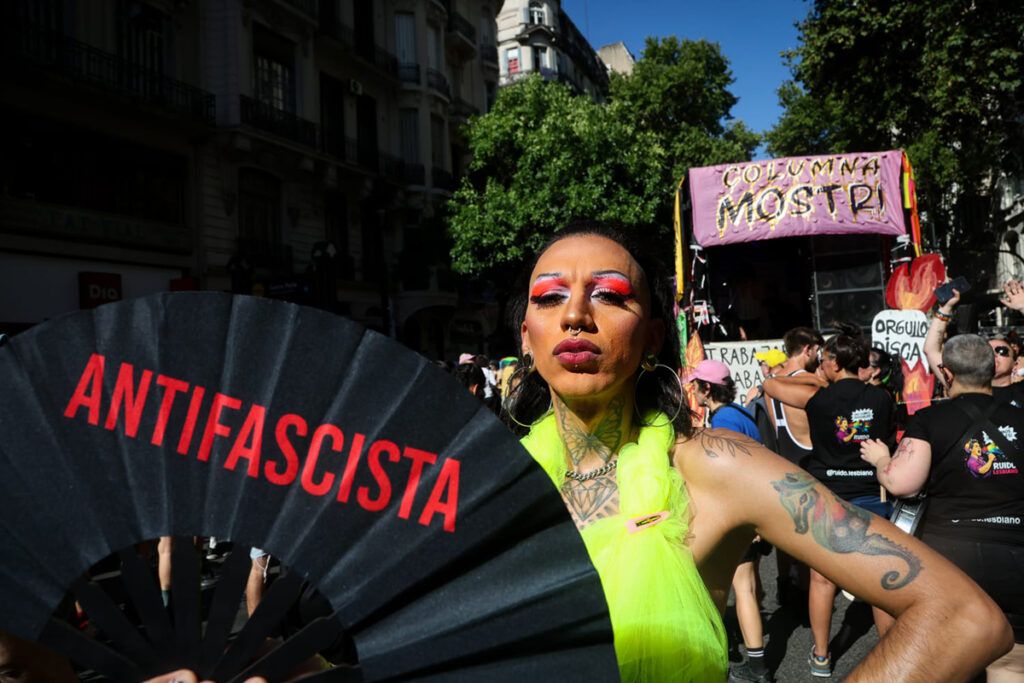
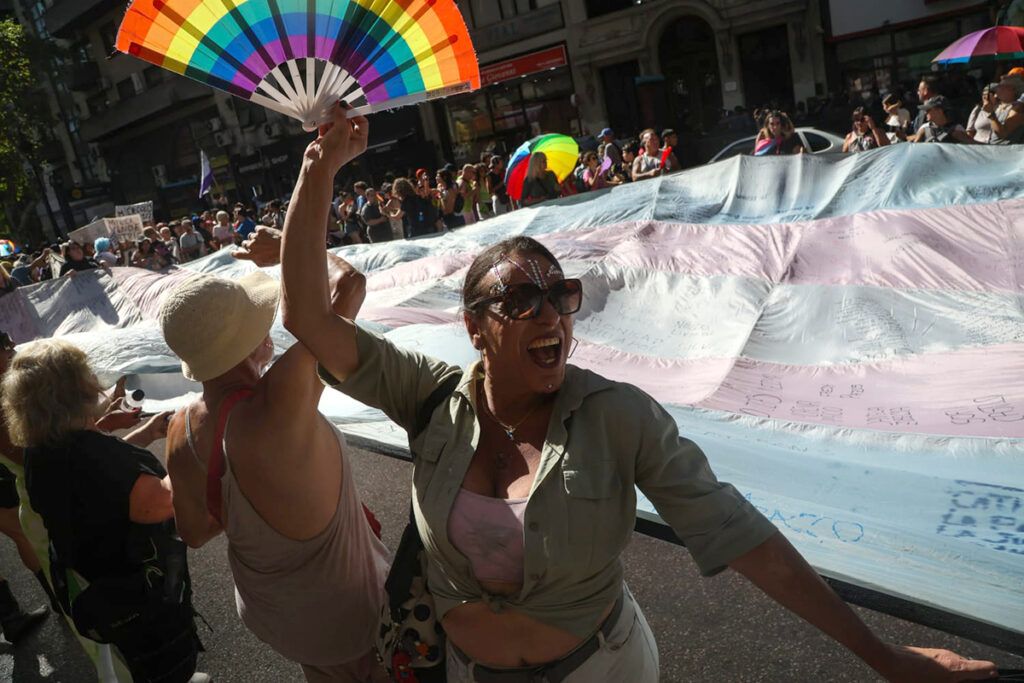
An immense flag with trans colors several meters long and wide was displayed on Avenida de Mayo. In the sun’s rays were older trans women and transvestites holding their edges. “We are here because of everything we have been through. They still kill girls and discriminate against us. There are older trans colleagues who do not have a pension and have to continue working on the street,” Mychel Aguilera, Teté Vega and Carolina Figueredo shared with this medium.
The message is in the street
The march had a union column, unions and political forces were mobilized. The Minister of Women and Diversity of PBA, Estela Díaz, participated in the second Anti-Fascist March. “We cannot continue to naturalize violence, discrimination, and hatred as part of politics. The extreme right has absolutely totalitarian discourses that do not respect or include diversities,” said Díaz.
For her part, the legislator of the City of Buenos Aires, Vanina Biasi, highlighted: “Today we go out again because fascism is advancing in this country to seek to approve that labor reform that they have prepared to approve in the Senate of the Nation next Wednesday. We have to unite against fascism.”
Victoria Freire, a Buenos Aires legislator, also highlighted the importance of being in the streets: “In a context of attempted labor and pension reform, of precarization of the lives of everyone, it is very important that the different sectors are in the streets, that Pride is in the streets.”
The union bloc also convened for the 7F mobilization. From the Buenos Aires Press Union, Micaela Polak, gender secretary, said: “The labor reform that the government wants to impose only affects the rights of workers, particularly press workers who have been hit hard by job insecurity.”
all the fights
“This labor reform is not going to happen, it is not going to happen,” chanted the leader of the march as it advanced down Mayo Avenue. The economic and labor situation was present in the posters, the songs and the testimonies of those who came to mobilize.
“Sexual dissidence, far from the social imaginary that liberalism and the right have established, are not alien to the demands of the great majorities. Quite the contrary, we find ourselves nourishing the layers of the working class and especially those layers of the popular sectors most neglected and damaged by the policies of this government,” said the transvestite teacher and activist Quimey Ramos.
Liliana Ponce is retired with the minimum wage and, like this Saturday, she mobilizes every Wednesday in front of Congress. “Today we are resisting not only the fascist attack, but also the economic attack, the labor reform. We say: enough of poverty, we want an emergency increase and not the labor reform,” he expressed from the head of the march.
“This second year, although the government has moderated to a certain extent its narrative against sexual diversity, it has not done so with its policies, which have deepened,” said Ese Montenegro, transmasculine activist and member of the Mostri Column. In this sense, the national government issued decree 62/2025 that modified the Gender Identity Law. Thus, it eliminated the possibility of trans adolescents being able to undergo hormone treatment. This attack against youth is complemented by its narrative against comprehensive sexual education and its obsessive attempt to lower the age of imputability.
After having vetoed the Disability Emergency Law, the national government was forced to regulate this regulation thanks to social pressure. “It costs us a lot to go out and put our bodies into the fight. The cooperation of the people is necessary for this to end once and for all,” said Remigia Cáceres, national secretary of Disability of CTA-Trabajadores.
The migrant groups, present at the march, denounced the persecution and criminalization they have experienced since decree 366/25 that modified the Migration Law. Other sectors in turn warned about the attempt to modify the Glacier Law and the poor management of forest fires in Patagonia. “We have plenty of reasons to denounce and highlight all the helplessness we are suffering,” said Irma Caupan, a Mapuche activist.
The meeting in the streets inaugurated 2026 with a certainty: “In the face of fascism, fight and solidarity.”
Different provinces of Argentina marched against fascism
The second Anti-Fascist and Anti-Racist LGBTIQNB+ Pride March took place in more than 26 points in the country, with different days, times and agendas, but under a common slogan: “There is no one left over here. No life is disposable.”
Throughout five virtual meetings, activists, militants, LGBTIQNB+ organizations, feminists and transfeminists came together to think about the actions of 7F throughout Argentine territory.
In addition to the main slogan, they also agreed on a series of positions: “the opposition to the reforms (labor, criminal and the Glacier Law). The repudiation of the ecocide that fuels the national government. The defense of life: against racism, colonialism and genocide in Palestine,” as they expressed in a statement.
Some localities also expressed local agendas, such as the call from Trelew, in Chubut, which mentioned the poor management of the forest fires that devastated more than 45 thousand hectares in that province. In that context, the slogan was “Let your reforms burn, not our forests.”
There were also mobilizations in Chaco, Misiones (Oberá), Santa Fe (Rosario), Neuquén capital, Buenos Aires (Bahía Blanca, Mar del Plata, Miramar, Villa Gesell, Necochea, Junín, Chivilcoy, San Nicolás de los Arroyos, Padua), Río Negro (Fiske Menuco, Furilofche, Bolsón), Córdoba, Salta, Formosa, Corrientes, Entre Ríos (Paraná), Tierra del Fuego and La Pampa.
On the networks
The dissemination of the slogans and the different demonstrations by district was carried out through the prideantifa account where a glossary was also disseminated to define why it is an anti-racist, anti-fascist and also anti-ableist march.
The glossary explains: «anti-racists because we do not buy the myth of a white Argentine. Anti-racist because we are together with the indigenous communities that demand other ways of living and relating to the territory,” the statement begins.
Regarding anti-ableism, he adds: «Anti-ableists because we collectively take charge of our fragility and our vulnerability, shared and irrevocable. And that responsibility is also our deepest joy. Anti-ableist because we do not believe that any life, any body, any way of being in the world, is worth more than another. We all throw supremacism!
The note is a collaborative coverage between Tiempo Argentino and Agencia Presentes, medium ally that works to make gender inequality visible through the development of clear and quality content.