Maintaining stability in fuel prices in the face of the crisis in the Middle East requires the Government of Mexico to allocate 280 million dollars each week. This containment strategy seeks to neutralize the direct impact of international volatility on the pockets of local consumers and mitigate inflationary pressures.
You may also be interested in: Obtain your balance in favor of the SAT 2026 without using the e.firma
Geopolitical factors that put pressure on fuel costs
The escalation of the war conflict in the Middle East has profoundly altered global energy markets. Targeted offensives against strategic infrastructure in the region, coupled with tight control over the Strait of Hormuz, have created a critical disruption to supply flows. Considering that a fifth of the world’s crude oil normally circulates through this passage, any instability immediately translates into a rebound in international prices.
Although Mexico has a position as a crude oil producer that allows it to capture excess revenues—estimated at an additional $180 million per week derived from oil sales—this benefit is insufficient to cover the total cost of the domestic subsidy.
Fiscal containment strategy and the challenge of gas stations
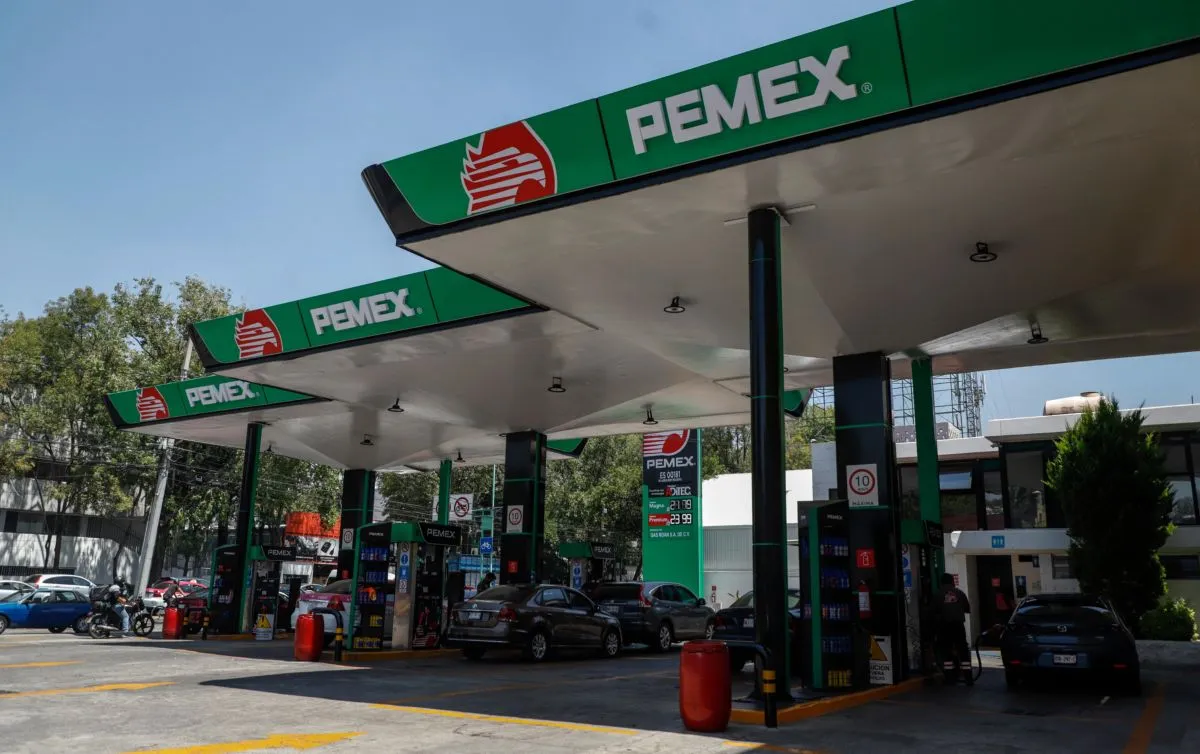
To stop an excessive increase in service stations, the federal administration has reactivated tax relief mechanisms similar to those implemented during the beginning of the conflict in Ukraine. Since mid-March 2026, the tax applied to gasoline has been reduced with the aim of anchoring the final price.
Currently, the protection scheme establishes clear parameters for the commercialization of hydrocarbons:
- Target Price (Magna): The agreement seeks to keep the liter below 24 pesos (1.53 dollars).
- Projected market price: Without government intervention, the cost would reach 33 pesos ($1.85) per liter.
- Protective differential: Approximately 9 pesos are subsidized for each liter consumed in national territory.
Despite these fiscal efforts, there is a margin of non-compliance on the part of certain businessmen in the sector. Service stations have been detected that ignore the agreed prices, selling fuel with profit margins higher than those voluntarily agreed with the State.
Surveillance and citizen participation mechanisms
Given the resistance of some distributors to transfer the benefit of the subsidy to the final consumer, the administration is evaluating the implementation of formal sanctions. However, the immediate line of action focuses on transparency and responsible consumption.
- Exposure of irregularities: The placement of badges or posters in establishments with excessive prices is proposed to alert users.
- Disincentive to expensive consumption: The strategy seeks for the market to self-regulate by migrating customers to stations that do respect the established limits.
- Continuous monitoring: Price monitoring remains a priority on the public agenda to guarantee that the investment of 280 million dollars per week fulfills its purpose of social stability.