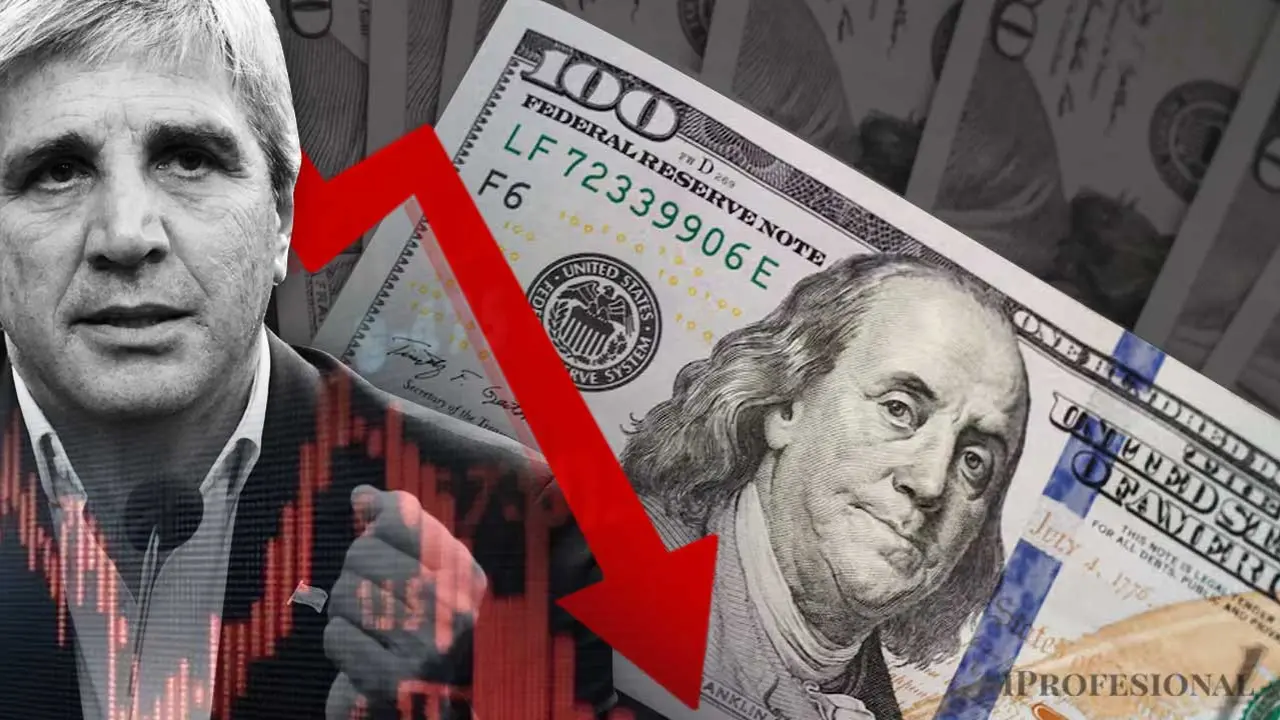
He current dollar level It became one of the hottest debates in the Argentine economy. While some economists warn that the exchange rate is behind schedule and that this could lead to a sudden correction, others maintain that it reflects a new macro balance and that it works as an anchor to lower inflation. The discussion is not minor: Much of the economic direction depends on its resolution. in the coming months.
The starting point of the debate is a fact that is difficult to discuss. Since Javier Milei took office, the dollar—especially the blue—has risen below inflation. In real terms, this implies an appreciation of the peso: goods and services in Argentina become more expensive measured in dollars and that is why for many analysts, this is the classic symptom of exchange delay.
Position 1: the dollar is behind and a sharp correction may come
A large majority of economists maintain that the current exchange rate is not sustainable. The central argument is simple: if inflation advances faster than the dollar, the economy loses competitiveness. Among the main points that stand out:
- The dollar rises less than prices
- Dollar costs increase
- Exporting becomes less profitable
- Importing becomes cheaper
Some private calculations estimate that The exchange rate delay is already between 20% and 25%. Such is the case of Orlando Ferreres, for whom, for example, the exchange rate should be significantly higher to reflect the price level of the economy. Along the same lines, analysts warn that the current scheme uses the dollar as an “anchor” to contain inflation, but at the cost of generating imbalances. The potential consequences of this approach are clear:
- Loss of competitiveness
- Pressure on reserves
- Future currency jump risk
Position 2: it is not backward, it is another economic regime
On the other hand, economists closer to the official approach relativize the diagnosis of exchange rate delay. For Ricardo Arriazu, traditional analysis no longer applies. The current dollar is not behind: it reflects a profound change in economic policy. The argument is based on three pillars:
- Strong fiscal adjustment
- Almost zero monetary emission
- Lower demand for coverage
Ramiro Castiñeira has a similar vision, who states that the low exchange rate is part of the anti-inflationary program. According to their approach, the dollar works as an anchor to slow down prices. For his part, analyst Salvador Di Stefano adds another element: the dollar came from very high levels in real terms, so the current “calm” is, in part, a correction of previous excesses.
For his part, economist Carlos Melconian provides an intermediate vision within the crack. Although he avoids talking about exchange rate delay in traditional terms, he warns that the current scheme has clear limits. His diagnosis combines two ideas: the dollar is not necessarily behind in historical terms, but the current level can become inconsistent if other variables are not corrected.
Melconian often emphasizes that the exchange rate cannot be analyzed in isolation. In his vision, the problem is not only the price of the dollar, but the general balance of the economic program. “This is not a classic exchange rate delay, but it is not a scheme that can be sustained indefinitely without adjustments,” is the synthesis of his position in different public interventions.
Furthermore, it warns that, if inflation does not quickly converge to low levels or if the economy loses competitiveness, the exchange rate will need some type of correction. In that sense, it introduces a key nuance in the debate and that is that Rather than discussing whether the dollar is behind today, the focus should be on whether it is sustainable over time.
The official vision: what Luis Caputo says about the exchange rate
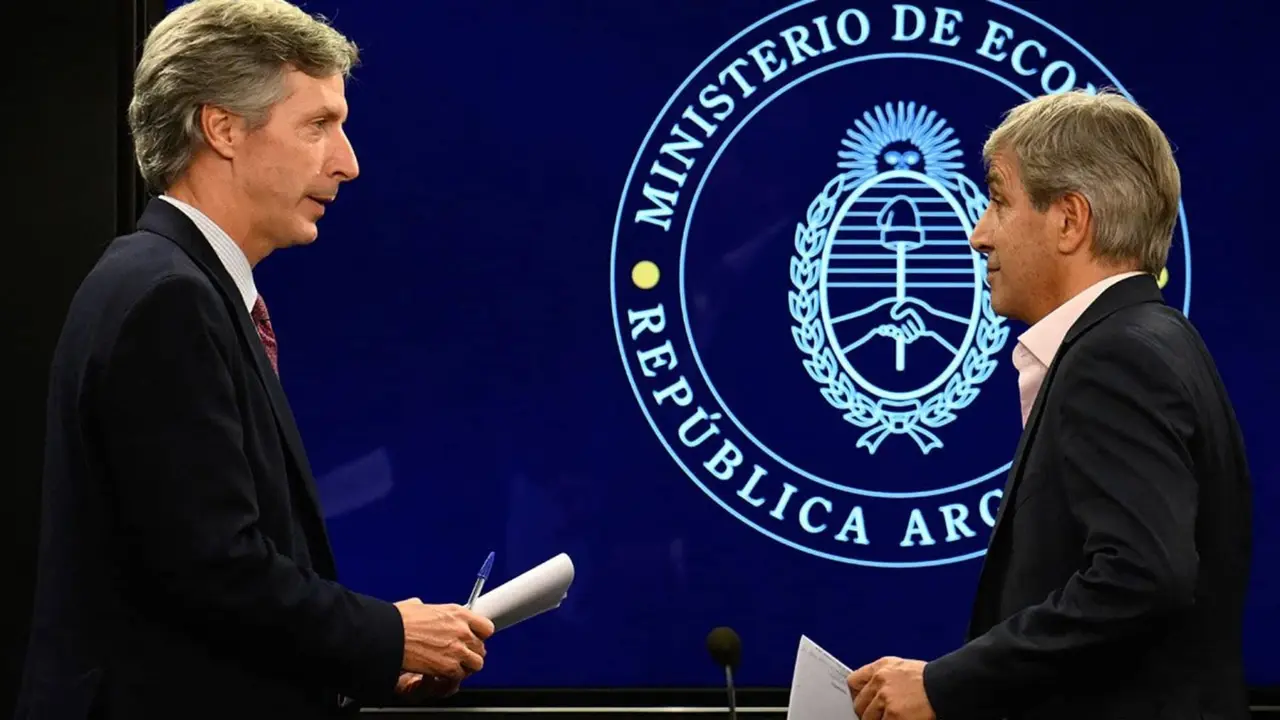
The Minister of Economy, Luis Caputo aligned himself with this second position and was categorical: denies that there is an exchange delay. The Government maintains that the level of the dollar is consistent with the new economic program and responds to specific fundamentals:
- Fiscal surplus
- Strong reduction in monetary issue
- Normalization of the exchange market
- Less uncertainty
Caputo emphasizes that, unlike other periods, there are no leftover pesos putting pressure on the dollarwhich explains the stability of the exchange rate. Furthermore, it states that the current scheme seeks to avoid the sudden devaluations of the past and consolidate a sustained disinflation process. In that sense, the low dollar would not be a problem, but rather a consequence of the macroeconomic order.
The technical point: what is the exchange delay
Beyond the positions, there is a technical consensus: When the dollar rises less than inflation, a real appreciation of the exchange rate occurs. That is what divides economists today:
- For some, it’s a problem that needs to be fixed.
- For others, it is a tool to stabilize
What must be taken into account, in general terms, is that the current behavior of the dollar responds to several factors, among them, contractionary monetary policy, a fiscal surplus that lasts over time, a lower issuance of pesos, expectations, although somewhat decimated, of stability and a smaller exchange gap. It is precisely this combo that reduced pressure on the dollar, something unusual in recent history.
Consequences: short vs long term
The impact of the “ironed” dollar is different depending on the horizon. In the short term:
- Helps lower inflation
- Reduce uncertainty
- Sort expectations
In the long term:
- May affect exports
- Incentives imports
- Can generate accumulated delay
For this reason, even some economists who support the program warn that the scheme has limits.
The underlying question: an exchange rate adjustment is coming
The market is closely following this discussion because it anticipates what may happen to the dollar. If the view of backwardness predominates, some type of exchange rate correction is expected in the future. If, however, the new regime is consolidated, the dollar could continue running behind inflation without generating tensions. In any case, this is a debate that defines the model and in this sense, the “dollar crack” reflects, in essence, two views on the economy:
- A more traditional one, which sees the exchange rate as a key equilibrium variable
- Another more orthodox one, which prioritizes the fiscal and monetary order
The outcome of that dispute is not theoretical. Defines investment decisions, savings strategies and the direction of the economic program. In an Argentina accustomed to dollarizing to avoid losing, the discussion opens an uncomfortable question: what if this time the dollar is not the refuge? The answer, for now, divides even economists… and also marks the official position.