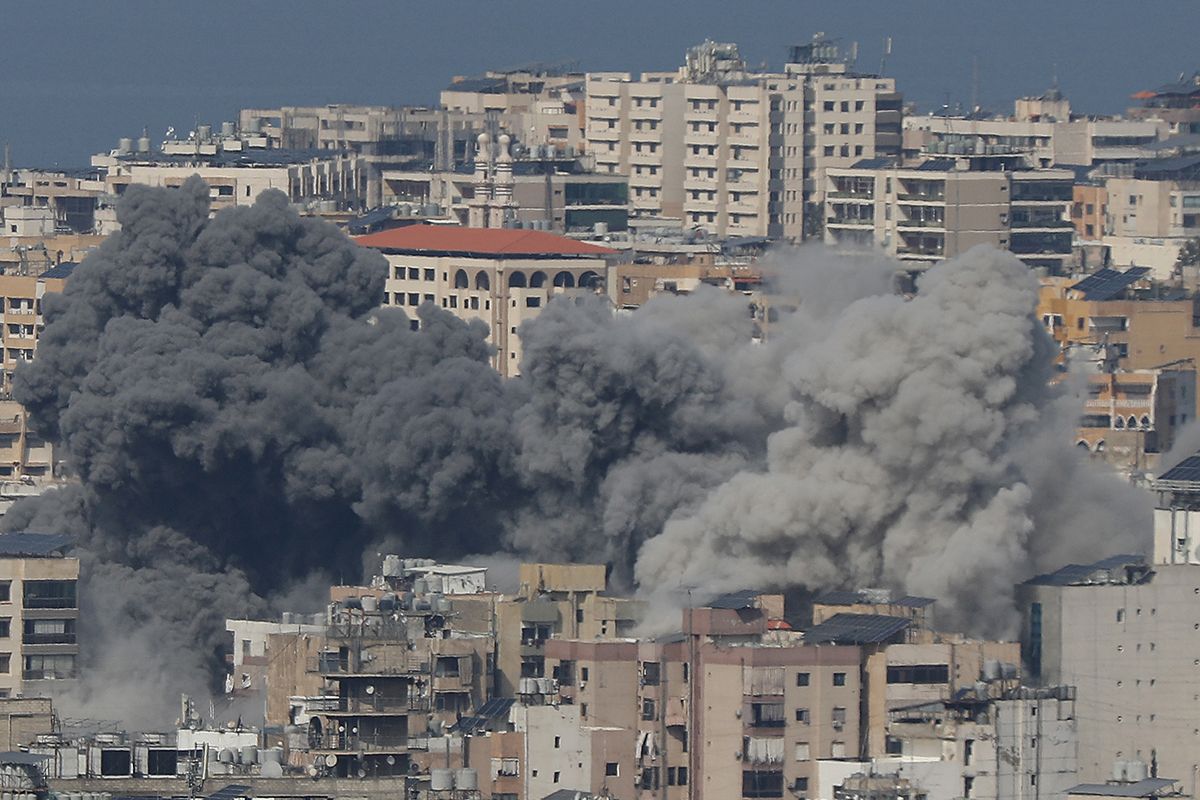
The ceasefire agreement was left under a cloud of doubt. On the first day of the truce, the announcement of pacification for two weeks quickly demonstrated its limits. The US and Israel’s war against Iran was no longer a total – and asymmetrical – conflagration, but it continued due to the unilateral will of Israel, which heavily bombed Lebanon this Wednesday. After Benjamin Netanyahu’s government ignored what was agreed, Tehran decided to once again obstruct the Strait of Hormuz.
The resulting scenario supposes a certain ‘de-escalation’ although at the same time it exposes its fragility. The panorama after the 39 days of war combines uncertainty, an expected human relief, plus a lot of intrigue about what may happen.
One of the first conclusions, transitory like everything in this war, is the determining importance of geography in international conflicts. As the British Tim Marshall maintains in his book Prisoners of geography (Peninsula editions), “we cannot escape from geography but rather adapt to it.”
This definition showed its validity in the Iranian military strategy, which based its defense on the maritime gorge that connects the Persian Gulf with the Gulf of Oman and, beyond, the ocean. The importance of geography, on the other hand, was exposed this Wednesday in a post on the social network
“It is unclear how the truce between Washington and Tehran will play out. But one thing is certain: Iran has tested its nuclear weapons. It is called the Strait of Hormuz. Its potential is inexhaustible,” the Russian tweeted early on Wednesday.
The provisional nature of the situation in the Middle East and the Gulf region is one of the world’s biggest questions. An authoritative voice to delve into the implications of the ceasefire and what can happen is the political scientist Said Chaya. Born in Rosario, 44 years old, he has a doctorate in international relations and director of the Middle East Studies Center at the Austral University. For Chaya, also a member of the Argentine Council for International Relations (CARI), the apparent two-week truce should be read as “a fragile agreement” and “based on contradictions.”
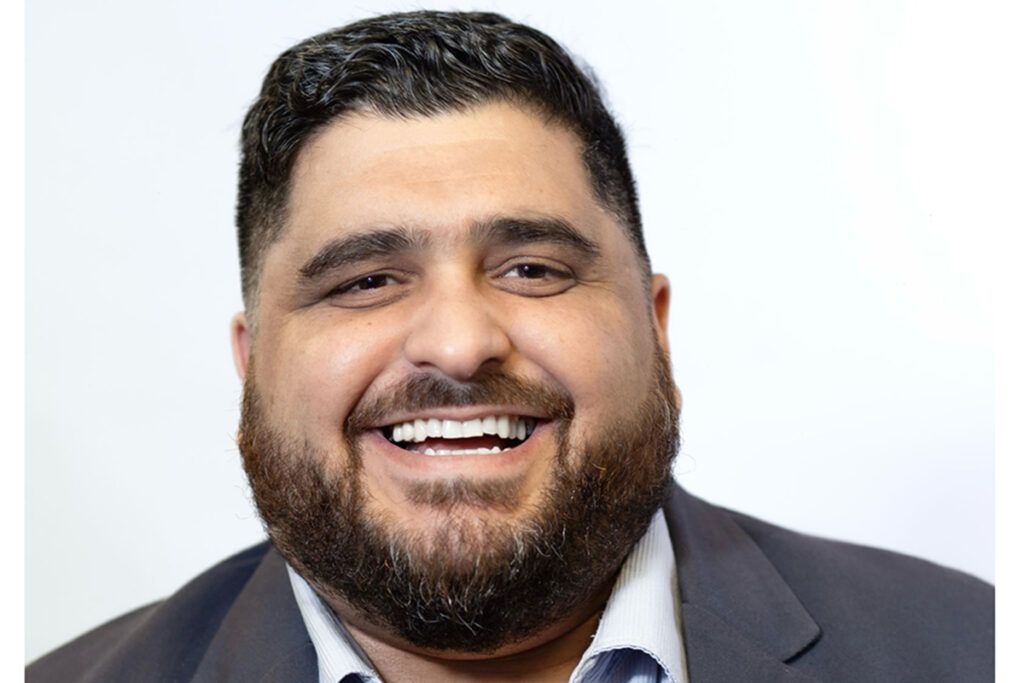
“If I have to describe the (ceasefire) agreement in some way, I would say that it is fragile,” he stressed in response to the first question from Time. And he added: “What I would be interested in knowing, because it is a question that remains in the air, is what role China has played in all this. Because in the last ten days China actively participated in different meetings in Islamabad.”
-How do you characterize this ceasefire and Pakistan’s mediation?
-I would say it is fragile. Firstly, because Pakistan, which is the mediator, has interests in the Middle East, but it is not a major player, not for the other actors in the region.
-And yet it has atomic bombs.
-Clear. And that causes some concern in his relationship with India. I was seeing some tweets from Indian opposition politicians criticizing (Indian) Prime Minister Narendra Modi: “why could Pakistan achieve this deal and we couldn’t?”, they said. In any case, what I am interested in knowing, because it is a question that remains in the air, is what role China has played. With that issue closed, I insist that the agreement is fragile and based on many contradictions. The US, on the one hand, says that it achieved the opening of the Strait of Hormuz. Iran, on the other hand, says: “Yes, we are going to open it (to the strait), but with the charging of a taxesa tax or fee.” A fee of two million dollars per ship to be distributed between Oman and Iran, which is included as a way to prevent the treaty from including war reparations that the US and Israel would eventually have to pay. On the other hand, the mediation agreement says that Lebanon is part of that ceasefire. But moments ago (at noon on Wednesday, NdR) Israel bombed more than a hundred different locations in Lebanon in ten minutes.
-I was reading tweets from people who are in Beirut: the Israeli bombings left a very great level of destruction.
-It is the other factor. Does the ceasefire apply or not apply to Israel? Furthermore, the Strait (of Hormuz) was not fully opened, although it was agreed upon. This accounts for the fragility which, it seems to me, is the word that defines the scenario. The agreement involves seeing if the US wants and can contain Israel. Or if you’re just going to use it as an excuse to say “well, it’s not our fault.” Because that is what has happened several times with the Gaza conflict. That the US said things like: “We have nothing to do with it, it’s Israel.” But only a fool would think that the US does not know what military steps Israel is going to take in the region. The US, of course, knows this. On the other hand, from 2009 to now, Israel has pushed the boundaries of its autonomy in foreign policy: it has built itself as an actor with great regional influence, with great military technological power, and its dependence on the United States is no longer the same as it was fifteen or twenty years ago.
-Brazilian analyst Breno Altman defined this temporary outcome as “a tactical victory for Iran.” Do you agree?
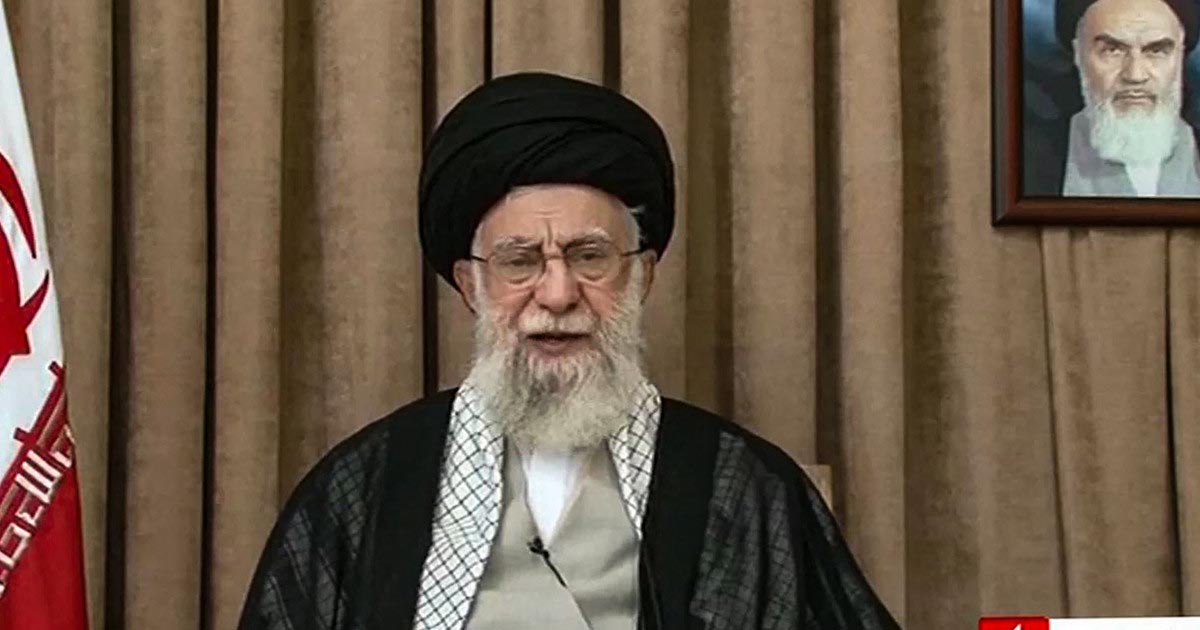
-I believe that both one actor and the other can ‘sell’ this as a triumph. Iran has grounds to ‘sell’ it as a triumph. But so does Trump. Of course, if you ask my opinion, I believe that Iran now has a much more advantageous position than it had on the night of February 28, when the attacks began. Yes, a lot of people have died; much of Iran’s critical infrastructure has been destroyed; The supreme leader (by Ali Khamenei) and several officials have died – they have been assassinated. But, in this context, the impression is that in the medium term the winner was Iran. In the sense that the Strait of Hormuz was open for free movement and now they are going to start charging for passage through the strait. Furthermore, in the previous negotiations, Iran was committing to the total reduction of its nuclear energy production – according to what Oman says about the previous negotiations. Now, however, Iran appears to reserve the right to use nuclear energy for peaceful purposes. In short, my impression is that Iran won.
-You mentioned the Iranian leader Khamenei. Is the assassination of a foreign head of state without a declaration of war or prior authorization from Congress an act of terrorism?
-The truth is, what the definition of terrorism is, I don’t know. Yes, I would tell you that attacking a university or a school are terrorist acts. I couldn’t tell you about the assassination of a head of state in a context of conflict. Yes, clearly attacking civilian targets, that is clear.
-In conventional wars, at least in the history of the 20th century, the powers that waged those wars did not kill the institutional head of the other State. For Persian Shiites, the assassination of Khamenei, I risk, is like for a Catholic the assassination of Pope Leo XIV. Do you agree?
-Yeah. Because without a doubt he was a spiritual and also a political leader. My impression is that it has been a long time since we have been in a context of traditional war, with a formal declaration of war and the end (of the fighting) through an agreement, an international treaty, proclaiming perpetual peace. The characteristic of 21st century conflicts is precisely that there are no formal declarations of war, nor are there concrete endings to armed conflicts. There is, however, a more complex nature of these conflicts, which become environmental, linked to the displacement of people, related to food and natural resources.
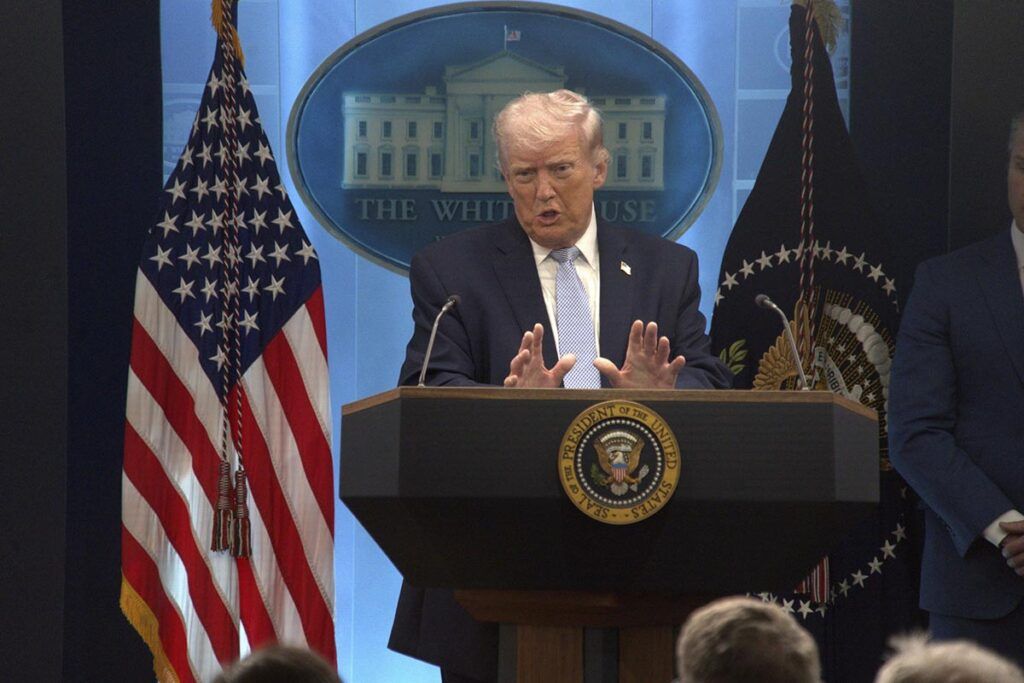
-Milei got involved with this war, at least discursively. It was in New York, when presenting at a university of Orthodox Judaism. He said “we are winning.” Then he triggered a diplomatic escalation: he expelled the chargé d’affaires. Could this have risks, benefits or harms for the country?
-I don’t think this (due to the war in the Middle East) will turn out well, but if it goes well the result could be very favorable for Milei. There may be some influence depending on the importance of the support that this (the Argentine government’s position regarding the war) can generate in Israel or the United States. That is, it can generate some form of support. Although the benefits that Argentina may obtain from this conflict are tied to the results of the war. On the other hand, for the average Argentine, war is not an issue that is essential to them, unless it somehow impacts prices in a much higher way. Personally, I do not believe that this scenario is advantageous for Argentina. For me, the essential thing has been the position of equidistance that the country has had since the ’40s until now, where we aim to install our products in all the countries of the region and collaborate with the peace process through the United Nations.

-Iran, in this second conflict with the US and Israel, was attacked to a point where its continuity, its very existence, seemed to be at risk. There were even plans for “regime change.” How does that impact the relationship with Argentina?
-Iran’s relationship with Argentina is a complicated relationship, but not from today but from the last thirty years. That must be understood. Especially since the attack on the (Israeli) embassy in ’92, in which the Supreme Court ruled the guilt of Hezbollah, which despite being a Lebanese group is linked in some way to the interests of Iran. And then, for Iran’s involvement in the AMIA attacks, even though it has not been definitively proven – because there is still no definitive sentence. In this context, Milei represents a worsening of these relations in a context in which the (Argentine) government feels comfortable.