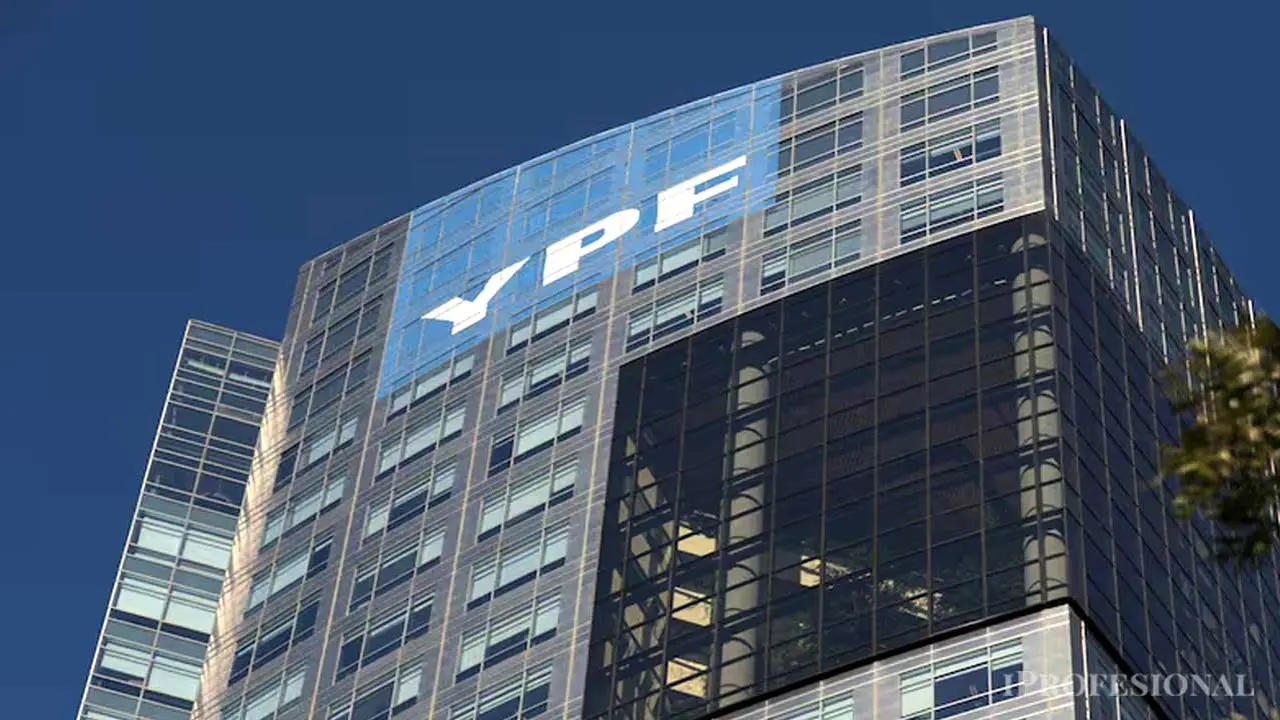
YPF closed this Thursday a new placement of negotiable obligations (ON) in the local capital market, with one of the lowest interest rates recorded by the company in this market.
According to reports, the state-owned oil company managed to place the Class XLIII Negotiable Obligations denominated in MEP dollars US$122 million within a period of 4 years and an interest rate of 5.50%for which it received more than 6,000 offers for a total amount of 203 million, once again showing its strong brand in the retail public.
The company’s last broadcast had been in February, when it placed US$131 million for a term of 34 months and with a rate of 6.50%both conditions being overcome by the results obtained in today’s broadcast.
As reported by YPF, the funds obtained Through the placement, they will be used to refinance existing debt with an interest rate higher than that obtained in the new Negotiable Obligation.extending the average life of the debt and to finance YPF’s investment plan.
Furthermore, in January of this year the company achieved international placement by US$550 million additional by extending a bond maturing in 2034 and a rate of 8.1%.
That issue was interpreted as a sign of market confidence in the oil company’s business plan. The resources obtained then were mainly allocated to infrastructure works for hydrocarbon transportation, a key element to expand production.
YPF results in 2025: the focus increasingly on Vaca Muerta
At the end of March YPF presented its results for the fourth quarter of 2025, and for one of the most influential tables in the City the recommendation remains buy. The central data of the report is Allaria’s strategic reading of the oil company’s new profile, increasingly focused on Vaca Muertawith less weight of conventional assets and with a roadmap that aims to fully capture the export leap that could begin to be felt from 2027.
The brokerage company set a target price of US$68 per ADR and of $115,600 per share for end of 2026compared to a quote of $41.58 at the time of the report. That implies a expected return of 64%, a number that alone explains why the paper remains in the buy category.
The underlying argument is that the market would not yet be fully reflecting the company’s operational transformation or the potential that the new infrastructure could unlock to evacuate oil and, later, monetize the LNG business.
The quarter left a loss, but with an explanation
In the fourth quarter, YPF recorded a loss of US$649 millionabove the red of US$198 million of the previous quarter and also above the negative result of US$284 million from the same period of the previous year. However, the report itself highlights that the main difference against what was expected was explained by an extraordinary income tax charge from US$1,000 million, linked to joining the ARCA payment facility plan in 120 monthly installments.
Sales totaled US$4,556 million, with a drop of 2% quarterly and of 4% year-on-year, affected by lower realized prices of crude oil and seasonality in gas.
Still, the performance was slightly above Allaria’s estimate. He EBITDA adjusted was US$1,283 million, with a margin of 28.2%, barely below what was projected by the firm, although with an improvement of 53% year-on-year.
YPF’s key is in the shale
The heart of the positive thesis is in the acceleration of the unconventional business and is that, during the fourth quarter, the Shale oil production grew 15% compared to the previous quarter and 42% year-on-year, until reaching 196 kbbl/d, which already represents 74% of the total. In the 2025 average, shale production was 165 kbbl/d, a increase of 35% year-on-yearin line with the company’s guidance.
According to the report, YPF is moving towards consolidating itself as a “pure shale play” as it finishes divesting mature and conventional fields. This pruning of the historical business already had a visible consequence on costs: the lifting cost fell to US$9.6 per boe, with a drop of 44.2% year-on-year, while in the Core Hub it was located at just US$4.2 per boe. For an oil company that wants to grow in scale and profitability, this cut in operating costs significantly modifies the future financial profile.
Furthermore, the proven reserves of shale in Vaca Muerta grew 32% year-on-year until 1,128 Mboe at the end of 2025 and already represent 88% of total reserves.
Cash, debt and divestments
The financial situation also enters the equation since, as of December 31, 2025, the consolidated financial debt amounted to US$10,581 million, with 78% of long-term maturities, while the cash totaled US$1,195 million, which left a net debt of US$9,386 million. Even with that level, the leverage ratio went down to 1.9 times, facing 2.1 times of the previous quarter.
In addition, the firm highlights that YPF obtained relevant financing in both the local and international markets, and that by 2026 the flow of free funds, which was previously projected negative, would now become positive thanks to the new higher Brent assumption and the contribution of different asset sale operations.
Allaria contemplates in her calculation the charges for the sale of Profertil and Manantiales Behralthough he clarifies that he still does not include any additional income for the sale of Metrogas, nor does he potential value of LNG projects or other assets such as YPF Agro.