The Government of The City delays the tender for the construction of line F, which had been launched last October.
The Ministry of Mobility and Infrastructure issued a circular this Wednesday through which rescheduled the opening date of envelopes, which was originally scheduled for April 22, to July 14.
The decision is not due to a lack of interested parties –around twenty national and international consortia had expressed their intentions to participate., but because some of them had requested an extension up to 180 days to prepare the necessary documentation.
Delays in the City project
Although extensions are common in projects of this magnitude, Some contractors claimed thatin this particular case, At the moment there is “no precise definition of the scope of the tender” and requested that “all digital information be delivered in editable format and with sufficient detail to be able to estimate the quantities of work to be executed“, something that would not be possible with the information available so far.
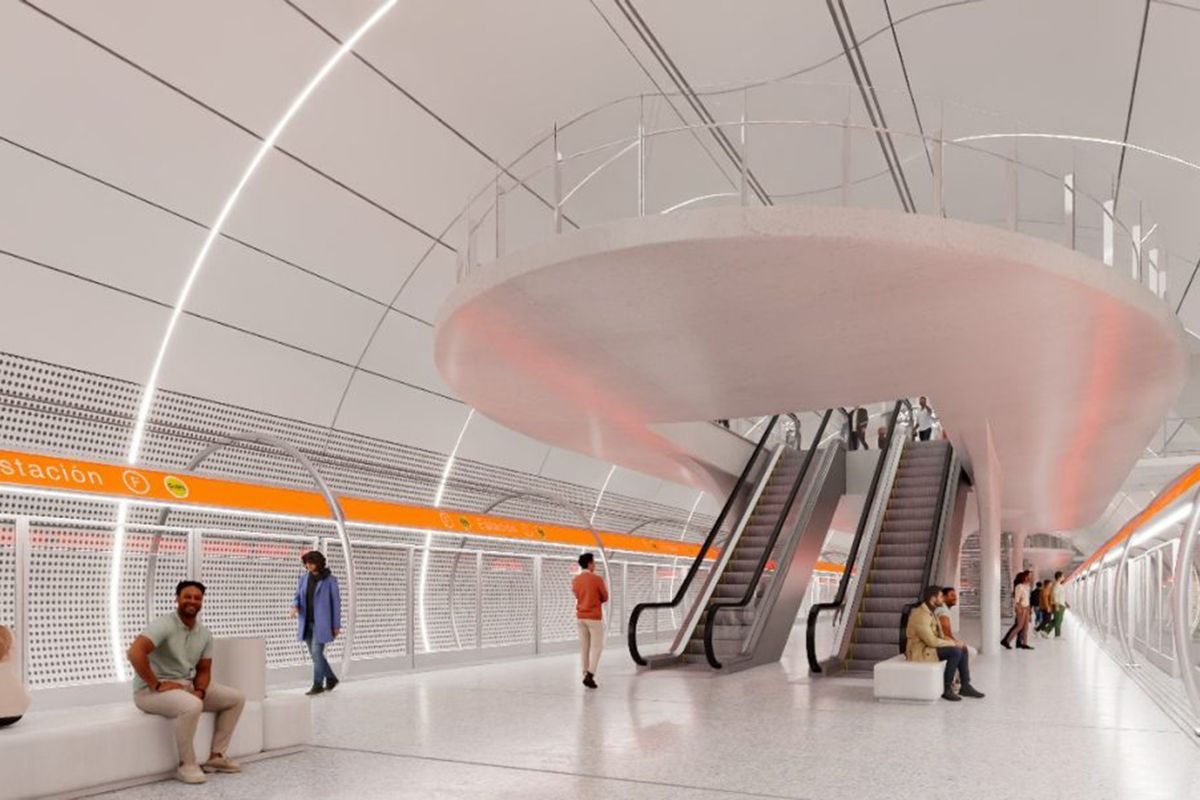
It is worth remembering that The tender in progress covers the “engineering, construction and equipment” of the linealthough not including the provision of rolling stock, signage or communications equipment, which will be the subject of subsequent contracts. The project to be executed is the one prepared last year by the UTE UPU and Associates – IATASA – ATEC.
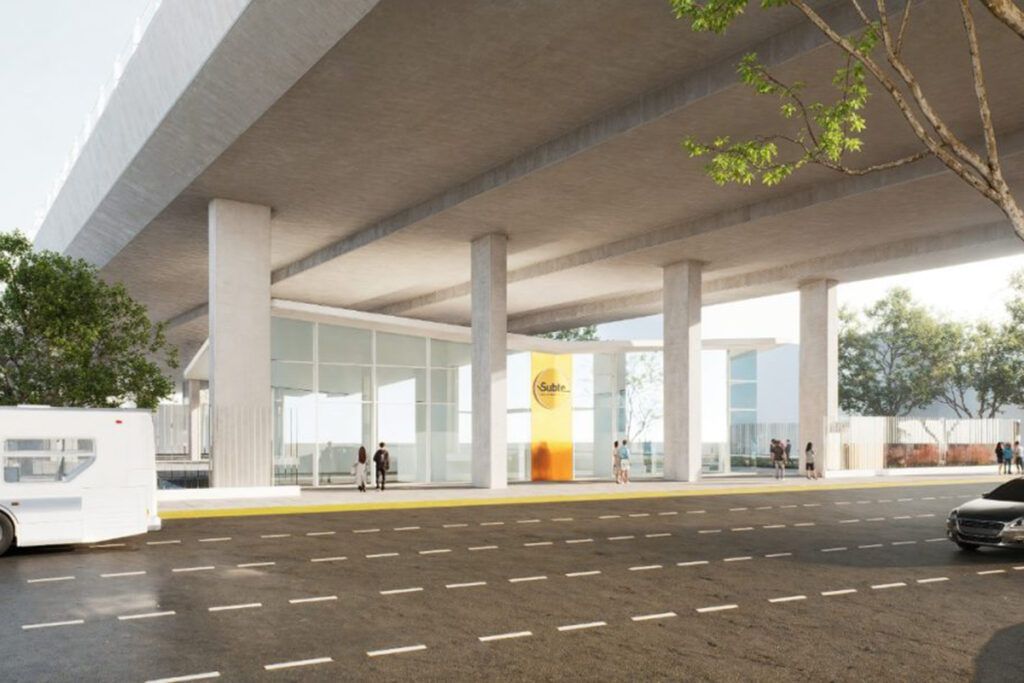
As part of the preparatory work for the work of the line, The City launched a tender for adjustments to the Plaza Constitución Transfer Center. As detailed enelSubtethe move of the bus regulation area located on the lower highway, the reorganization of stops and the expansion of sidewalks is contemplated to generate space for the implementation of the workshops and future access to the Constitución F station.
In turn, the Buenos Aires Executive sent two projects to the Legislature linked to the work of the line.
The first of them is an authorization to borrow up to a maximum of $1.35 billion to pay for the tendered work, that is, “the engineering, construction and equipment of line F.”
The second It includes a series of expropriations of real estate and subsoil pfor the accesses of several stations and for installations of the future line.
The latter, furthermore, proposes modifications to Law 670 to marginalize Subterráneos de Buenos Aires (SBA) from the construction process of new lines: It removes from SBA the responsibility of calling for bids for the works on lines F, G, H and I and removes it from the Joint Monitoring Commission for tenders and network extension works.
Line F, between round trips
As explained enelSubte, The F line project dates back to at least mid last century. Its official layout was formally established more than two decades ago.with the approval of Law 670 (2001), ratified by Law 2710 (2008).
In recent years, the possibility of moving forward with the construction of the line was mentioned several timesalthough until now it has remained nothing more than a future project.
In mid-2019, the City Government took the first significant stepannouncing a tender to carry out studies to prepare the specifications for the work, whose project had been being worked on by SBASE. However, after 14 postponements, that tender was canceled in May 2022. As announced then, SBASE would be in charge of preparing the studies “with its own equipment,” with the argument of generating tax savings.
After thisand in the midst of statements in which Buenos Aires officials They ruled out or directly described the construction of the line as “madness.”, The project was shelved until February of last year. Jorge Macri surprisingly announced that a tender would be called for the construction of the line.
What is the F line project like?
Line F will run for about 9.8 km between Barracas and Palermo. The line would follow the axis of General Hornos Street and Juan de Garay, Entre Ríos/Callao and Las Heras avenues. in accordance with the provisions of law 670approved in 2001 and ratified in 2008 by law 2710.
According to the official project, The line will have a total of 12 stations (Brandsen, Constitución, Cochabamba, Chile, Congreso, Corrientes, Pizzurno, Junín, Pueyrredón, Parque Las Heras, Ecoparque and Pacífico), of which eight would be combination, allowing users to connect with all Subway lines and with the railway lines Roca and San Martín.
In the future, a possible extension to the south (California station) is contemplated.which could be executed as a viaduct taking into account the characteristics of the soil in the area – the proximity to the Riachuelo makes the construction of tunnels inadvisable.
According to official documents, “the potential demand for this line is projected to be the highest in the local subway network.” (…) Furthermore, its execution would imply a redistribution of passenger flows and a reconfiguration of surface transportation services.”