The recent validation of the new legal framework enshrines a model of delegated sovereignty. Under this scheme, the State acts as the architect of a selective lack of protection: it guarantees the legal security of transnational capital while systematically eroding the vital security of citizens and territories.
The implementation of this legal regime configures conditioned territories: enclaves of exception where the democratic exercise is restricted and local regulations are subordinated to investment protection treaties and the demands of global markets. In them, the public decision moves towards regulatory frameworks defined outside the territory.
In this scenario, the territory is fragmented and offered in an auction of components that academia and politics have failed to interconnect:
The cryosphere as an input (Glaciers): the regulatory reform of the Glacier Law constitutes a reengineering of the territory where the glacier is reduced to the category of geological obstacle. This legal redefinition transforms a strategic common good into a simple operating cost, prioritizing the viability of mining income over the integrity of the water cycle.
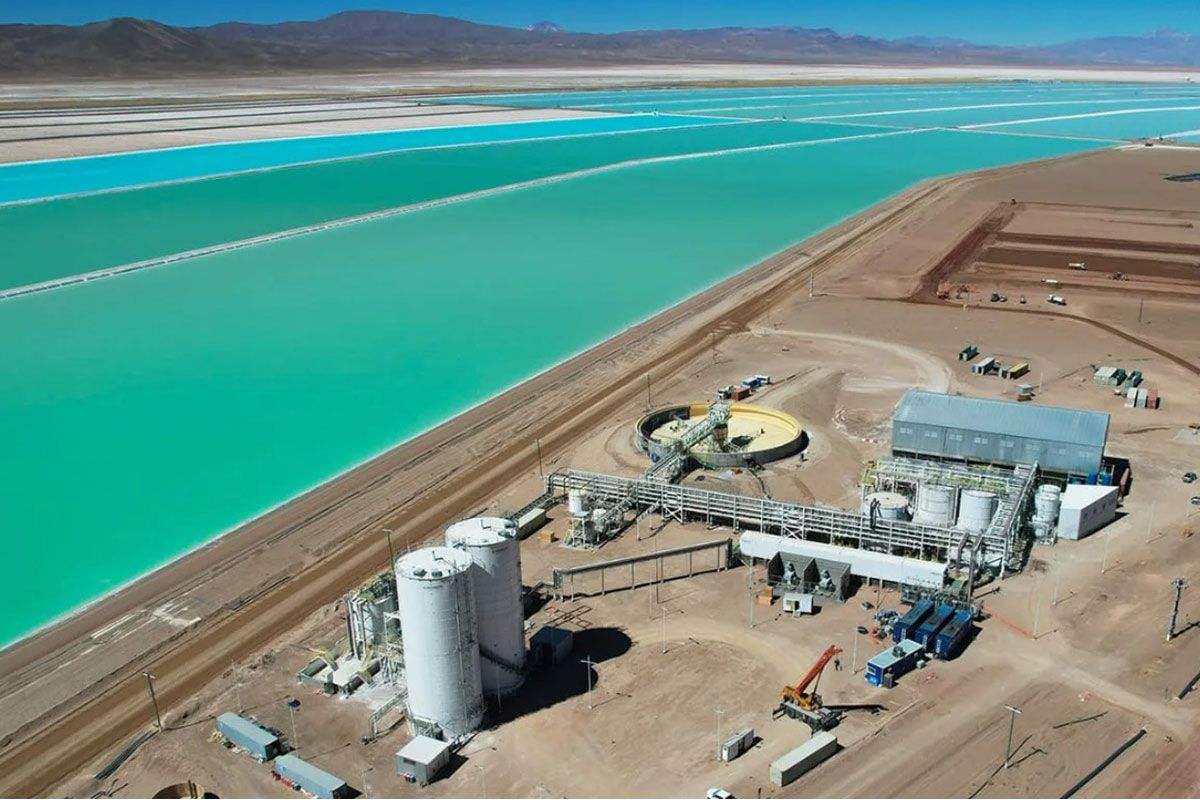
The energy frontier (Lithium): The “green transition” legitimizes a new extractivism. The North reduces emissions while intensifying extraction in the South, where environmental and social costs are concentrated. Sustainability thus operates as a mechanism of global inequality. The result is a sacrificial economy: watersheds are degraded to sustain electromobility and the dispossession of territories and communities is consolidated.

Selective deprotection
The State withdraws its regulatory shield from strategic sectors of the common good—water, health, privacy—to facilitate the accumulation by dispossession. It is a designed asymmetry: maximum protection for capital flow and intellectual property; zero protection for the hydrological cycle and the sovereignty of the bodies. This institutional renunciation shifts the environmental and biological risk towards the population, ensuring the viability of corporate income.
Privacy Mining (Data and Health):The digitization of public health under private property standards establishes a symmetry between mineral extraction and the capture of biometric data. This process converts the biological record into a tradable asset, where intimacy and genetic information is integrated into the value chain of large technology corporations.
In this scenario, the dispute over data infrastructure takes on a strategic nature. Today the data —biometrics, relational and mobility— are accumulated by the transnational private sector without effective counterweights. Its recognition as collective heritage implies limiting this appropriation and promoting forms of social control over technological architectures and data flowspreventing the ongoing transfer of sovereignty from becoming irreversible.
A holistic view of dispossession
The intersection between glaciers, lithium and health reveals the map of the new dependency. The privatized and deterritorialized data infrastructure nullifies any possibility of health autonomy.
The panel organized by JPMorgan Chase in New York —where national officials shared a table with executives from Rio Tinto and McEwen Mining to debate the ‘unlocking the mining frontier’— constitutes the foreign policy of extractivism made visible. Economic self-determination is impossible when the material basis of life—glacial water—remains mortgaged to sustain the global electromobility value chain.The approval of this regulatory framework seals the transition towards corporate governance, where the national territory is reduced to a sum of resources at the service of international logistics.

Uniting these processes constitutes the first act of intellectual resistance in the face of a project that seeks the fragmentation of political consciousness and opens the possibility of contesting, from organized territories and a sovereign policy, the control of water, resources and data infrastructures.
The advance on the glaciers works as a environmental subsidy for lithium. The capture of health data—biometric records, medical records, genetic information of entire populations—operates as a biopolitical subsidy for him surveillance capitalism. Everything under the architecture of a state who has delegated his ability to sovereign decision. This is how an economy of total extraction is configured: of land, water and bodies under a rationality that converts life itself in resource.
The contemporary conflict is organized around the comprehensive control of living conditions: the water that sustains ecosystems, the minerals that structure the energy transition and the data that encode biological existence. In this convergence the architecture of power in the 21st century is defined.