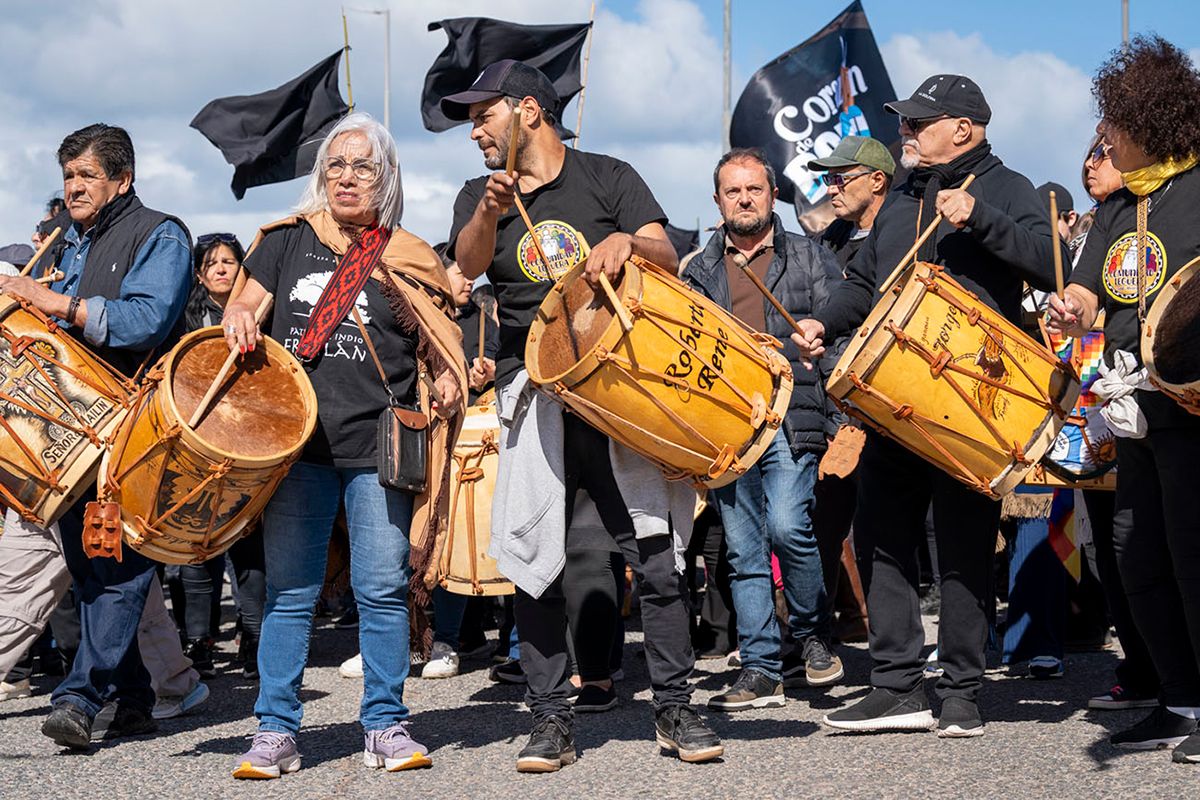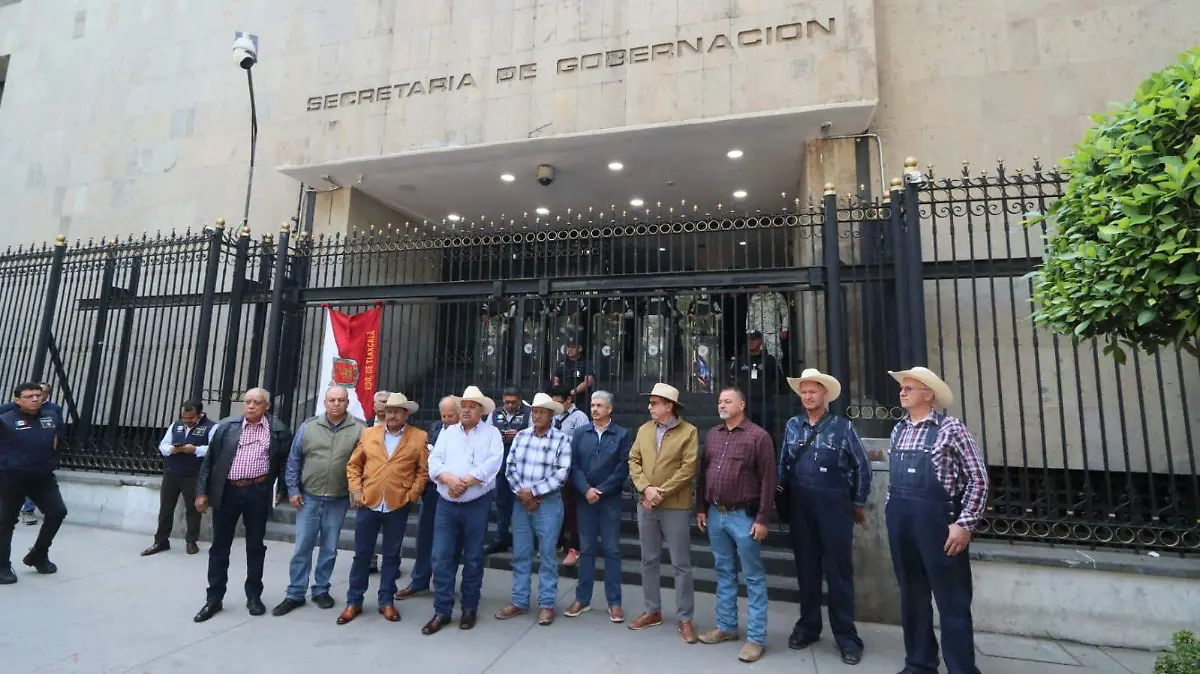
The withdrawal of agricultural and transport organizations from the Ministry of the Interior marks the end of the dialogue after the conditioning of the federal authorities, who demanded the end of blockades to negotiate. This institutional position has led to the immediate reactivation of national mobilization plans.
You may also be interested in: Strategies in the critical phase of drought and heat in Yucatán
Failure in the technical table and eviction of the Cobián Palace
The dialogue between the Federal Government, the National Front for the Rescue of the Mexican Countryside (FNRCM) and the National Association of Transporters in Mexico (Antac) was definitively fractured after four hours of waiting in the vicinity of the agency. Although the protesters’ commission agreed to reduce its representation from 60 to 40 members to speed up entry to the premises, internal officials issued a last-minute statement that altered the conditions of the security and negotiation protocol.
The explicit demand to remove the active blockades in various parts of the country before beginning the exchange of proposals was received as an imposition. The sectoral leaders interpreted this demand as a violation of mutual respect and an annulment of the minimum bases for political understanding. Given the lack of guarantees, the representatives left Abraham González Street to reorganize the logistics of the national strike that began last Monday.
Axes of paralysis and security deployment
The operational situation on the roads and the official response are summarized in the following critical points:
- Persistent conflict points: Strategic blockades are maintained on the Veracruz-Mexico City highway, in addition to an active presence in Tlaxcala, Chihuahua and Sinaloa.
- Breakup in the North: The Chihuahua leadership reported an absolute loss of contact with the Executive, denouncing a lack of respect that makes it impossible to resolve the conflict in the short term.
- Police deployment: Within the framework of the 107th death anniversary of Emiliano Zapata, access to the Ministry of the Interior was guarded by elements of the National Guard with anti-riot equipment.
This display of public force was described by the producers as a sign of political closure, contrasting with the historical symbolism of the date for Mexican agrarianism.
Protest logistics and communication routes management
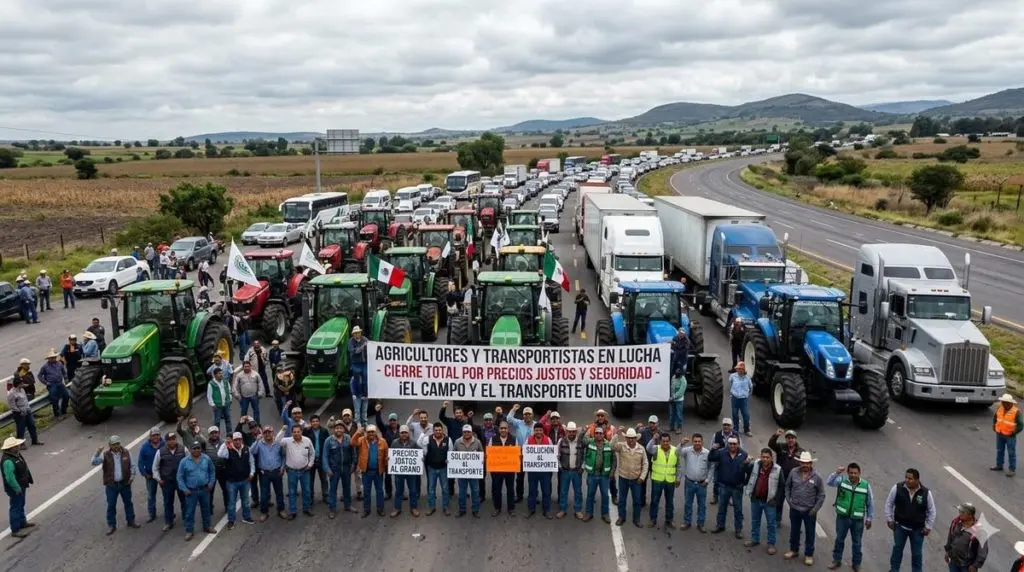
The mobilization strategy in states like Sinaloa has focused on the liberation of toll booths. This measure sought to maintain vehicle fluidity to demonstrate willingness to dialogue without giving up physical protest. However, the federal administration insists on the total dismantling of the presence on the roads as a prerequisite, a condition that the organizations categorically reject until they obtain tangible solutions and real financing for the sector.
Threat of interference in international events
The stalemate in the negotiations, which has dragged on for four months of failed attempts, has escalated into a warning of radicalization. Movement leaders pointed out the disparity in the allocation of public resources, criticizing the prioritization of massive investments for globally visible events while the field faces a critical lack of economic support.
If there is no immediate budget reallocation, the organizations have raised the possibility of directly interfering with the logistics of the next World Cup soccer tournament. The position of the sectors is clear: the survival of the national productive apparatus must be above international sporting commitments.