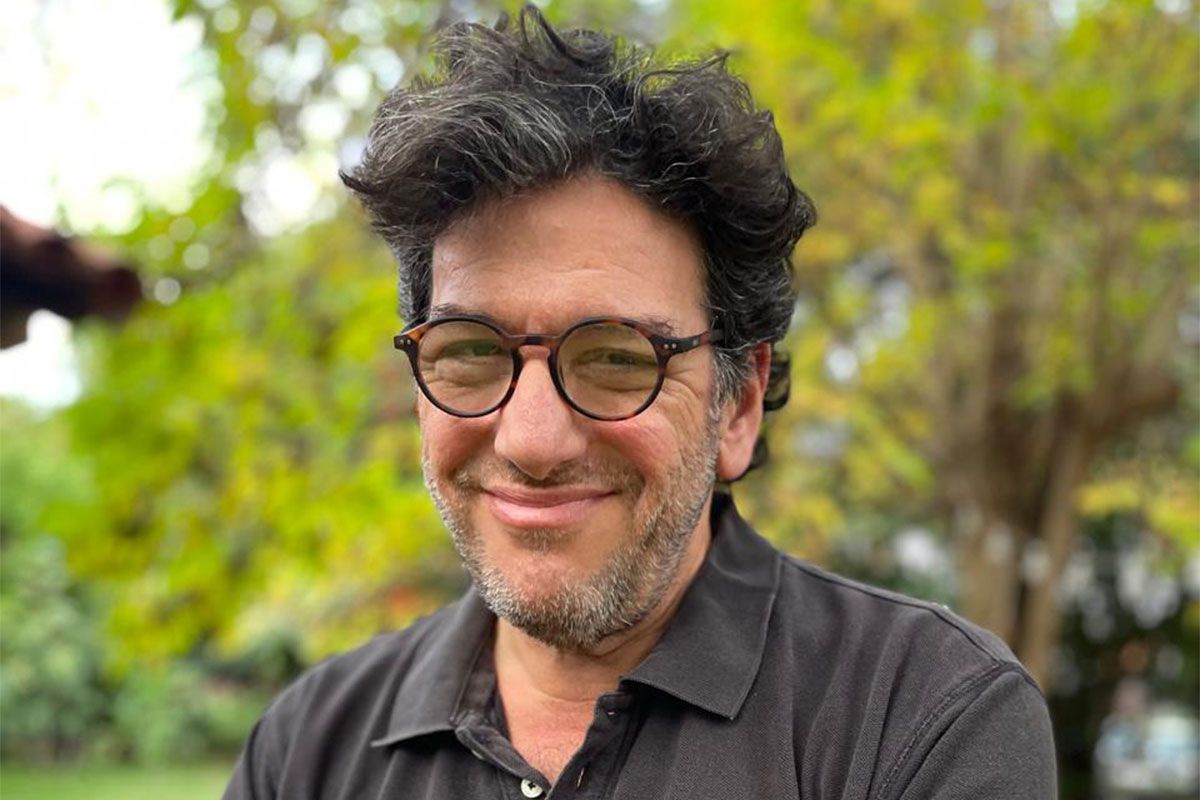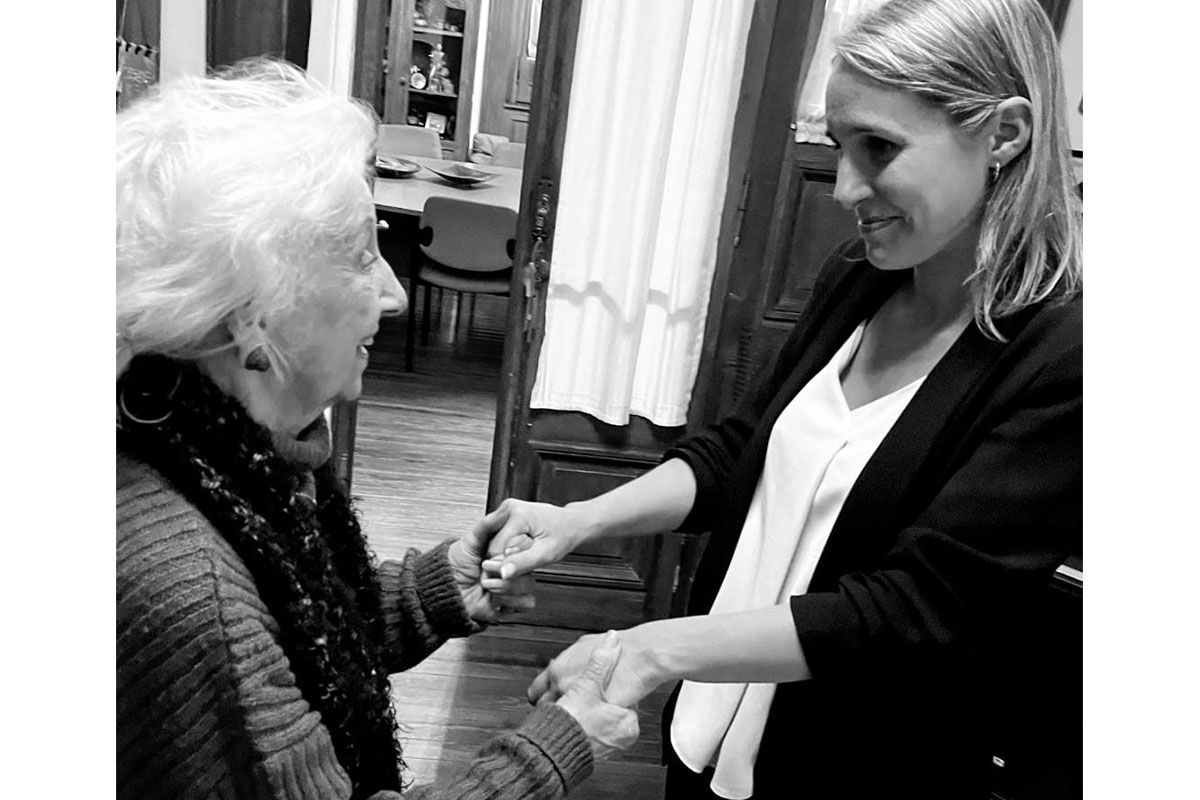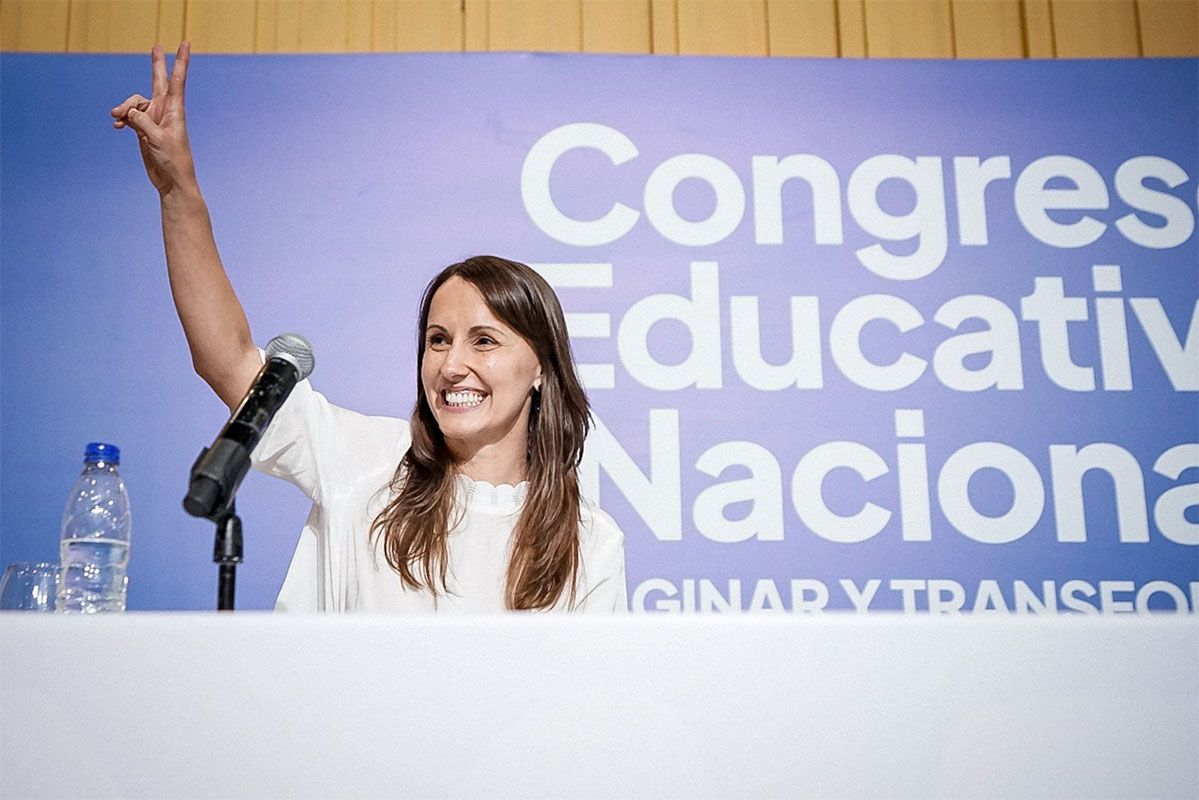
For the first time after 19 years of PRO hegemony, Peronism presides over the Education Commission of the Buenos Aires Legislature. Such responsibility was left in the hands of the Fuerza por Buenos Aires legislator Maru Bielli, who took office during the week and on Thursday premiered her mandate in the first session of the year in the facility. Time He spoke with Bielli and in one of his reflections he focused on the situation of Education workers: “In the richest city in the country, the teacher salary is in the middle of the table at the national level.”
Bielli is a Sociologist, teacher and a fervent defender of public education. Author of more than 600 projects since taking office in 2019, activist of the political organization El Hormiguero and critic of the educational emptying carried out by Macrism.
–Taking into account that the PRO and LLA make up a government alliance, what similarities and differences do you find between the Milei government and Jorge Macri in the City?
-They are governments that almost always appear camouflaged, in fact behind both of them is Mauricio Macri. The head of government strives to be a good student of Javier Milei and that is what we Buenos Aires men and women suffer from. Even in the face of economic policy definitions made by the national government, but Jorge Macri goes for more. For example: since he took office, the subway has increased by 1,600%. The City, which due to its resources could cushion the impact of economic policy, on the contrary, deepens it. And on top of that they are in a communication battle for who is crueler, stronger with the weak. They seem to be in a desperate race over who represents this hate speech more. But society can cultivate its sad passions only for a while, it cannot feed itself. Trying to cover the sun with your hand (the impact of your economic policies with accusations of certain sectors, creating scapegoats) that has short legs.
-And in educational matters?
-There are some differences. It is very clear that the Milei government does not place any value on the school. It is an unschooling project. Milei intends to discuss a law (called “educational freedom”) that takes our educational system to a situation prior to Law 1420 of 1884, where the governing nature of the State in the sector was established. Every political project brings with it an educational project. And although in our country there were periods in which school, university and science were considered fundamental pillars for the development of Argentina and others in which this was ignored, belittled or defunded, the very existence of the educational system was never in discussion, at least since the return of democracy. This is what Milei is proposing. And I think that’s not only reflected in your bill but also in the drastic reduction of the education budget in half in two years. In the city, if one sees the budget evolution, it is clear that in almost 19 years of government, education was not a priority for the PRO. There were many attempts at educational reforms with pompous names that did not work in practice, some even overlapped the others.
-What is the most urgent thing that the Buenos Aires educational community needs?
-We have enormous educational gaps, linked to access and the type of offer, unaddressed inequalities between the north and south of the city. We have a very poor quality school feeding system. We have evidence that shows a fairly widespread stagnation in the evolution of learning in general and a major problem in mathematics.
-And very low teacher salaries.
-Yeah. In the richest city in the country, the teacher salary is in the middle of the table nationally. In a city that knew how to offer permanent training for teaching excellence that was completely defunded. In a city with an enormous deployment of the national scientific and technological system, there is no link between it and the school. With enormous challenges to accompany diverse trajectories, to generate real processes of inclusion. Added to these historical debts are the challenges of current phenomena, the drop in the birth rate and the new digital culture, which affect, among other things, the way of being at school.
-Jorge Macri began to close primary grades and kindergartens with the argument of the low birth rate. Are these closures justified?
-I think in some cases yes, and in others no. Nobody intends or can maintain that children have 4 classmates in primary school. It’s not good. What we have been proposing in this sense is that the phenomenon of falling birth rates, which is not new, which has been going on for ten years and already has an impact to a greater or lesser extent on a large part of primary school, has to be addressed intelligently. What do I mean by this: in 10 years we have half of the children in schools. A brief look at the phenomenon can lead to the reasoning that half the resources are then needed. And the truth is that if we all agree that our educational system has flaws, I think that no one can think that this is not a good opportunity to try to address them and try to solve them. There is no excuse.
-Should we focus on improving educational quality?
-It is time to think about what is the best coverage for the initial level that also allows the development of a comprehensive care system, think about how full-day coverage is provided where it is needed, how resources are used to guarantee excellent nutrition, what new roles and functions the school needs: pedagogical couple, fewer students per teacher, tutors who accompany the trajectories, health professionals with greater ties to the school. Rethink the infrastructure, so that children have more sky and more greenery, children cannot lose space in the city. Even develop an even better technical-professional education system that provides an offer of careers in demand by this phenomenon linked to care of the elderly. In short, many things that require a little audacity and imagination but that allow us to navigate the decline in birth rates taking advantage of the circumstances.
Rethink the infrastructure, so that children have more sky and more greenery, children cannot lose space in the city. Even develop an even better technical-professional education system that provides an offer of careers in demand by this phenomenon linked to care of the elderly. In short, many things that require a little audacity and imagination but that allow us to navigate the decline in birth rates taking advantage of the circumstances.
Violence in schools
–After the murder of a student in a school in Santa Fe, the issue of violence in schools reappeared. What is your opinion on this issue?
-We are facing a particular event, let us remember that the last case occurred more than 20 years ago in Carmen de Patagones. I think there are many variables that come into play. Due to the evolution of the case, I think it forces us to reflect on the lives of young people and boys and girls in the digital world: there is part of their subjectivity, their recognition, their bonds that play out there. The content of these young people’s devices sometimes explains better than many other things how they feel, how they perceive themselves, what their fears are. And this is a problem that must be addressed. And not from the logic of control, but from care. Because the digital terrain is complex, undemocratic and driven by a logic that is not ideal for the socialization of boys and girls.
–And in that sense, what do you see in the City?
-There is an attempt to address the link with digitality, I think we must go deeper, discuss approaches and address other aspects of the issue: from platform regulation, to the need for this logic that prevails in digital to be a content in itself for the school that allows students to have more tools and knowledge to navigate it.
And without a doubt this has to be complemented with other aspects of the lives of boys and girls. And with the possibility also of having more and better equipment in cases where situations of violence manifest themselves at school.
-The School Guidance Teams control the different problems of the children, but their workers say they cannot cope. How could this situation be improved?
-These teams are not enough. A logic of derivation operates that even makes interventions often ineffective. It is necessary to think about another logic, from the construction of networks, but not those that arise by the will of the people but as public policy, the idea of building many more instances of support, of channels with health teams, with clubs, with libraries. We must think about the community school, in the central function linked to access to knowledge and in the countercultural role that it plays today with respect to the need to live in community, in less violent, more just societies. «