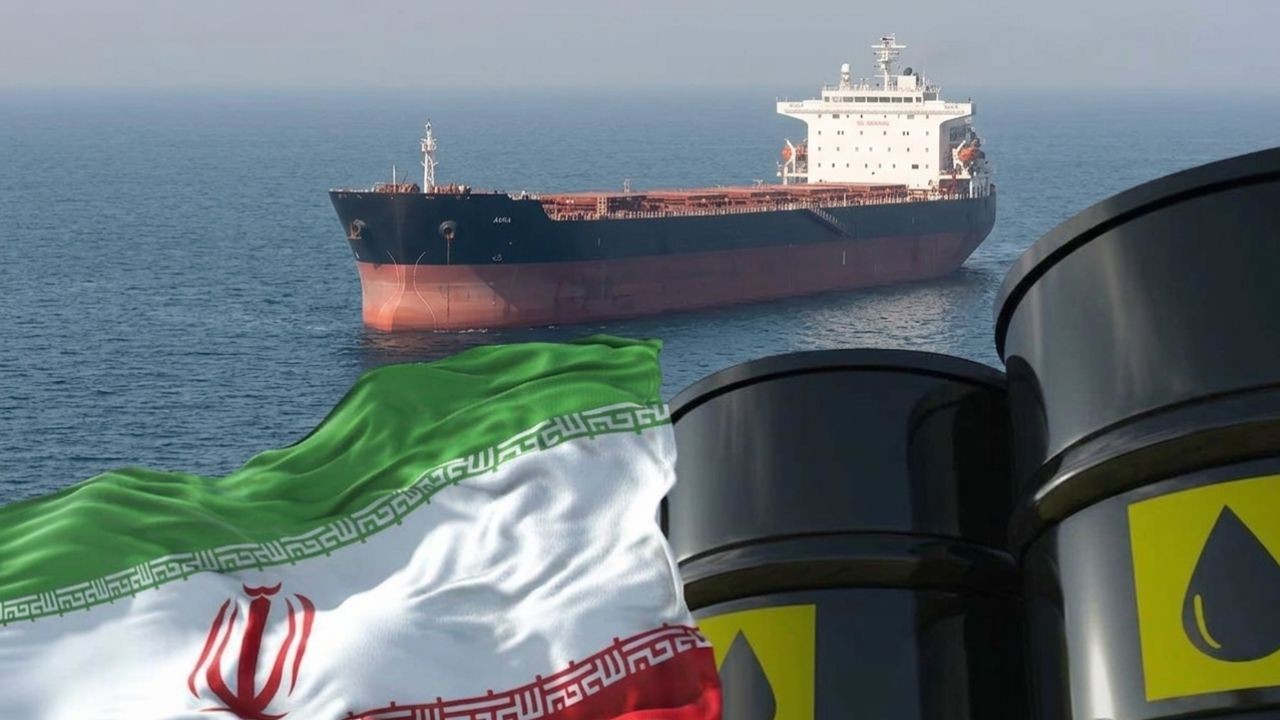
The international prices of oil registered a sharp drop this Friday, April 17with setbacks close to 12%, after Iran confirmed the reopening of the Strait of Hormuz within the framework of an agreement with the United States and in the midst of the truces in force in the region.
The decision to reopen the Strait of Hormuz immediately reduced geopolitical tension and alleviated fears about a possible prolonged interruption of global energy supplies, which had a full impact on crude oil prices.
In addition, Donald Trump announced that he hopes to reach an agreement with Iran “within one or two days” to end the war, since “there are no conflict points left.” “The Iranians want to meet. They want to make a deal. I think there will probably be a meeting this weekend. I think we will reach an agreement within one or two days,” he said in a brief phone call with the American digital media Axios.
In this context, the barrel of Brent -reference in Argentina- fell 10% to US$90after having exceeded US$97 in the previous hours and US$110 during the first weeks of the conflict in the Middle East. It is one of the sharpest daily declines since the start of the war.
For its part, the crude West Texas Intermediate (WTI)reference in the United States, fell 10% to around US$84per barrel. Despite the drop, the price still remains above pre-conflict levels, when it was around US$70, reflecting that the market retains a certain degree of caution.
The country risk remained at its lowest since February
In this scenario, Argentine assets show disparate behavior this Friday: While stocks listed in New York traded lower, sovereign bonds managed to extend their recovery in a more favorable international context. driven by signs of detente in the Middle East.
In that framework, the dollar bonds They operated with a majority of increases in the local squareled by Bonar 2041 (+0.6%) and followed by Global 2041 (+0.5%). On the other hand, the Global 2019 fell 0.1%. In that scenario, The country risk stood at 519 basis points, a decline of 16% so far this month.
The rise in securities was also reflected in the weekly balance, with increases of up to 4.5% that made it possible to reverse part of the losses accumulated so far this year. The improvement was supported by a more stable international context, following the reopening of the Strait of Hormuz and the fall in US Treasury bond yields.
However, the performance of the shares was less favorable. Argentine ADRs showed generalized falls, led by YPF (-3.8%), Transportadora de Gas del Sur (-2.8%) and Pampa Energía (-1.9%). In contrast, Banco Macro was one of the few exceptions with a slight increase of 0.6%.
At the local level, the index S&P Merval also accompanied the negative trend and fell 1.3% to 2,885,124.66 points. Measured in dollars, the drop was 1.2%, reaching 1,988.26 points. Within the leading panel, YPF once again stood out among the biggest decliners, with a decline of 4.2%.
The geopolitical background continued to set the pulse of the markets. Trump affirmed that the war with Iran is “about to end” and detailed contacts with Lebanese President Joseph Aoun and Israeli Prime Minister Benjamin Netanyahu to advance the truce. Furthermore, the White House was optimistic about the possibility of new negotiations in Pakistan.
In parallel, European powers such as France and the United Kingdom are making progress in organizing an international meeting with the aim of guaranteeing freedom of navigation in the Strait of Hormuz, a key route for global energy trade.
In this context, investors combined signs of relief on the international front with a growing selectivity towards Argentine assets, which explained the improvement in bonds—more sensitive to country risk—and the relative weakness of stocks.
Impact of the agreement and the role of the Strait of Hormuz
The movement in prices occurred after the official confirmation of the Iranian government on the reopening of the Strait of Hormuza key route through which it circulates near the 20% of the oil traded globally.
Iran’s Foreign Minister Abbas Araghchi noted that the passage of all commercial ships was “completely open” during the ceasefire period. The measure is part of the understanding reached with the United States, in parallel to the truces in force between Israel and Lebanon.
Since the beginning of the blockade, more than a month ago, the price of crude oil had accumulated increases greater than 50%driven by fear of global supply restrictions.
Energy market analysts highlighted that prices reacted with high sensitivity to both signs of escalation and detente. In that sense, the Statements by US President Donald Trump, who had anticipated that an agreement with Iran was “very close”, also contributed to tempering expectations.
Furthermore, eventual progress in the negotiations opens the door to a possible relief of sanctions on the Iranian energy sector, which could translate into a increase in global oil supply in the short or medium term.
Natural gas also adjusts
The impact was not limited to oil. He natural gas registered a slight decrease close to 1%in line with the normalization of traffic along this strategic route.
During the days of greatest tension, the partial interruption of the passage through Hormuz had generated significant increases in energy prices, due to the risk of shortages.
Strong reaction in international markets
The reopening of the strait generated a change in the climate in the financial markets, with generalized increases in the main stock markets.
In Europe, the main indices advanced strongly: Frankfurt rose 2.23%, Paris 1.99% and Madrid 2.05%while the Euro Stoxx 50 gained around 2%.
In the United States, Wall Street also reacted positively. Towards noon, the index Dow Jones climbed 2.2% to 49,599 pointswhile the S&P 500 rose 1.30% and the Nasdaq advanced 1.53%in both cases reaching new historical highs.
The rally was driven by lower risk aversion and the expectation of greater stability in energy markets.