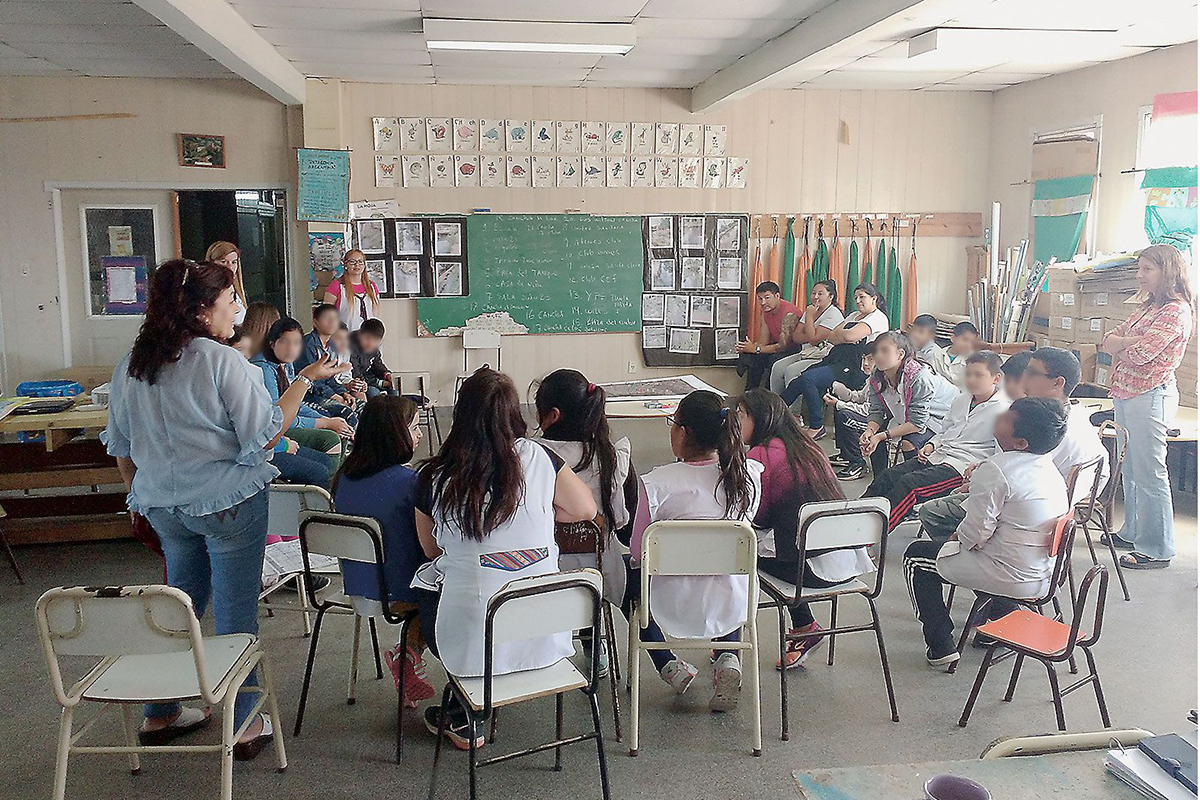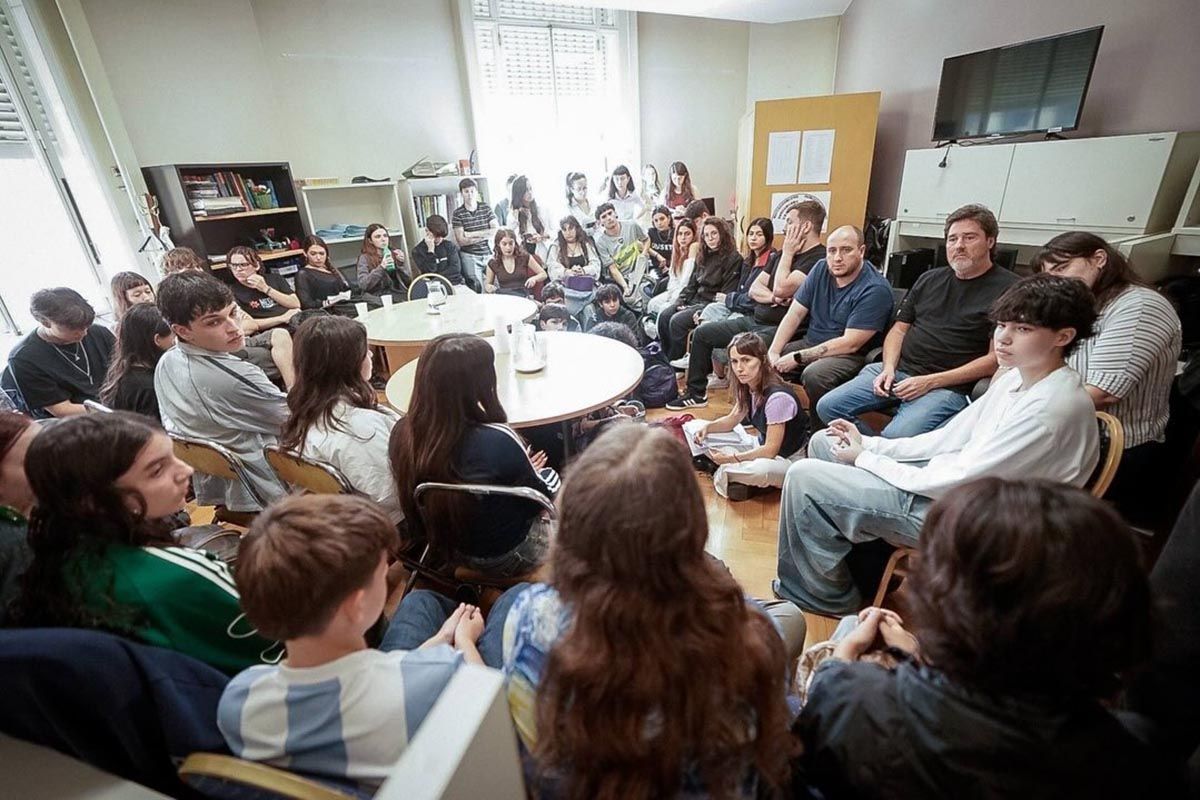
It is an issue that has been placed on the agenda and that worries the entire educational community: families, teachers, administrators and students. After the shooting at the school in the town of San Cristóbal, in the province of Santa Fewhere a student murdered a classmate, intimidating messages began to be reproduced in different schools in Buenos Aires and other jurisdictions in the country.
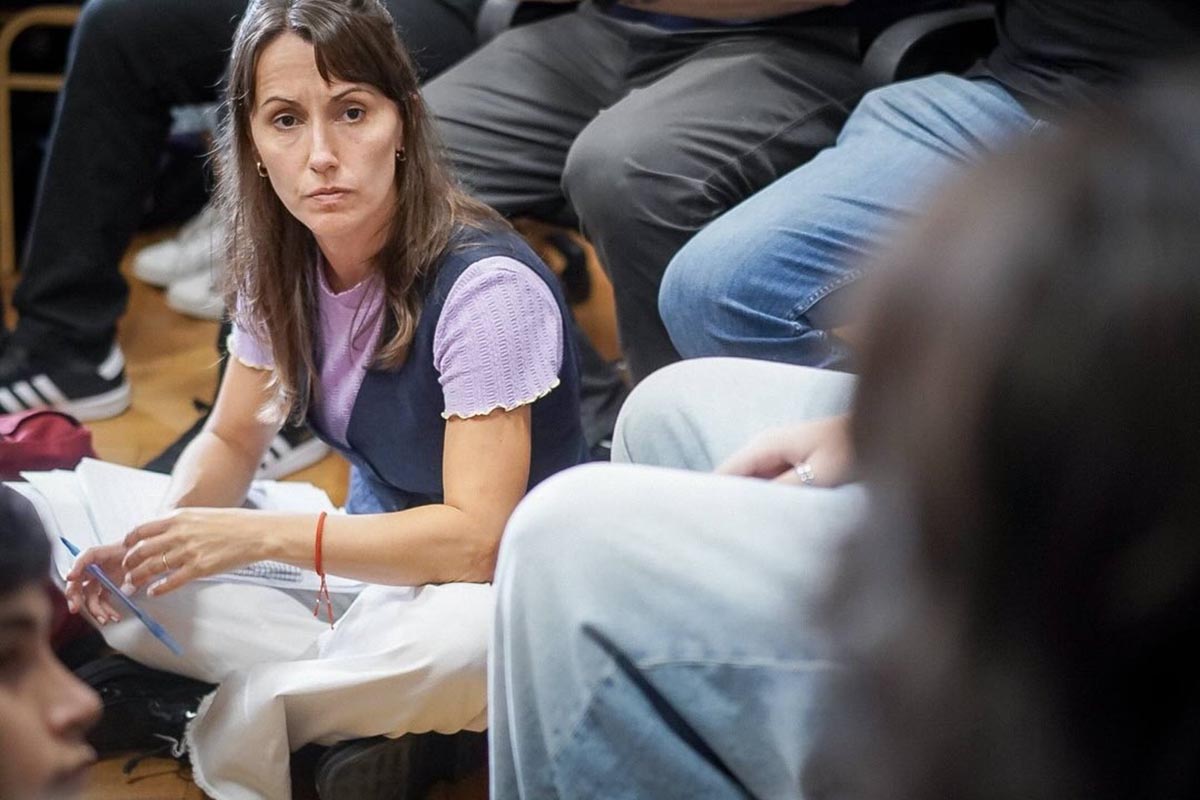
As a result of this phenomenon, initially motivated by social networks, Buenos Aires legislator from Fuerza por Buenos Aires (FxBA) Maru Biellithat chairs the Education Commission of the Legislatureopened a work space with secondary students, teachers, families and specialists to address this issue. The meeting revolved around the presence of the State, the role of social networks in the new generations and addressing the mental health of students.
“It is necessary that the Legislature and all political forces listen to the community and give a word to a phenomenon that is a symptom of many problems. We must think in two stages. First, actions in response to the urgent. Second, reflect in a complex way what this what happened in schools implies After what happened in Santa Fe, what is the link between the new generations and technology, what is happening with the approach to mental health,” he said. Maru Bielli at the start of the meeting.
What are the tools that school institutions have and which ones need to be strengthened? or incorporate; the challenges posed by violent content on social networks in terms of prevention, approach and regulation; and the necessary measures to respond to the discomfort of girls, boys and adolescents; They were the three axes around which the work meeting revolved.
“These cases are symptomatic that we have left the children alone. Families do not have time for intergenerational meetings due to the great crisis we are experiencing and the breakdown of the social fabric,” lamented the Father “Toto” of the Virgen de los Milagros de Caacupé parish of Villa 21-24 of Barracas.
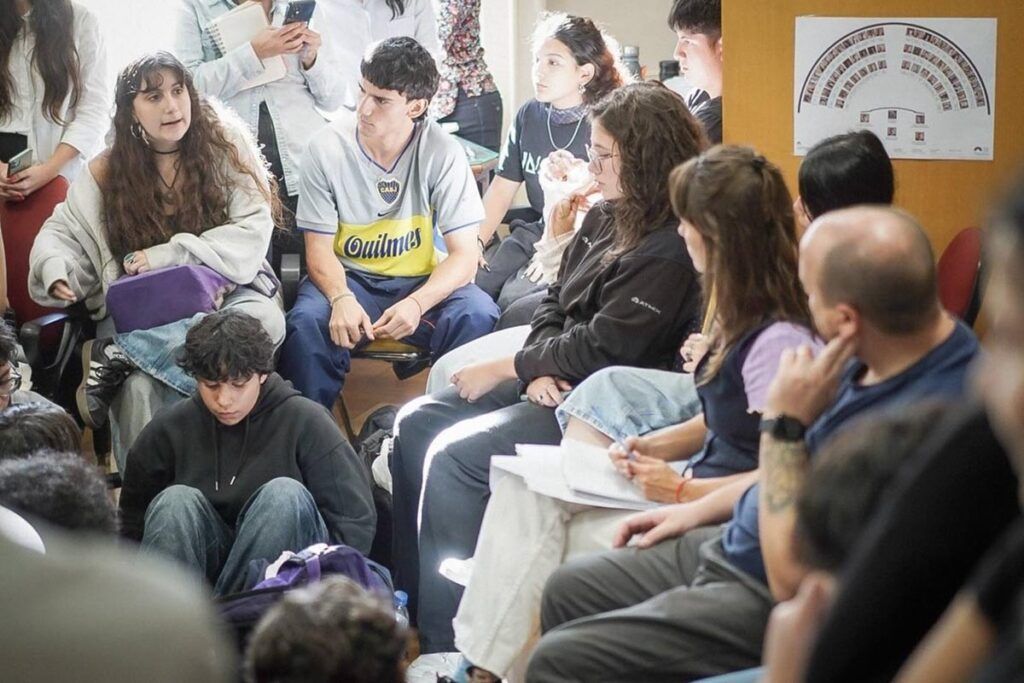
This was one of the consensuses of the meeting: the lack of spaces to listen to adolescents. “Little do they ask themselves what we adolescents need. It is time for young people to organize for our future and be protagonists of the issues that involve us,” said a student from the Buenos Aires National School.
“The State cannot trivialize what happened. The answer cannot be that it was a viral TikTok challenge”said a student from Lenguas Vivas.
The role of the State and its responsibility was one of the central themes of the meeting. They agreed that this must put mental health at the center of its public policies and the well-being of children and adolescents, which must provide more resources to schools and strengthen articulations with other actors, as well as generate new support frameworks in the face of scenarios of growing social violence.
“We cannot build bills based on the problem of the year: online gambling, deepfakes, threats. We must think of transversal devices and policies that put the words of kids at the center,” expressed Pilar Molina, coordinator of interdisciplinary teams in the Public Guardianship Ministry of CABA..
“This is not a school phenomenon, it occurs at school. Schools today are quite alone and yet they are still a great meeting space,” he said. Roxana Perazza, General Director of the Right to Human Development of the Ombudsman’s Office of the Town of CABA. At the same time, he urged adults to take charge of the difficulties when looking at and housing children and adolescents.
In that sense Juan Pablo Sabino, rector of Normal 4, said: “We do not need available adults, but responsible ones.”
For her part, Jordana Secondi, director of Middle School No. 6 of School District 5, warned about the risks of criminalizing young people. “I am afraid that we will feed the idea that schools are hostile spaces.” to be when in reality they are kind places, of care and respect.” Viviana Alonso, rector of the Higher Normal School No. 5added that the school is a place that has to be sustained on the basis of a network of trust.
Impact of social networks
At the meeting It was proposed to urgently address the impact of social networks in the lives of youth, designed so that users spend the greatest amount of time there. The need to advance its regulation to promote the care of new generations was pointed out.
“The environment in which these challenges and threats circulate is not neutral, it has a design, an architecture that stimulates compulsive use.”. Responsibility must include the platforms and the recognition that they are not immune from the content that their users upload, especially if it is illegal content,” he explained. Martín Becerra, CONICET researcher and teacher at the UBA and UNQ.
Santiago Stura, institutional communication coordinator of the Faro digital organization, explained that platforms do not invent childhood and adolescence, but they are the territory where they are processed. historical challenges typical of that age linked to belongingties and identity: “We find a very large intergenerational distance with the adult world that crosses a crisis of cognitive authority. “We must restore chronological authority and establish at what age each screen, platform and content.”
“What we are experiencing is the enormous dissatisfaction that a large part of our people have with what the State should resolve, in this case, in relation to the school, the place where Boys, girls and adolescents learn to live together democratically. Quite the opposite of social networks. We have two commitments: addressing mental health and advancing a regulatory discussion of the platforms that They have domicile in the City of Buenos Aires. We need to live up to what the boys and girls who the adult world failed demand. Politics must provide answers,” Bielli concluded.