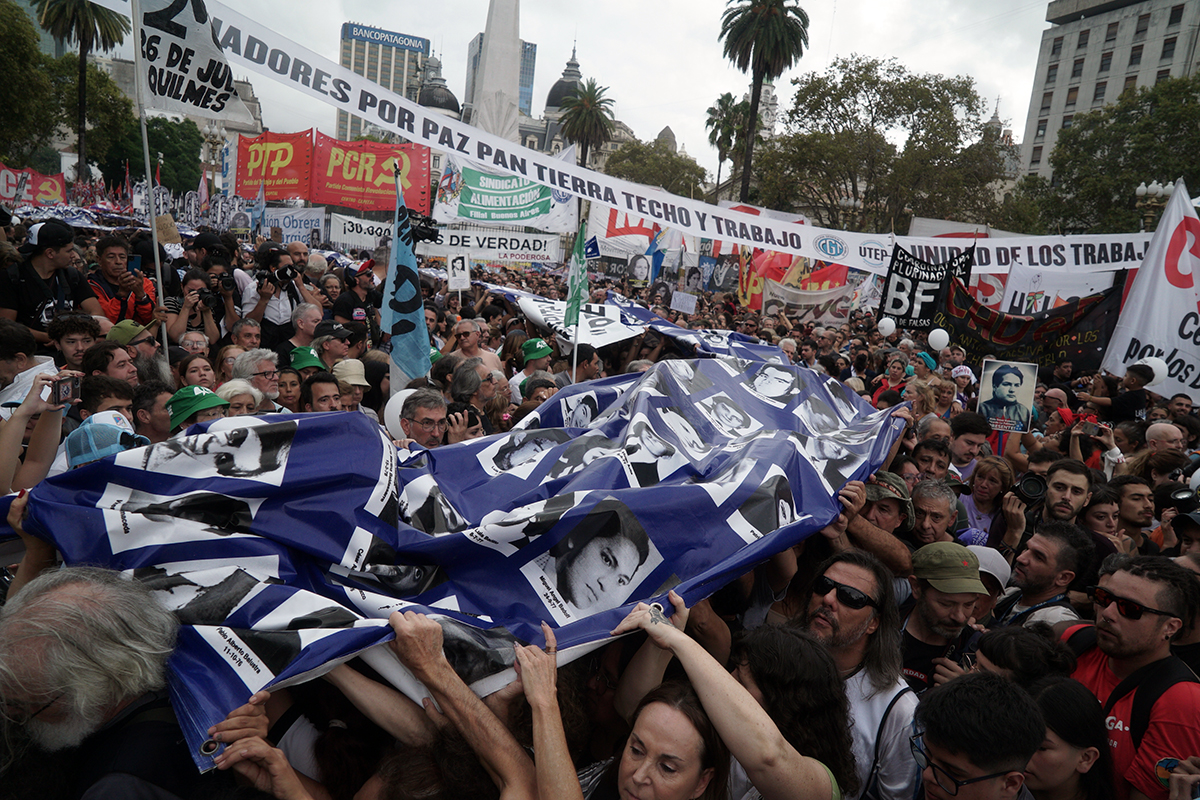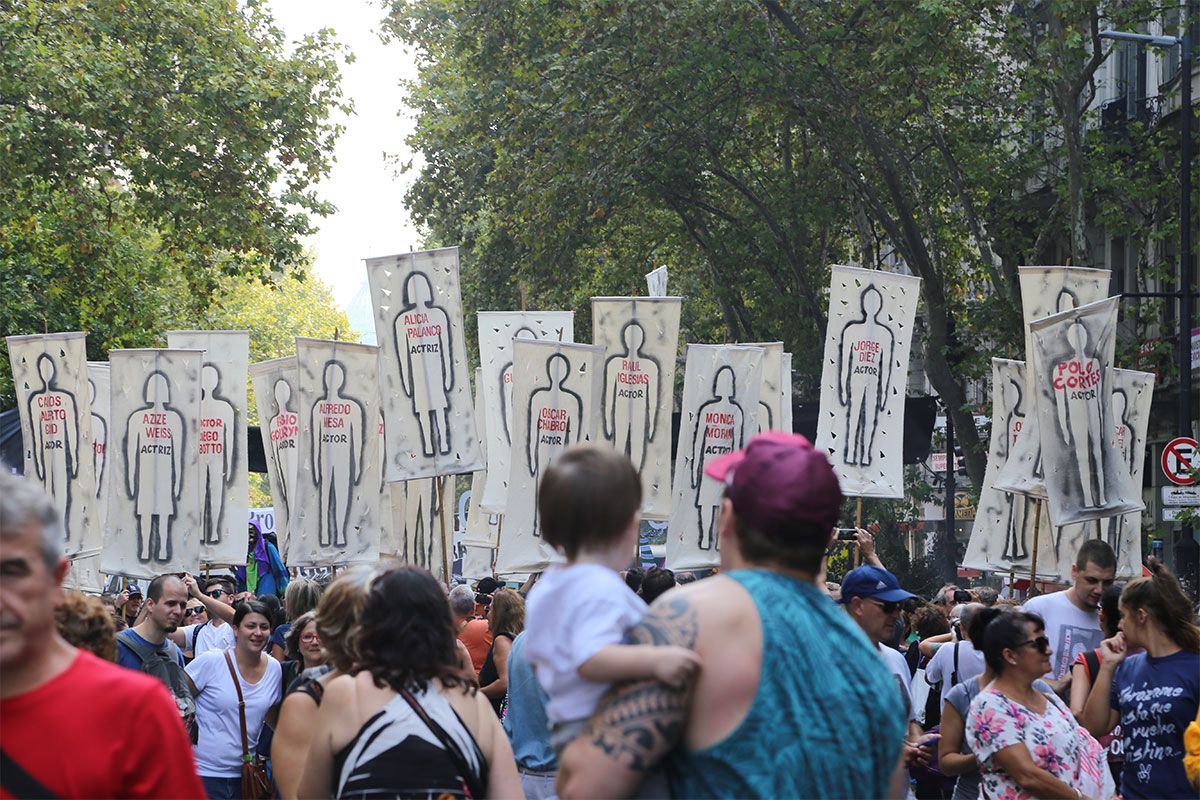
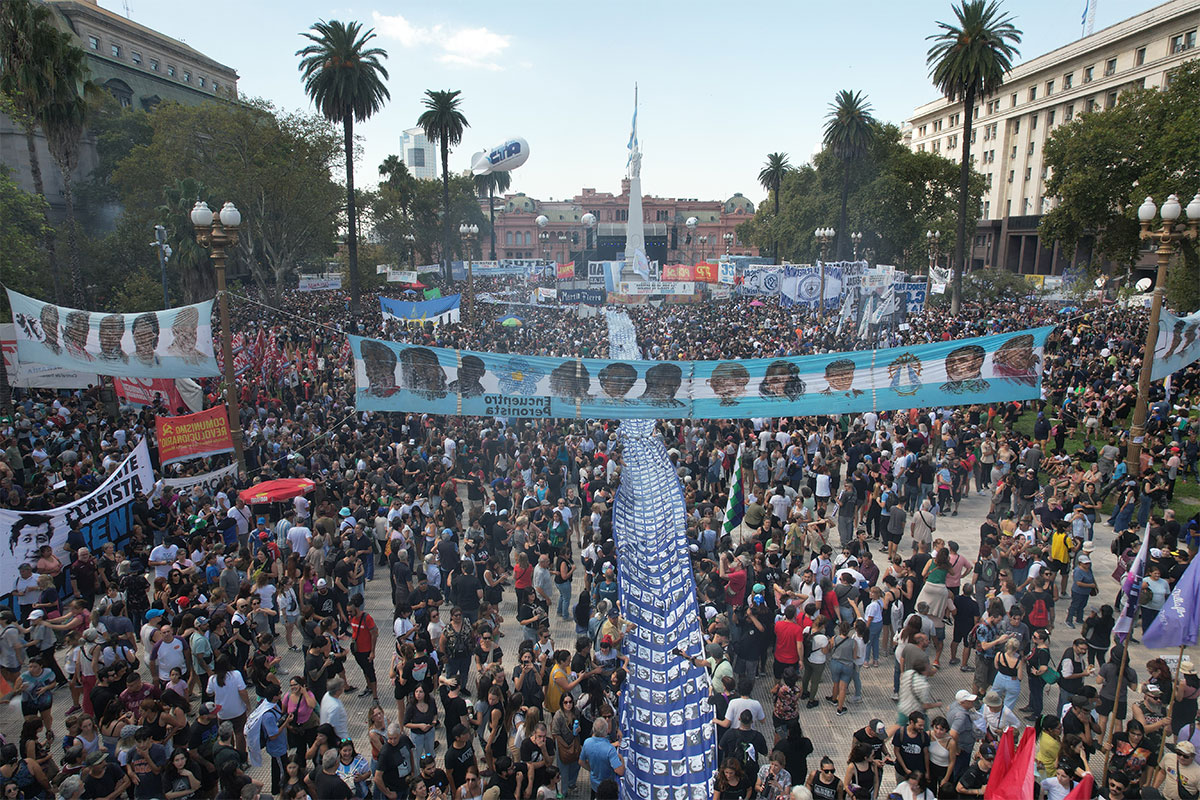
The commemorations for the 50th anniversary of the genocidal coup d’état occur when Argentina is governed by an administration that promotes denialist readings about the crimes against humanity committed by the last civil-military dictatorship. However, a majority opinion survives in society that supports the legacy of the Memory, Truth and Justice policies and positively values the fight that Human Rights organizations gave in denouncing State terrorism.
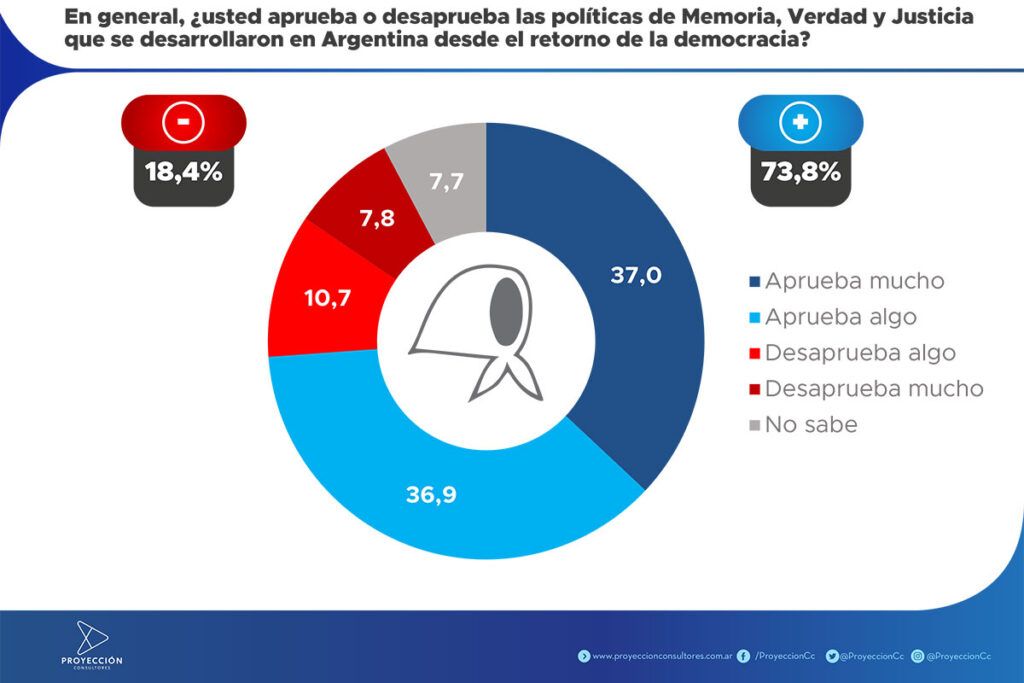
According to a survey carried out by the consulting firm Proyección, exclusively for Argentine Weather73.8% of those consulted approve the Memory, Truth and Justice policies developed since the recovery of democracy.
Furthermore, seven out of ten people consider that between 1976 and 1983 there was “a systematic plan by the State to torture and disappear people. Meanwhile, 81.7% recognize that the organizations played “an important role in the history of the country.”
Along these lines, 76.3% responded that when the slogan “Memory, Truth and Justice” is heard, they believe that it “mainly represents a way of “remembering missing persons and defending human rights,” while 11.5% estimate that it is a “partial vision of what happened in the ’70s and another 11.4% affirm that it is a slogan “used for political purposes.”
This is a study prepared based on a universe of 1,045 people that has a confidence level of 95% and a margin of error of 3.03. “These are figures that provide broader support than we expected based on the continuity of a discourse that disqualifies the role of Human Rights organizations, by stigmatizing them as “a job,” which was done during Mauricio Macri’s administration, or the denialist positions promoted by Javier Milei’s government,” he said in dialogue with Time Santiago Giorgetta, associate director of Projection.
The figures of the survey seem to contradict the official discourse when it appears that 70% recognize that the last dictatorship applied a systematic plan of human rights violations, compared to 17% who understand that there was in that period “a war between two sides, and 11.3% who only admit the existence of “isolated excesses or abuses during times of illegal repression.
The legacy of Mothers and Grandmothers
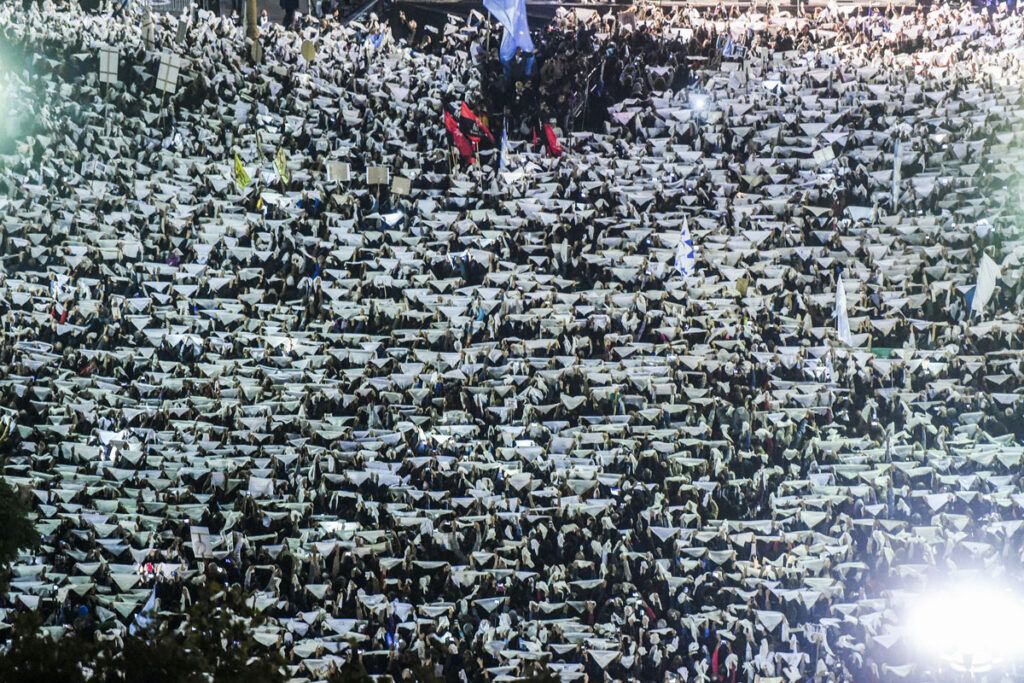
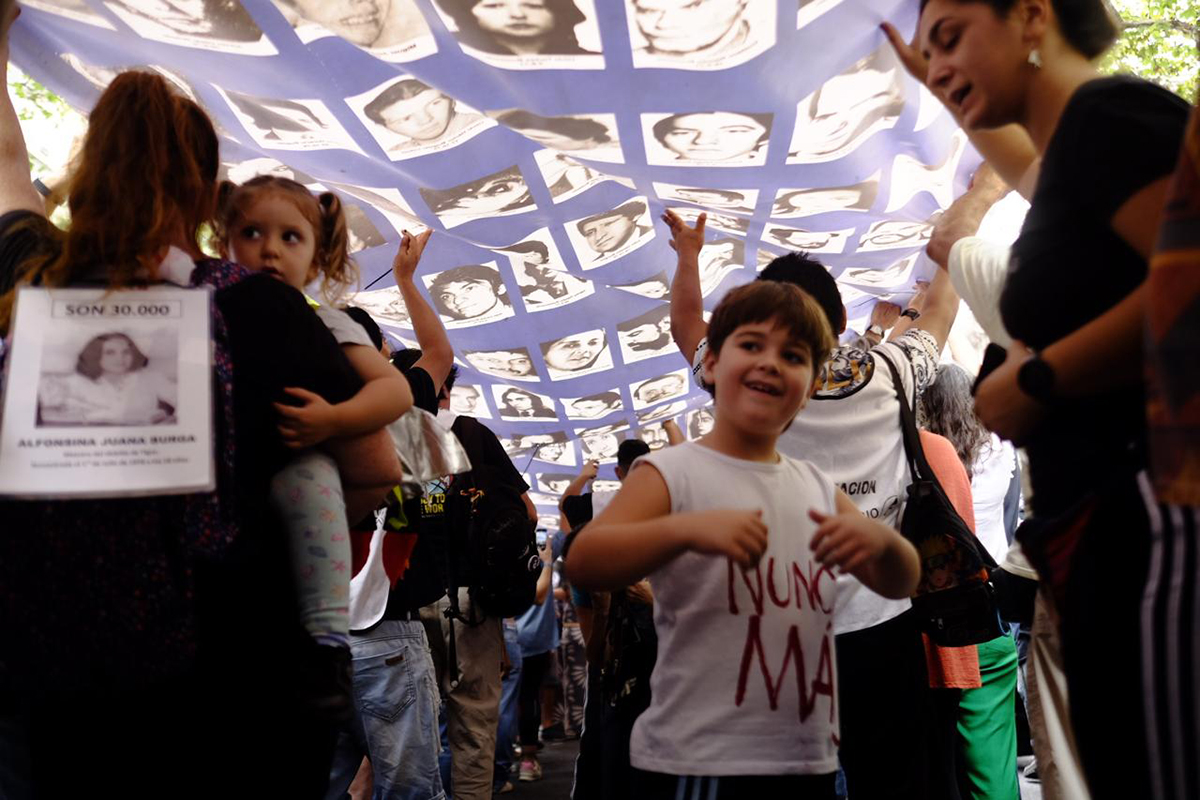
This majority opinion that endorses the legacy of the Never Again, confers a very notable value on the human rights movement that emerged in the years of the dictatorship and that still struggles to sustain the policies of Memory, Truth and Justice.
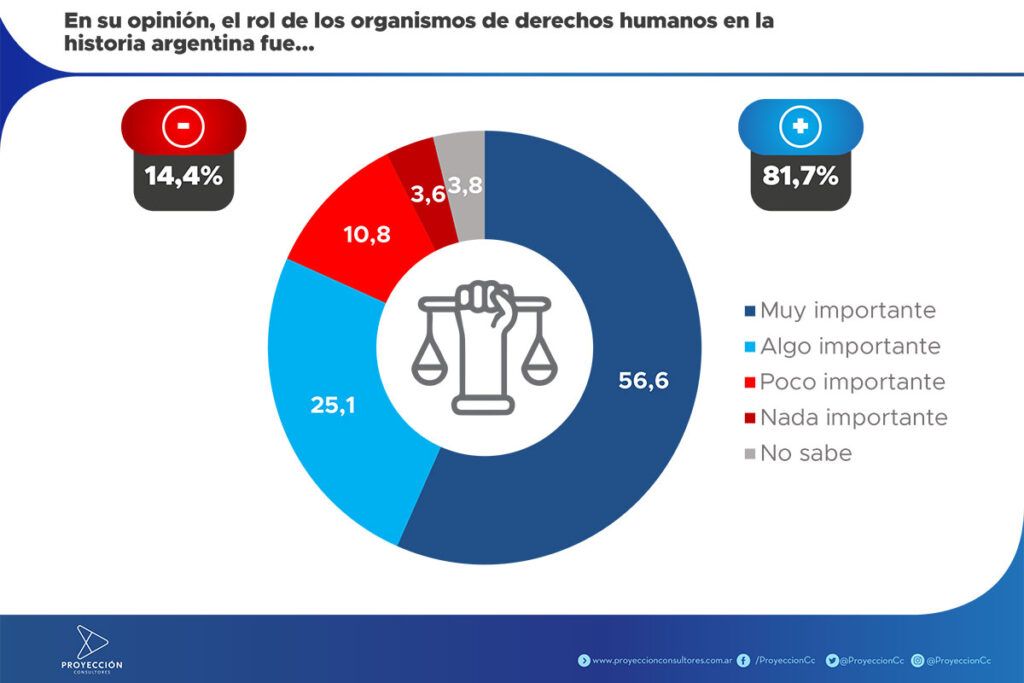
56.6% answered for this survey that the performance of the organizations was “very important, and 25.1% recognized it as “important”. Only 10.8% evaluated the role of human rights defense entities as “not very important” and 3.6% as not at all important. Only 3.8% “do not have an opinion on the matter.
In that sense, 97.5% stated that the Mothers and Grandmothers stood out mainly for “reporting disappearances and violations of human rights,” and only 1.2 interpreted that, in reality, these entities “participated in the armed struggle.”
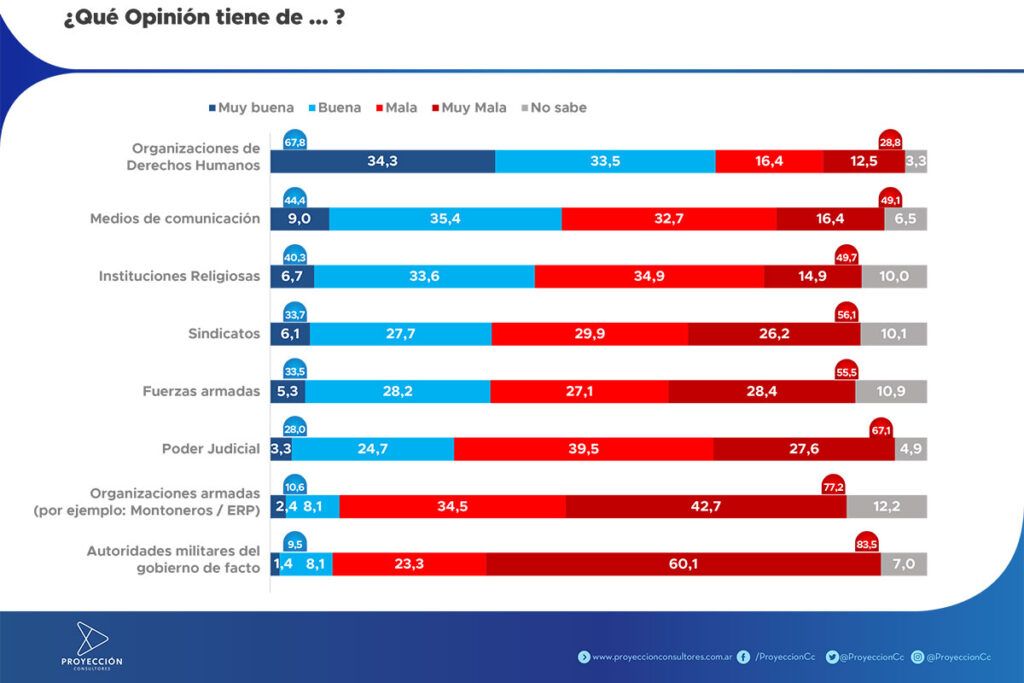
When comparing the image of the organizations with that of other institutions, 67.8% of those questioned indicated that they had a good to very good opinion of the defense entities and 28.8% had a bad or very bad opinion.
In this way, the organizations have evaluations that exceed those of the media (44.4 positive and 49.1 negative); Religious institutions (40.3 and 49.7); Unions (33.7 and 56); Armed Forces (33.5 and 55.5); And the Judiciary (28 positive versus 67.1 disapproving).
In relation to the ’70s, armed organizations have a positive opinion of 10.6% and a negative opinion of 77.3. The military authorities of the de facto government receive a 9.5 correct rating and an 83.5 disapproval rating.
When breaking down the data on the importance of Memory, Truth and Justice policies, 37 percent strongly support their development in the democratic period; a 36.9 approves something and in contrast, a 10.7 disapproves something and a 7.8 disapproves everything. Meanwhile, 7.7% responded that they were unaware of the topic.
A striking fact is the view that those consulted reported on the economic legacy of the dictatorship. 72.1% responded that the military regime mainly favored large companies; a 5.7 that benefited workers and popular sectors; 3.2 applied recipes that benefited everyone equally and 19 did not have a defined position on this topic.
The dissemination in schools of what happened during the last dictatorship has overwhelming support among those surveyed: 92.1% support teaching what happened with State terrorism and only 7.9 are opposed.

A very similar consensus
A survey carried out last week by the consulting firm Zuban Córdoba showed assessments and results that express a majority rejection of state terrorism and the last military dictatorship.
When faced with the phrase “the civil-military dictatorship that governed Argentina between 1976 and 1983 was a period of human rights violations, economic crises and lack of freedoms”, 68.6% of those surveyed responded in agreement; 18.6 rejected it and 12.8 said they did not know.
The striking thing is that, based on the vote in the last ballot, those who opted for Milei in 2023 endorse this phrase by 56.6% compared to 31.3 who think the opposite. Only 11.9 responded that they did not have a clear position.
“Beyond the “cultural battle” that the ruling party claims to be waging, opinions favorable to democracy are verified in the collective memory,” interpreted Gustavo Córdoba, director of Zuban Córdoba.
This report coincides with the results of a study by the Pulsar observatory of the UBA and Cels: 71 percent consider that the last military government was bad and very bad. While a 19 estimates it as average and only a 7 rates it between good and very good.
The survey prepared by the consulting firm Dynamis for the Amnesty International organization reports that 75% of young people between 16 and 30 years old consulted reject the possibility of a pardon or pardon for military personnel and members of the security forces convicted of crimes against humanity. Only 19 endorse it in a context with versions about the possibility of a pardon by the government for those responsible for the genocide. It is a fact that undoubtedly represents a defeat in the so-called “cultural battle” waged by the ruling far-right.
Democracy and political spaces
The assessment of democracy and the validity of the rule of law from 1983 to date has broad support. The striking fact of the Projection work emerges when asking what candidate and political space they relate to democracy. 26.7% of those consulted identify the term with the figure of Governor Axel Kicillof and 20.7 with President Javier Milei.
In that sense, the FIT representative, Myriam Bregman, scores 11.2; Vice President Victoria Villarruel a 5, LLA Senator Patricia Bullrich a 3.9; the governor of Santa Fe, Maximiliano Pullaro a 3.2; the head of the Buenos Aires Government Jorge Macri a 2.6 and the president of Córdoba Martín Llaryora a 1.3. Meanwhile, 25.4 do not identify with any leader.
Regarding the political spaces most related to the word democracy, those questioned responded that 30.8% identified this noun with Peronism/Kichnerism, 23.4 with LLA; a 7.2 with the PRO; 6.5% relate it to the Left Front and 3.5% relate it to the United Provinces. A 28.7 does not relate the term democracy to any political force.
Regarding the continuity of the democratic system, 70% consider that it is a legal system that “has problems, but a dictatorship is no longer possible.”