Fifty-one years ago, a year before the civil-military coup, the Argentine working class showed a sign of political determination that it had lacked until then. During the days of June and July 1975, including a general strike, he carried out a power challenge: he demanded the resignation of the factotum of the government at that time, José López Rega, and a change in the economic direction of Isabel Perón after the Rodrigazo.
But the claim for power was not accompanied by a fight for that power, which continued in the same hands that held it. The coup was the response to the workers’ and popular challenge. Hence its violence and cruelty: the military government had to root out those who had questioned the power of capital.
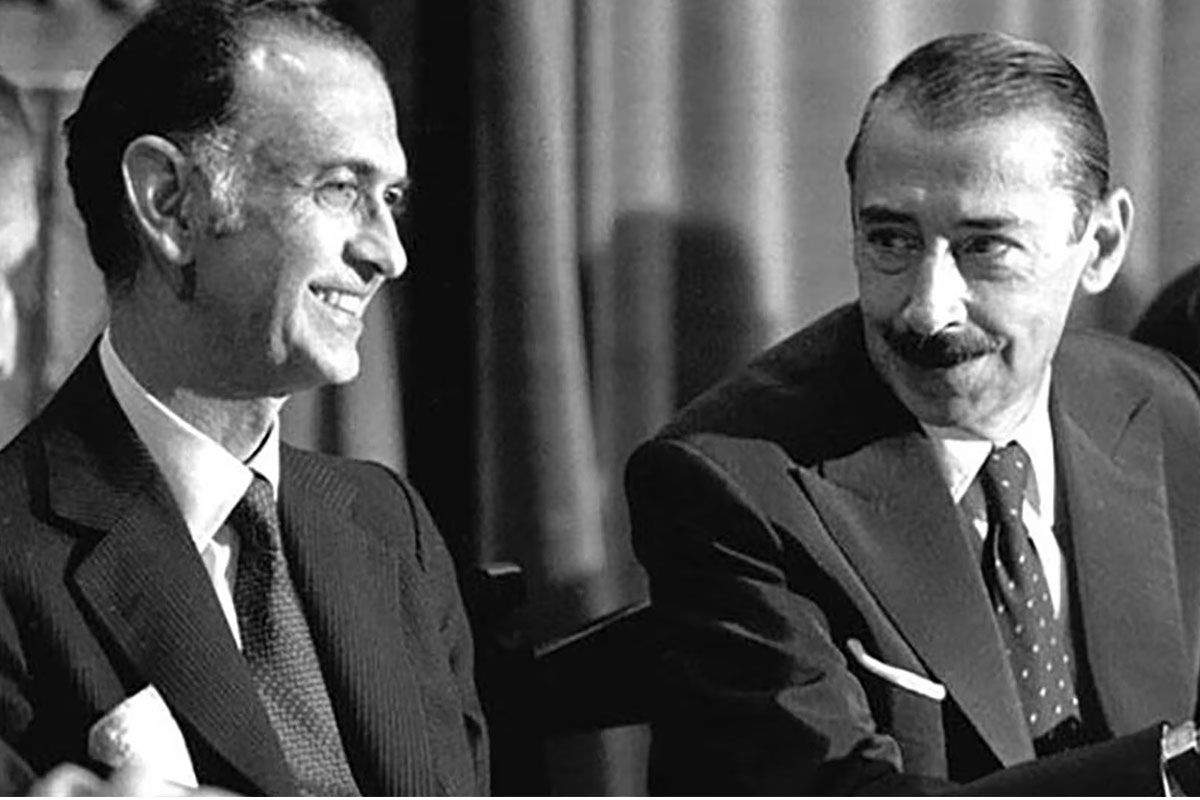
In some way, the modification of the country’s economic structure responded to that same objective, which was felt as existential for the entire employers’ association. Some segments of it, such as the industrial sector, maintained their support without fissure until it became unviable, after the Malvinas war, despite the fact that this change had weakened it compared to others, such as banking, insurance, agriculture and companies with contracts with the State, especially energy companies.
in his book Argentine economic crisisJulián Zícari highlights that “the general guidelines of the dictatorship were marked by class revanchism.” As now with the government of Javier Milei, it was proposed that populism would never return “never again”, so it faced economic restructuring that would allow that objective.
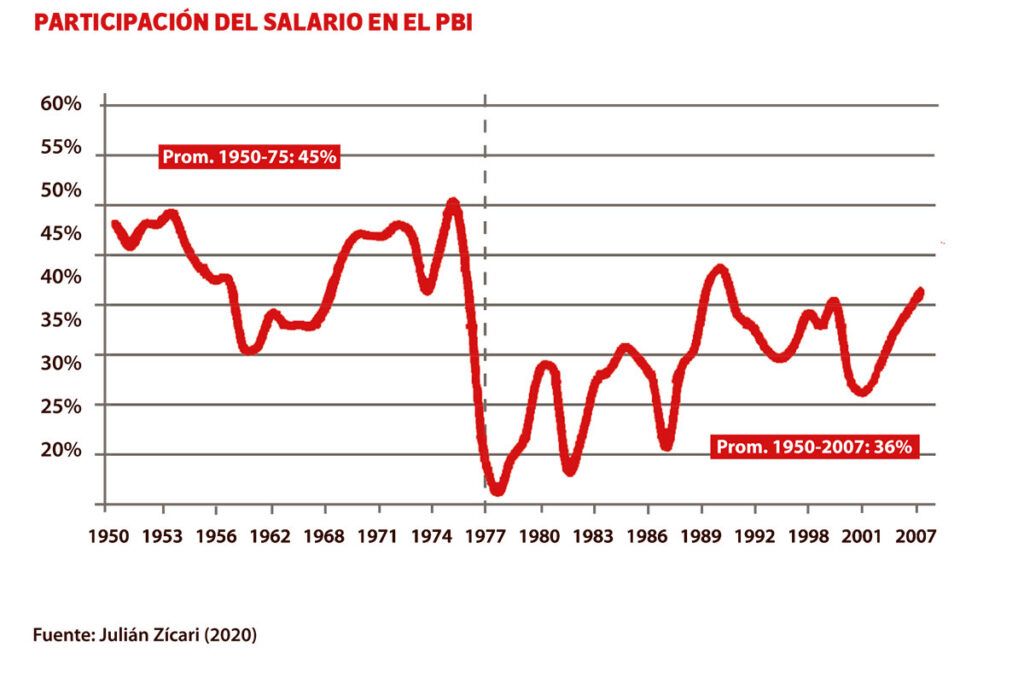
What heterodox academia calls “the new pattern of capital accumulation based on financial valorization” was, in reality, the consequence of the plan that aimed to disarm workers’ power. In addition to their physical extermination (one in every three missing people was a worker), the plan sought to subjugate them through hunger: by the simple expedient of allowing a bizarre increase in prices and a freezing of salaries, the wage participation in the GDP collapsed by half, going from 50% in 1974 to 25% in 1977, although it is worth clarifying that the Rodrigazo did a good part of the dirty work (see graph).
Eduardo Basualdo characterized this fall as “the deepest reduction in real wages in Argentine history” in his book The Bank of the Argentine Nation and the dictatorship.
This transfer of income – explained Basualdo – was key because it generated the surplus that allowed the subsequent financial valuation through the indebtedness of the economy.
The fall in the industry’s participation in GDP also played a role in this transfer, which is clearly seen after 1975.
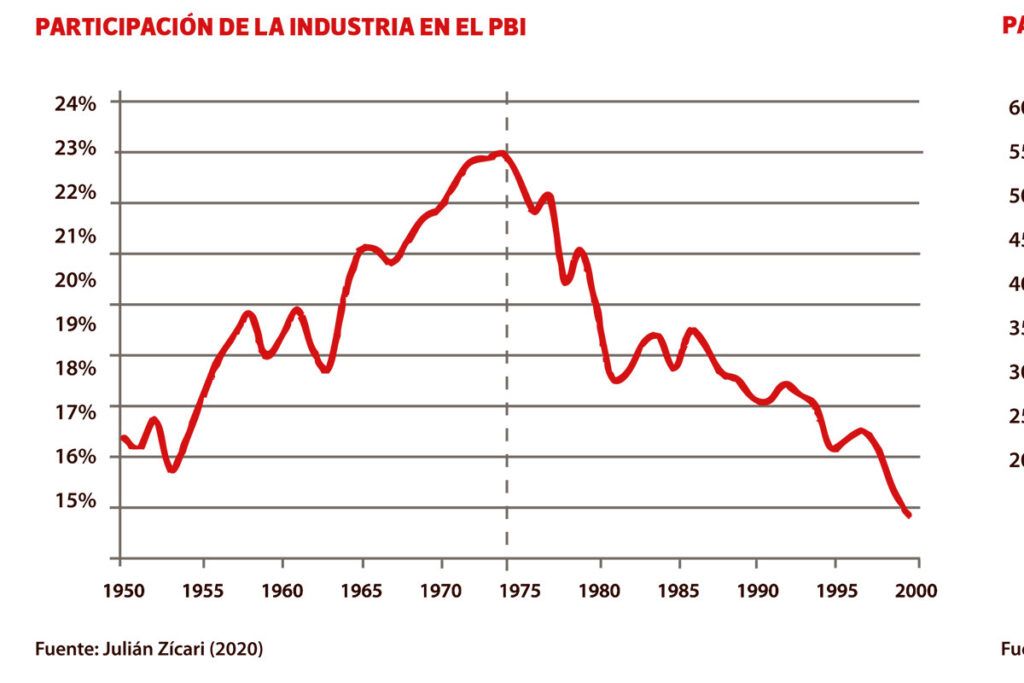
In other words, the poverty of the workers and the fall of the industrial product gave rise to the surplus that, through the mechanism of debt – and the flight of capital – ended up in the hands of a segment of capital that until that moment had been subordinated to the previous regime: the financier, with strong links to international capital, at that time eager to enter economies such as Argentina, considered closed to foreign capital.
In order for debt (which in itself does not create value) to become the new fuel for the economy, it was necessary to impose trade liberalization, free the flow of capital to and from Argentina, lower the value of the dollar, ensure a positive real interest rate and deregulate the rest of the economy, all measures that the libertarian administration applies in 2026.
This logic was the guide of the Minister of Economy, Martínez de Hoz, but as with Mauricio Macri in 2018, in two years it showed its unviability due to over-indebtedness: it multiplied by four between 1976 and 1981, when Martínez de Hoz left his position. «