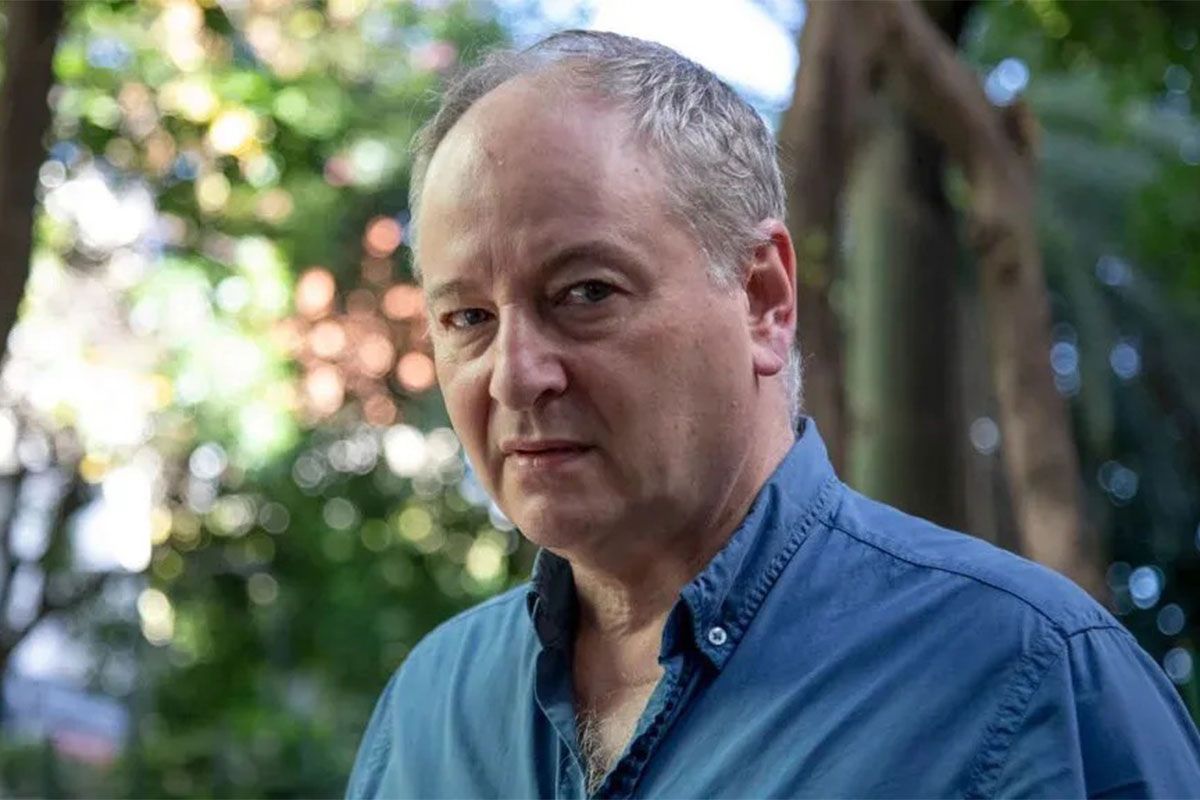
This March 24 is not just another commemoration. Beyond the forcefulness of 50 years, that same number that is so large and through which so many generations have already passed, leads us to rethink the validity of memory and the fight that knew how to build our democracy and condemn crimes against humanity. To reflect on these points, Time spoke with Emilio Crenzel, Conicet researcher and author of Thinking about the 30,000: what we knew about those who disappeared during the dictatorship and what we still don’t know (21st century, 2025) and The Political History of Never Again (21st century, 2008)
-In several interventions, various Human Rights activists emphasize preventing the horrors of the last dictatorship from being committed again. Is there a social subjectivity and concrete conditions that validate this fear?
-I think that these interventions have a context that explains them. Never Again has been increasingly put into discussion. It is a symbol and a commitment associated with a political order, democracy, and this was no longer viewed as the system that ensures compliance with the motto. On the contrary, democracy is questioned by authoritarian currents that reached the national government, by the persistence of state repression and, also, by the expanded reproduction of social inequalities. Since 1983, Never Again has been invoked again and again. Since then, it was the object of uses and resignifications. On the one hand, this demonstrates its persistence in the collective memory of this past. But, at the same time, the reiteration over and over again of this phrase, which expressly expresses the rejection of the return of the past of violence and horror, makes it clear that the fight to prevent it from returning continues. It is valid. Unfortunately, crimes against humanity, genocides, have been repeated over and over again and today wills emerge in the world that vindicate them. There are no guarantees of non-repetition. This depends on the orientation that public policies assume from the State, but also from civil society actors.
-You wrote Political history of Never AgainWhat place does this report occupy today in the construction of collective memory and how is it redefined in the current political context?
-Never Again continues to have a central place. It is the best-selling book on state terrorism, and is incorporated into the curriculum and middle school libraries. But it is also present in the slogans of public speeches, in the flags that are displayed in demonstrations, in the chants of those who march in all the squares of the country. That is, it expresses the rejection of state terrorism. The Milei government has taken note of this condition and tried to use it instrumentally by raising the slogan “Kirchnerism Never Again.” This use distorts the meaning of Never Again. It configures, on the contrary, an authoritarian expression, the denial of otherness, a use of the lowest political speculation and that lacks sensitivity with respect to what the phrase condenses: the rejection of the atrocity, of the aberrant violence carried out by the State in Argentina.
-In recent years, denialist or relativizing discourses of State terrorism have reappeared. How is this phenomenon interpreted from the sociology of memory?
-As I show in my latest book Think the 30,000, The relativization of crime, based on discussing the number of missing people, emerged when the dictatorship could no longer deny its existence. Then he spoke of excesses, mere errors committed in every war and dismissed the figures documented by local and international Human Rights organizations such as the Inter-American Commission dependent on the OAS. When democracy returned, these currents attacked the CONADEP investigation and the trial of the Juntas with these arguments. They claimed the violation of Human Rights and believed they saw in their review a revenge for subversion. The novelty is that this discourse has achieved another institutional relevance since it is now supported by the leadership of the State. There is, then, a genealogy of this confrontation that is important to highlight. As the sociology of memory explains, these struggles are part of the initiatives of groups with different ideas, values and interests about the past that in the present seek to predominate in the public space.
-What challenges does the politics of memory, truth and justice face today in Argentina, especially in a regional and international context where authoritarian discourses re-emerge?
-I would say that we are faced with a double challenge. On the one hand, a government that relativizes human rights violations. We must insist: there is no justification for kidnapping, torture, murder and the denial of all responsibility for the events. On the other hand, we face the challenge of renewing the forms of memory transmission. 80% of the country’s population did not experience the dictatorship and, therefore, does not have a biographical memory of that period. Generational renewal determines the permanent nature of the struggles for memory. In this context, there are several novel issues to address: youth cultures permeated by the technological revolution, the brevity and fluidity of the content they consume, the rejection of politics and, in a broader sense, the debate of complex ideas. In this framework, the challenge is to avoid turning young people into passive recipients of discourses. It is about inviting them to participate as active agents in the elaboration of what happened. Programs such as “Youth and Memory”, promoted by the Provincial Memory Commission of the province of Buenos Aires, have been going in that auspicious direction for more than 20 years.