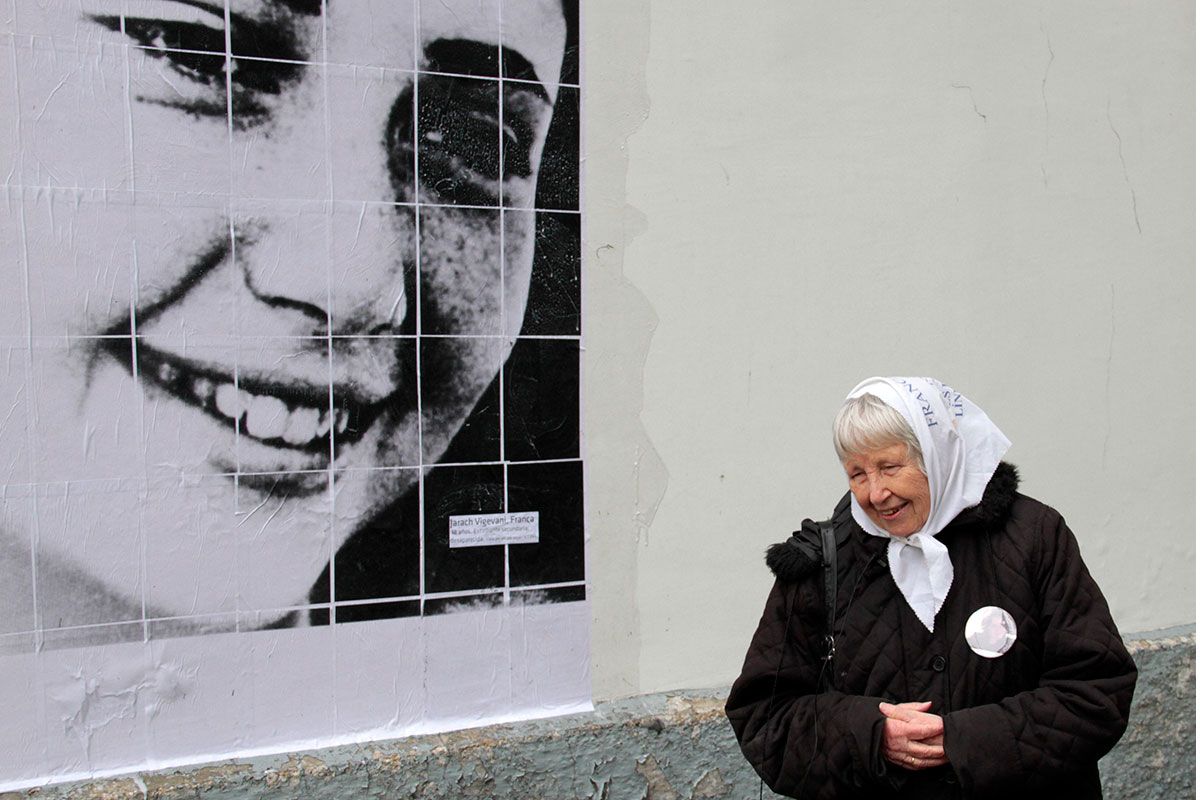
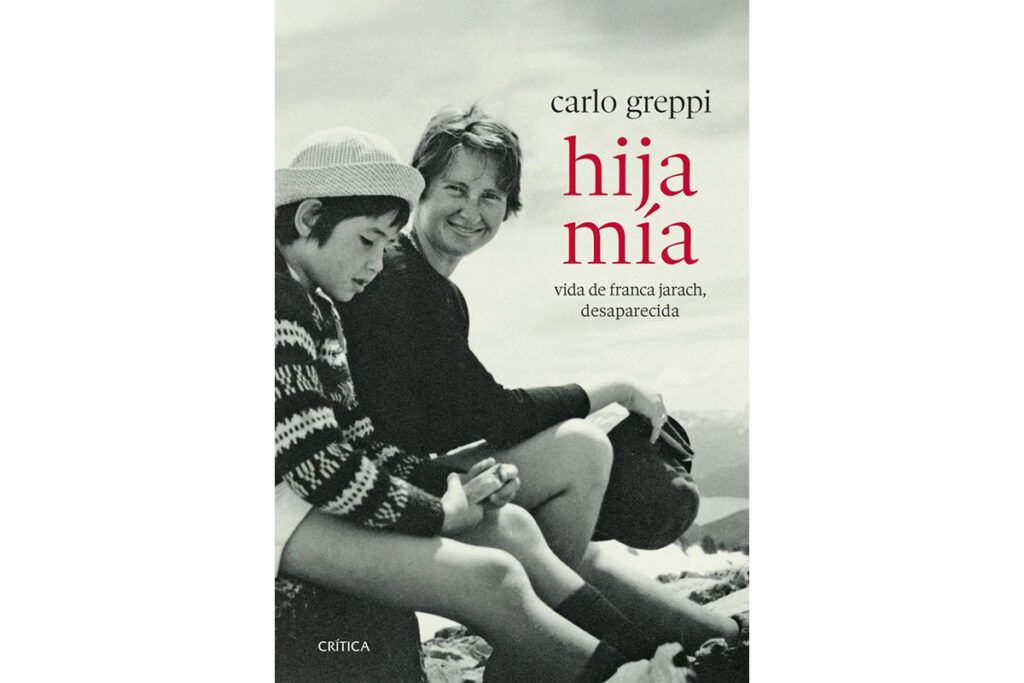
“Franca’s brief existence is documented. Irregularly, yes, but also abundantly. And that is what makes her exceptional,” writes Italian historian Carlo Greppi. A “documentary treasure” to narrate the very short 18 years of life of the young activist Franca Jarach, kidnapped and missing since June 25, 1976. The civil-military dictatorship had been in government for three months and one day.
The biography he built is an enormous puzzle of voices, photos, drawings, judicial statements, letters, diaries and other sources that coexist with the gaps. The empty lockers left by disappearance: “A whirlwind formed by nothing.”
Of course, the almost 400 pages of the book my daughter They are also about the almost 50 years of struggle that followed those 18 years interrupted by a flight of death. They reconstruct half a century of Vera Jarach’s struggle, also documented profusely. And through Vera, the role of the Mothers of Plaza de Mayo as a cog in the process of memory, truth and justice.
fragile rock
“I met her mother, Vera Vigevani Jarach, in 2008. I was one of the many young people she met. For me it was the university years. Her sweetness and tenacity impressed me deeply, and the story of Franca and her generation has stayed with me ever since,” Greppi tells Time from Italy, a few days before traveling to Argentina to present his book, published by Crítica. Fifteen years after that first meeting with Vera, he decided to investigate Franca’s story.
“There are people who have disappeared from reality and also disappeared from collective memory: people who have not had someone like Vera, who has dedicated her entire life to being her daughter’s first biographer,” he notes in an excerpt from the book. Greppi consulted Vera before launching his work. He had his endorsement, his interviews, his contributions, his readings. She was looking forward to the edition translated into Spanish. His death on October 3 cut that wish short.
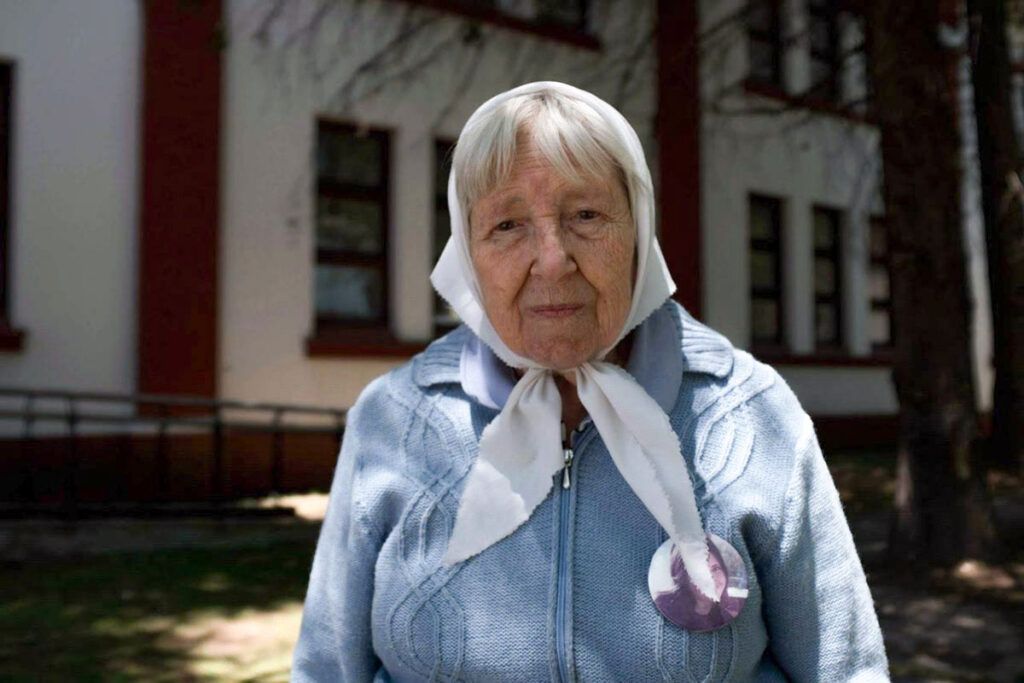
my daughter, about Franca’s life, is dedicated to Vera. “Our fragile rock, mother worthy of her daughter – Greppi wrote – This is how I see Vera, historically and humanly (…) And Vera’s strength, which is part of that of all the Mothers, is impressive and continues in a very concrete way Franca’s political commitment. ‘We have learned from our children that they were right,’ he declared in one of his first interviews, twenty-five years ago. “Vera knew how to convert individual pain into collective struggle from the beginning.”
Sixty-eight seconds
The journey goes from the story of a family that came to Argentina fleeing from Italian fascism, it goes through Franca’s cozy childhood between the Belgrano neighborhood, the Tigre Delta and Bariloche, the turbulent adolescence at the National School of Buenos Aires, the loves and increasingly stronger political militancy, from the Union of Secondary Students (UES) to the Peronist Working Youth (JTP) and then Montoneros.
The job of the historian coexists with the memory activist who speaks to Franca in an attempt to reconstruct until the last second of her life, thrown into the Río de la Plata from one of the flights of death. “If you fall from an altitude of four thousand meters, you will have a little more than sixty seconds ahead of you. Sixty-eight, to be exact. That is the last minute of your life. An eternal time or the blink of an eye in the history of humanity: it all depends on perspective.”
The reference to that atrocious fall appears again and again. Like the memory of audio that became judicial evidence: the recording of the call that Franca could have made from captivitycalmly asking his father to take care of himself. And much later, after fruitless searches and false leads, the pieces of truth that came from testimonies of ESMA survivors. The detailed description of the journey conveys how exhausting it was for Vera – and her partner, Giorgio – to find out what had happened to their daughter. But neither the accumulation of years nor the loss of vision stopped Vera on that path, which she left as a legacy with her recent departure.
When Greppi finishes writing this book, the speeches that demand “complete memory” are already a reality in this country, under the government of Javier Milei. The author is responsible for pointing out that the incompleteness is the work of the perpetrators, as recalled on March 24 by the banners that ask “to tell where they are” those who have disappeared like Franca.
“What we know about you until now, almost fifty years after that June 25, 1976, is an imperfect – incomplete – truth, but it is a truth,” Greppi writes to that young woman frozen at 18 years old. “In any case, the search does not end here: We will continue talking, getting interested, trying to understand (…) The last trace of this crime, of this blasphemy against humanity, is in some corner of the world, Franca. And someone, someday, will find it.”
A house, a room and books
The tours and conversations to reconstruct the history of Franca (and Vera) are often located in the house that the family lived in in the Buenos Aires neighborhood of Belgrano, on Montañeses Street.
“From the entrance to the living room until reaching, after walking down the hallway, Franca’s room, located on the right, everything in Vera’s house remembers her daughter”, describes Carlo Greppi.
Anyone who has been there knows that it is a true journey through time. The toy train installed on the ceiling by Giorgio, the letters of the alphabet painted on the wall next to Franca’s bed, her drawings, photos, poems. A constant and permanent presence, in the midst of books everywhere.
Part of the great family library of Franca, Vera and Giorgio can be seen in the Mothers’ House, located in the Former ESMA.