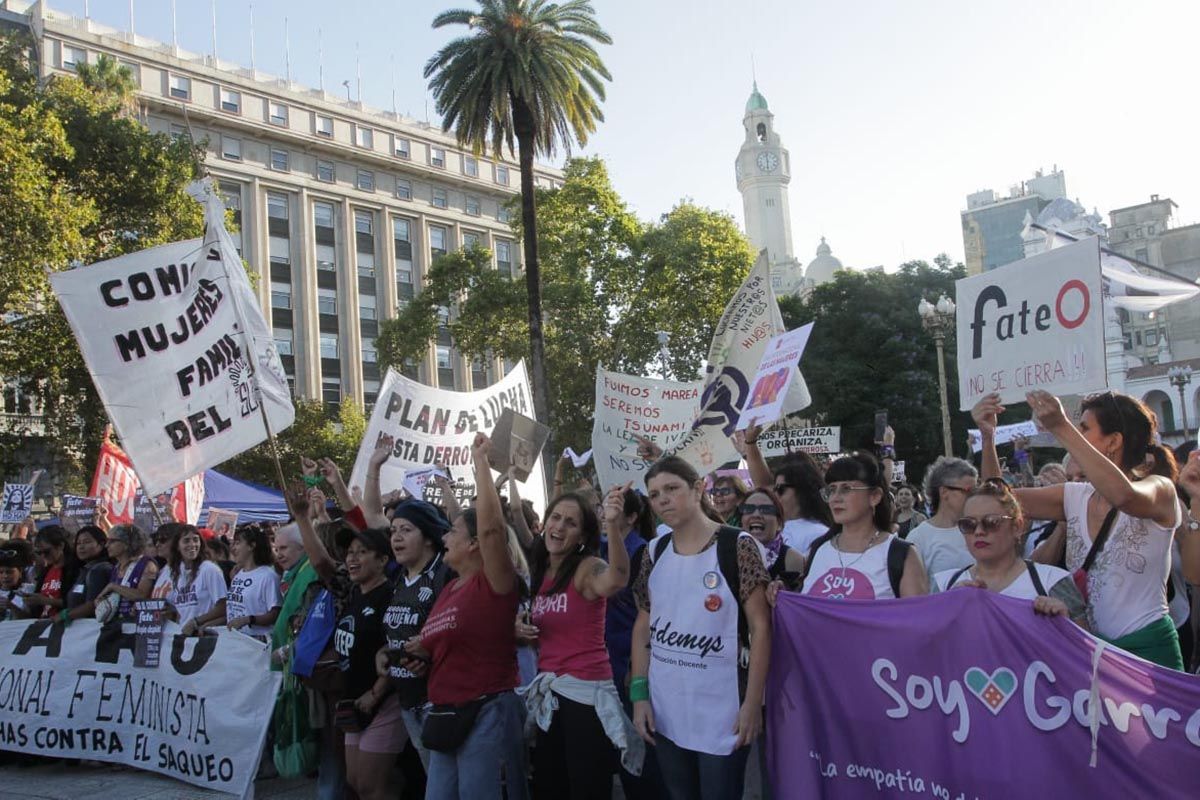
Gender issues and those linked to the feminist agenda suffered striking silencing in the media, a trend that was seen this 8M.
In Argentina, hand in hand with the official emptying of those organizations that worked for gender equality and are in charge of preventing and eradicating gender violence, came an absence of feminist voices. In some cases it was due to digital attacks and in others due to the lack of interest of each media.
One fact is that between 2018 and 2019, newspapers, radio stations and channels opted for gender sections and editors or for convening specialists to build a common agenda. This, in 2023 2024, responding to local politics changed radically. Sections and charges were removed. The disappearance or reconversion of the media also threatened the construction of this agenda.
In the region this was not very different. According to a report by the media monitoring consultancy Global News Group, Media coverage for International Women’s Day (8M) in Latin American media fell by 61% between 2023 and 2026.
The report indicates that in 2023, 9,323 publications were registered and in 2024 the number was 6,190, by 2025 the figure dropped to 3,800. Finally, in 2026, 3,604 notes were counted, 5.1% less than the previous year.
This drop in media coverage of 8M is not reflected in the same way in the rest of the digital ecosystem. The analysis of social networks, on the contrary, registers an increase in user interest that shows a growth that went from 19,673 posts in 2025 to a massive volume of 25,277 posts in 2026.
The conversation, however, shows a strong depoliticization of 8M: The overall sentiment of the conversation was 55% neutral and 44% positive with a margin of negativity of just 1%.. This, says the report, shows that on social networks 8M is firmly perceived as a date of clear social consensus.
The displaced 8M
For Camila Montaño, Operations Manager and Innovation Leader at GlobalNews Group Colombia, the drop in coverage is due to a combination of factors, she told Argentine Weather. “On the one hand, We observe a decrease in the number of media outlets at the regional level and a transformation in their editorial line, which now prioritizes the humanization of the date through life stories instead of coverage of marches and mobilizations.”
Added to this, he states, is a “media agenda highly concentrated on the geopolitical situation and events with high local impact. In countries like Colombia, for example, the coverage of 8M coincided with legislative electoral processes, which displaced the visibility of the anniversary in traditional media. In addition, the limited generation of actions or public policies at a general level makes it difficult for the date to position itself as priority news.”
While it fell on the web, on digital platforms, the topic grew. “And in a forceful way,” says Montaño. “We conclude, according to our analysis, that interest in 8M is still valid, evidenced by the increase in publications on social networks, where users appropriate the topic and use it as a space for expression.”
No media, yes networks
In addition to the number of publications, the contrast is in the vocabulary of the different digital media. According to what Montaño states, the press agenda focuses on the terms of “violence”, “government”, “justice” and “march”. While on the networks, where users mostly speak, terms linked to recognition prevail, such as “equality”, “history”, “happy” and “women”.
“The conversation indicates that Gender equality continues to be a topic of great interest in the people’s agendawho migrated to the digital environment looking for a space for commemoration and empathy. This, however, It leaves us with a challenge ahead of us, which is to transfer greater depth in the debate to the social agenda.since today that more critical or structural view is not displayed as strongly in the digital word cloud.”
Equity as a point of interest
The Global News report also provides important information regarding the age group that was involved with 8M in 2026.
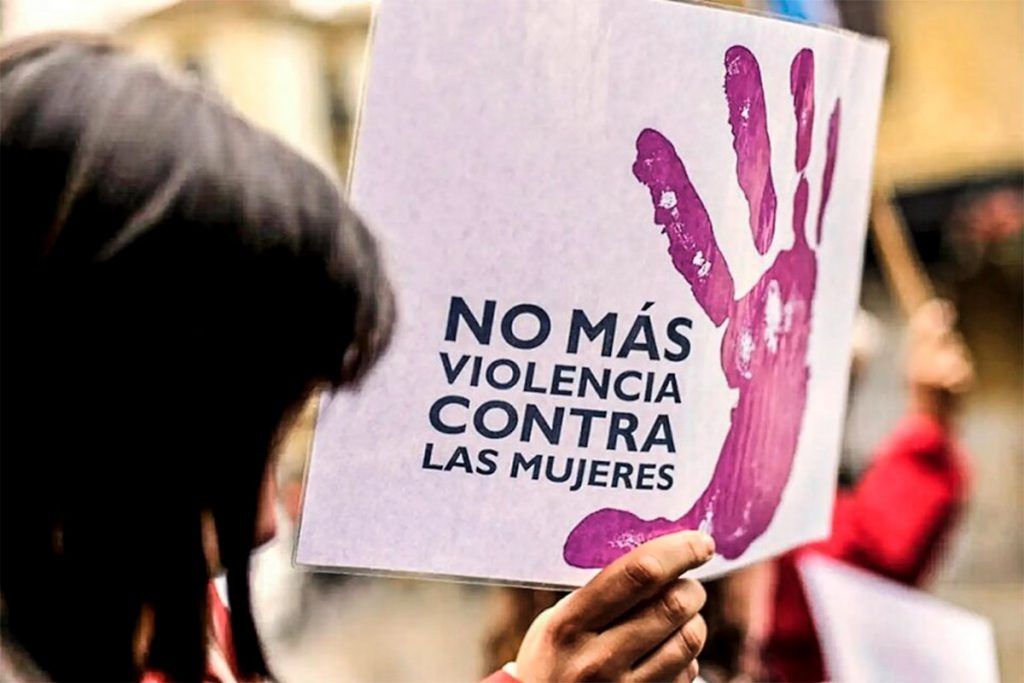
“It is one of the great findings of digital measurement because it shows the transversality of interest in the topic. The dominant group is led by young adults between 25 and 34 years old, which reflects greater appropriation of the topic by digitally active generations. Almost half of the users who promoted this conversation were men, with 49.6% participation. This shows that Gender equality and reflection on 8M are no longer niche or exclusive topics for the female gender.but it is an issue that truly affects the entire society.”
The challenge towards other forms of approach
The fact that the digital conversation increases when it is separated from the political, may reflect, says the expert, “a general exhaustion in the face of partisan polarization.”
“The users decided to remove the anniversary from that trench of confrontation. They prefer to focus on commemoration and empathy rather than on the traditional political clash,” says Camila Montaño. But he highlights, “here our greatest challenge arises as a society and that is that this conversation does not remain solely in tribute. We need the 8M to continue being political in its broadest and most constructive sense.acting as a driving force to demand and promote specific public policies that collaborate with the objective of achieving gender equality.”
This trend, which is not only local but also regional, can be reversed with intense communications work. “Communicators must listen to what audiences are asking for so that the commemoration translates into more coverage that drives actions that generate tangible and positive changes. Users respond very well to positive approaches.
Therefore, The media can take advantage of 8M to inspire and educate, putting valuable topics such as gender equality, reducing gaps and the importance of diversity in decision-making spaces on the agenda. It is an invitation to approach the anniversary from empathy and deep reflection, beyond the news of the day,” he concludes.
More figures from 8M
The data released by the media measurement and monitoring company indicates:
-The amount of articles published on the topic «Women’s rights» in 2026 reached 767 notes, which represents a growth of 79% compared to 2025.
–The “Life Stories” They went from having a moderate presence with 197 notes in 2025 to become the third pillar of the agenda, achieving 521 impacts.
-On the contrary, the theme «March 8M»which had been the second with the most publications in 2025 (770), suffered a significant setbackobtaining only 509 publications in 2026.Was marked differences depending on the geographical area. Mexico went from 956 publications in 2025 to 1,310 in 2026which represents an increase of 37%.
In South America The most critical cases were Colombia, which decreased by 56%, falling from 318 to 138 notesand Peru, which suffered a drop of 59%, going from 315 to 129 publications. The great exception of the south was Chilithat managed to maintain a stable presence with 239 notes.