In the midst of a crisis that pushes millions of families to finance food and basic expenses with credit, a project presented in the Buenos Aires Legislature seeks to create an unprecedented tool to stop the escalation of debt. The initiative proposes to incorporate the figure of “over-indebtedness” in the provincial Consumer Defense law and establish a prior mandatory mediation that allows obligations to be renegotiated before the conflict reaches Justice.
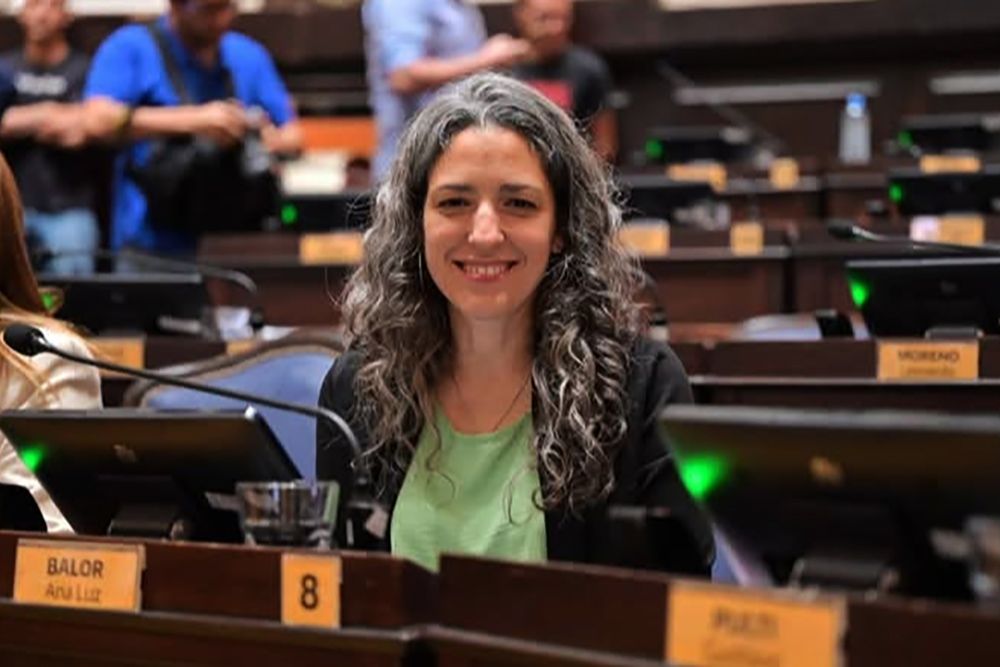
The project was presented by the provincial deputy of Union for the Homeland, Ana Luz Balor, and proposes a modification to Law 13,133 with the objective of formally recognizing those who entered a spiral of debt and offering them a specific protection procedure.
Article 1 incorporates into the norm and into the Provincial Code for the Implementation of the Rights of Consumers and Users the concept of “overindebtedness” and establishes “a special administrative protocol for its prevention and solution”, in addition to empowering the municipal Misdemeanor Court to hear the matter.
The initiative defines the phenomenon of over-indebtedness as a situation in which the consumer cannot meet his financial commitments. In this sense, article 2 establishes that these are cases in which a person is “placed in a situation of over-indebtedness, understood as the impossibility of facing, with the product of their regular income, the fulfillment of the obligations payable or promptly payable, contracted with a final destination, when this circumstance compromises the access and enjoyment of essential goods, directly affecting the family economy, their psychophysical health, and/or their life project.”
The key to the project is the creation of a mandatory mediation instance that allows debts to be renegotiated. This instance also suspends judicial actions for 90 days, including seizures or executions. The deputy explained that the initiative aims to provide a concrete solution to families trapped in a chain of loans.
“The creation of the figure of over-indebtedness is proposed for those people who have already entered into a spiral of debt, of taking on one debt after another, either one to pay off the other or simply because they cannot make ends meet and have to use those credits, those loans for goods and services, for food, which is the most worrying thing,” he said. Balor in dialogue with Time.

The legislator stressed that the situation is not linked to luxury consumption but to living day to day. «We are not talking about sumptuous expenses, but about those debts that practically make it possible to live or survive. So the danger that this entails, beyond the debt, is that it affects the psychophysical health of the families that are in this situation,” he considered.
The project provides that the Executive Branch may grant powers to the municipal Consumer Defense offices and the Misdemeanor Justice Department to intervene as mediators between creditors and debtors. “The most important thing about this instance, where a negotiation hearing is generated to restructure the debt, is that it suspends for 90 days those judicial actions that mean an embargo, a confiscation of assets,” explained the deputy.
During this instance, the conditions under which the credit was granted and the conduct of both parties will be evaluated. “The idea is, on the one hand, to analyze whether both the lender and the creditor took or gave the loan in good faith, if there was no abuse,” said Balor, who warned about the growth of loans granted under disadvantageous conditions.
Mediation could lead to different solutions, such as haircuts, interest reduction or longer payment plans. «An agreement can be reached, a reduction in interest, a restructuring of the debt, a reduction in capital or more installments. You will see that, in each particular case, you will see it between the parties,” he said.
The initiative also incorporates financial education as mandatory content in formal education, with the aim of preventing future debt situations. For Balor, it is important that students be able to learn, from a young age, “what these instances are like, and what certain terminologies that are used in contracts and generally given in these credits refer to.”
For the deputy, the economic context makes it urgent to deal with the project in the Legislature Buenos Aires “We believe that it is fundamental, it is a very difficult year, people’s purchasing capacity is increasingly less and on top of that, starting the year, with the start of classes, there are more than 20 million Argentines who are in debt, so it seems to us to be a fundamental issue that must be addressed at this time,” he stated.
The project must now be discussed in the committees Consumer Law, Municipal Affairs and Legislation before arriving at the venue.