Iran’s decision to require payments in Bitcoin, stablecoins or yuan for transit through the Strait of Hormuz does not arise as an isolated gesture, but a clear signal of where the global financial system can move in the coming years.
Tehran will charge ships tolls in alternative currencies in an explicit attempt to circumvent the dollar-dominated system and international sanctions. In this framework, it seeks to convert a structural restriction into a tool of power, relying on one of the most sensitive routes in global trade.
The movement seems to have logic. About 20% of global oil circulates through the Strait of Hormuz, making any change an event with systemic impact. By accepting payments with Bitcoin and the yuan, Iran not only circumvents financial restrictions, but transforms a chokepoint energy into a tool of monetary pressure.
For the crypto market, the case works as a full-scale experiment. The use of Bitcoin in international trade had until now been marginal, but never linked to a critical infrastructure of this caliber.
If it achieves some degree of adoption, it may accelerate the narrative of Bitcoin as an alternative settlement layer in international transactions.especially in contexts of restricted access to the traditional financial system. The main challenge remains volatility and operational complexity in a demanding logistics environment.
In parallel, the yuan emerges as the most pragmatic leg. Unlike Bitcoin, it offers greater stability and already has an expanding payment infrastructure which allows operating outside the SWIFT system. In that sense, the Iranian move is aligned with a broader process of de-dollarization.
Mariquena Otermin, CMO of Bitwage, tells iProUP that “Iran is not changing the global financial system on its own, but it is showing something key: In a fragmented world, the dollar is no longer the only possible way to move value in international trade“.
The expert warns that in the face of sanctions, blockades or geopolitical tension, cryptocurrencies and the yuan “begin to function as alternative liquidity and payment lanes”. According to Otermin, that does not automatically make Bitcoin a global trading currency, “but it does reposition it.”
“More than an immediate threat to the dollar, these episodes show that The international financial system is ceasing to be completely unipolar. And every time that happens, Bitcoin gains relevance as a neutral, portable and difficult-to-censor asset.“he adds.
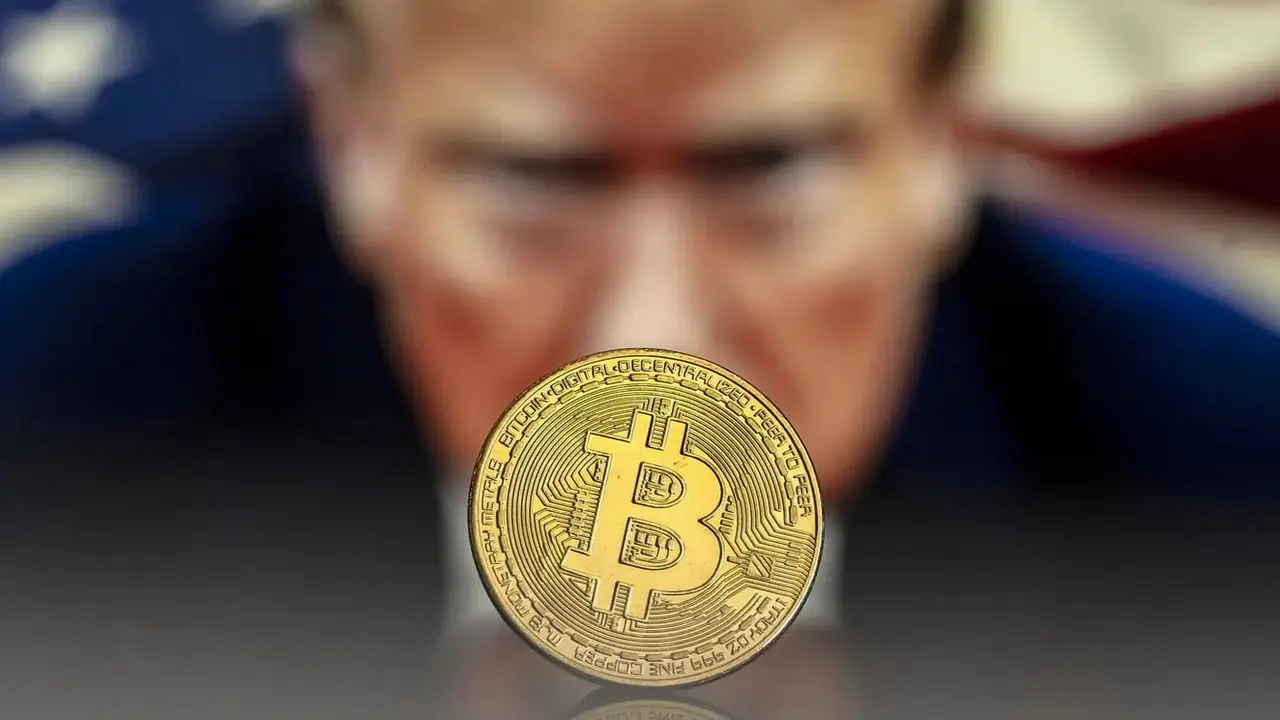
This is a direct hit to Donald Trump: the digital asset that he trumpets so much became a weapon against Washington.
Iran challenges the dollar: is it beginning to change the global financial order?
The economist Federico Glustein assures that “we cannot speak of a new financial order, but we can speak of an incipient change“.
According to your vision, the absolute preponderance of the greenback as a global currency of exchange begins to changegiving rise to a more diversified scheme in which “dollars, euros and yuan coexist, with the latter increasingly competitive against the US currency.”
“It challenges the dollar at the margins, especially in sanctioned and high-risk trade, but it does not replace its global centrality yet,” he explains. In that framework, The Chinese CIPS system becomes relevant, with a volume of 200 billion yuan (US$30 billion) and the consolidation of the eastern China-Russia-Iran-Qatar axis that is beginning to take shape as an alternative pole to the Western scheme.
Glustein warns that, although the dollar may begin to lose relative ground, it does not imply a structural shift in the short term. Even in a recent context of geopolitical tensions where the US currency strengthened, the advance of the yuan or cryptocurrencies in sensitive corridors may erode their exclusivity.
For this to lead to a sustained fall in the dollar globally, something deeper would be necessary.: large-scale capital markets outside the US, highly liquid alternative assets and an equivalent level of legal confidence. “Today that does not exist in the same dimension,” he remarks.
Regarding the impact on the crypto ecosystem, consider that the news is structurally bullish in terms of geopolitical adoption, not necessarily in price. It can boost prices based on the narrative of de-dollarization and real use, although it can also generate the opposite effect if the conflict increases risk aversion.
“The anti-system or parallel system narrative may end up prevailing if Iran manages to channel a relevant part of these payments through cryptocurrencies,” he concludes.
Geopolitics and the dollar: the real match
Nicolás Kohn, Balanz executive, states that It is premature to anticipate a structural change in the global financial order. In the face of negotiations between the US and Iran, sees it unlikely that Washington will validate a scheme in which Tehran manages to condition the commercial flows of one of the most sensitive energy routes in the world, given the negative impact on its strategic interests.
He warns that the very dynamics of the conflict limit Iran’s room for maneuver. “Attacks on neighboring countries erode their negotiating power and regional support, which may lead to a response from the main OPEC exporters such as Saudi Arabia, seeking logistical alternatives to the Strait of Hormuz for their oil exports,” he says.
Where he does identify a clearer signal is in the dynamics of the dollar. Kohn maintains that, once geopolitical tension is reduced, bearish pressures on the US currency may reappear, as already observed in recent days. On that front, the focus is less on the Middle East and more on US global policy.
He points out that Donald Trump’s position towards NATO, his relationship with Europe and the handling of the conflict in Ukraine will be decisive. A turn towards a further breakdown of the traditional international order could act as a negative catalyst for the dollar.
Added to this is a more structural macro front: The United States has a high current account deficit, an expansive fiscal policy and a growing debt/GDP ratio. A combo that, in the medium term, plays against the strength of its currencyregardless of the short-term geopolitical noise.
Pablo Lazzati, CEO of Insider Finance, suggests that “as an example, he proposes the return of Venezuela’s oil exports to operations in dollars, “a dynamic that can be replicated if The greenback is not losing ground in the global system, “but reaffirming its role in key markets, especially in energy“The US is advancing on Iranian production.”
In parallel, he maintains that this same context opens space for alternatives. “When access to the dollar becomes restricted or conditioned, cryptocurrencies begin to gain prominence as a transaction channel for certain assets and specific operations,” he analyzes.
The result, according to Lazzati, is not a replacement but rather a coexistence: The dollar remains the axis of global trade, while cryptocurrencies begin to occupy niches where the traditional system does not reach or imposes friction.