Until just a few hours ago, if an investor wanted to access certain Negotiable Obligations (ON) of large companiesfinancial trusts or closed funds, had to demonstrate that it was a “Qualified Investor”. The problem was that, for the regulator, if you had $100,000 in Bitcoin, “you had nothing”. These assets were invisible to the required assets, forcing many to be left out of the most profitable tenders in the capital market.
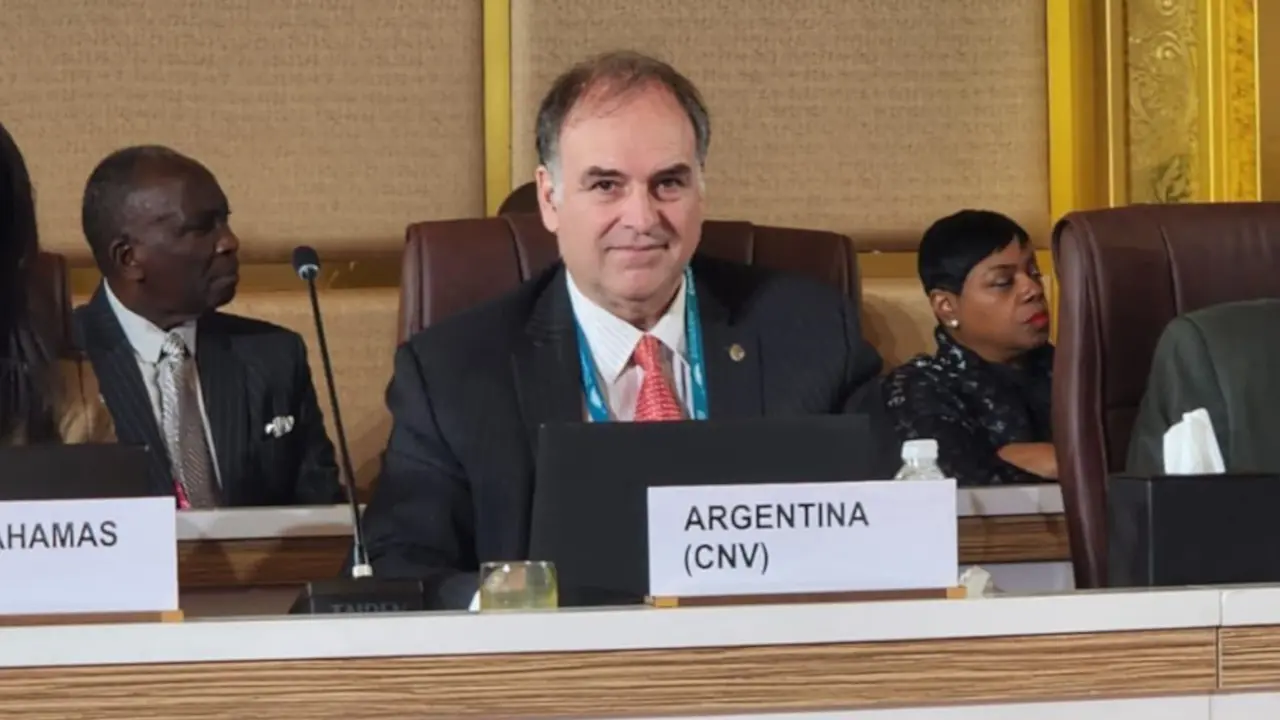
That distortion has just ended. The National Securities Commission (CNV) issued General Resolution 1125/2026a regulation that formally integrates digital assets into the legal system and validates an economic reality that was already operating de facto.
From now on, Bitcoin (BTC), Ether (ETH) and other altcoins – even tokenized assets – count toward “elite investor” status.
The millionaire threshold that now includes your cryptocurrencies
To understand the impact of the measure, you first have to look at the numbers: The central requirement to be considered a “Qualified Investor” is to possess a assets greater than 350,000 UVA. At the values of this April 2026, we are talking about a figure that exceeds $600 million.
In dialogue with iProUPtax expert Sebastián Domínguez highlights the importance of this change: “This is positive because it is a CNV recognition for those who invest in crypto and for the market in general. In this way, the organization is recognizing that investors have been incorporating virtual assets into their portfolios.”
According to Domínguez, until before this reform, These instruments were not taken into account to define this threshold of patrimonial capacity..
“This incorporation, along with other types of investments, are instruments that must be taken into account to define the financial experience and access to other investments which many times are exclusively for qualified investors”, assesses the expert in dialogue with this medium.
The doubt that ran through the City: is it a covert money laundering?
One of the doubts that circulated strongly in the City’s money tables is whether this resolution has any tax or capital regularization background.
However, specialists are specific about this: The measure seeks operational transparency, not tax forgiveness.
Marcos Zócaro, specialist in digital taxation, clarifies iProUP that “it is not money laundering, it has nothing to do with tax. Obviously, if the investor wants to be recognized for holding assets, they must be blank.”
For Zócaro, The move is a logical step towards system maturity: “It seems good to me that the CNV recognizes the economic reality and the fact that many investors have virtual assets today“.
Along the same lines, Sebastián Domínguez clears up any ambiguity: “This has no tax effect. What the CNV now contemplates is that within the amount to reach the 350,000 UVA will also be considered virtual assets that that investor has”.
The new assets that CNV enables for bitcoiners
Have the status of Qualified Investor It is the master key to the most sophisticated instruments of the Stock Market. By being recognized as such, the user accesses:
- Exclusive tenders: many first-line negotiable obligations require this status to participate
- Complex instruments: real estate, agricultural or infrastructure funds with above-average dollar returns
- Operational flexibility: fewer restrictions on the purchase and sale of certain securities and access to fiduciary products
The interesting thing about Resolution 1125 is its breadth. “It is not only linked to holding Bitcoin or Ethereum; it is for any asset that falls within the definition of virtual assetit can be any other altcoin,” explains Domínguez.
And the expert adds a key piece of information for the local ecosystem: “It even frames a AL30 token like the one tokenized by Ripio. That token that someone may have will fall within the assets that must be added to see if it reaches the bottom of the GRAPE“.
It is not enough to show the balance of a cold wallet. For the CNV to accept these assets, Transparency conditions are established that the investor must consider:
As Zócaro points out, to use these funds as support before a public regulator, they must be declared.
It is the End of anonymity in exchange for greater investment firepower in the traditional market.
For those savers who already exceed the threshold of 350,000 UVA adding its virtual assetsthe path to obtaining Qualified Investor status follows a clear administrative roadmap:
- Custody Validation: ensure that virtual assets are deposited in a Virtual Asset Service Provider (PSAV) that appears in the official registry of the CNV (VASP). Funds in cold wallets or exchanges without local registration cannot be counted for this purpose.
- Asset Certification: ask a public accountant to prepare a manifestation of assets or patrimonial status. In this document, the professional must validate the possession of the digital assets and their valuation as of the cut-off date, crossing the data with the previous sworn statements to ensure the legality of the funds.
- Presentation before the ALyC: deliver the accounting certification (legalized by the corresponding Professional Council) to the Settlement and Clearing Agent (ALyC) with which it usually operates. The platform will verify that the total amount (traditional assets + virtual assets) exceeds the minimum required by regulations
- Signature of Affidavit: The investor must sign a document declaring that he or she has the knowledge and experience necessary to operate complex instruments, accepting the risks that come with the category of Qualified Investor.
This measure represents a win-win for the Argentine economy of 2026. On the one hand, the capital market gains a mass of liquidity who was previously “trapped” in the crypto world without being able to finance productive projects. On the other hand, the long-term holder is no longer discriminated against: he can now use his Bitcoin as a backup to diversify without having to sell his original positions.
In this way, the barrier between “the exchange” and “the stock market” has become almost invisible: The CNV has finally recognized that wealth, whether in bricks, shares or programming code, has the same weight when it comes to qualifying the protagonists of Argentina’s new financial era.