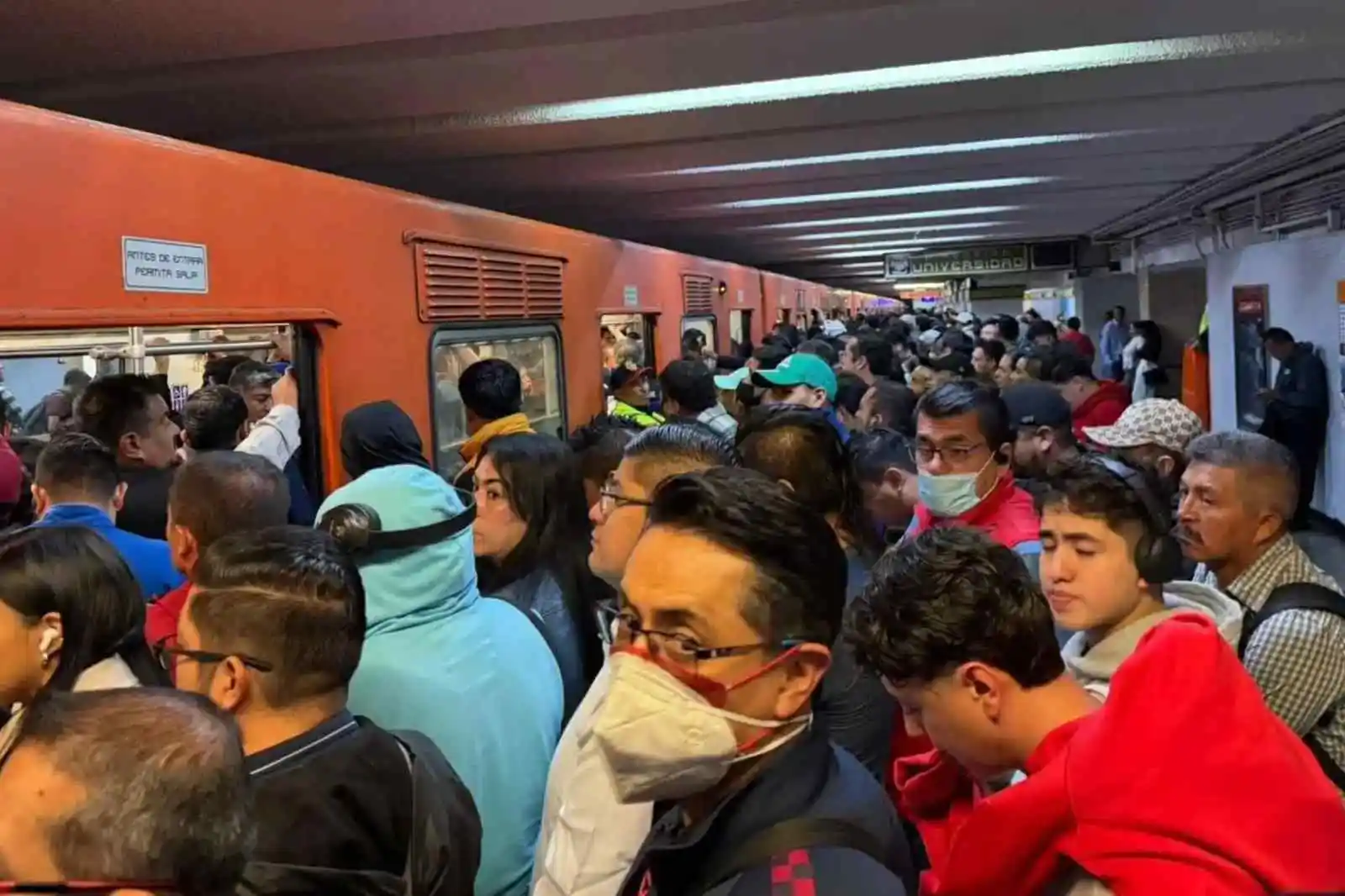
The operation of the Metro Collective Transportation System faces severe delays this Monday, April 13 due to the resumption of union protests. Workers continue to refuse to work overtime and apply staggered absenteeism, directly impacting the frequency of trains and saturating the lines with the highest demand.
You may also be interested in: Maximum pressure with tariff: Trump threatens China with a 50% tariff
Return of labor conflict and operational crisis in the network
After a brief suspension of protest activities over the weekend, the National Union of Workers of the Collective Transportation System (SNTSTC) reactivated pressure measures against the Government of Mexico City. This sit-down strategy and refusal of extra hours seeks to force an immediate response to union demands, compromising the mobility of millions of capital residents who depend on this neuralgic system.
The lack of personnel in key areas has caused convoy movement to be irregular. The organization has asked citizens to anticipate their departures, since the capacity to respond to the morning demand is limited by the structure of the protest.
Lines with the greatest impact and critical saturation
The official report and monitoring at stations confirm that the service is overwhelmed at strategic points. The lines that present the most complex scenarios are:
- Line 3 (Green): Waiting times ranging between 10 and 15 minutes for boarding.
- Line 7 (Orange): High influx of passengers and slow flow of trains.
- Line 9 (Coffee): Saturation in terminals and main transfers.
- Line 12 (Gold): Operation reduced due to lack of personnel on extended shifts.
To mitigate the impact, the system implements sending empty trains to stations with the highest levels of overcrowding, trying to drain the accumulation of users on the platforms.
Good morning! Right now we start the service. Temperature in Mexico City, Max. 25° C Min. 10° C pic.twitter.com/iPI0O7Ur7Y
— MetroCDMX (@MetroCDMX) April 13, 2026
The origin of the protest: maintenance and budget
The core of the conflict lies in the union complaint about the physical state of the fleet. According to data from the SNTSTC, of the 391 trains that make up the vehicle fleet, 70% have not received the required general maintenance. This situation is described by the union as a latent operational risk for both staff and the user public.
Main demands of workers
The resolution of the conflict depends on attention to the following fundamental axes:
- Budget injection: Immediate assignment of specific resources for preventive and corrective maintenance.
- Rehabilitation of facilities: Urgent intervention in the infrastructure of roads and electrical systems.
- Improvement in working conditions: Adequate equipment and respect for current contractual agreements.
For its part, the Metro administration maintains that the negotiation tables remain open. The current economic proposal is under review by the Secretariat of Administration and Finance, seeking a balance that allows the pressure measures to be lifted without compromising the financial viability of the institution.
Real impact on citizen mobility
User travel time has doubled compared to a normal day. Testimonies collected on Line 3 reveal waits of up to 40 minutes to enter a car, transforming ordinary journeys into journeys that last more than an hour.
The lack of overtime means that, in the event of any minor breakdown, the service recovery time is significantly slower, since there is no technical staff necessary to cover incidents outside of their base shifts. The uncertainty about the duration of these measures keeps the metropolitan area on alert.