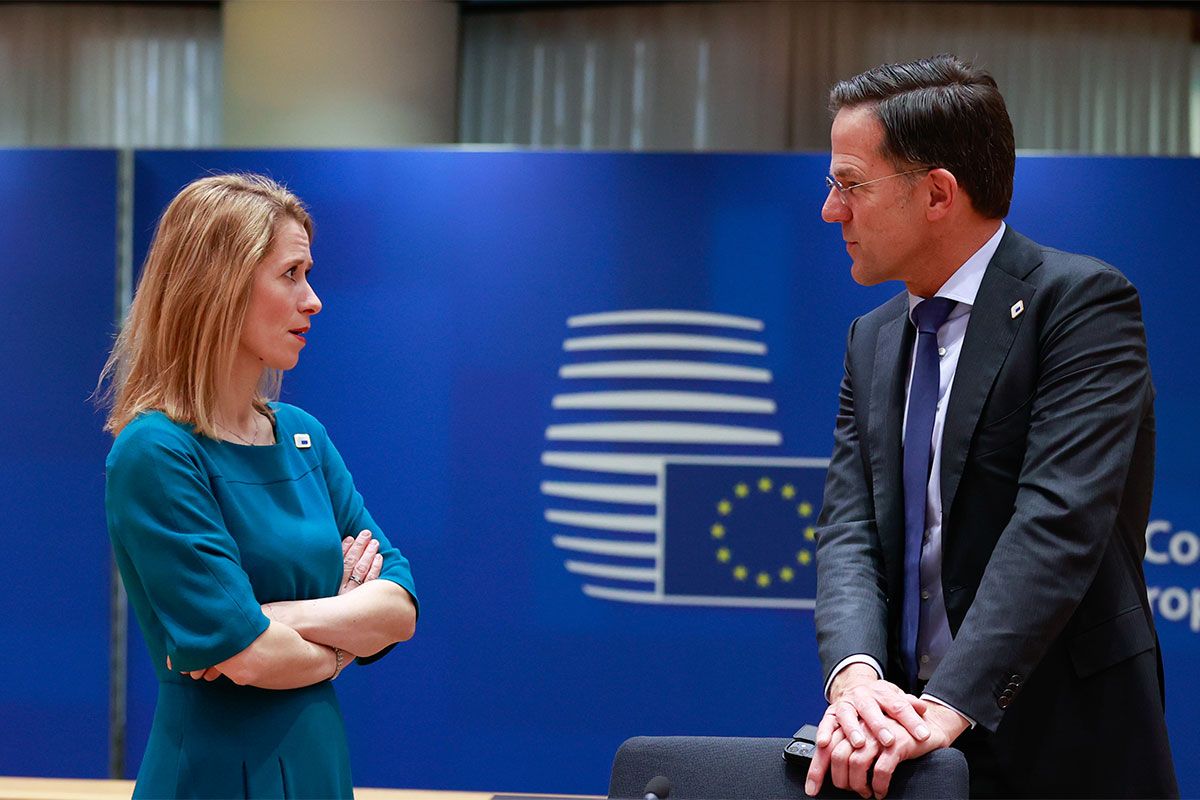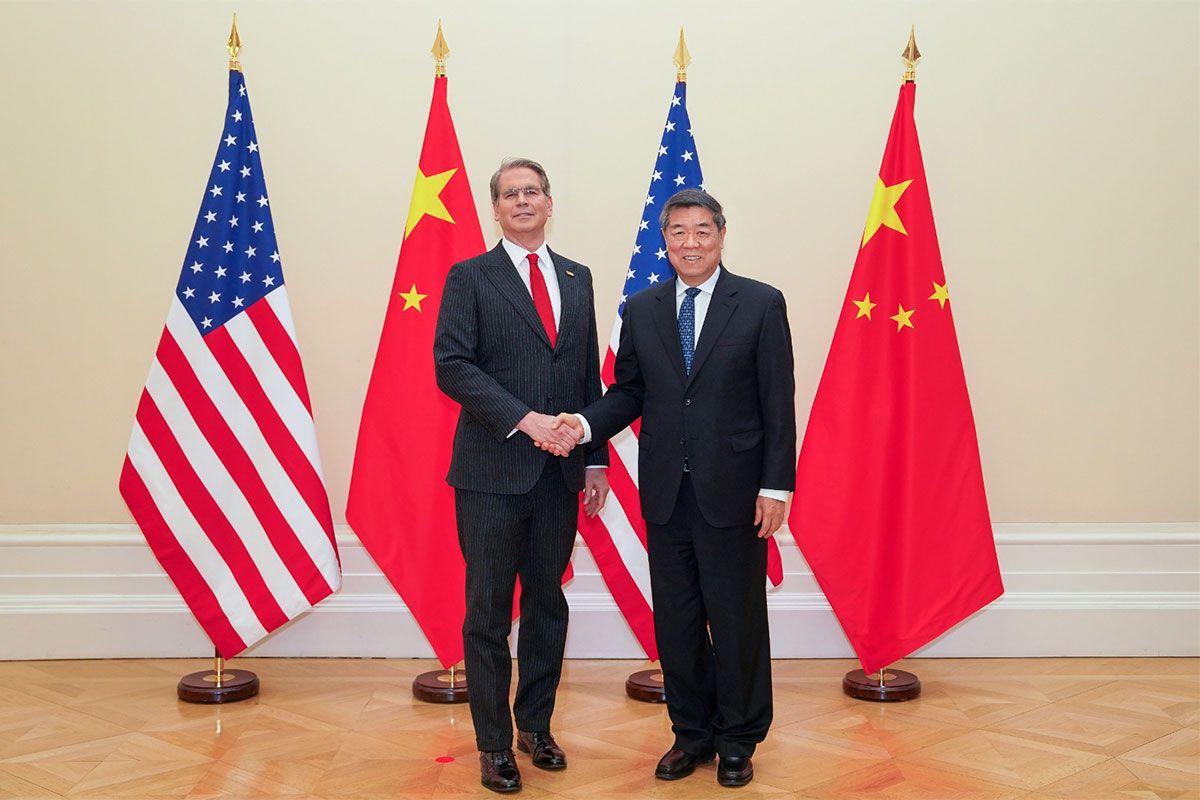
When the Chinese and US delegations sat down at the table in Paris, official statements spoke of “frank, in-depth and constructive” dialogues. The ratings suggested that everything had been under control during the meeting of two old business colleagues. But between the lines, and especially in the subsequent statements, another film appeared: that of a business partner who is no longer satisfied with being the stone guest.
Because if the meetings of March 15 and 16 in the French capital – the sixth round of bilateral economic and trade consultations since May of last year – made one thing clear, it is that Beijing has brought its own calculator and stopped trusting the numbers drawn in Washington.
Chinese Vice Premier He Lifeng arrived in Paris with a script that his American interlocutors – Treasury Secretary Scott Bessent and Trade Representative Jamieson Greer – surely knew by heart. China values dialogue and respects the “strategic guidance” agreed upon in previous meetings between Xi Jinping and Donald Trump. But it also has memory.
And memory, in this case, records that the US Supreme Court declared illegal the tariffs that Donald Trump imposed invoking the International Emergency Economic Powers Act. It records that, despite this, Washington applied an additional 10% surcharge on imports from all its trading partners under section 122 of the Trade Act of 1974. And it records, above all, that the United States has launched Section 301 investigations against 60 economies – China included – accusing them of having “excess capacity” and allowing “forced labor.”
On that last point, Beijing did not limit itself to responding: it presented “serious complaints” and expressed its “serious concern” about this type of unilateral investigations. “China will take necessary measures to firmly safeguard its legitimate rights and interests,” He Lifeng said. The phrase, highlighted by the Chinese agency Xinhuawas the core of the message.
Hours later, another Chinese Ministry of Commerce official, Li Chenggang, praised the consultations among the technical teams and noted that they had reached “a preliminary consensus on certain issues.” The phrase contained a key that the official statements did not completely deactivate. Talking about a preliminary consensus on certain issues is not the same as highlighting general agreement. There is the abyss.
The curious thing about the case is that while attention was focused on the negotiating table in Paris, the Chinese Ministry of Commerce issued a statement in Beijing with unusual harshness. “We urge the United States to immediately correct its mistakes,” the text said, after highlighting that the investigation under Section 301 is “unilateral, arbitrary and discriminatory,” and constitutes “an error upon another error” that undermines global supply chains.
From Beijing they recalled that the People’s Republic of China is one of the founding members of the International Labor Organization (ILO), has ratified 28 international conventions and has a comprehensive system of labor laws to prevent forced labor and other illegal practices.
They also argued that the United States has not ratified the Forced Labor Convention of 1930 and uses this issue as a political tool. Under this logic, the Section 301 investigation would not only be a commercial measure, but an attempt to erect new barriers, “extremely unilateral, arbitrary and discriminatory,” according to the official newspaper Global Times.
China and the United States have been talking for almost a year. Since that round in Geneva in May 2025, passing through London, Stockholm, Madrid and Kuala Lumpur, they have achieved the suspension of additional tariffs of 24%, a framework consensus on TikTokthe expansion of agricultural trade and advances in cooperation against fentanyl.
But some agreements, says Zhou Mi, a senior researcher at the Chinese Academy of International Trade and Economic Cooperation, “have not yet been transformed into formal results.” “China has a stable and predictable environment for investment,” says Daryl Guppy, former member of the Australia-China Business Council. “But that must extend to common areas of cooperation. And that requires a political decision on the part of the United States,” he adds.
Perhaps that is why Chinese Foreign Minister Wang Yi chose his words at a pre-summit conference: “Neither side can change the other, but we can choose how we want to relate.”
The Paris meeting ended with a joint statement that speaks of “new consensus”, “significant” progress and the commitment to “continue consulting”. It also mentions the possibility of establishing a cooperation mechanism to promote bilateral trade and investment. In the United States they spoke of “a modest but significant step,” according to the correspondent of the ChinaDaily.
At the end, another sign of attention emerged with the postponement of the summit between Xi Jinping and Donald Trump, scheduled for the end of March. In principle, from the influential Financial Times and The New York Times They linked the failure of the meeting to the Chinese refusal to join the US strategy in the Strait of Hormuz. Faced with this, Beijing’s initial reaction was a suggestive silence, until government spokesperson Lin Jian stated that the journalistic rumors were “completely false,” a denial shared by Bessent.
But the noise persists
Meanwhile, the Asian country continues to take note. Of unilateral investigations, of tariffs, of sanctions. And also the promises. “China reserves the right to take all necessary measures to firmly safeguard its legitimate rights and interests,” they repeated from the Ministry of Commerce.
In the new commercial geopolitics, conversations stopped being a space for understanding and became a registration mechanism. China and the United States spoke in Paris. They said it was constructive. But at this point, the term “constructive” seems to mean that no one left the table.
The difference is that Beijing no longer plays the scene. It documents it. And when necessary, he turns it into a complaint. Not to close the negotiation, but to redefine it. Because at this stage, and in the best Chinese tradition, negotiating is also deciding who sets the meaning of what is being talked about. «