Keys to the news:
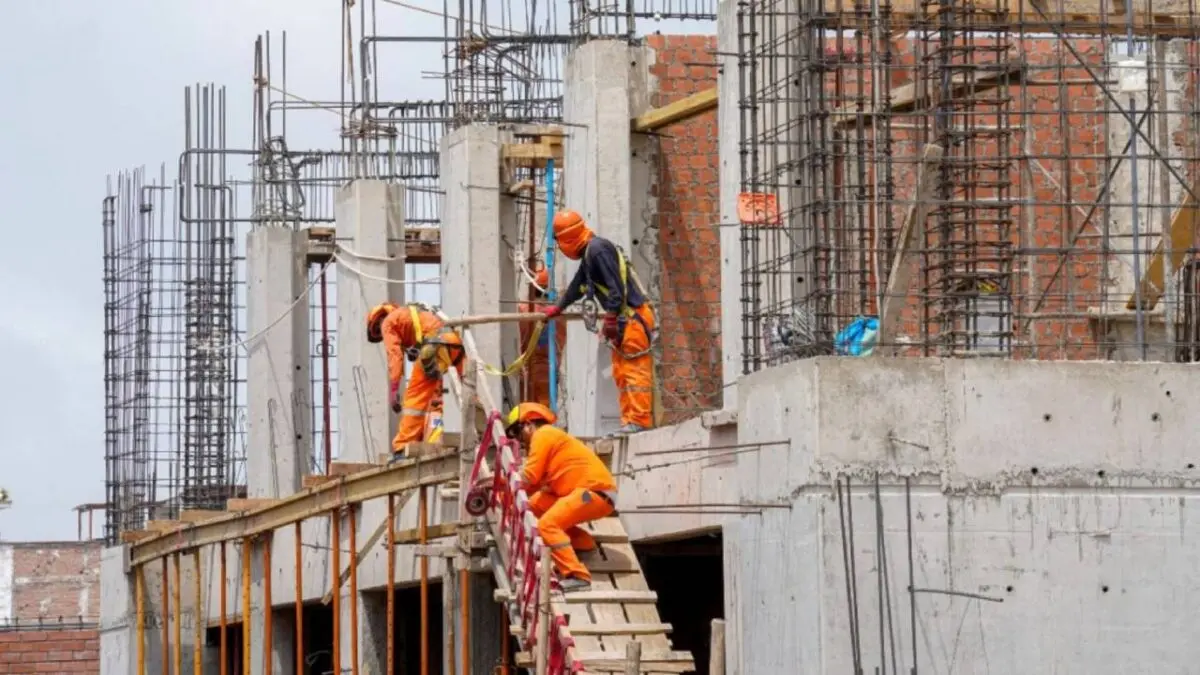
- Construction and tourism: In southern Mexico, the construction sector registered a resounding annual drop of 42.9% in the fourth quarter of 2025.
- Fear factor: Public insecurity and travel alerts from the United States are consolidated as the main deterrent to the arrival of international visitors.
- Domino effect: Analysts warn that the lack of fixed investment and the budget underexercise are seriously deteriorating regional infrastructure.
CDMX.- The economic engine of southern Mexico faces a critical scenario that combines budget neglect with the direct impact of organized crime. According to the most recent Report on Regional Economies published by the Bank of Mexico (Banxico)the construction and tourism sectors in the southern region experienced falls in 42.9% and 2.3% annuallyrespectively, during the fourth quarter of 2025.
This contraction is not an isolated event, but rather the deepening of a negative trend that has marked the year. In the previous quarter, construction had already shown a collapse of 48.1%, while tourism suffered a decline of 5.9%. The states of Campeche, Chiapas, Guerrero, Oaxaca, Quintana Roo, Tabasco, Veracruz and Yucatán They are the ones who today pay the bill for a crisis that mixes the perception of violence with inefficiency in public spending.
You may also be interested in: Shielding gasoline in Mexico requires a weekly investment of 280 million dollars
The stigma of violence scares away capital
For the central bank, the causes are clear and come directly from the voices of businessmen and direct contacts in the region. Those interviewed for the report indicated that the poor perception of security It is the determining factor that has slowed down both the construction of new infrastructure and the arrival of foreign currency from tourism.
The impact is particularly severe on the flow of foreign visitors. According to the Banxico report, news about the incidence of crime at the national level and, specifically, the alerts issued by the United States Government, have functioned as an invisible wall that discourages American travelers from visiting traditionally popular destinations in the Mexican Caribbean and the coasts of Guerrero and Oaxaca.
Without bricks there is no future: The brake on construction
If tourism suffers from the external image, the construction falls apart due to internal factors. The 42.9% drop in the last quarter of 2025 is a reflection of the budget subexercises. The lack of execution of public works, added to a climate of uncertainty that stops private investment, has left the region with unfinished or canceled projects.
Gabriela Sillerdirector of Economic Analysis at Grupo Financiero Base, is blunt about this: fear has become a macroeconomic variable in the south.
“Public insecurity stops everything, it is a real brake on the economy. If there is no fixed investment, if there is no construction, then the infrastructure deteriorates,” Siller explained in an interview.
The analyst warns that this deterioration is not only aesthetic or logistical; It is a loss of long-term competitiveness. With no new roads, hotels or industrial developments, the region’s ability to recover in 2026 is seriously compromised.
A year-end under the shadow of pessimism
The Banxico report, published on March 12, makes it clear that southern Mexico is trapped in a cycle where the lack of security impedes investment, and the lack of investment generates stagnation that fuels social problems. Despite the potential of emblematic projects in the area, the reality of the data shows that dynamism has been lost.
The south’s dependence on international tourism makes it vulnerable to external narratives. As long as the perception of risk does not change and public resources are not used with efficiency and transparency, the country’s “tourism giant” will continue to operate with its hands tied, seeing how the sectors that were once its pride today lead the national loss charts.