Keys to the news:
- Gino Segura promotes a Wellbeing Model: The senator highlights that the reform allows private investment to be integrated under principles of transparency, order and public responsibility for national development.
- Historical Amount: The plan projected towards 2030 contemplates an investment of 5.6 billion pesos to trigger growth and reduce inequalities.
- State Rectory: The creation of a Strategic Planning Council is proposed to guarantee that the works benefit all regions of the country.
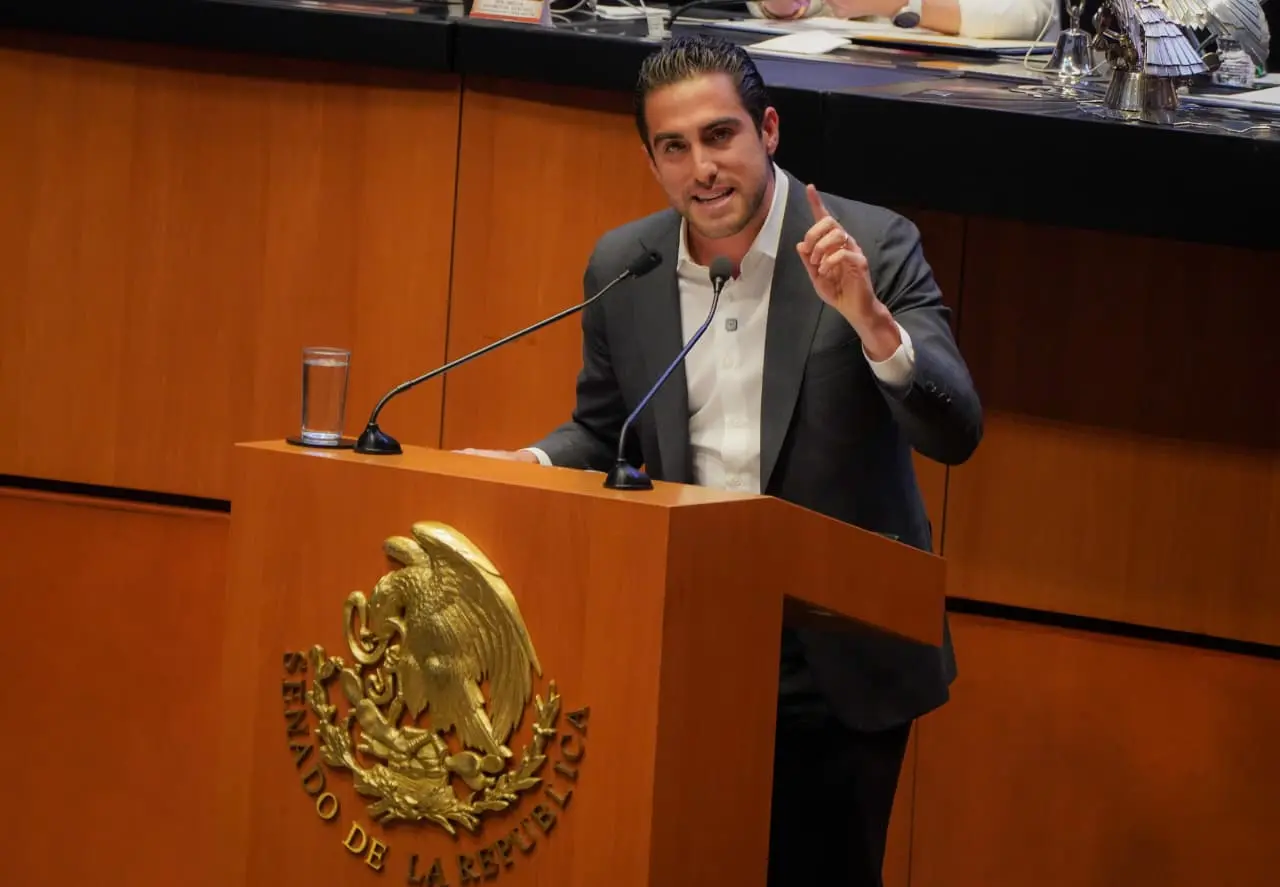
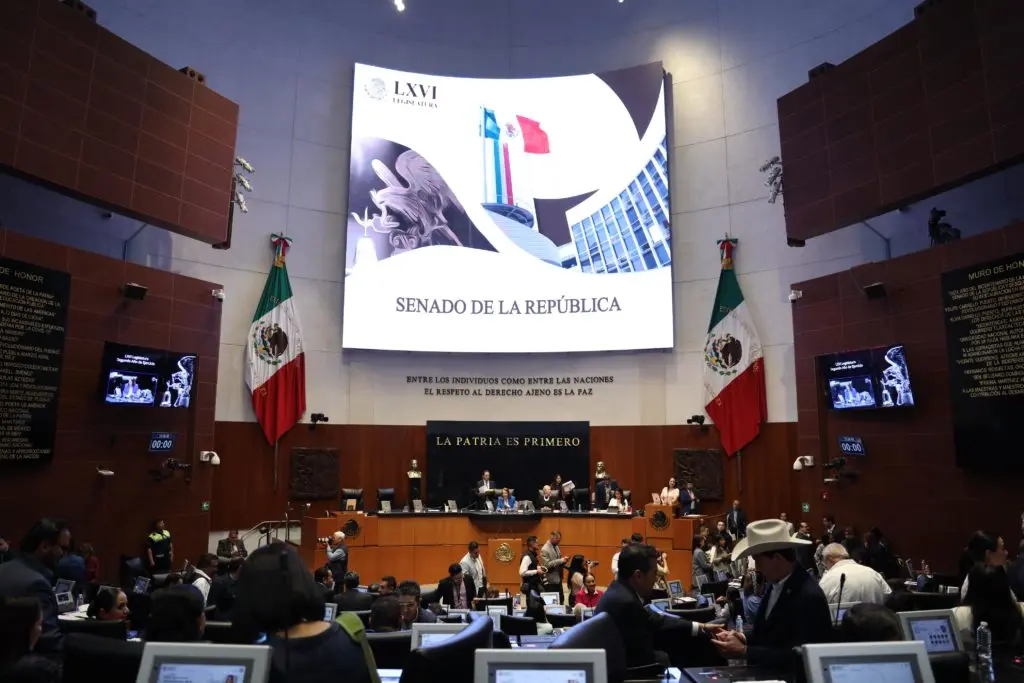
CDMX. – In a key move to consolidate the economic agenda of the Federal Executive, the senator for Quintana Roo, Eugenio “Gino” Seguraexpressed his total support in the Senate of the Republic for the new Infrastructure Investment Law promoted by the president of Mexico, Claudia Sheinbaum Pardo.
During his speech, the Quintana Roo legislator stated that this proposal establishes a disruptive model that will allow promoting national development with a vision of well-being, strategic planning and, above all, social justice. Segura stressed that the objective is to build a scheme that corrects the failures of the past, guaranteeing that economic growth does not remain in the hands of a few, but rather permeates the entire population.
You may also be interested in: Mara Lezama inaugurates C2 in Chetumal: Quintana Roo achieves 24/7 surveillance with 736 cameras
Gino Segura: Private investment with a social vision
The legislator clarified that this new approach does not reject private capital; On the contrary, it invites you to participate under clear rules and a firm state stewardship that ensures collective benefit.
“We want private investment, but with social orientation, with public planning, with clear rules, with transparency and with benefits for the development of the entire country. We want growth, yes, but growth with well-being, with sovereignty and with social justice,” the senator emphasized.
The reform creates the foundations to strengthen strategic investment through the incorporation of mixed participation schemes and the creation of a Strategic Planning Council. In addition, it seeks to protect fiscal transparency and harmonize the budgetary framework to provide continuity to long-term projects in critical sectors such as energy, transportation, health and hydraulic infrastructure.
Towards 2030: A plan of 5.6 billion pesos
One of the most relevant points highlighted by the senator is the financial projection of this plan. Towards the year 2030, a mobilization of resources by 5.6 billion pesosaimed at strengthening national infrastructure and, as a priority, reducing regional inequality gaps.
Segura indicated that this model provides legal certainty to investors, while aligning financial resources with a vision of the country that prioritizes the quality of life of Mexicans.
Finally, the senator from Quintana Roo reiterated that this reform turns investment into a true instrument of transformation. “Investment must serve to develop regions and strengthen our sovereignty. This law puts capital at the service of Mexico,” he concluded.