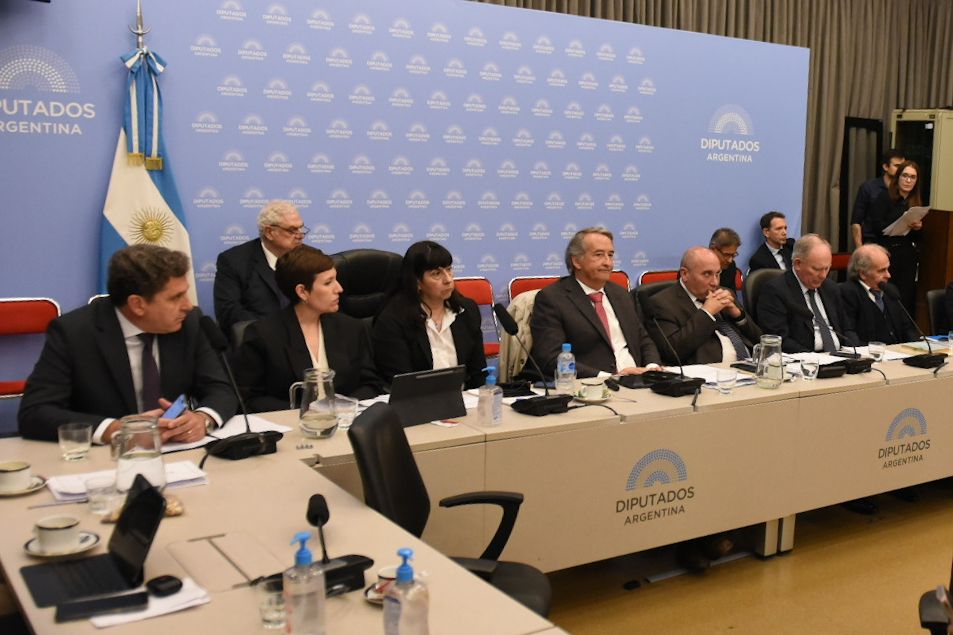
This Tuesday, the ruling party of the Chamber of Deputies of the Nation managed to sign a majority opinion for the Glacier Law within the framework of the plenary session of the Natural Resources and Constitutional Affairs commissions. The initiative will be discussed tomorrow from 3 p.m. at the venue. The ruling party would have 140 votes to turn it into law, while the opponents prepare judicial presentations.
The text already has the approval of the Senate. In the plenary session of commissions of the Lower House it had 37 signatures out of a total of 66. The Unión por la Patria bloc presented its own rejection opinion and, despite having members who are part of mining provinces, could vote without fissures in the session. For their part, the 4 deputies of the United Provinces also signed their own.
During the meeting, the opposition questioned – and asked – that the Secretary of Mining of the Nation, Luis Lucero, retire due to “incompatibility” due to his links with mining companies. The deputy of the Civic Coalition Maximiliano Ferraro requested that he excuse himself from speaking in his role as an official “as he did in 2025” since “he was a lawyer for more than ten mining companies.”
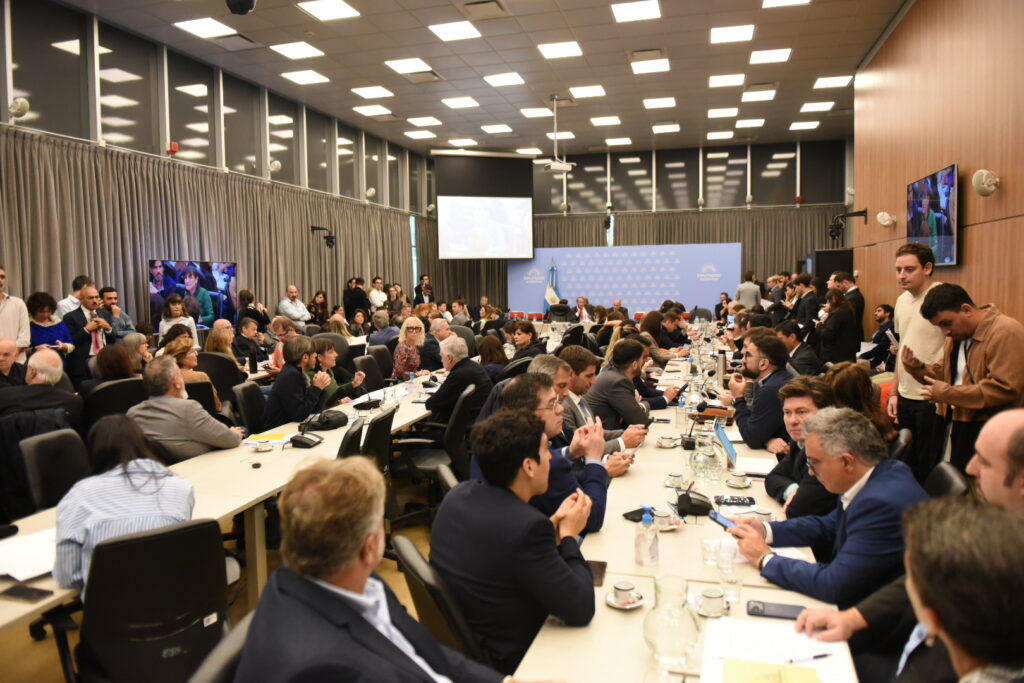
Photo: Courtesy Gustavo Molfino
“The Secretary of Mining is not participating as a mere actor of the executive branch. In 2025, because he belonged to a law firm and advised more than a dozen mining companies, he asked Minister Caputo himself to excuse himself from administrative decisions regarding specific mining projects. We ask him to excuse himself and not participate in this process that is already quite tainted by pressure and scandalous lobbying,” said the deputy.
Left-wing deputies Romina del Pla and Miriam Bregman, as well as Sabrina Selva from Unión por la Patria, expressed the same sentiment.
Del Pla denounced: “Mining companies and the officials paid by the mining companies are the ones who have taken this plenary session of commissions by storm. It is a plenary session of commissions at the service of the mining lobby and, therefore, against the majority of the population of this country. The mining lobby wants to appropriate the resources and common goods, it wants to destroy the glaciers and the periglacial area to benefit a few and leave the environmental liability.”
For his part, Selva pointed out that “the reform of the Glacier Law did not have the consensus of all the provinces in the Federal Environmental Council and coincidentally none of those that opposed were invited.” “Today we have a national government official who had to abstain from participating in procedures in the Executive Branch and comes to speak with the rest of the officials, who come to lobby mining,” he stated.
Ferraro criticized the fact that only representatives and governors of mountain provinces with current or future mining development projects have been invited. “As if the original domain established in article 124 of the Constitution of natural resources was only that of the mountain provinces.”
Previously, at the beginning of the meeting, governors and officials of mining provinces defended the initiative within the framework of a plenary session of informative commissions that took place during the afternoon.
Lucero’s release
After the accusations, the Secretary of Mining, Lucero, responded: “I am very proud to say that I have worked with mining companies.” And he explained that as a lawyer he advised companies “for more than 30 years” and justified the government’s choice to call him to take office. “It seems reasonable to look for someone who has experience on the subject.” During his presentation, he criticized the use of images of the Perito Moreno Glacier by stating that “Argentines are going to run out of water.” “Fresh water is not a real problem. We have to distribute it better and it is not something we want to attack,” he said.
He stated that “the attacks on the project have implied an offensive disregard for provincial capabilities.” “How can we say that we are going to let the provinces manage their water?” he asked, and considered that the opposition sought to “instill fear.” He also clarified that “for various reasons, the pursuit of this cooperative project is the exchange of information.”
The only governor who defended the project was that of San Juan, Marcelo Orrego, even though all the members of the lithium and copper table were invited. The rest of the provincial leaders sent their officials, as in the case of Mendoza and Catamarca. In this framework, he was once again in favor of the text promoted by the ruling party, but also expressly expressed his commitment to the Glacier Law and to the geoform of the periglacial environment. “This is said by a person who lives in a province with 83% mountains, imagine the meaning that water has for us,” he added.
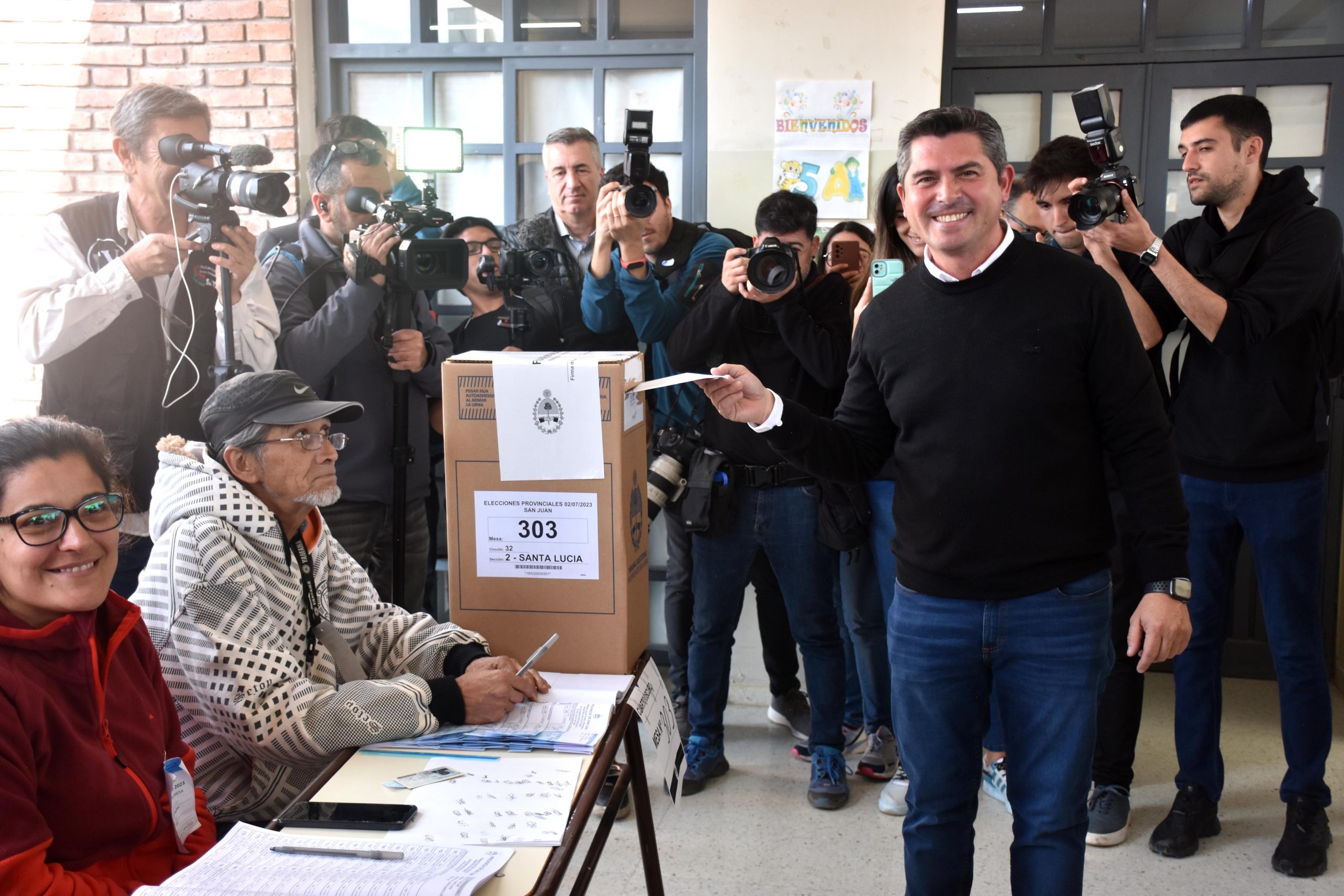
Orrego also expressed that “mining generates enormous activity in the generation of direct and indirect employment, a chain of local suppliers. It is not only developed in one province, but it requires, for example, the metalworking industry in Córdoba or Santa Fe.” Likewise, he pointed out: “This law is not about delegating powers to the provinces, it is about recognizing the true owners of natural resources are the provinces.