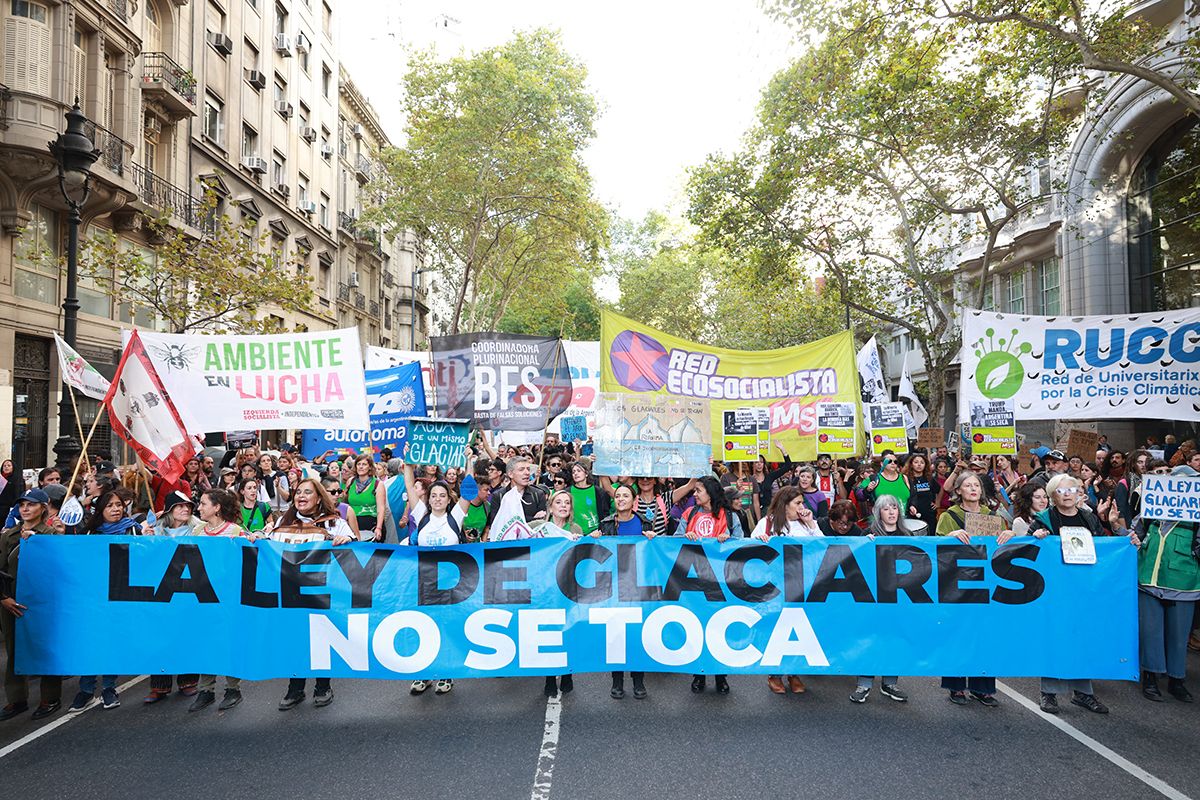
It seems obvious, but in today’s Argentina—where common sense has been reversed—we must repeat the same thing: we defend the glaciers because we defend life. We defend them because they are our water reserves, because they feed rivers and entire territories from the mountain range, because they support regional economies, ecosystems and communities. Because, ultimately, without glaciers there is no present, but above all, there is no future.
However, in a context of increasingly evident climate crisis, with extreme events that are multiplying and water stress that is silently advancing over huge regions of our country, the National Congress decided to move in the opposite direction. On April 9, the Chamber of Deputies approved a reform to the Glacier Law that not only implies an environmental setback of enormous severity, but was also created in a deeply flawed institutional process, crossed by irregularities, manifest illegalities and decisions taken with our backs to society.
What was presented as an instance of democratic participation was, in reality, a staging. The so-called “public hearing” was neither a hearing nor public; More than 100 thousand people registered to participate, but less than 300 were able to do so. There was no real deliberation, there was no listening, there was no debate. There was, however, an operation designed to simulate participation, but they did not succeed.
Congress and the conflict of interest
Added to this is an even more serious fact, which directly erodes the already fragile institutional credibility of Congress, the participation of legislators with manifest conflicts of interest, impossible to conceal.
The case of Flavia Royón is paradigmatic. Senator for Salta and, at the same time, a consultant and supplier to mining companies, she participated in the vote without making excuses, without abstaining, as if the incompatibility between her public function and her private interests did not exist. This is not a minor detail nor an opinionable issue, it is a direct violation of the basic principles of public ethics and the configuration of different criminal offenses, which is why our organization presents the corresponding criminal complaint in federal justice.

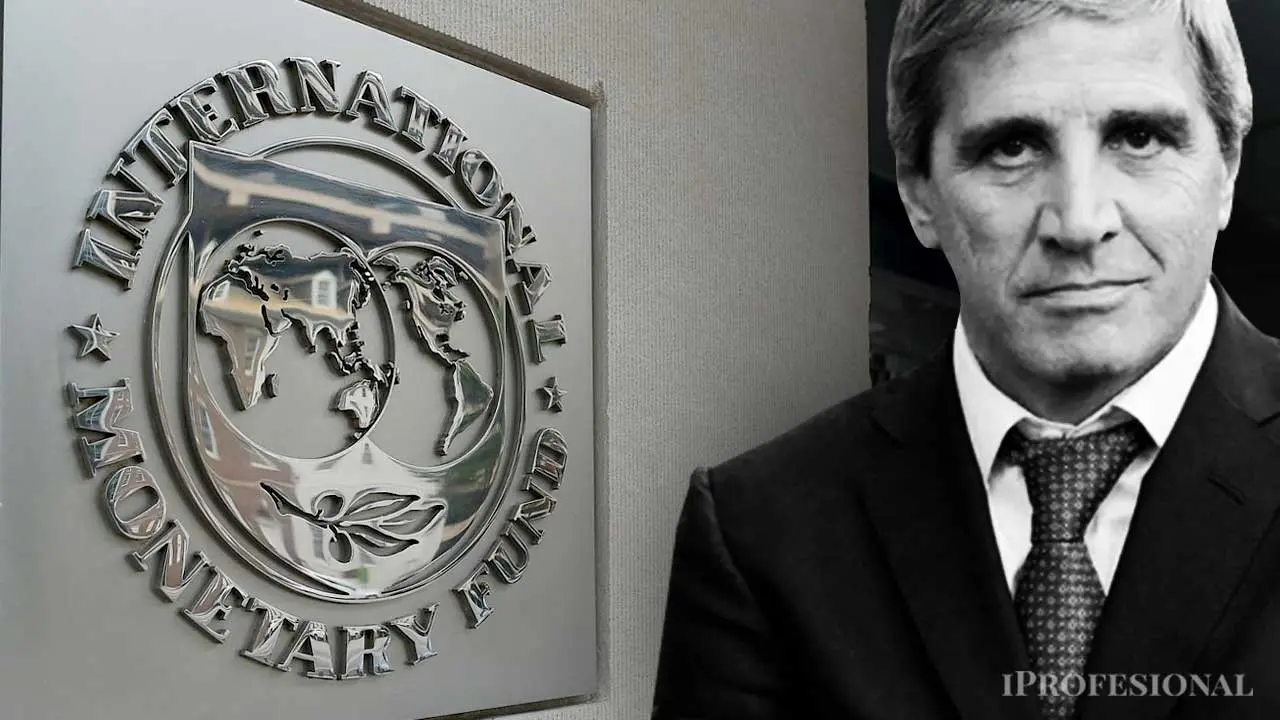
Along the same lines, deputy Nicolás Massot, with business ties to the mining sector, did not deviate from the treatment of a rule that directly impacts his interests. And as if this picture were not alarming enough, the current Secretary of Mining of the Nation, Luis Lucero – linked to multiple corporations in the sector – not only did not maintain the mandatory distance required by his role, but he acted as a true operator of the mining lobby, which is why we also reported him to the federal justice system.
What was approved, then, is not a simple regulatory modification or a technical adjustment. It is a tailored suit for extractive interests, designed to enable a handful of mining projects in glacial and periglacial environments. This is a reform that opens the door to the destruction of strategic freshwater reserves, ignoring not only scientific evidence but also the national and international legal framework.
From a legal point of view, we are facing an openly unconstitutional norm. Not only because of the irregularities in its sanctioning process, but because of its regressive content, which violates the principle of environmental progressivity and non-regression, recognized both in our legislation and in international treaties signed by Argentina.
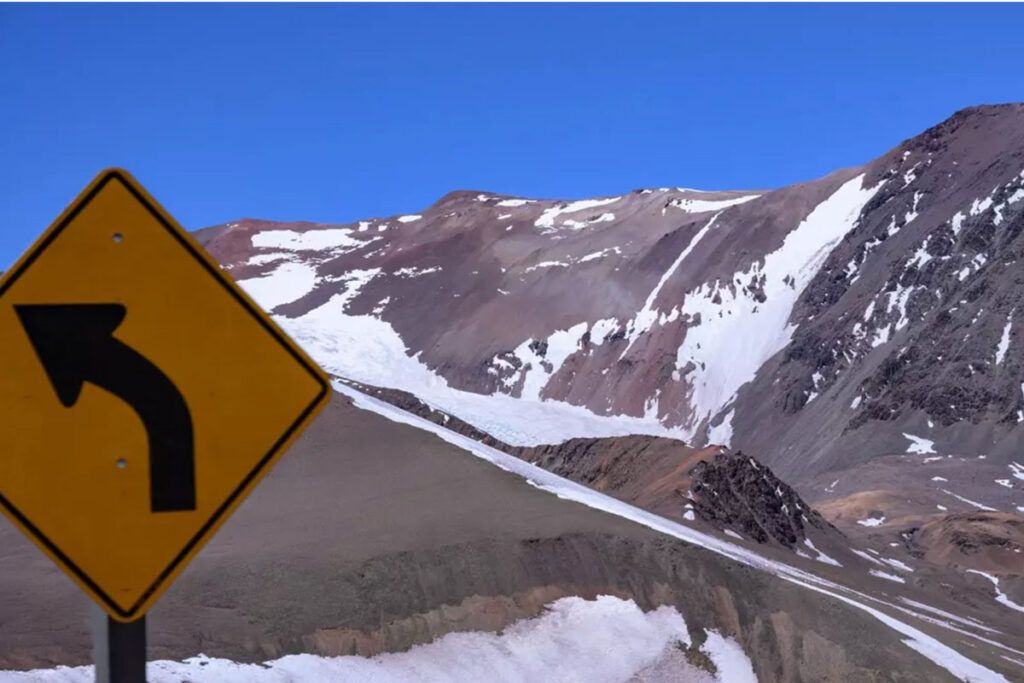
The defense of glaciers and collective construction
But if the history of the Glacier Law teaches us anything, it is that it was never a concession of political or economic power (it was born with a presidential veto). It was, from the beginning, the result of a collective construction, of years of struggle, of articulation between organizations, assemblies, scientists, communities and sectors committed to the defense of water. And like any social conquest, it is not surrendered or resigned: it is defended.
Therefore, far from any logic of defeat, what is now opening up is a new stage of struggle. A stage that is not limited to the institutional level, but goes beyond it and enhances it. In this framework, we have just launched a campaign to promote the largest collective lawsuit in history in defense of water and glaciers, as a concrete tool to confront this setback and sustain the fight on all possible fronts.
The call is broad, federal, open. It is aimed at all citizens, because what is at stake is not a sectoral interest but access to water, it is the integrity of the territories, the very possibility of a habitable future. Joining this collective lawsuit does not imply assuming legal obligations, but it does mean being part of something much deeper, which is the construction of an unstoppable social force.
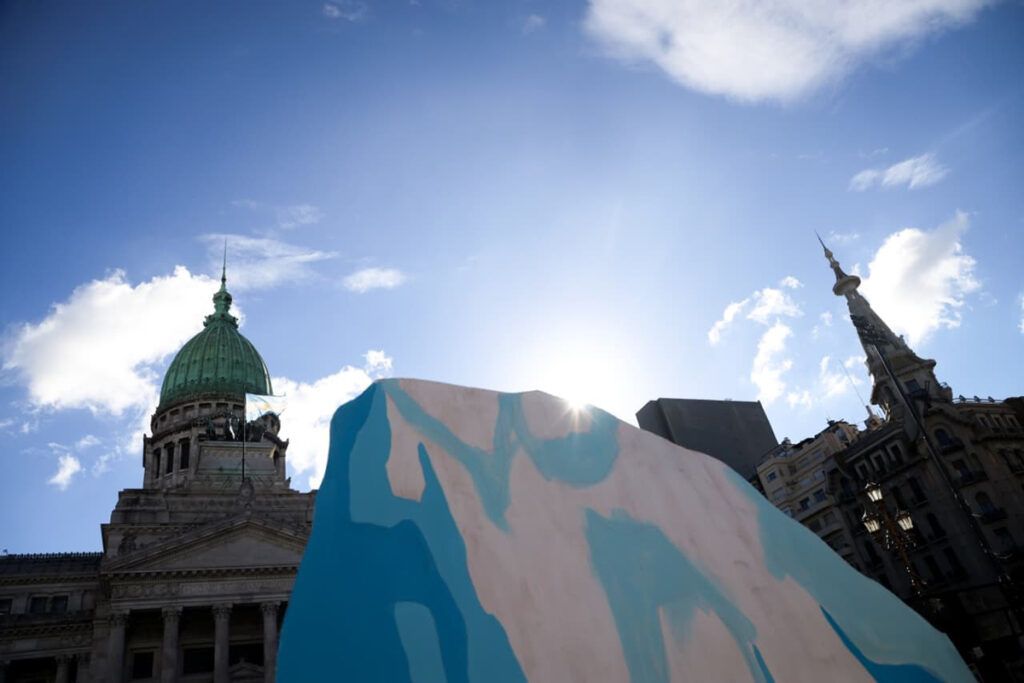
Because this dispute is not going to be resolved only in the courts, although we will also fight there. It will be resolved, as so many times in our history, in the articulation between the street and the institutions, between social mobilization and legal action. The Palace and the street. One foot in the Courts and another in the squares and streets throughout the country, because we understand that there is no environmental justice without popular protagonism.
More than 750,000 people
There are already signs that society is not willing to sit idly by. More than 750,000 people have already signed this initiative, which continues to grow. Assemblies that are reorganized, communities that are mobilized, organizations that articulate at the federal level, provinces like La Pampa that are beginning to react to the impacts that this reform can generate on their water basins.
The mining lobby and its political allies believe that this time they will be able to advance without resistance. That social fatigue, fragmentation or the economic crisis will function as conditions of possibility to impose this model without costs. But they are wrong again. They underestimate, once again, the memory, organization and dignity of a people who have known how, at key moments, to set limits.
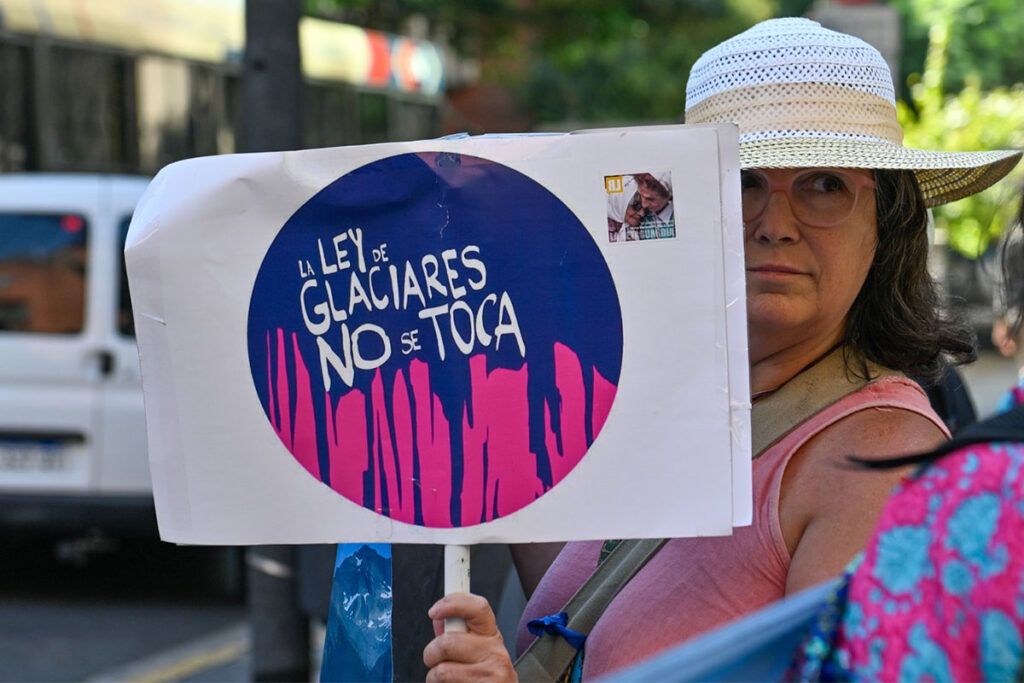
Photo: Courtesy Gustavo Molfino
Because if something has become clear over these years, it is that when they touch the water, society responds. And today that response begins to take on an unprecedented dimension, with the construction of what is going to become the largest collective legal action in the world in defense of water. The invitation is still open, you can still join at https://www.demandacolectivaglaciares.org:
There is no room for indifference nor room for resignation. History, as always, is in dispute. And in the face of an attempted setback of this magnitude, the only possible response is more organization, more participation and more collective struggle. Because this reform is not an arrival point. It is a starting point. And what is coming, we are going to build together.
The Glacier Law is not touched.