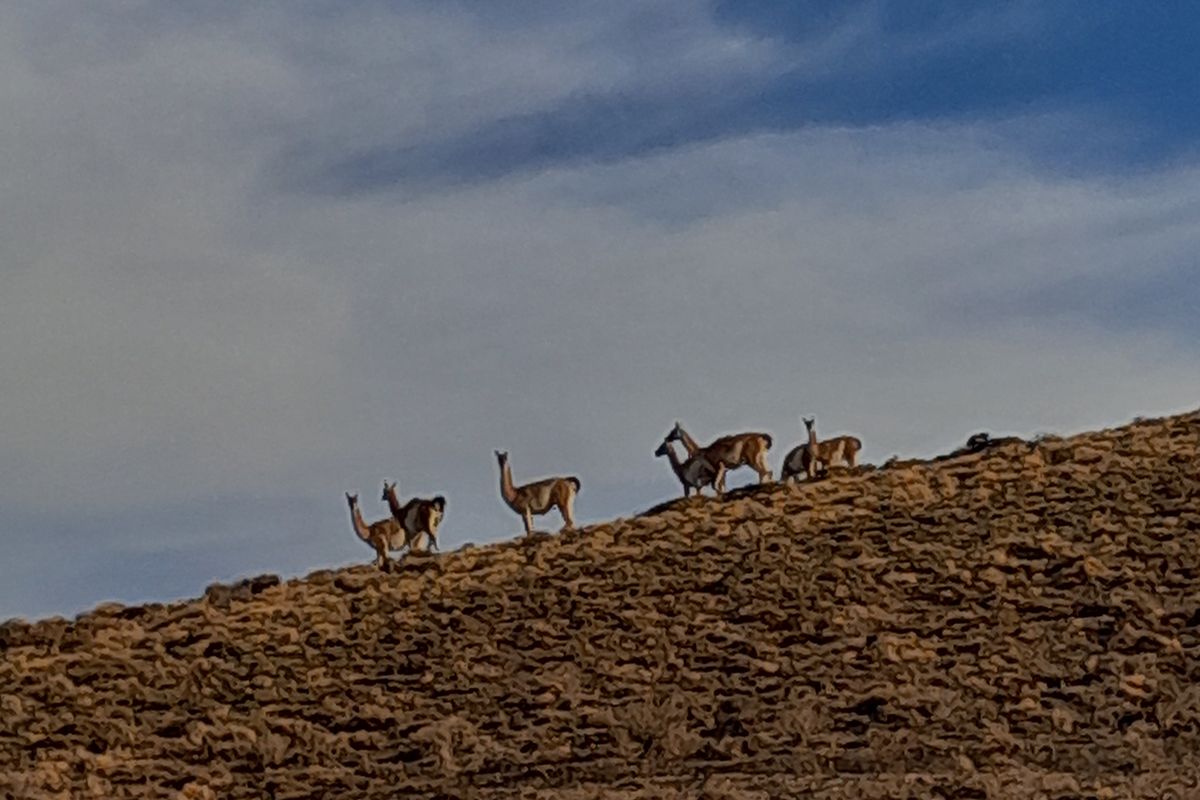
We slaughter a guanaco, come to the field. The mantra was an open secret in the Santa Cruz territory, always. But a decade ago, work began to generate a management plan for this native and wild animal that lives throughout the country, from the sea to the mountain range. At times, he becomes a road hazard because he runs and jumps over fences without drivers seeing them or braking to avoid them. In 2018, a census estimated a population of one million guanacos and today, many consider that it grew to about four million. Others dare to say that there are six million roaming the provincial territory.
The idea was to control the species and return to what the native peoples did: shelter themselves with leather and its fiber and eat meat. It’s a reality. And an old argument that has been going on for a century and a half is that the ranchers, sheep producers, complained that one guanaco consumed three sheep. But the locals know that this wild animal has foot pads (like cats) and does not desert the ground. He even cuts the grass, he does not uproot it like the sheep that then steps on what is left with its hooves.
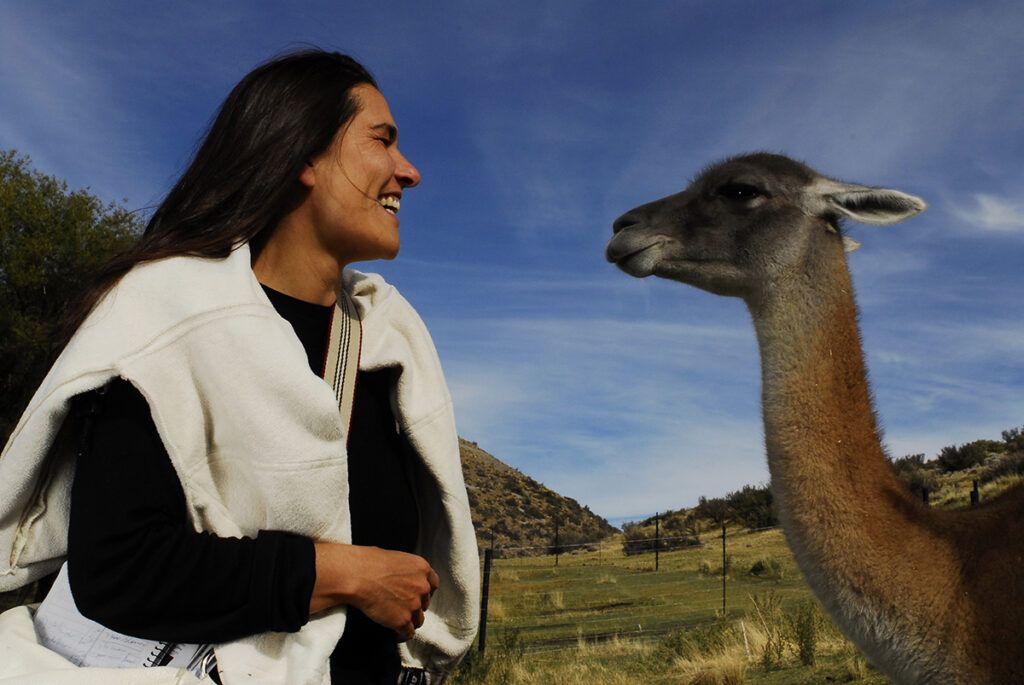
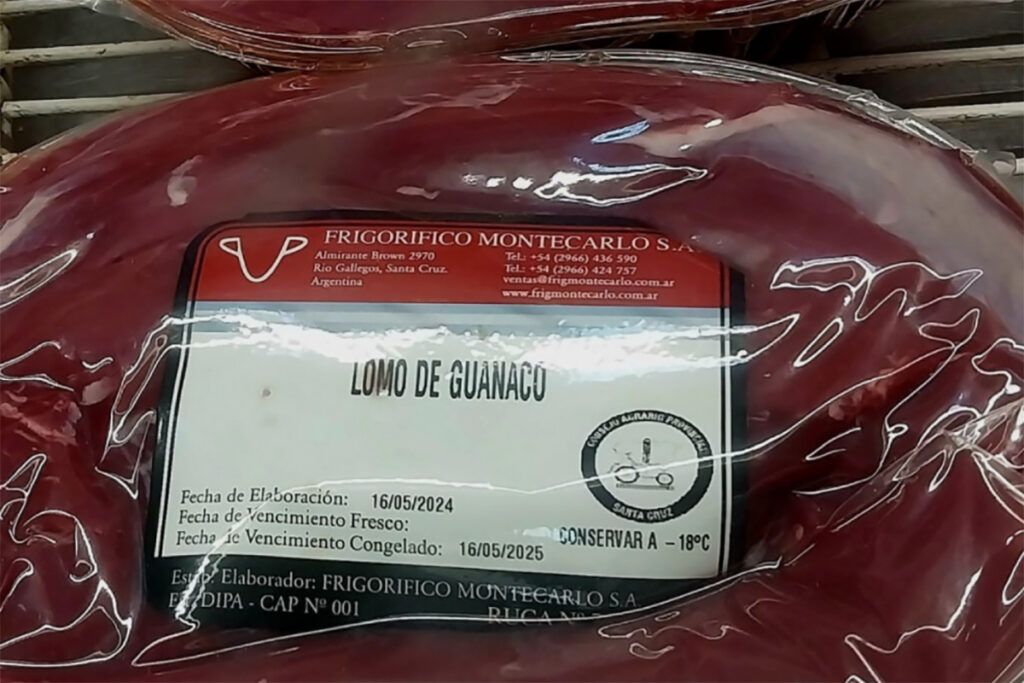
This week, guanaco meat arrived at different businesses in different Santa Cruz towns. Delivery is direct from the two authorized refrigerators in packs, with traceability and health security. The meat processors slaughter and package the meat and distribute it to hundreds of shops, supermarkets, butcher shops and even chicken shops like Don Mateo in Puerto Deseado (Almirante Brown 1217), where Danilo Veiga became a pioneer when in the middle of the summer of 2026 he announced it as a star product. Faced with the increase in beef, which rose 50 percent in recent months, guanaco has a very competitive cost. Two kilos of minced meat cost 12 thousand pesos while the classic special minced beef costs 14 thousand per kilo.
The cuts – loin, quarter, shoulder – arrive vacuum packed. There is a family pack for 20 kilos, all boneless, at a promotional value of 6,500 pesos per kilo.
Guanaco and the sale
Danilo Veiga announced it on his social networks and in the window of his chicken shop: “Dear customers, starting today we incorporate guanaco meat into our products, a unique, authorized and carefully controlled regional product to guarantee quality and safety”. It was at the end of February he wrote for his pollería that he has been working in Puerto Deseado, Santa Cruz, for 14 years, and became the first “official” guanaco meat seller.
For Danilo, raised in the Santa Cruz coalfield, guanaco meat is not just about putting it on the shelf. “You have to know how to work it. I tried recipes and today I sell everything from milanesa, to minced meat, to meatballs,” he explained to Tiempo.
“When they sent me the first box of guanaco to sell, I started to figure out how to prepare the meat and offer it. Then, they sent me between 200 and 300 kilos, and I sold them in a day and a half. Then 1,000 kilos and I finished them in four days and now I am at 1,970 kilos of guanaco meat per week,” he told Tiempo.
In addition, this merchant educates about the benefits of guanaco and distributes the idea with a billboard of nutritional value: “Authentic and Patagonian flavor, ideal for those seeking new gastronomic experiences. High nutritional value, with low fat content and high protein content. Responsible and regulated origin, complying with all current food regulations. We invite you to come and discover this new flavor in our establishment,” says the place’s graphic.
Gastronomic identity
This week the first day “Guanaco Meat: new gastronomic identity of Patagonia” was held. in Río Gallegos, the capital of Santa Cruz. It was on Friday, at an event organized by INTA EEA Santa Cruz, Frigorífico Montecarlo, the Provincial Agrarian Council (CAP), Institute for the Promotion of Livestock (IPG), Sociedad Rural de Río Gallegos (SSRG) and the ArgenINTA Foundation. It has the support of the Government of Santa Cruz through the ministries of Health and Social Development and the Ministry of Tourism; the Federation of Agricultural Institutions of Santa Cruz (FIAS), the ATENEO of the SRRG and the Santacruceña Association of Nutritionists (ASDEN).
The novelty is that the proposal brought together chefs, gastronomic entrepreneurs, institutions and the public interested in learning more about the qualities of guanaco meat. One of the people in charge of the organization, Carla Cepeda (INTA – Natural Resources Research Group), highlighted that “the development of products based on guanaco meat also represents a new productive opportunity for the region, which allows diversifying the food supply and generating added value from Santa Cruz’s own resources.”
For her part, Carla Larrosa (INTA-AER Río Gallegos) explained that “it is a meat that stands out for its versatility and the cultural and economic potential it offers for local gastronomy.”
Premium gastronomy
The day was designed with the participation of renowned chefs with live demonstrations, exchange of knowledge and gastronomic proposals. Paula Comparatore, Mauricio Villa, Alejandra Repetto, Guillermo Vergara, Diego Aybar and Carlos Martínez shared different ways of working with this resource, highlighting its versatility, its nutritional value and its potential for local development.
Chef Mauricio Villa is a reference for gastronomic innovation in the province, creator of the “Don Villa” brand and pioneer in the legal use of guanaco meat. Alejandra Repetto has more than 20 years of experience in El Calafate, leading gastronomic proposals based on local products and sustainability. It was in the “El Alambique” restaurant, at the Kau Yatun Hotel, where many were able to taste their dishes. Repetto is distinguished by the responsible use of guanaco and promotes transparent cuisine, linked to the territory and oriented to the development of a regional identity. She is also an ambassador of this gastronomy and was the winner of the BaronB 2021 Grand Prix with “Experiencia Guanaco”.
Only sustainable project
There is a pioneer in Santa Cruz who carved his life alongside the guanacos. He is Eric Mario Augustin “Cachito. His nickname is “The Maradona of the Guanacos”. He is next to National Route 40, in Gobernador Gregores, where he receives about three buses of European tourists per week who seek to learn about the sustainable management of guanacos. Eric with his partner, Mónica Reinsch, promotes the Patagonia Nativa Project and offers to meet these animals in their field with herds of between 100 and 400 individuals.
“It is open every day, you know the place, the work with the guanacos, you share a Patagonian barbecue, the sustainable management, the shearing, and if it is a family, the kids feed it, they are two meters away. With the guanacos you can stay all day, I tell tourists,” he tells Tiempo. It is easy to find the place in Gobernador Gregores, because everyone knows it.
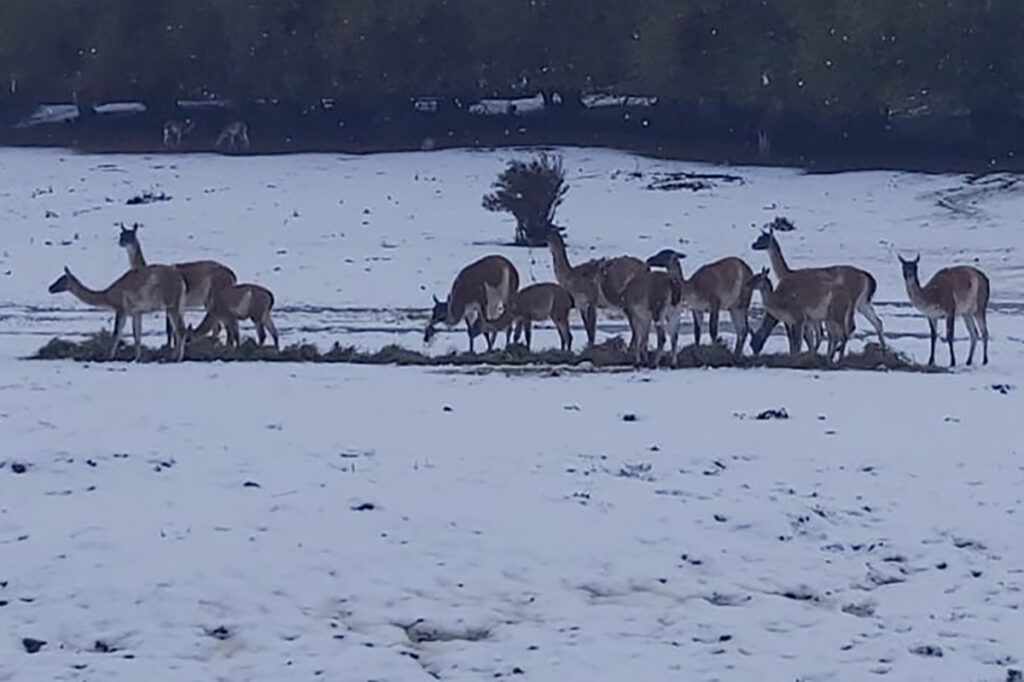
“The guanacos choose to stay in the area with food. They come in the afternoon because they learned that there is extra forage. There is no need to fence or lock them up. We use the fences and nets to contain rescued chulengos in adaptation. And above all so that they are not attacked by stray dogs that roam the farms,” says Reinsch, Eric’s partner.
Eric maintains that in the entire guanaco movement, meat is very important but sustainable projects must be developed around this animal. “We are the only farm that has this proposal and before reaching the refrigerator, the Sustainable Management Plan that we make is to work with wool. It is the first farm with this production,” he highlights.
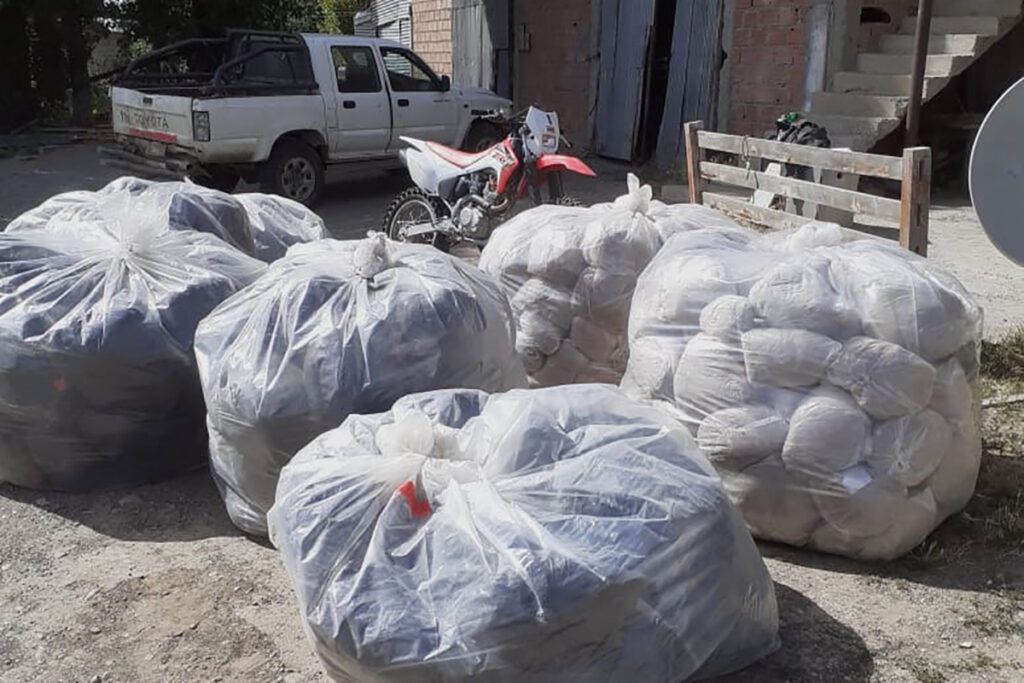
A kilo of guanaco wool has a price of 250 dollars compared to 5 dollars for the best sheep wool. Thus he was able to sell 6,000 kilos to Italy and when he was in Bolivia to promote the venture he was able to market 100 kilos.
One thing is the slaughter and sale of meat and quite another is a sustainable project like Patagonia Nativa. In this province, they can also be seen in freedom. And if you visit the Patagonia National Park or the Parque Patagonia reserve – managed by the Rewilding foundation – the guanaco is at every step. History, nature, production and tourism come together in a territory where the dimensions make it the infinite Patagonia.