The regional financial market is experiencing hours of tension. Trump targeted PIX, Brazil’s electronic payments system, in a conflict that goes beyond commercial: It has a high dose of geopolitics.
He threatened sanctions and tariffs on the neighboring country because believes that PIX, as a state payment model, creates a competitive disadvantage for American companies.
Brazilian President Lula Da Silva came out to “bank” the system and Gustavo Petro, his Colombian counterpart, announced that he plans to adopt it, discarding the Bre-B project itself. But the threat that Trump sees goes beyond a temporary and economic issue.
Why Trump targets PIX
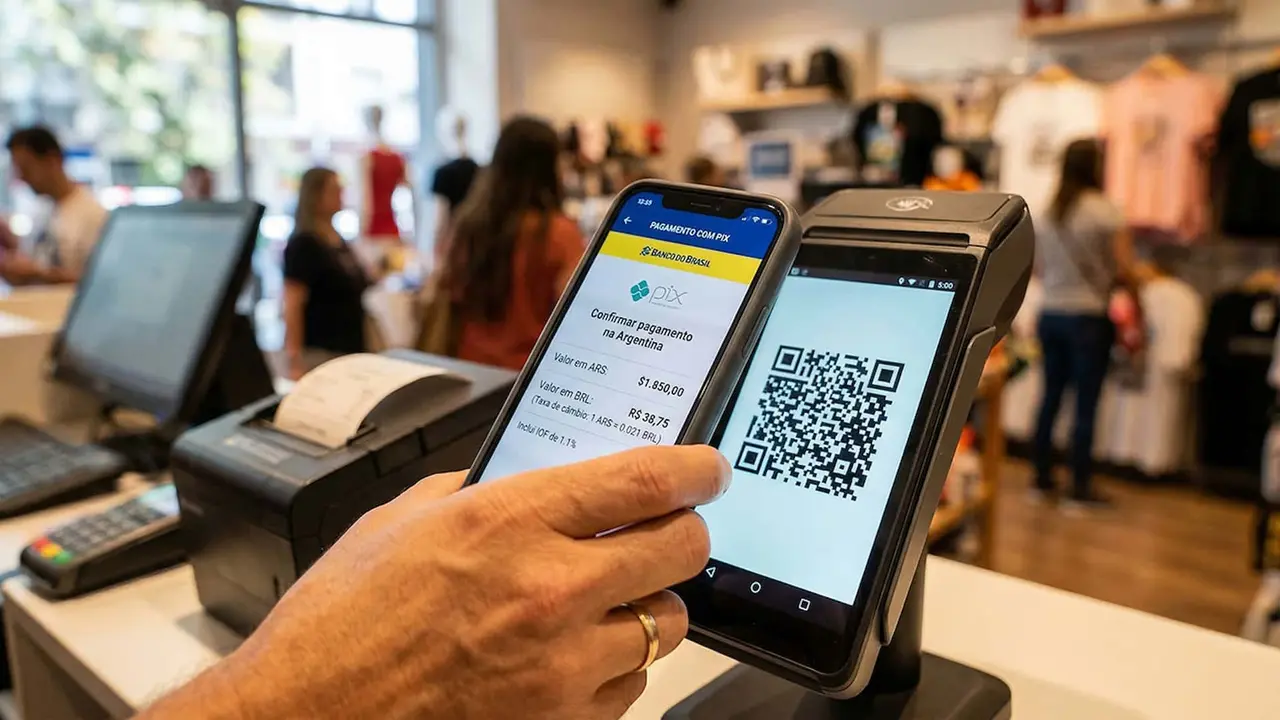
The Brazilian payment system has certain similarities with Transferencias 3.0, the standard used in Argentina. Allows you to charge and transfer using a PIX (phone number, email or national identification) or QR key. AND It does so with very low rates for businesses, up to 0.33%versus the 1.13% and 2.34% that apply to debit and credit cards.
The discussion has several aspects. According to Diego Kupferberg, Banking and Fintech analyst at Taquion, the first is the reason Trump uses, but not the most important: “The United States opened an investigation into Brazil’s practices. PIX entered a formal trade policy discussion.”
Francisco Chaves del Valle, fintech consultant and ITBA professor, adds: “The free nature and design of the Central Bank of Brazil, associated with bank accounts and fintech, means that there are several interested parties and be one more topic in the bilateral conversation between the United States.”
Keys to the Trump vs. confrontation PIX
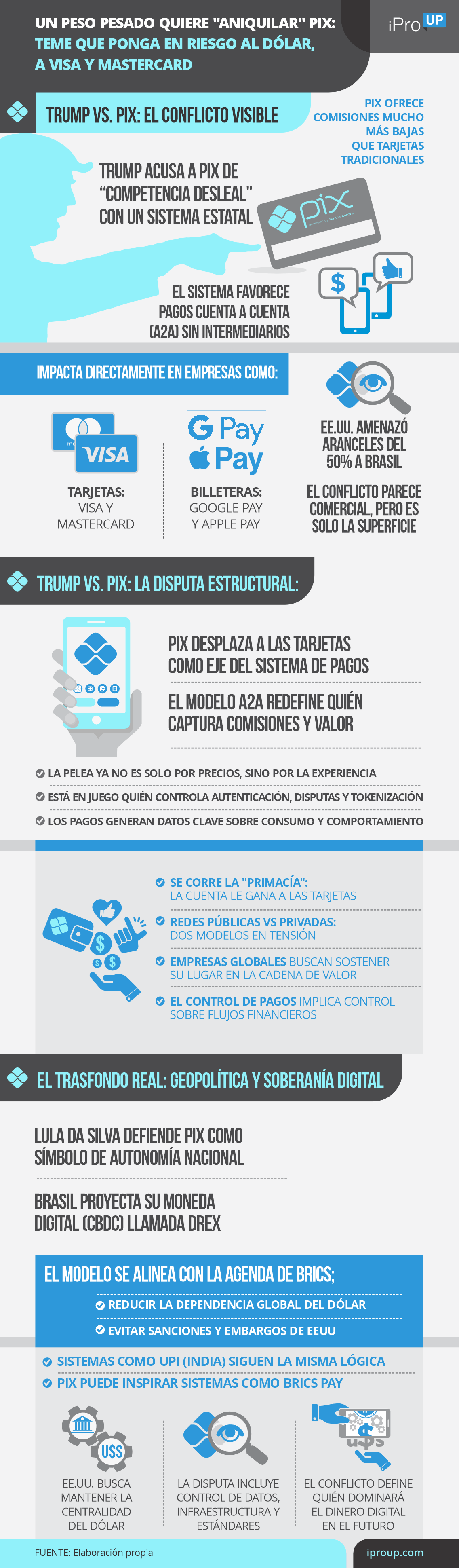
The second key to the problem is the most visible: The Brazilian scheme favors bank accounts and low commissions, which competes head-on against card brands and Google Pay or Apple Pay.
Cristian Soragni, professor at UCA, assures that “It is the most immediate economic effect: it hits Visa, Mastercard and the entire traditional banking system and to the commission model that we know today.
The third aspect is the base of the iceberg and is at the top of Washington’s priorities: geopolitics. For Kuperferg, “when a Central Bank builds public payments infrastructure that scales massively and serves as a national standardwe are no longer discussing just one product; digital sovereignty is discussed“.
So it bleach Lula Da Silva himself with a network campaign: “PIX is from Brazil.” And it sets the tone for what is to come.
Geopolitics and payments: the heart of the confrontation
According to Soragni, The US coup is not against a payment system, but rather responds to an agenda of the bloc which makes up Brazil together with Russia, India, China and South Africa, which is in tension with Washington.
“The model proposed by PIX is 100% related to policies that the BRICS want to promote, such as reducing global dependence of the dollar or promote local currencies,” says Soragni, alluding to avoiding US sanctions and embargoes.
The expert emphasizes that the North American power “dominates key institutionslike SWIFT and the IMF. Brazil with a system like PIX, with influence in Latin America; and under the BRICS bloc, they seek to decentralize the economy that the US centralizes with the dollar.” Chaves del Valle reinforces: “Trump wants to avoid total state control of digital money.”
DREX, the central bank digital currency (CDBC) being prepared by Brazil, will also be able to run on the PIX rails. Trump himself ruled out having one for the dollar and delegated that risk to private parties, in addition to forcing them to buy Treasury debt as collateral to maintain the greenback as a global reference.
“If Brazil establishes CBDCs, it can naturally transform other infrastructures, such as blockchain. Each Central Bank would have full control of turning those tokens on or off. If Brazil gains an advantage on this point, the US will respond so that the world continues moving with the dollar: it will fight each battle as the last,” says Chaves del Valle.
This has two readings. On the one handPIX may be the model inspired by BRICS Pay, the system that emerging countries design as an alternative to the dollar to trade between themselves and other nations.. In fact, India’s UPI and Russia’s SPB follow that path.
The leading global power not only seeks to keep the business, but also the flows and information that this entails.. According to Kupferberg, “there is a fight over data, interface and account primacy.”
“When payment is made by account by account (immediate A2A), the card loses its primacy: The discussion is not just ‘how much do I charge’, but who is at the center of the experiencewho defines authentication, disputes, tokenization and programmable payments,” he adds.
Soragni reinforces that, due to payments with transfers, “The evolution of debit cards is falling. So, brands like Visa lose all those commissions for a volume that they don’t see today“.
Trump also seeks to prevent the spread of PIX, something that began to be noticed with increasing force. Argentine wallets and banks are already compatible with the Brazilian QR, which accounted for US$7 million in daily payments from albiceleste tourists on the coasts of Rio. In Uruguay it is also accepted as a means of collection.
But its expansion is not only cabotage. The BIS, which brings together central banks from around the world, proposes PIX as a success story in its NEXUS project to be imitated by other countries. Nobel Prize winner Paul Krugman also highlighted it as a more effective vehicle for financial inclusion than cryptocurrencies and private options such as the American Zelle.
Kupferberg highlights that now “is expanding through cross-border use and bilateral acceptance: tourism, remittances, regional trade and bridges between systems“, like the Argentine QR, carried out by COELSA.
The Argentine case
The fight over the interoperable QR has already generated disagreements in Argentina. The most notable was to “upload” the cards for reading codes with any wallet, but Visa had previously presented its complaints in the first version of the interoperable QR.
The center of the issue was the replacement of the debit card by transfers, that was decided salomoonly: In both cases, the commission is 0.8% for the trade. It can be said that the Argentine QR is safe from Trump’s attacks.
For Soragni, The claim is logical since VISA is the main issuer of debit cards in Argentina, especially those linked to salary accounts.. “Seek to counteract it with promotions like: ‘pay with NFC and we’ll give you 30% back,'” adds the expert.
Chaves del Valle adds that Transfers 3.0 “was not created 100% by the Central Bank, but together with privateat a time when total control of QR payments was with Mercado Pago. From there the best possible product was made, with low commissions.”
This allowed players to participate in the business, so that the incentives and conditions have a certain level of industry consensus. Although it is for regional compatibility: COELSA is already negotiating with the clearinghouses of other countries so that the Argentine QR is also compatible with that of Paraguay and Uruguay.
The firm has also just announced another function that benefits the industry, but puts the card business at risk: NFC payments, in which you only have to bring two phones together.using the transfer infrastructure instead of cards. And threatening another business that Visa and Mastercard are already testing in other countries.
Interoperability is at the center of the scene. Not only Latin America is advancing, but also the Asia-Pacific region, with agreements between eastern and oceanic countries to emulate a common payments area similar to the European one, but with QR.
In response to state efforts, PayPal World is already being formed, a payments alliance that, in the form of a Treaty of Tordesillas, the American giant drew up throughout the world to maintain leadership in payments:
- Venmo (US and Europe)
- UPI (India)
- Mercado Pago (Latin America)
- Tencent Pay (China)
“Latin America is entering a much bigger discussion: whether the payments of the future will be dominated by open public infrastructures or private layers that rent access to the user experience,” closes Kupferberg.
Trump is not going against Lula or against a QR. It seeks to neutralize a systemic risk that threatens to reduce the relevance of the dollar and US companies in daily transactions. It’s a fight over who defines the rules of digital money.