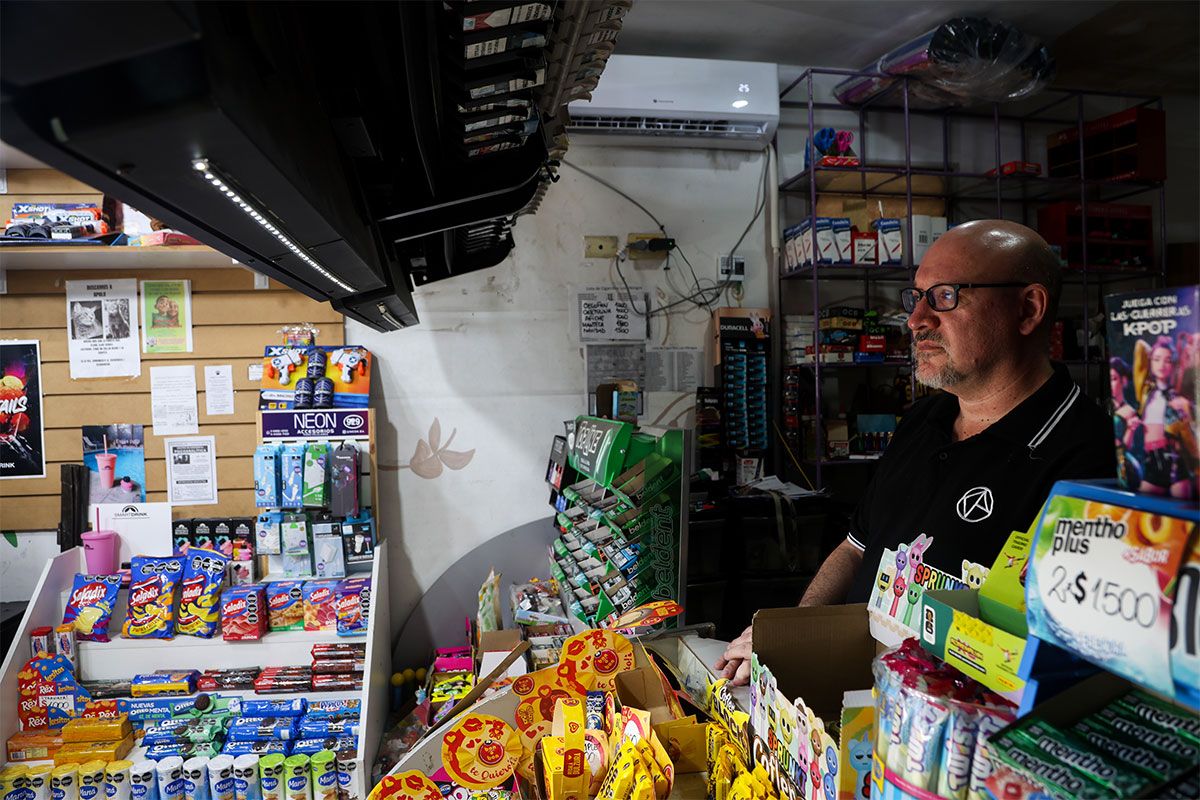
In every corner of Argentina there is a kiosk. From multi-business businesses to small family or sole proprietorships, where consumers quench their thirst, hunger or simply get out of trouble. However, these earthly paradises are in sharp decline, victims of an economic policy that plummeted purchasing power and pushed more than 36,000 merchants to lower the blinds. They define it with a concept: they are “in danger of extinction”.
As president of the Union of Kioskers of the Argentine Republic (UKRA), Ernesto Acuna summarizes that “in recent years, but especially since the government of Javier Milei“The sector is going through a critical situation.” The cold numbers don’t let it lie: Of the 96,000 kiosks that existed in November 2024, today there are 59,000 left. They estimate that about 70 thousand people had to look for other sources of income.
Beyond the characteristics of each kiosk, they are generally neighborhood businesses run by one or two people. Only a handful have formal employees. The sector references consulted by Time agreed in pointing out that the sector, without exceptions, goes through a complex scenario with three well-differentiated problems which, if not reversed, will further reduce the number of survivors. Today 70 kiosks die per day.
There is no money
In unison, the sources highlighted the drop in consumption as one of the main obstacles. “Nothing is sold, we are at an average of 50% of what was sold before. The loss is uneven depending on the area: if you are in Recoleta, Puerto Madero either Belgranothe drop is 10% or 15%,” he describes Acuna who has his kiosk at Olazábal 5314. He has been in Villa Urquiza.
The worst context occurs in the most popular neighborhoods. “If in the City You have a kiosk in the central corridor, as in little horse, Flowers or even Villa Urquizathe decrease represents 50% compared to last year or two years ago. If you go to Conurbanocolleagues tell us that they are selling only 30% of what they sold before and many are thinking about closing. The same or worse happens inside,” says the reference of UKRA.
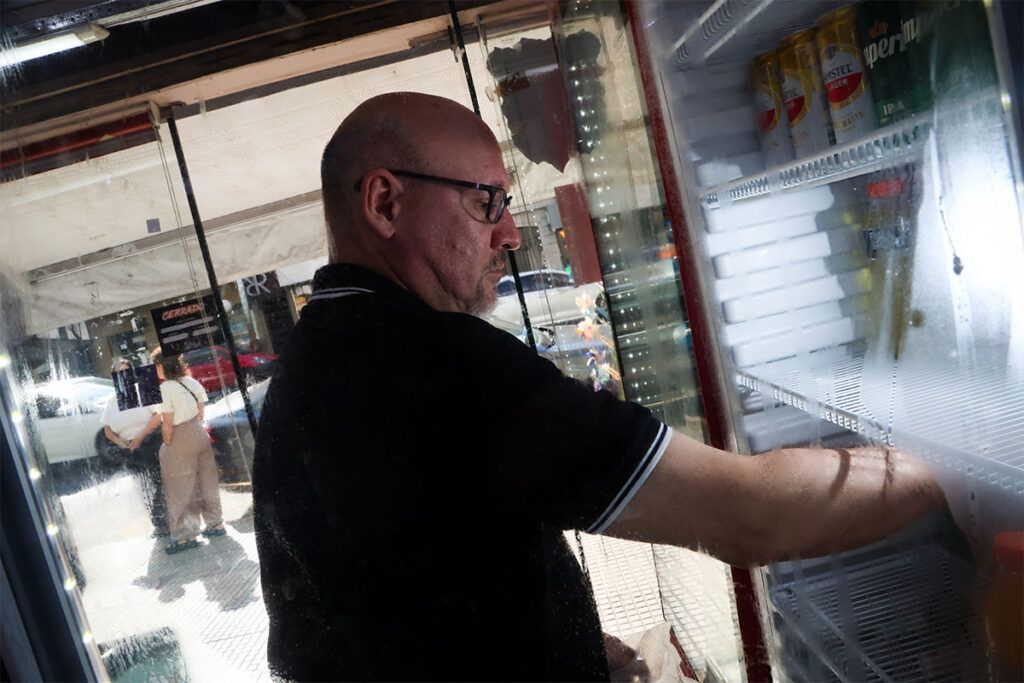
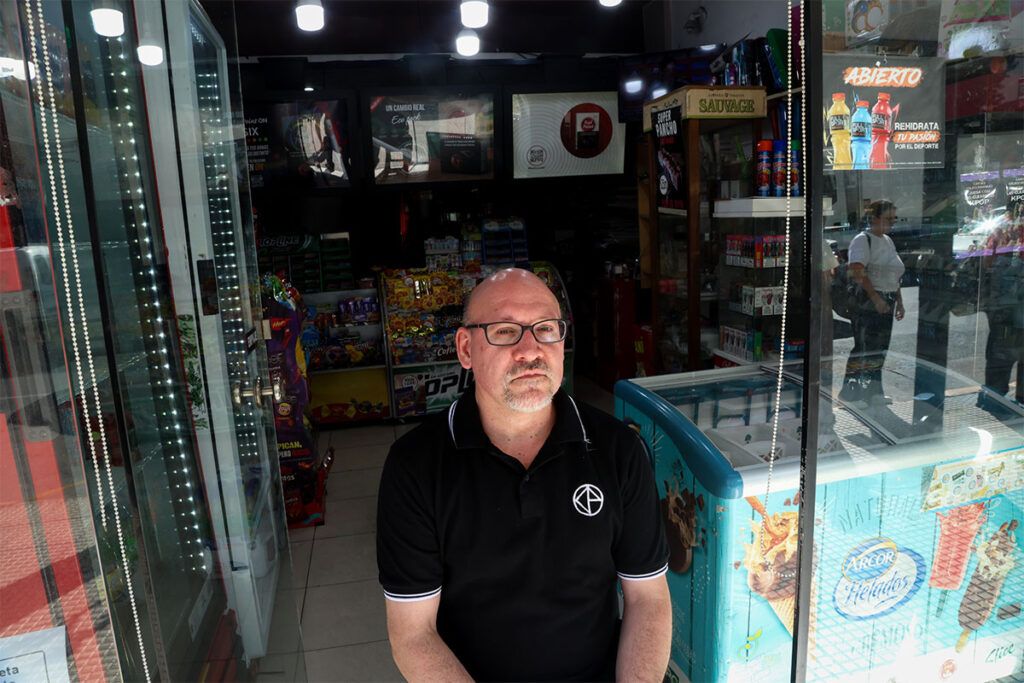
On the other side of the General Peacenestled in Villa Martelli, Vicente Lopezthe kiosk José turns 32 years old. “My wife and my brother opened the store and I helped when I came home from work,” remembers this former tire salesman. Over time, their children contributed their own while they studied. Today, although the couple retired, José helps the only son who continues with the business: “Over the years this changed. There were very different situations, but I can assure you that There has never been a total stoppage like the one there is now.“Consumption drops, but services increase: “A colleague from Lugano told me that he was paying a million-odd rent and they took it to 2,600,000. It has to go or close. We do not pay rent, otherwise with this drop in sales the same thing would happen to us.”
Franchise dumping
As a second point, from the sector they indicate that the emergence of kiosk chains in cities leads traditional merchants to the abyss. “You have a kiosk in the middle of the block and these franchises come and open one on the corner and another on the other. Because they do that, they look for the corners. For every one that opens, five or six close”he complains Acuna. And he warns: “If before you earned 100, now you earn 33 or less because you have to distribute it with these chains. Then, the neighborhood kiosk closes, because they have another back.”
José also emphasizes this phenomenon: “These chains do a kind of dumping. They come, they install a kiosk for you and they lower your prices for six months, they melt you down and then they are left alone. There they change prices again.”
Exclusiveness
The third factor is also important: the merchandise that was traditionally sold in kiosks was no longer exclusive. It is no coincidence that the City of Buenos Aires or the main urban centers have lost the greatest number of these businesses: “Today you can sell anything anywhere. Capital is a total mess. A pharmacy sells you candy, a Chinese supermarket sells you cigarettes, the grocery stores put refrigerators with drinks. You go to a corralón and between moladoras and bags of cement they have a kiosk in the box,” he lists. Acuna.
TO Christian they usually tell him ‘Diego’ because his business is dedicated to the soccer star. In 2028, MaxiD10sko will celebrate two decades in Blanco Encalada 5029, CABA. The young man feels privileged to be a few meters from the Urquiza Station of the Miter Train and of Subway B. “Before we worked more calmly. Suddenly it’s like they slapped us. “The majority cannot find a way around it to be able to move forward,” he said.
“Before it was easier to maintain the business: we bought merchandise, there was stock, and although prices increased there were a lot of sales – he continues Christian-. What changed is that a year and a half ago everything increased a lot at once and people find it difficult to buy. Then, the price of the merchandise stagnated, but they hit us hard and they continue to increase all services: electricity, rent, expenses”.
The president of UKRA He adds that in the first semester he took office Milei The light increased to 400 percent: «In some cases it quintupled. All from one day to the next. And the increases continued.” Acuna sentence that in his 27 years as a newsstand ““For the first time we are paying more for electricity bills than for rent.”.
The kiosks knew how to adapt to different situations. From adding telephone booths to photocopiers, or collecting bills for services, managing the delivery of packages as a pick-up point and even the preparation of homemade food. The deterioration is notable. From Villa Martelli, José He highlights that years ago “a business like ours managed enough income for two families to live in. Today I don’t think even one survives.”
Acuna recognizes that in crises appears the “kiosk window”: “People who may not make ends meet and with an investment open a business in the garage, in the window of a bedroom or in the dining room.” The future of these kiosks is tied to the skill of the entrepreneur who, as a counterpart, may lose his savings.
This trend, typical of these times, “in the long run ends up screwing up the neighborhood kiosk owner in the area, who was previously alone and now sees that there are two or three on the block. In the Conurbano there are blocks with 10 houses and 5 kiosks“analyzes Acunawho clarifies that since UKRA They represent “all colleagues equally.” Less to the chains: “They are our enemies and one of the culprits why we closed”.
Exclusivity and proximity: two bills
To alleviate the crisis in the sector, the Union of Kioskers of the Argentine Republic (UKRA) proposes the sanction of two laws – one linked to proximity and the other to exclusivity – to protect merchants.
The first of the rules seeks to establish that a kiosk cannot be opened less than 100 meters from another that is already installed. “Especially so that the chains do not put a business next to you as is happening now,” he argues. Ernesto Acuñapresident of UKRA. On the other hand, the so-called exclusivity law intends that only kiosks can sell certain products such as candy.
Time was able to know that the references of UKRA They have been polishing both projects with Buenos Aires advisors and legislators from sectors as dissimilar as Peronism, the left, but also the PRO and leaders who respond to the former Head of Government Horacio Rodríguez Larreta.
“Before I took office, I had a coffee with Jorge Macri in Villa Urquiza and I told him our problems. He told me that his idea was not to get involved in this story. “They believed in the free market,” he laments. Acunawho insists on the importance of putting a stop to franchises.
The idea is that these two laws are sanctioned in the City of Buenos Aires and generate a contagion effect in the rest of the country’s jurisdictions: both in the provinces and in the municipalities, who are ultimately the administrations that charge them fees and taxes in order to function.
“I didn’t think about closing, because a lot of people pass through the door of my business. But these laws are key for us to survive. Before, my business was enough for me to support my family and go on vacation for 20 days.“, summarizes Christianthe owner of MaxiD10skowho adds that his wife, with whom he has a four-year-old daughter, must now look for a job “even if it is an administrative job to complement her income.”
“The neighbor has no money today”
Joséof Villa Martelliwarns about the importance of enacting a rule that allows kiosks to sell certain products exclusively. “We serve as Guinea pig for those companies like Orders Nowwho were setting up their own market after seeing what people asked us for during the day: soft drinks, cigarettes or chocolates,” he details. Now, these companies have their own warehouses in different areas and “they sell it directly.”
“At the national level they are modifying many laws, but I believe that none of them so far are in favor of the worker.. And we, the small businessman, live off of his clients, of the neighbor who takes the bus to work every day. Those who today do not have money because either they do not have a job, or they do not have a salary that allows them to live with dignity,” he concludes.