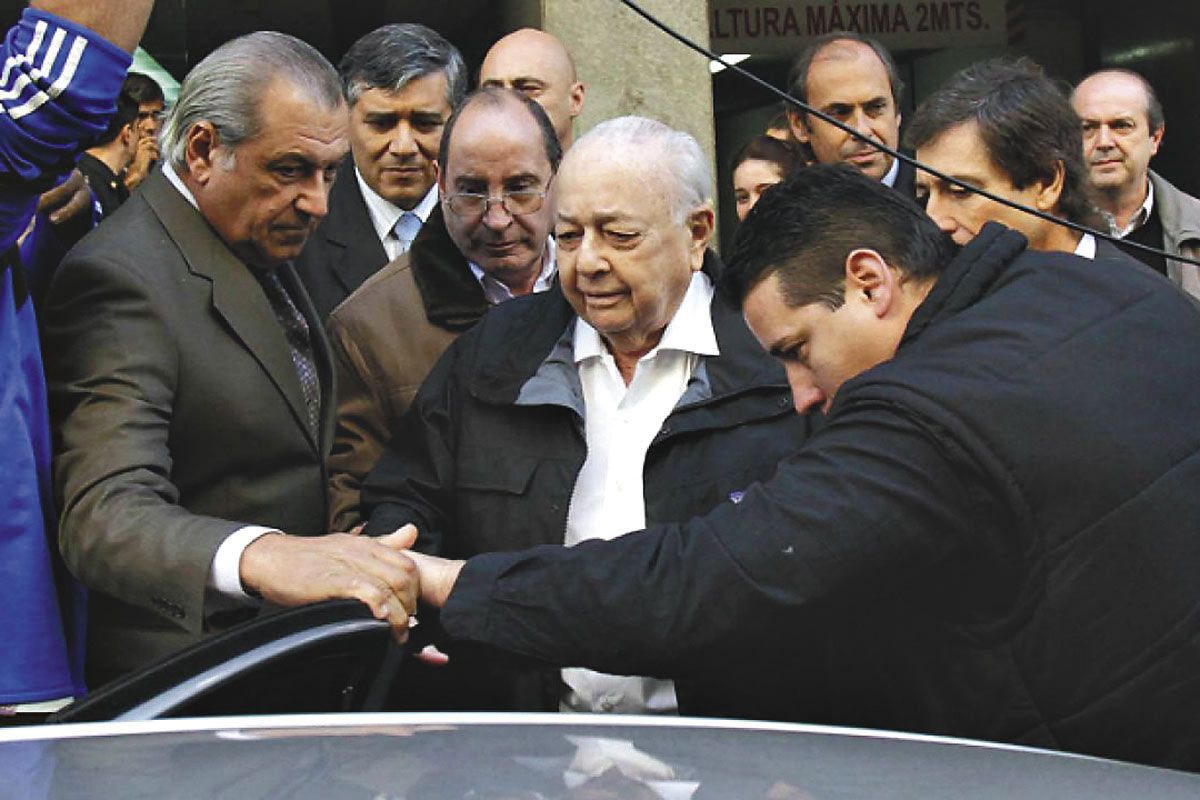
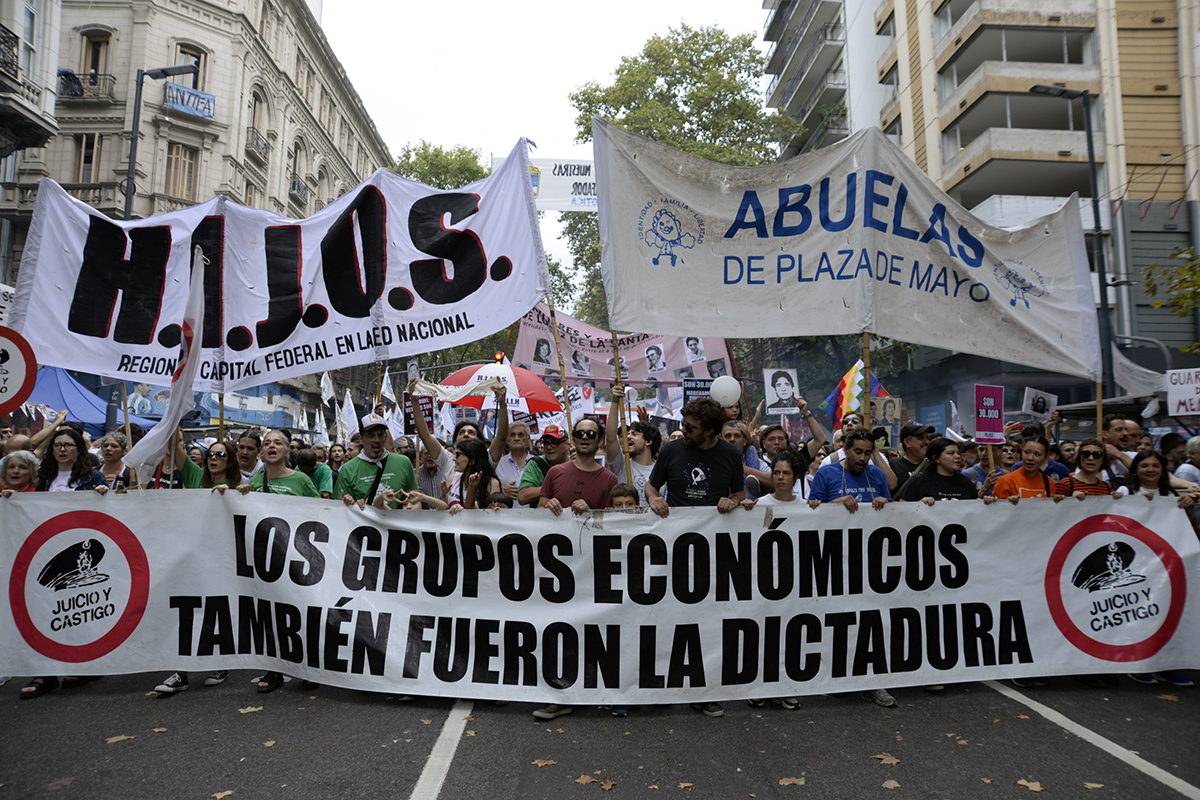
While the judicial process has already involved more than 360 sentences and more than 1,260 people convicted of crimes against humanity, only three of those people were businessmen: just 0.24% of the total. The judicial bar is raised when powerful civilians are involved.
The judicial reluctance to move forward with those who benefited from the kidnappings, torments and disappearances was clear from the beginning of the trials and was recently confirmed with the acquittal of former senior employees of Acindar in Rosario with arguments that justified the repression.
Despite this, in this very complex political moment, the causes remain. The victims of Molinos Río de La Plata hope that the debate against Emilio Parodi, former chief of staff of the firm that belonged at that time to Bunge and Born, will begin next April, and a date must be set for another against Juan Ronaldo Tasselkraut, former production manager at Mercedes Benz.
In Jujuy, the victims await the debate over the Ledesma crimes, the cause in which the owner of the mill, Carlos Blaquier, died unpunished. Only the former administrator Alberto Lemos remains charged.
In Tucumán, ten years of judicial proceedings for the La Fronterita crimes were not enough and the debate was suspended last March 10, a few hours before it began due to a delaying strategy by the defenses, which challenged two judges of the Court. The defendants are two directors of the sugar company, Jorge Alberto Figueroa Minetti and Eduardo Buttori, accused of complicity in kidnappings, torture, rapes and homicides that had 68 people as victims, mostly workers and union leaders of the sugar mill. Both are over 86 years old.
For historian Victoria Basualdo (Conicet/ CEDIEP-UNQ/IIEGE-UBA), the fact that it has been possible to investigate and judge the responsibility of some companies has enormous value in the Memory, Truth and Justice process. “A lot of issues could be raised in the Argentine case, the Ford case was achieved, which is a point at an international level to be able to think about this issue, and not only verdicts but very interesting sentencing grounds were achieved.”
“Without a doubt we are at an inflection point, it is a change of time in many ways and it is very difficult to do an analysis with the processes in motion, but it seems to me that there are lines that are solid and that cannot be ignored. I believe that this line of corporate responsibility today is very relevant and we have opportunities to deepen it in the courts but also in the streets, in the processes of memory, in the processes of articulation, union struggle and identity construction. Not in the key of nostalgia, not in the key of looking only at the past, but also looking at the present and to the future,” he concluded.
An anti-worker ruling
If getting to trial for these crimes is difficult, convicting those responsible is even more complicated. This happened in the Acindar case, in which last year the Federal Oral Court of Rosario acquitted the 17 defendants, including Roberto Pellegrini and Ricardo Torralvo, former hierarchical employees of the company that until 1976 was chaired by José Alfredo Martínez de Hoz.
The ruling, known in November 2025, generated surprise but the foundations published at the beginning of February of this year generated a lot of anger and indignation. The vote of Judge Ricardo Moisés Vásquez, who took the lead, dedicated pages and pages to analyzing the political affiliation and the possible crimes that the Acindar workers, victims in this trial, would have committed when they carried out forceful measures in the factory located in Villa Constitución.
“We were surprised by the shielding of the legal discourse, it is prior to 1985, prior to Cause 13. The theory of the two demons falls short, they see only one demon and it is us,” Gabriela Durruty, APDH lawyer, who represented survivors and relatives, summarized in a press conference, who described the ruling as “anti-worker” and “revictimizing.” The APDH, like the Public Prosecutor’s Office, appealed to Cassation to reverse the ruling.
The judge clarified again and again that this is not an ideological ruling, however, he justifies the mass arrests with arguments very close to those that led the government of Isabel Perón to order the repressive operation called “Red Serpent of Paraná”: “The identification by the State of union leaders and activists of the Brown List as linked to political-military organizations, and the decision to adopt repressive measures under the protection of the current state of siege, were inscribed in a context historical period in which the conflict was perceived—regardless of its subsequent legal assessment—as part of a national political dispute, and not as a mere local union dispute,” said the judge, who considered that there is no evidence to convict any of the accused.
Although Vásquez’s vote was supported by his peer Omar Paulucci, Judge Germán Sutter Schneider voted in dissent and considered that ten of the cases constituted crimes against humanity, for which a sentence of 6 years was appropriate for Pellegrini and 8 years for former federal police officer Roberto Álvarez.
Sutter Schneider pointed out that they constituted crimes against humanity “as they originated in the political persecution of those arrested for belonging to, adhering to, or invoking their connection to the group or collective with its own identity called the “Brown List” of the UOM union of Villa Constitución, led by Alberto Piccinini, falsely branded as subversive.” “They cannot be interpreted as isolated events but as part of a plan to eliminate in this way the political opposition that this type of grassroots, pluralistic and independent union management meant in the UOM and that generated the true siege that took place in Villa Constitución, characterized by a systematic attack on the civilian population in those years 1975,” he added.
The responsibility of large companies in state terrorism was clear from the first complaints from survivors, organizations and relatives. The Never Again and the trial of the military junta highlighted that many of the victims were workers and that there were kidnappings and clandestine detention centers in the workplace.
The first conviction, however, occurred only in 2016, when the now deceased Marcos Levin, owner of La Veloz del Norte, received 12 years in prison as a necessary participant in the illegal deprivation of liberty and torture applied in 1977 to a worker and union representative of the firm. In 2023, he received a second 18-year sentence for his involvement in crimes against 17 other workers.
In 2018, it was the historic ruling in the Ford case in which two managers of the multinational, Pedro Müller and Héctor Sibilla, were sentenced to 10 and 12 years in prison for crimes against 24 workers at the Pacheco plant.
These convictions show the unprecedented progress that the Memory, Truth and Justice process was able to achieve. The difficulty in reaching these trials and verdicts also shows the resistance it generates within the Judiciary, as could be seen in cases such as that of Blaquier, who benefited from the judicial delays that allowed him to remain unpunished until the end, or the herbalist businessman Adolfo Navajas Artaza, who died without even being prosecuted: in the file, 18 judges refused to take an investigative statement from him for having personal ties with the powerful Corrientes businessman.