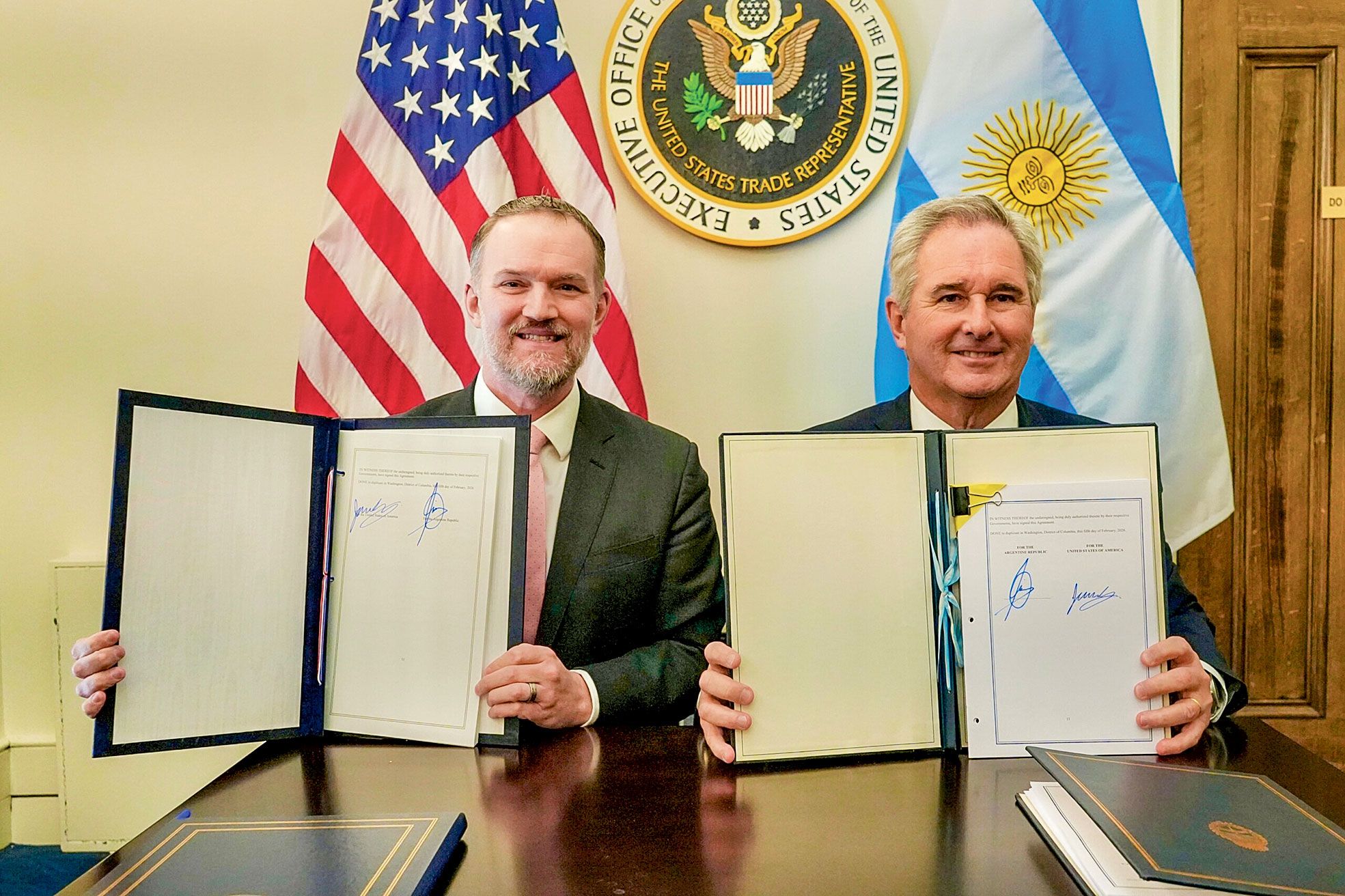
After having signed the trade agreement with the United States, and in the midst of expectations for its future after the resolution of the US Supreme Court, the chancellor Pablo Quirno will attend Congress to present the details of the most important understanding of the government of Javier Milei. This was confirmed by official sources to this newspaper, while recognizing that only some of the points signed in the trade alliance will be discussed in parliament to achieve their full application.
Just as the Secretary of International Economic Relations, Fernando Brun, did weeks ago, the minister and former Secretary of Finance will appear in the coming days before the members of the Foreign Relations commissions, chaired by the deputy Juliana Santillanand Mercosur, led by the bullrichista, Damian Arabia. The ruling party’s decision for Quirno to attend Congress, meanwhile, comes amid the claims of the Union for the Homeland bloc that, through Eduardo Valdesthey promoted a draft resolution for the chancellor to appear before parliament.
Weeks ago, the ruling party had let it be known that they would advance in the implementation of some specific administrative measures – such as the simplification of procedures or changes in export licenses – without them being discussed within Congress. The intention, they explained at the time, was to show quick and concrete results to strengthen the political decision to agree with the North American state. The plan was to apply them via decree or resolutions, in order to “save time” and avoid legislative deadlines.
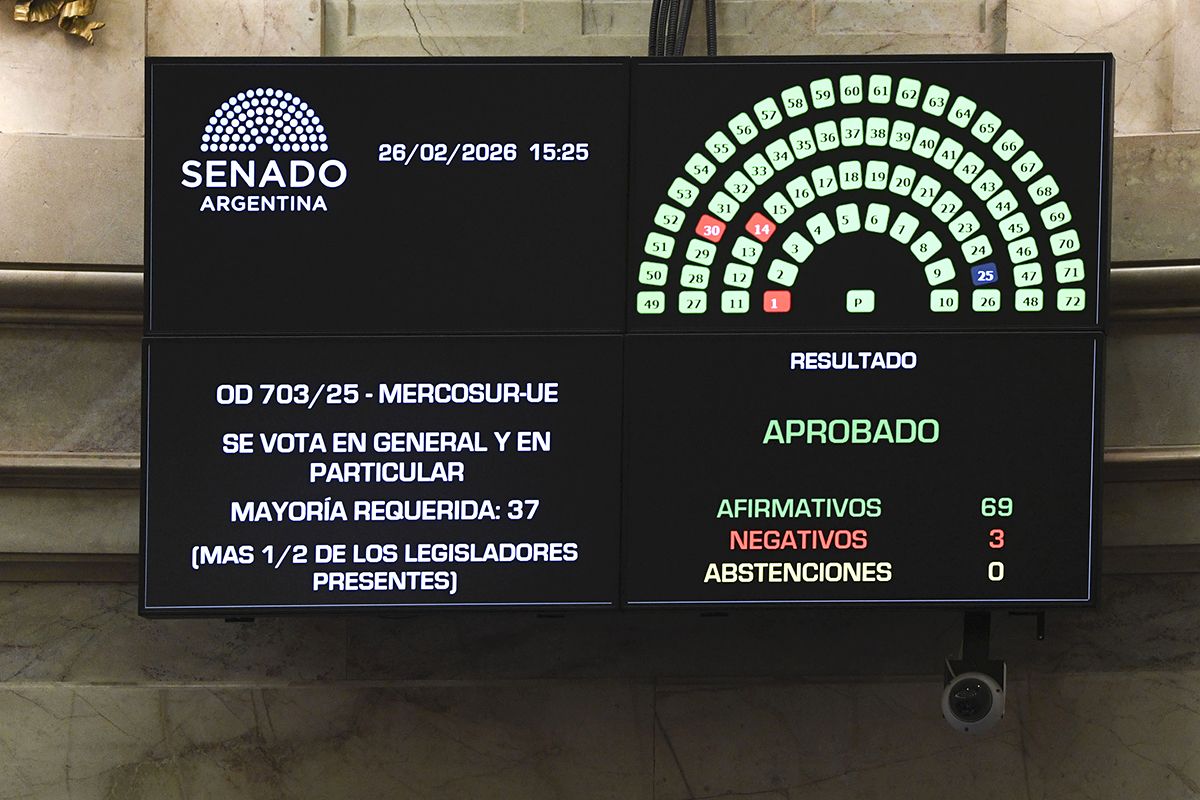
Although the plan continues to be to avoid this step, the Government knows that the agreement must be discussed and approved by both chambers, as happened with the one of the Mercosur-European Unionand with the right times, they are preparing to discuss the same starting from the beginning of the ordinary sessions this Sunday. At some point during the summer, at Casa Rosada they fantasized about the possibility of trying the same during the extraordinary sessions. The overproduction of laws and carnival holidays cut short the wishes of the ruling party.
Still without a specific date, according to sources familiar with the matter, it will be defined in the coming days. The intention of the ruling party is to discuss the agreement in March, along with the rest of the package of projects that the Executive plans to approve in what they define as “the most reformist year” of the libertarian presidency. In this plenary session, it is not ruled out that the ruling party also advances with electoral and tax reforms, and, as stated Time in its Wednesday edition, begin to gradually fill the more than three hundred vacancies in the judiciary.
It is coming… https://t.co/8wINfriB4D
— Pablo Quirno (@pabloquirno) February 26, 2026
The agreement signed on February 5 was the crowning of the carnal relations that the libertarian leader established with donald trump since the magnate’s return to the White House. Its main axes point to the reduction of tariffs on more than 1,600 products to strengthen bilateral trade and the industries of each country, an alignment in foreign policy and the commitment to protect intellectual property.
The possibility of completing this signature was for the national government international confirmation of the support that the Republican gave to the libertarian management, although the ruling party is responsible for warning that the relations are not between governments, but between states. In this way, they seek to ensure that, in a possible change of management in the north, the links will always continue.
Despite the hubbub, the US Supreme Court put a stop to Trump’s advanced tariffs and in recent days forced the tenant of the White House to redesign the global trade schemes that Trump himself announced with great fanfare. The news shook the world and set off alerts in the national government, where they recognize that the agreement is going to be redesigned in pursuit of the upcoming decisions that the US president will make in the coming days regarding his economic policy. Beyond the setbacks, the Executive is confident and hopeful about the continuity of the agreement with which they hope to open a new stage for the national economy.