The capture of Nazi war criminal Adolf Eichmann in Argentina by Mossad, the Israeli intelligence agency, in May 1960 went down in history as a “heroic” event that was endlessly reflected in articles, films and books over the years. The feat sparked an international stir, in the midst of the Cold War, and the then president Arturo Frondizi even accused Israel of violating sovereignty. However, this official story has several elements still hidden to this day: documents linked to this operation remain secret or lost.
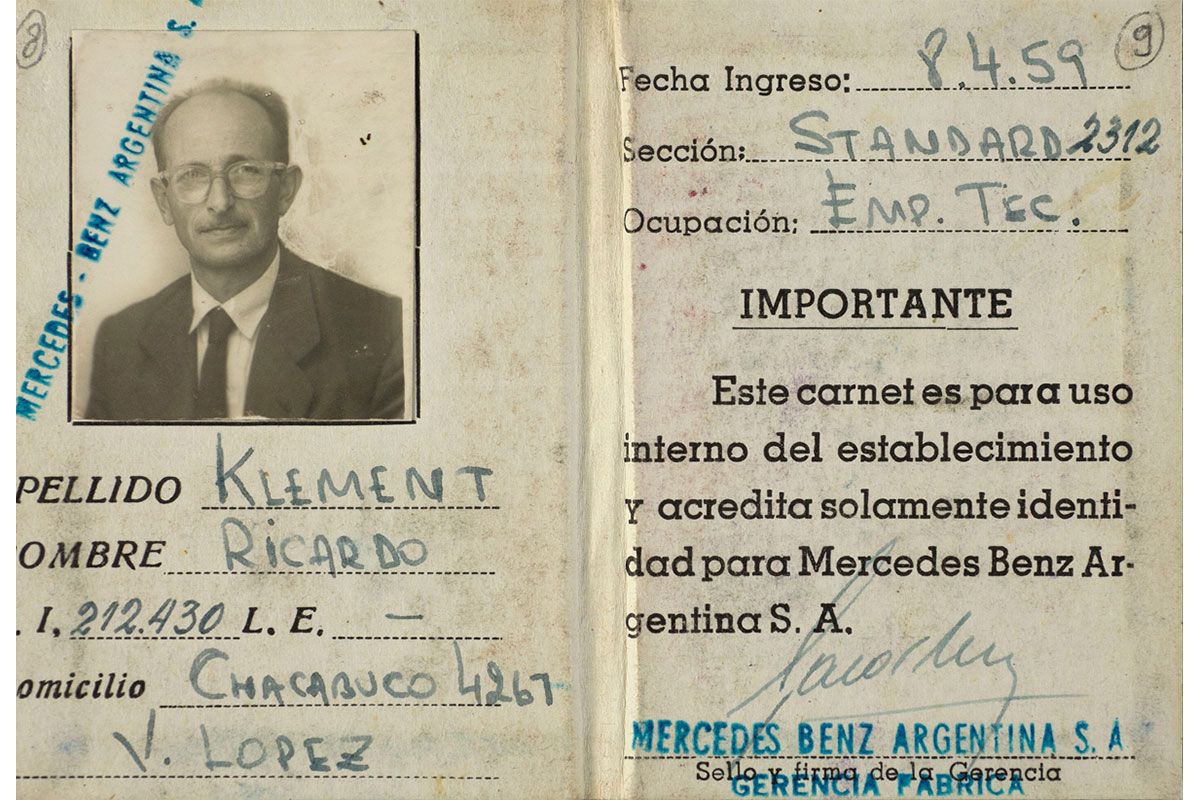
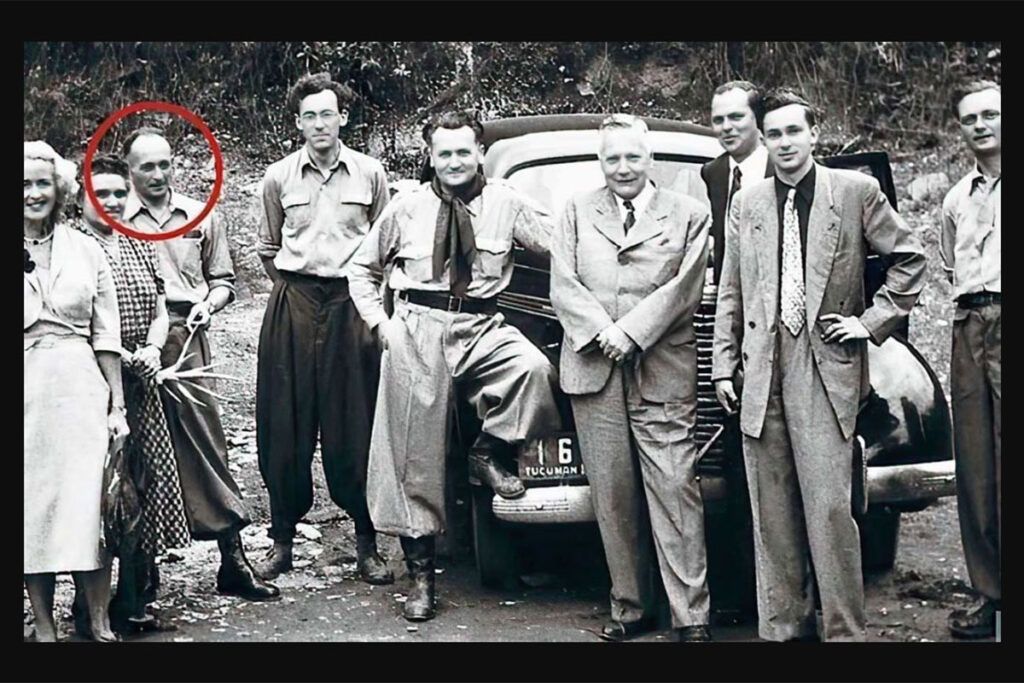
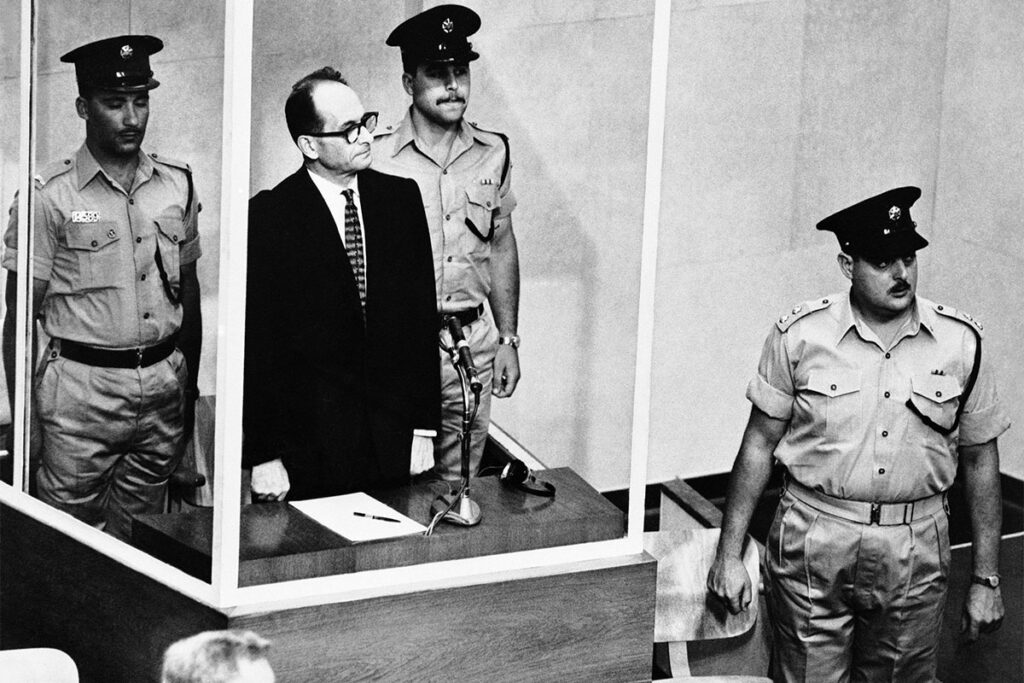
After having been One of the main organizers of the “Final Solution” during World War II, Eichmann managed to flee to Argentina in 1950.with the help of officials and members of the Catholic Church and a false identification under the name of Ricardo Klement. He lived for a time in Tucumán and then in San Fernando, province of Buenos Aires. The official version states that in May 1960 Mossad agents illegally captured him and transferred him to Israel. In Jerusalem he was put on trial and found guilty, with a sentence: hanging. He died on June 1, 1962 in Ramla prison.
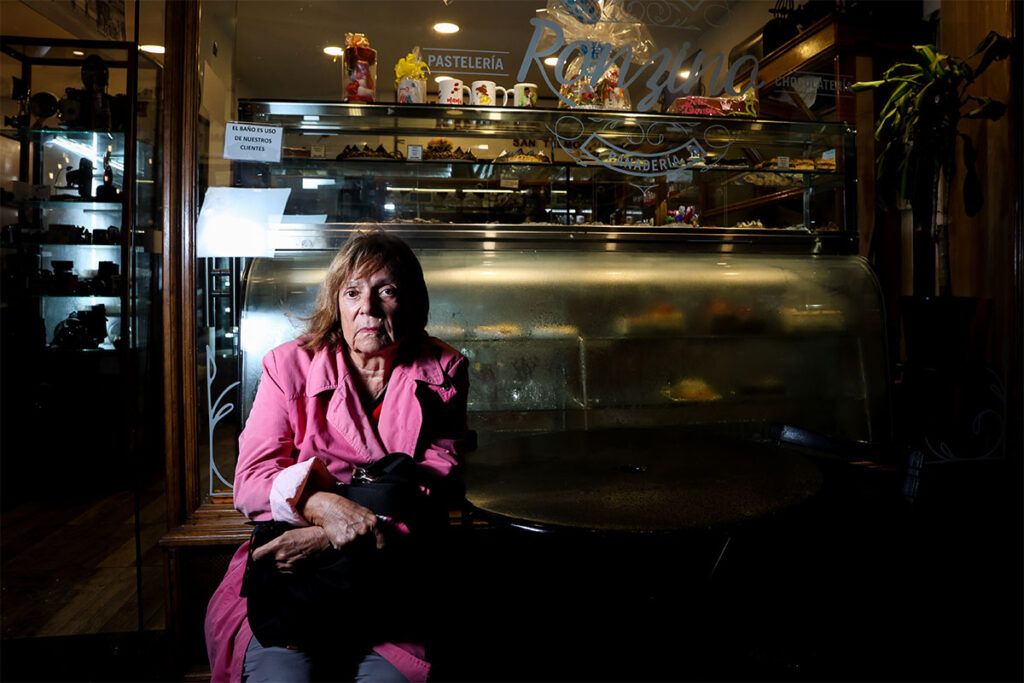
The German journalist living in Argentina, Gaby Weber, has been litigating for ten years against the Argentine State to access crucial information about the alleged detention or capture of Eichmann in Argentina. In March 2025, finally, The case reached the Supreme Court and it agreed: the Argentine Foreign Ministry must deliver the documents it requested. However, the organization maintains that the requested files were not found: they were lost or stolen.
Eichmann, Israel and Frondizi
For almost five decades, Weber has dedicated himself to investigative journalism. He is a plaintiff in various lawsuits for the declassification of files in Argentina, the United States and Germany. He published several books, such as The Eichmann Files, and produced documentaries. He began to become interested in the Nazi war criminal from his research on Mercedes Benz Argentina. First he investigated Nazi money laundering in the 1950s through the company and then the disappearance of workers and the appropriation of babies linked to the automobile company, during the last civil-military dictatorship. Eichmann was one of his employees.
Based on a series of documents that she accessed, the journalist questions the official version of Eichmann’s capture by the Mossad, the famous “Operation Garibaldi” – that was the name of the street where the house she lived in – which at the time received the attention of the media around the world. Instead, Weber investigates the possible involvement of Frondizi government officials in the arrest of the Nazi criminal and an agreement between Israel and Argentina.
“The entire official version is based on some sayings by Mossad agents. They are fantasy. The Mossad Archive remains closed to this day. In 1960 the State of Israel was 12 years old, it was incapable of being able to do something like that. They use this heroic moment to justify the violation of international law, of kidnapping people, for a ‘good’ purpose,” Weber shared with Tiempo.
At that time, May 1960, the failed Paris Summit between the United States, Great Britain, France and the Soviet Union for nuclear disarmament and the possible reunification of Germany was taking place. The failure of an agreement that could have been historic was soon overshadowed after Eichmann’s capture.
In his investigation, Weber found witness sheets in the Historical Archive of the Argentine Foreign Ministry that refer to inventoried cables that were classified as “reserved” or “encrypted” that are not found in the public archive, but somewhere else. Through them, communications were allegedly established between the Argentine Foreign Ministry and the representation in Tel Aviv.between the second half of May and June 1960.
Federal judge Santiago Carillo recognized the importance of Weber’s lawsuit against the State to access the documents and ruled in 2020 in favor of his request. He maintained that his Court shares the journalist’s interest “in the clarification of the historical truth (…) all the more so when it comes to events (…) of incomparable significance for contemporary universal history.” He declared the Foreign Ministry’s conduct of refusing to provide some of the files requested by Weber without sufficient justification to be illegitimate, and ordered the delivery of the certified copy of the documentation. The case reached the Supreme Court, which endorsed that decision.

In parallel, and given the negative response from the Foreign Ministry, Weber initiated a criminal case to investigate the possible theft or deletion of documents. After the testimony of a series of witnesses who could not find the place where the documents would be found, Judge Sebastián Ramos decided to file the case, which was confirmed by Chamber I of the National Chamber of Criminal Cassation. The journalist challenged this resolution.
Last Tuesday, March 31, a public hearing took place in which Weber and his lawyer, Marcos Filardi, presented to the judges of Chamber IV of the National Chamber of Criminal Cassation the reasons why they consider that the case should be reopened. Among them, they highlighted that there is still evidence pending production and witnesses who asked to be called to testify and have not yet been summoned, and figures who should testify such as the Minister of Foreign Affairs, International Trade and Worship, a position currently held by Pablo Quirno. “If we admit as a society that a public authority can refuse to hand over the information in its possession, claiming with impunity that it cannot find it, this is the end of access to public information, a fundamental pillar of democratic scrutiny of the actions of the State at all levels,” lawyer Filardi said in dialogue with Tiempo.
“The Ministry of Foreign Affairs, International Trade and Worship sought at all times to prevent Gaby Weber’s access to the diplomatic cables, first denying their existence and then claiming that it could not deliver them. Once the criminal case began, they hindered and delayed its progress as much as possible. In short, they sought by all means at their disposal to shield the State from access to such valuable information,” he added.
Along these lines, prosecutor Mario Alberto Villar considered that the appeal filed by the journalist should be granted and, therefore, the case should be reopened. At the closing of this note, the response from the magistrates is still pending.
The Computer Law Observatory of Argentina (ODIA) accompanied the journalist at the public hearing.
Weber completed: “The Argentine Law on Access to Public Information is very good. But there is a lack of will on the part of governments to comply with it. For good journalism to exist, the information must be public and accessible.” «
The declassification of Nazi archives
Decree 232 of February 1992, signed by then-president Carlos Menem, left “without effect any reservation for ‘reasons of state’ of documentation related to Nazi criminals.” The Commission for the Clarification of the Activities of Nazism in the Argentine Republic, created five years later, announced that the criminals of the Third Reich taking refuge in the country were 180, a figure later dismissed by the Simon Wiesenthal Center as too low.
In April of last year,
The General Archive of the Nation (AGN) made these declassified documents available to citizens on its website, which until now could only be consulted in a room of the AGN.
These are 1850 documents gathered in seven files on Nazi activities in Argentina. In addition, the AGN published online the secret and confidential presidential decrees produced between 1957 and 2005.
When the national government spread this news last year, journalist Gaby Weber sent a letter to President Javier Milei in May. “At the request of this email, we respectfully request that you order that the Ministry of Foreign Affairs make available to us the documents relating to the SS officer (Schutzstaffel) Adolf Eichmann,” says the first paragraph of the letter.
“They never answered it, neither he nor his officials. Everything that was declassified is information that is already known. There is nothing important new,” Weber shared in dialogue with Time.
A key role in the extermination
Adolf Eichmann, born in 1906 in Germany, lived much of his youth in Linz, Austria, where he joined the Austrian National Socialist Party and the Schutzstaffel (SS). When he reached the rank of SS sergeant, he joined the Security Service Main Office.
From there he monitored Zionist activities and promoted the emigration of Jews.
He was in charge of the central Jewish emigration office in Vienna, the model of which prompted the opening of the Reich Central Office for Jewish Emigration, which he also ran from October 1939. When the Reich Security Central Office (RSHA) was created in September of that year, Eichmann was transferred to the Gestapo and played a central role in the deportation of more than 1.5 million Jews from European countries occupied by Germany to extermination camps and sites. There he participated in planning the annihilation of millions of Jews, the so-called “Final Solution”, as an SS lieutenant colonel. A decade later he would arrive in Argentina.