Labor reform, economic crisis, debt, growing violence and the feeling of a very dark future present a bleak panorama. Especially for women and diversities against whom the socioeconomic measures that this government took as soon as it came to power have a full impact.
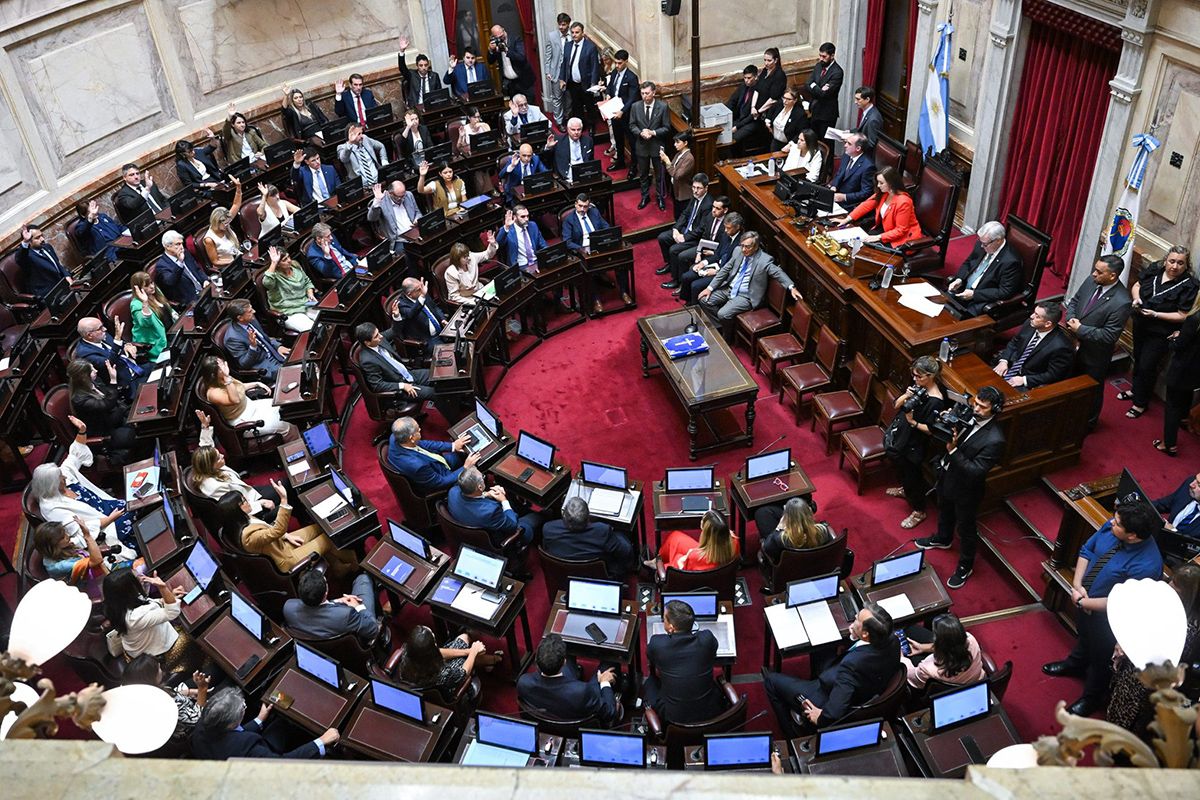
At the opening of sessions of the Legislative Assembly in Congress, President Javier Milei celebrated “having closed the Ministry of Women, Gender and Diversity and the Télam National Agency. The seriousness of these two events, together with the closure of the Institute against Discrimination (INADI), became a tragic combo. The prevention and containment programs for victims of gender violence were completely emptied abruptly in one year. The result, the increase in violence that had on the one hand a symbolic component (the insistent hatred of the government, the hegemonic media, streamers and libertarian politicians) and on the other hand, a structural component that arises in moments of crisis.
Every certain period of time, the president or some of his officials insist on removing femicide as a legal aggravating circumstance or threaten to repeal abortion. Because La Libertad Avanza, in addition to stigmatizing feminist militancy and the necessary gender agenda, managed to convince a large part of the population that it is women and diversities who take away their rights. Along with this speech, there was also that of the “allies” who stigmatized and blamed the gender agenda with the phrase “feminists spent two towns.”
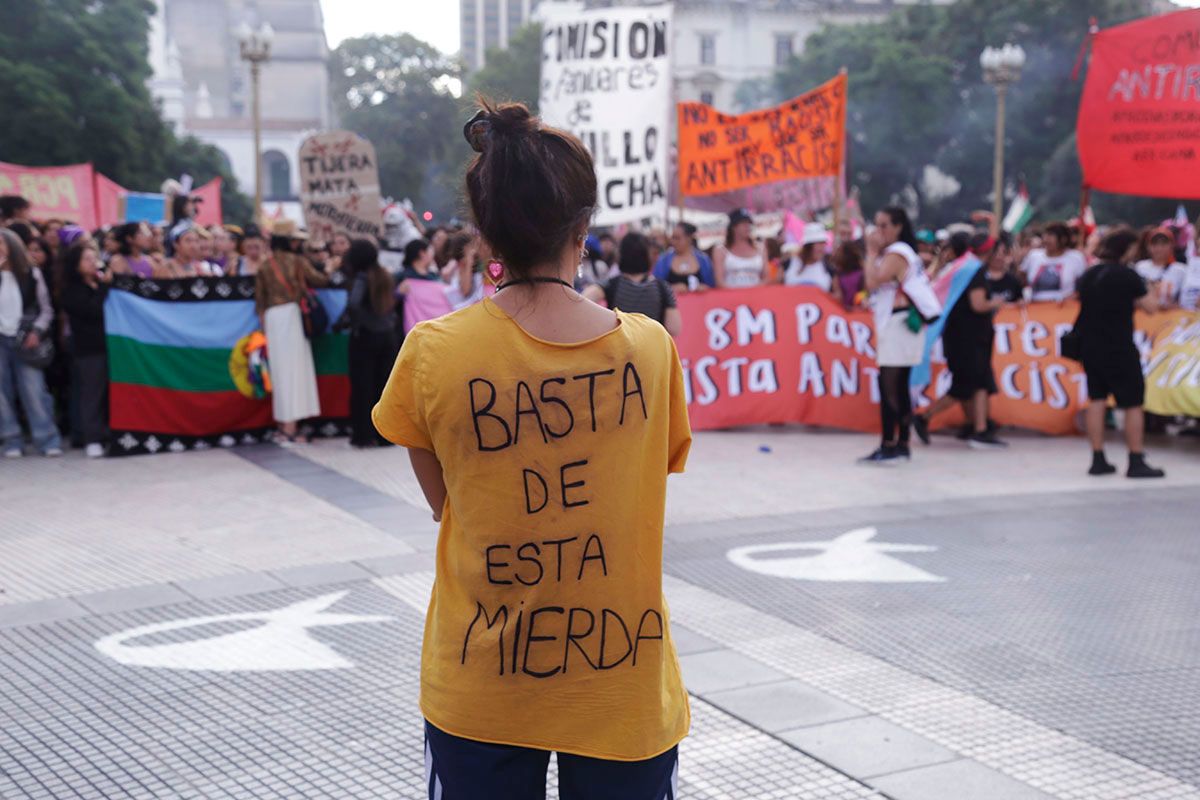
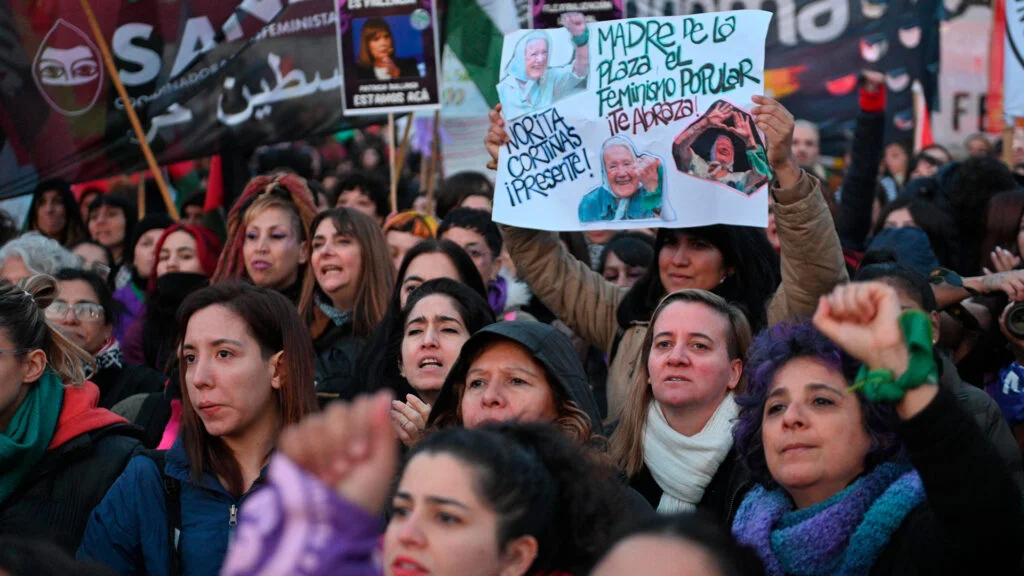
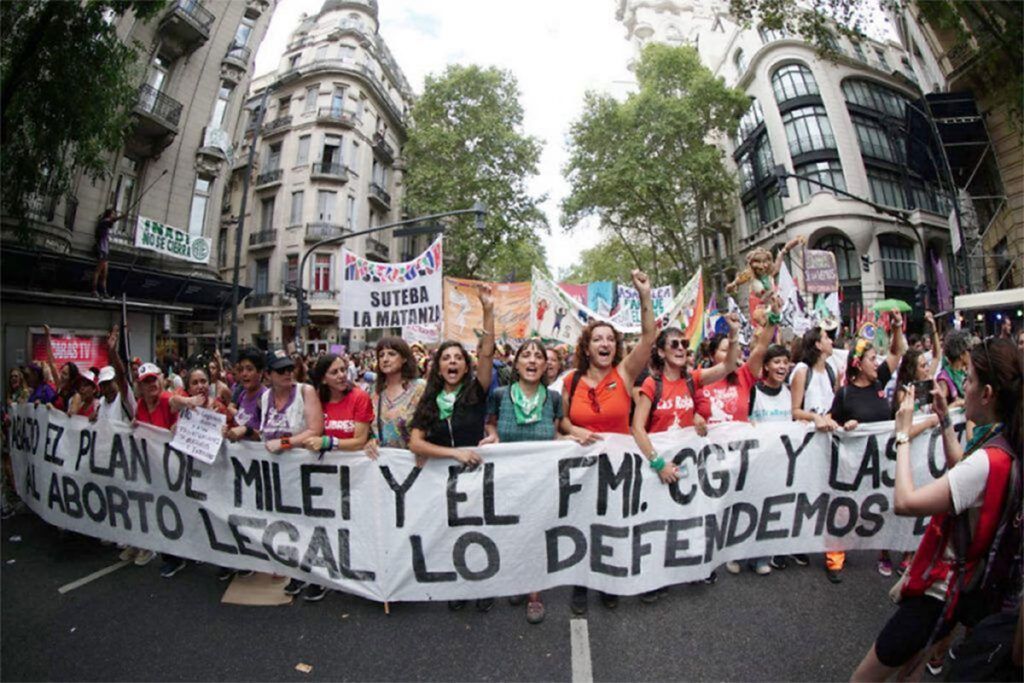
The truth is that for the second year the transfeminist movement with all its groups within are the ones who carried out massive demonstrations and took over the streets with a transversal agenda that covered all the claims for each attack by the national government. Because of what is happening in the streets, it is expected that next March 8 the march will also be large and federal.
Crisis and gender violence
The observatories that record the victims of femicide and the variables that each of the cases go through highlight how difficult it is to keep records at this time without the normal functioning of Télam, which between 2019 and 2023 also carried out in-depth work on a gender perspective. Today this record depends on community and self-managed media, which deal with gender issues that have recently been absent in the hegemonic media. Although there has been progress, today the situation in terms of violence is worrying.
“In this country, gender violence cannot be separated from access to housing, from debt, from the deregulation of the economy, from the labor reform that is going to increase workplace violence and abuses at work,” she told Argentine Weatherthe sociologist and representative of Ni Una Menos, Luci Cavallero. From January 1 to January 30 in Argentina there were 25 femicides, a fact that is not at all irrelevant.
Work, care and debt
Less than two months after Milei’s inauguration, the community soup kitchen workers, who until the middle of the previous year had been advancing a bill for their work to be recognized, had to come out to report that the soup kitchens were missing food. They also warned that a significant increase was beginning to be seen in the number of people who had to go to soup kitchens to survive. Today the situation worsened.
Along with the shortage of money, layoffs, cuts in social assistance programs, came debts. It is one of the main problems that falls mainly on women in informal work, who had to appeal to platforms that provide a quick loan with very high interests.
The labor reform does not present a better outlook for them. “It makes time more flexible as if care did not exist: fractional vacations, more hassle in the summer without school, teleworking rights and licenses are emptied,” Lucía Cirmi analyzed in her X account.
IMPACT 1: LESS TIME = MORE CARE CRISIS
The reform makes time more flexible as if care did not exist.
– Fractional vacations, more hassle in the summer without school.
– Teleworking rights are emptied
– Licenses: the same as always🤨— Lucía Cirmi 💚 (@luciacirmi_) February 5, 2026
Win in the streets
The feeling is complex when we analyze the future, but it becomes stronger when we look back. After Ni Una Menos (2015), the transfeminist movement took over the streets and did not abandon it for ten years. There were great achievements, such as establishing the debate on the right to abortion that later became law, or reaching the Gender Parity Law that allowed many female deputies (who today vote against other women being on the benches). But the most profound thing in these ten years was to advance with organized working women who were growing in number and in debates within feminism.
In this new session opening Milei may not target women and LGBT people. Whatever the case, transfeminism will be in the streets on Monday the 9th, building alliances and always demanding more rights. «