The continuity of the mobilizations of transporters and farmers for this Tuesday, April 7, remains under reserve, given the warning of indefinite strikes in 20 states of the Mexican Republic due to lack of agreements with the federal authorities.
You may also be interested in: Shielding gasoline in Mexico requires a weekly investment of 280 million dollars
Status of the day of national demonstrations
Although there is no institutional confirmation about a total “mega blockade” scheduled for this Tuesday, April 7, 2026, the National Association of Transporters (ANTAC) and the National Front for the Rescue of the Mexican Countryside (FNRCM) declared that the mobilization remains active. The possibility of intermittent or total road closures is high at strategic points, given that the government has rejected the reasons for the protest, hardening the protesters’ stance.
Central demands of transporters and farm workers
The national day of struggle responds to a structural crisis that affects both cargo transportation and agricultural production. The guiding axes of the protest focus on the following points:
- Comprehensive road safety: Immediate demand to stop the wave of robberies, assaults and extortion suffered by cargo transportation.
- Operating costs: Demand for fair and accessible prices for diesel, a critical element for the economic viability of both sectors.
- Stop corruption: Elimination of improper charges and harassment by authorities at checkpoints.
- Infrastructure and rates: Petition for fair transportation rates and maintenance of the road network, including rural roads.
- Protection of the sector: End to the criminalization of rural and transportation activities, along with real support for production.
Roads with the highest risk of impact for April 7
Based on the events recorded during the day of Monday, April 6, vital arteries with a high probability of new incidents or presence of protesters are identified:
Main accesses to the Valley of Mexico
Connectivity with Mexico City presents critical vulnerabilities in four cardinal points. The Mexico-Querétaro Highway stands out as the center of greatest concentration. For its part, the Mexico-Pachuca Highway recorded morning blockages, while the Mexico-Puebla Highway presented severe effects on the flow towards the east. Finally, in the Mexico-Toluca Highwaythe intermittent closures have impacted the movement of thousands of people.
National strategic corridors
- North Arch: Fundamental connection point that usually presents interruptions in the face of any mass mobilization.
- West and North Route: Risks are expected on the Mexico-Guadalajara highway and on the approaches to Nuevo Laredo.
- Federal Highway 45: Specifically kilometer 20 of the Mexico-Ciudad Juárez section, in Chihuahua.
Analysis of incidents in key states
The reports from April 6 serve as a direct antecedent of the operation of the protest groups:
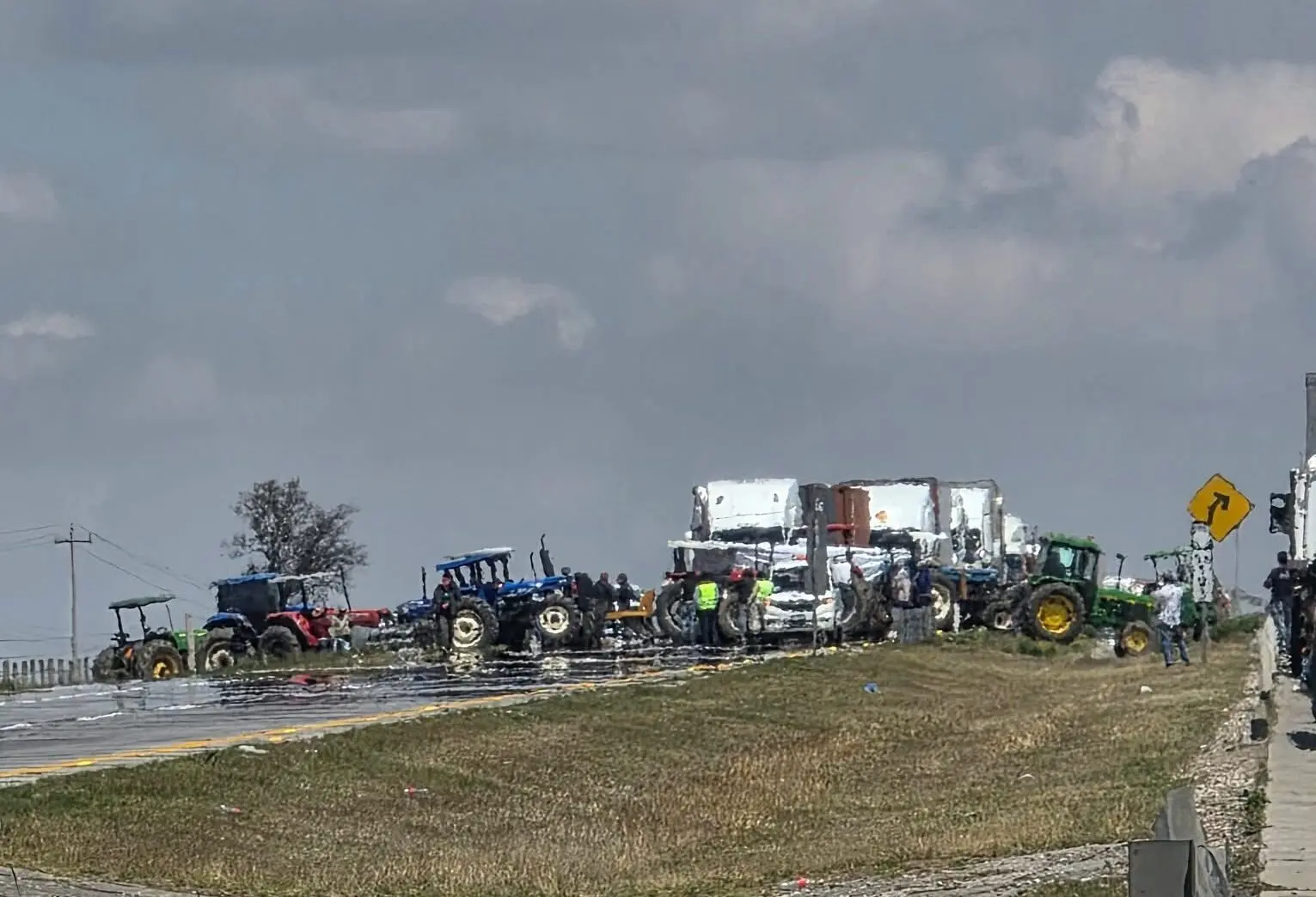
In it State of Mexicopeasants took over the booth on the Mexico-Toluca highway. Despite trying to free the passage, the infrastructure’s anti-evasion mechanisms caused a bottleneck that led to the total closure of circulation. The discontent centers on the rising cost of fertilizers and the low profitability of agricultural products.
In Zacatecasthe protest was concentrated at the Calera toll booth (kilometer 26 + 850). The producers used tractors to flank the road and allowed free passage under slogans of protest against the situation in the fields. In Chihuahuathe blockade allowed controlled passage in a single lane for emergency vehicles and passenger transportation, maintaining the closure for the bulk of commercial cargo.
Recommendations for users of the road network
Given the climate uncertainty of the protest, users of federal roads are suggested to take strict precautions:
- Active monitoring: Check CAPUFE updates and the National Highway Guard account before leaving.
- Time management: Anticipate journeys and avoid, as far as possible, peak traffic hours.
- Alternate routes: Identify federal toll-free sections in case of total closures on concessioned highways.