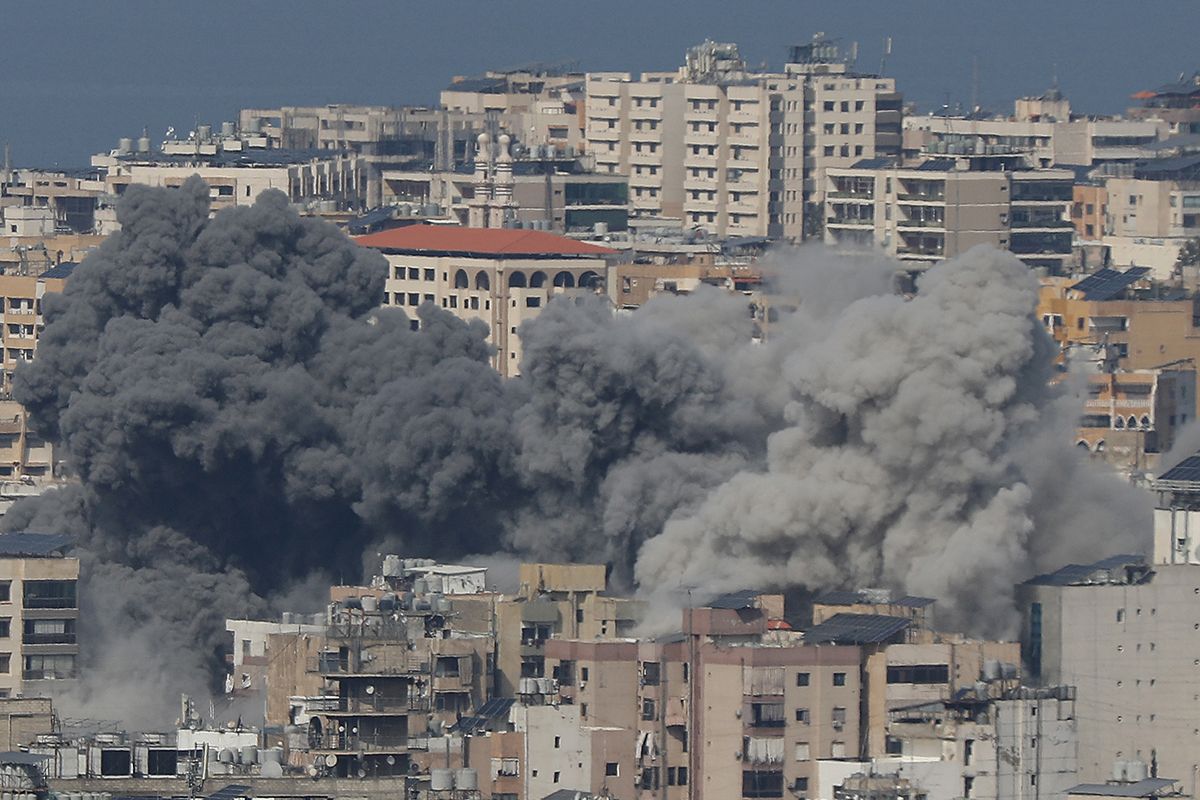
Temporary ceasefire in the Middle East announced on Tuesday night by Donald Trump unleashed a wave of euphoria in global financial markets. International stock markets recorded widespread increases and oil prices fell after the announcement of the agreement between the United States and Iran.
The positive scenario continued throughout Wednesday, despite the fact that Iran announced a new blockade of the Strait of Hormuz due to Israel’s new attacks on Lebanon.
In principle, the truce (which faltered this Wednesday due to Iran’s decision) establishes a two-week pause in hostilities. The most important thing: it included the reopening of the Strait of Hormuz, the maritime corridor through which nearly 20% of the world’s oil circulates, which was closed again and maintains tension in the Middle East.
Argentine stocks rise and country risk falls 40 points
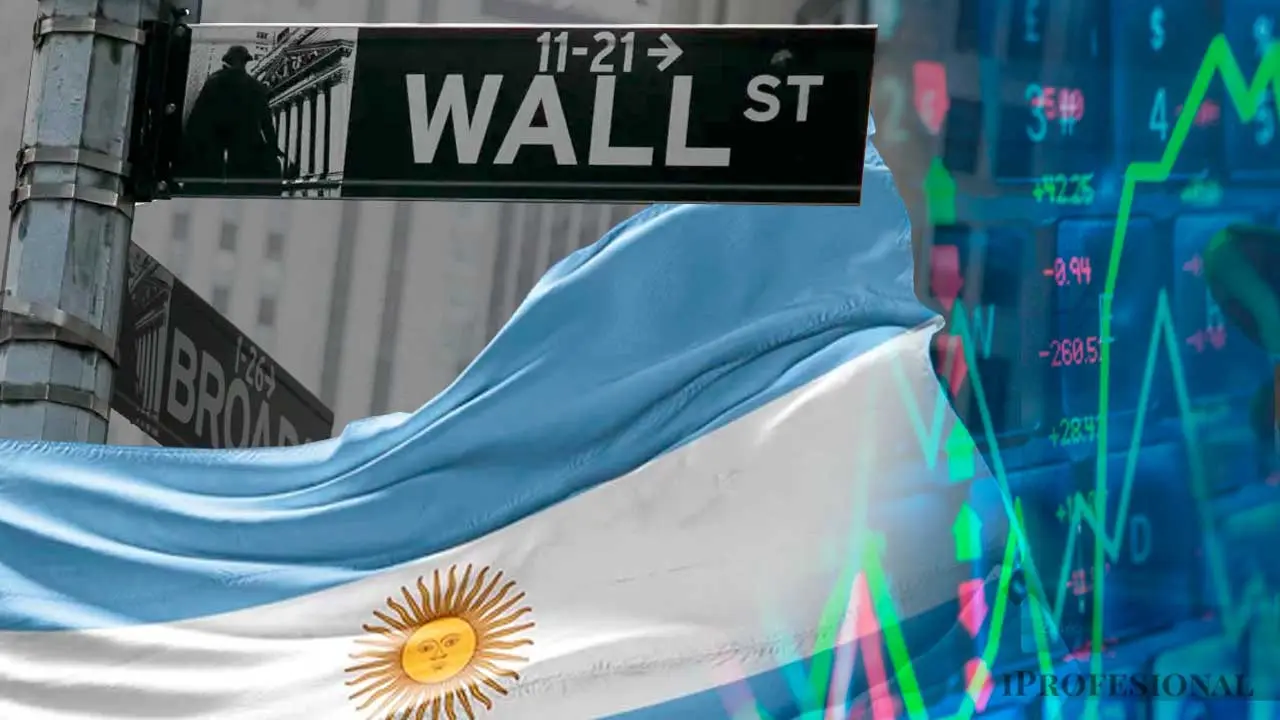
In that framework, the S&P Merval rose 1.% while in dollars it advanced 1.7%while bonds rise strongly and country risk falls to around 40 basis pointsin a context of global improvement in the world’s main stock markets.
The shares operated with a majority of increases, among which the following stood out: Macro Bank (+7.1%), Supervielle Group (+6.5%), and BBVA Bank (+5%). At the other extreme, the losses are led by Southern Gas Carrier (-3.4%) and Northern Gas Carrier (-2.9%).
From IOL they indicated that The two-week bilateral ceasefire in the Middle East generated an immediate reaction from the market.
“The most robust upside is not in the assets that gained during the conflict (energy, defense), but in those where the compression of multiples was excessive”they noted in reference to high-quality technology companies, which suffered the double punishment of high rates and risk aversion, but whose underlying businesses continued solidly.
In line with this change in climate, dollar bonds operated with increases of more than 2%, led by the Global 2041 and the Global 2035 (+2%). Thus, the country risk It cut 40 basis points (bp) to reach around 570 bp.
Market sources highlighted that the contraction of country risk places it at a level that could open a window for debt restructuring operations.
The momentum is also reflected in international markets. The main Wall Street indices advance up to 2.8%, while the most important European stock markets operate with significant increases: the Euro STOXX 50 climbs up to 5% and the German DAX up 5.1%.
In this context, US President Donald Trump warned that he could impose 50% tariffs on countries that supply weapons to Iran, after the two-week ceasefire agreement. “Any country that supplies weapons to Iran will be immediately taxed with a 50% tariff on all goods it exports to the United States. There will be no exceptions,” he stated through his social network Truth Social.
In that framework, Argentine ADRs soared up to 7.4%, led by Grupo Supervielle, followed by Banco Macro (+7.1%) and BBVA Argentina (+5.2%). In contrast, energy stocks fall: Transportadora de Gas del Sur (-2.2%), YPF (-1.6%) and Pampa Energía (-0.03%).
Sinking oil eases energy pressures
The energy market is one of the main protagonists of the day. Brent crude oil fell sharply before the news of the new closure of the Strait of Hormuz became known and was around US$95 per barrel, well below the recent highs that had exceeded US$110.
In accumulated terms, Brent futures fell by up to 15%. WTI oil also showed significant declines, although it still remains above levels prior to the outbreak of the conflict at the end of February.
The decline represents critical relief for energy-importing economies, especially in Europe, where dependence on supply transiting the Strait of Hormuz is very high and any prolonged disruption would have triggered production costs and inflation.
The decline in crude oil also fueled expectations that central banks could accelerate interest rate cuts. Lower energy costs mean lower inflationary pressure.
Agricultural commodities also felt the effect
The impact of the ceasefire extended beyond energy. In Chicago, wheat futures fell about 3%while corn fell around 1%.
Better weather conditions in the United States added to the downward pressure. Prospects of greater production in Russia also influenced, which would expand global supply.
Investors began to unwind defensive positions in agricultural commodities. The normalization of maritime traffic reduces logistical risks and pressures on freight.
Be wary of a truce that can be broken
Despite initial enthusiasm, markets maintain a cautious stance. During the first hours after the announcement, episodes of violence continued to be recorded in the region.
There are still no clear details on how the ceasefire will be effectively implemented. The uncertainty lies in the possibility that the truce will be broken before the agreed two weeks have expired.
If the flow of crude oil from the Gulf were to be disrupted again, energy prices would tighten again and generate global inflationary pressures just as central banks are considering rate cuts, potentially forcing them to delay or cancel those decisions.
Market analysts warn that the current scenario opens the door to a moderation in oil prices. It also fuels expectations of rate cuts in the United States around 2026.
But the focus will continue to be on the evolution of the situation in Hormuz. The sustained normalization of maritime traffic will be key to consolidating the decline in crude oil and sustaining the rebound in the stock markets.
For now, the global financial climate combines relief and caution. The markets celebrate the truce, but remain attentive to any signal that confirms – or puts at risk – its continuity. Next week will be decisive to assess whether today’s optimism has lasting foundations.