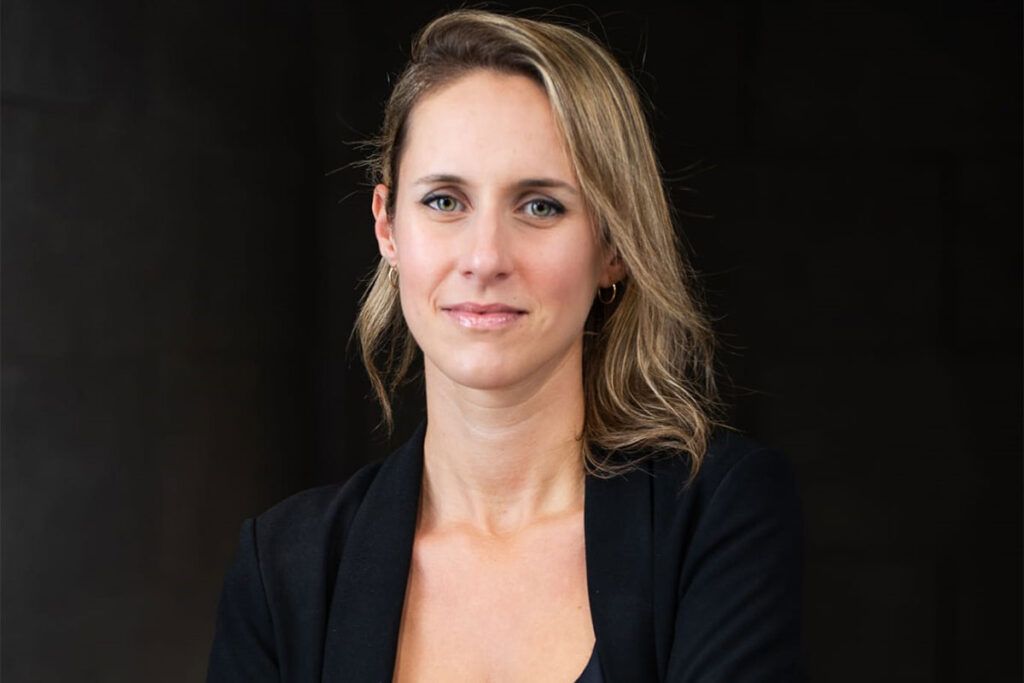
Alexandra García Tabernero, prosecutor in Barcelona and professor of criminal law in that same city, dedicated part of her career to the analysis of international criminal law. But 13 years ago his vocation was crossed by a great paradox, when he learned that he had an Argentine uncle who had been involved in crimes against humanity committed during the last civil-military dictatorship.
How to resolve this emotional crossroads? Is it possible to dissociate the law from family ties? From what place should we relate to the pain of the victims? The attempt to resolve all these questions prompted Alexandra to write Letter to the colonela book in which an open, imaginary and reflective dialogue is proposed with the Argentine Army officer Reinaldo Tabernero, who died in 2007at 85 years old, prosecuted for crimes against humanity.
“Once I finished my law degree, I did a postgraduate degree in London, and there I wrote an article about the arrest of Augusto Pinochet. I told it then at a family gathering, in 2013, and I told them that my intention was to dedicate myself to international criminal law. ‘There is an uncle of yours in Argentina who had problems similar to those of Pinochet’. It was an isolated reference. I even asked other relatives if they knew anything about that relative, and no one gave me many details. I started searching and found that a military man called Tabernero had been arrested in Argentina in 2006, after the repeal of the Punto Final and Due Obedience laws,” says Tabernero García in dialogue with Argentine Weather when telling the reasons that led her to write this open letter.
Reinaldo Tabernero was a colonel in the Argentine Army, and Between November 1976 and December 1977 he served as deputy chief of the Camps Police. He played a leading role in the chain of command of the genocidal machinery that Camps launched in the province of Buenos Aires and was involved in crimes that were committed at the 5th Police Station in La Plata. He died without being tried.
The history of this high command of the dictatorship dates back to a small village in Rioja, in Spain, where a family of six brothers lived. Five emigrated to Argentina at the beginning of the 20th century, and only one remained in that mountainous province in the north of the Iberian Peninsula. “That person who remained in Spain is my great-great-grandfather and is part of my maternal family. The rest of those Tabernero brothers emigrated to Argentina. Reinaldo descends from that part of the family,” explains the lawyer.
Alexandra continued with her life and career, studying in the United States, working in The Hague, at the International Criminal Court, and becoming a prosecutor in Barcelona. The topic of her Argentine uncle and his responsibility for the criminal crimes that she always wanted to investigate and pursue was something latent, which she had not delved into at the time, but one day it returned to her daily life and motivated her to delve deeper into the story of that family member linked to the tragedy of a southern country, on the other side of the Atlantic.
“In November 2024, I decided to travel to Argentina. My intention was to visit three friends that I had met in Barcelona in July of the following year. I told some relatives that I had planned to go to the country and an aunt told me: ‘If you are going to investigate what happened to your uncle the colonel, you are not going to like what you find.’ “A cousin who had made a family tree confirmed to me that there was an uncle, a colonel in Argentina who had even had contact with my family and had visited the village of Rioja, where I was also when I was little,” she reviews.
A trip down memory lane
The lawyer traveled to Argentina in July 2025 with the decision to find out what had happened to her uncle and decided to carry out an investigation in the country. Thanks to her friends, she contacted victims and obtained first-hand testimonies to find out who Reinaldo Tabernero was. “I wanted to know the context and the area in which he moved during the illegal repression in the province of Buenos Aires,” he stated.
In that sense, when interviewing victims and actors who worked in the Memory, Truth and Justice process, Alexandra maintained that Argentina achieved something “amazing” by placing the leaders of the genocidal dictatorship in the dock and achieving 1,231 convictions for crimes against humanity to date.
“In addition, exhaustive documentation work was done that impacts and contrasts with the transitional justice process that Spain followed after the dictatorship with the promulgation of the amnesty law of 1977. Here (in Spain) a criterion of not opening wounds was established, very different from what happened in Argentina.
García Tabernero assures that while he was collecting testimonies and documents to write the Letter to the colonel He had a pleasant feeling when he encountered the predisposition of the victims. “No one closed their doors to me and everyone shared their experiences. This Letter is an intention to seek a guarantee of non-repetition,” he emphasizes.
On her journey, Alexandra met again with former prosecutor Luis Moreno Ocampo, who acted in the International Criminal Court and also accused Camps in the trial that followed in 1986.
“He was my professor at Harvard and I knew his work in the Trial of the Juntas. In the Camps trial he took a statement from my uncle, who testified as a defense witness, and I remembered his testimony well,” he adds.
After that statement, Human Rights organizations requested the prosecution of Tabernero, but the Full Stop and Due Obedience laws interrupted the action of justice. Until the repeal of these regulations. In 2006, the colonel was arrested and died a year later, while under house arrest.
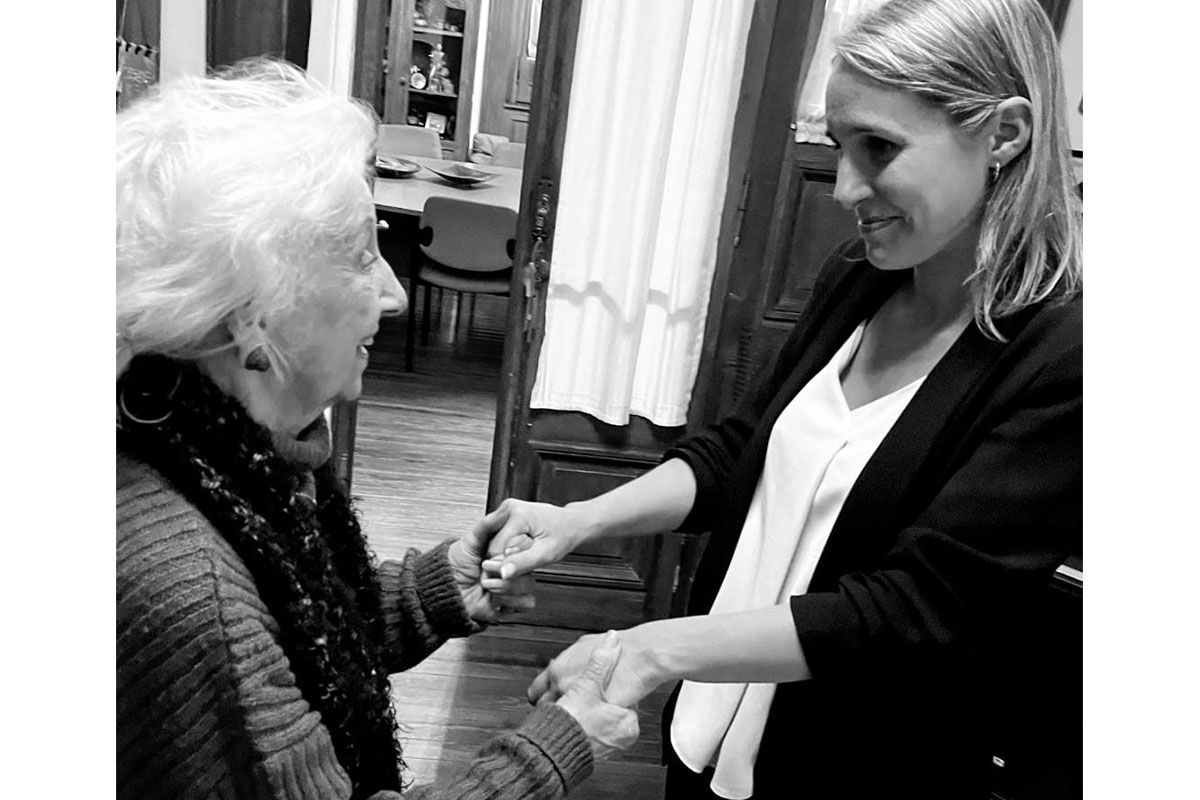
In her journey through memory, Alexandra also met with the owner of Grandmothers of Plaza de Mayo, Estela de Carlotto, who encouraged her to write this work. “She was incredibly kind and encouraged me to write this Letter. It was important to meet Estela for everything she represents. She is someone who never spoke of revenge and always fights to find her grandchildren,” she adds.
As a judicial official, she assures that she wrote this work as a niece and that the legal part was in the hands of the prosecutor Felix Crous, who composed the epilogue of Letter to the colonel. “A prosecutor evaluates evidence and reaches conclusions. That is why I wrote as a niece, from my personal experience and addressing my identity conflict. It is an emotional journey that stirs my insides because my uncle was accused of the crimes against which I decided to fight. I feel that with this book I also introduced myself to the feeling of a country that until then was foreign to me,” he concludes. «