Fabiana Quintero, head of Primary Health Care in the rural area of San Pedro, Jujuy – more than 70 km from the provincial capital – arrives agitated at her hospital office after visiting several health posts. He immediately describes the situation: although the province purchases contraceptives, since the dismantling of the National Plan for the Prevention of Unintentional Pregnancy in Adolescents (ENIA Plan) They are no longer enough.
“For the rural area they sometimes give us 3 boxes of condoms… but it is for the entire area. I have a population of 13,700 inhabitants, with many teenagers,” he says.
For 6 years, the ENIA Plan not only allowed the adolescent fertility rate to be reduced by almost 60%: it was also key for hundreds of girls and adolescents to be able to speak out, report and name situations of sexual abuse.
This network of support, sexual and reproductive health counseling and access to contraceptive methods was dismantled after the arrival of Javier Milei (La Libertad Avanza) to the Casa Rosada. The national government dismissed the staff, cut the budget by 85% between 2023 and 2025interrupted the shipment of contraceptives and canceled training.
The Milei Government is the one that delivered the fewest condoms and contraceptives in the last 10 years
Checked made a analysis of the execution of the physical goals of the Open Budget published by the Ministry of Economy on a quarterly basis, which shows the concrete and quantifiable purposes that each direction, and each ministry, proposes to achieve a public policy.
According to these data, In 2024, the distribution of condoms, the only method that both prevents unwanted pregnancies and protects against HIV and other sexually transmitted diseases, was the lowest in the last 10 years.. In 2014, 10.4 million had been distributed. The highest peak was in 2018, with 55.4 million condoms delivered.
Last year, the amount distributed was 4.8 million for the entire Argentine territory. This means 3 condoms per year for every male over 15 years old. The distribution was within the framework of two programs of the National Ministry of Health: the Development of Sexual Health and Responsible Procreation – where the ENIA Plan was located – and the Response to HIV, Sexually Transmitted Infections, Viral Hepatitis, Tuberculosis and Leprosy.
Assistance in sexual and reproductive health, which includes the delivery of injectable and oral contraceptives by the Ministry of Health, was also the lowest of the decade: in 2014 there were 14.7 million, the highest number in the series. In 2024, the Ministry of Health distributed 2.4 million of these contraceptives throughout the country.
By 2025, The distribution of approximately 56 thousand methods is planned long-term contraceptives for adolescents, which are the ones prioritized by the ENIA Plan: IUDs (intrauterine devices) and subdermal implants.
However, during the first quarter no deliveries were made, under the justification that “work is being carried out on redefining the distribution of long-term methods (LARC) in the different jurisdictions of the country in a phased manner. During the second quarter the distribution will begin, seeking to compensate what is owed,” it is indicated in the official table of physical goals.
The delivery of subdermal implants fell by 95% between 2023 and 2024
Within the framework of the ENIA Plan, the national Ministry of Health provided specific contraceptives for adolescents: subdermal implants and IUD (intrauterine device). Checked made several requests for access to public information to have historical information about these deliveries.
According to those recordsthe National Ministry of Health went from sending to the provinces of the ENIA Plan, prioritized due to the high rate of teenage pregnancy, 76,150 subdermal implants in 2023 to 4,200 in 2024. This represents a decrease of 94.5%.
Throughout 2024, the 12 provinces where the plan was implemented (Buenos Aires, Catamarca, Chaco, Corrientes, Entre Ríos, Formosa, Jujuy, La Rioja, Misiones, Salta, Santiago del Estero and Tucumán) received between 100 and 500 subdermal implants for their entire population.
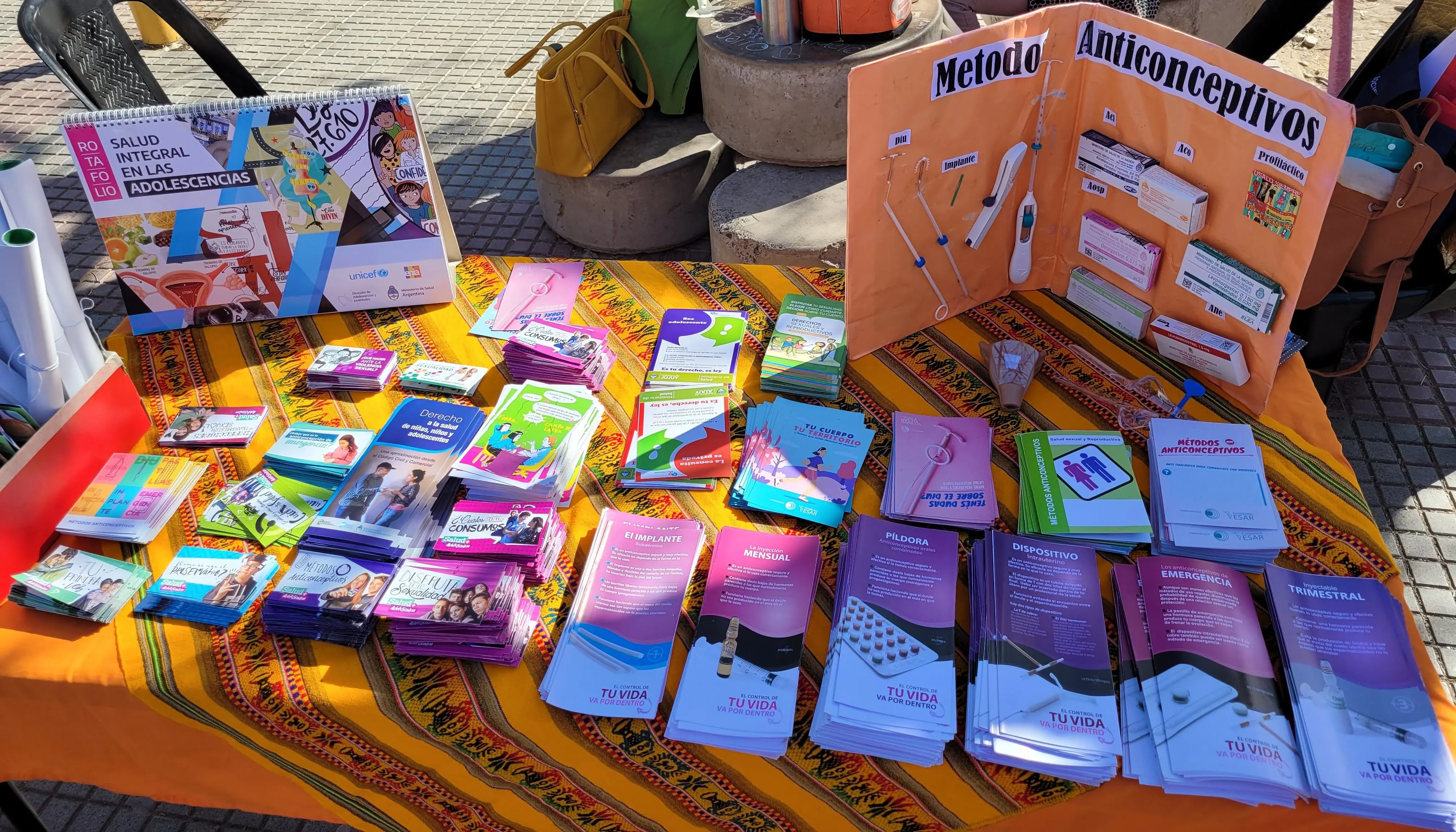
According to the ministry’s response, the data is from the Integrated Logistics and Medication Reporting System (SIR – Remediar) and the Input Monitoring Area of the National Directorate of Sexual and Reproductive Health (DNSSR).
In it Budget 2025 The Teenage Pregnancy Prevention subprogram continues to appear within the Directorate of Sexual Health and Responsible Procreation (DSSPR) of the Ministry of Health. This is a budget extended from 2024, which in turn was extended from 2023.
The program’s current budget is $1,355.86 million. In 2024, that budget was the same amount, but only 20% was accrued. That, in real terms (that is, taking into account inflation) means a reduction of 85% compared to 2023.
“During the first 3 months of 2025, the national State consolidated the policy of adjustment and reduction of public spending that began in 2024. The DSSPR program faced a drop in budget execution of 58% during the first quarter of 2025 compared to the same period of the previous year. In the same period, the Ministry of Health increased its execution by 199%. That is, the decrease in the program was significantly greater than that of the ministry,” says a report of the ACIJ, ELA, Redaas and CEDES organizations from May 2025.

Checked consulted about the current situation of the plan and about the decrease in the delivery of condoms and oral and injectable contraceptives to the undersecretary of Sectoral Relations and Articulation of the Ministry of Health, Augusto Lauría, but at the close of this investigation he still did not receive a response.
Tucumán: the Plan opened the door for girls and adolescents to report situations of abuse
In the “El Sifón” neighborhood, a faded mural covers the wall of the living room where a group of mothers and fathers cook for their neighbors. Irma Monroy, a neighborhood leader and founder of a civil association that was born in the middle of the crisis in 2001, has been working there for more than two decades, when with a pot and whatever each family had they managed to distribute a plate of food to each house.
Today, teenagers approach Irma with an insistent question: “Che, they tell us that they removed the ENIA, what are we going to do?”
For her, the ENIA Plan was one of the most valuable programs she has known in all these years. “It hasn’t been just put on the chip and go, it has been a teaching, an education. It has hurt me a lot, because sometimes the things that are useful to us don’t last long,” he says, while offering a sweet mate. The teaching, he says, transcended the adolescents. Adult women in the neighborhood also learned that their husband could not force them to have sex, or what contraceptive methods existed to be able to take care of themselves.
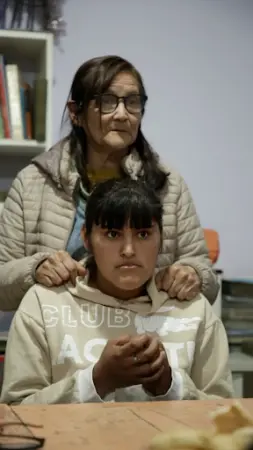
In Tucumán, in 2017, an 11-year-old girl arrived at a provincial public hospital pregnant due to domestic rape. She was not the only one: that year, 2 out of every 1,000 girls became mothers in that province alone, according to data of the Ministry of Health. By the end of 2022 The pregnancy rate for girls (10 to 14 years old) in Tucumán had dropped to less than single digits (0.6).
“The worrying thing about this age group is that most pregnancies are not only unintentional, but are the product of sexual abuse,” explained Lisandro Lescano, lawyer and former coordinator of the ENIA Plan in that province.
The plan not only prevented unintentional pregnancies: it also opened the door for many girls and adolescents to report situations of abuse. The advisors listened, accompanied and then made presentations before the Court. In Tucumán alone, at least 25 cases were prosecuted, and there were advisors who testified in oral trials against abusers.
“Advisers ended up sitting in front of the perpetrators and they were condemned. The ENIA agent was fundamental in the criminal process, so that the rapist went to prison,” Lescano remembers. And at the same time he laments: “Maybe there is a teenager who needs counseling, maybe there is a girl who was abused and today has no one to talk to. It’s like that.”
Jujuy: from the historical drop in teenage pregnancies to the lack of delivery of contraceptives
Claudia Castro has been director of Maternity, Childhood and Adolescence of the Ministry of Health of Jujuy since 2017. Under her management the ENIA Plan operated in the province. He speaks in his small office inside a hospital – just three people and a camera fit in – and reviews the numbers:
“In 2014 we had 19.5% of births of children to teenage mothers, aged 10 to 19. In 2023 we were able to lower it to 6.5%. It was really a very strong change,” he says. And he adds: “We had a very large gap between what it was like to be born in Jujuy and to be born in another place. With this intense work with adolescents we have reduced that gap and today we are even below the national average.”
Provincial Ministry of Health records show that, since the launch of the ENIA, Jujuy was among the provinces that managed to reduce teenage pregnancies the most.
But the closure of the program forced the province to take charge of the purchase of supplies. According to the answer from the Ministry of Health of Jujuy to a request for access to information, Between January 2024 and March 2025, the Nation did not send any IUD or two-rod subdermal implants. Only 5,000 single-rod implants and 1,000 condoms arrived. The province, on the other hand, had to purchase 222,891 condoms on its own.
While the provinces try to maintain what was previously a coordinated national policy with their own resources, thousands of adolescents are left without access to information and contraceptive methods. Official numbers show that where the ENIA Plan worked, pregnancies among girls and adolescents decreased year after year.
Today, in neighborhoods like El Sifón, the teenage girls’ question to Irma Monroy resonates like an echo of what was lost: what are we going to do now?
This report was produced with the support of the International Women’s Media Foundation (IWMF) as part of its Reproductive Rights, Health and Justice in the Americas initiative.