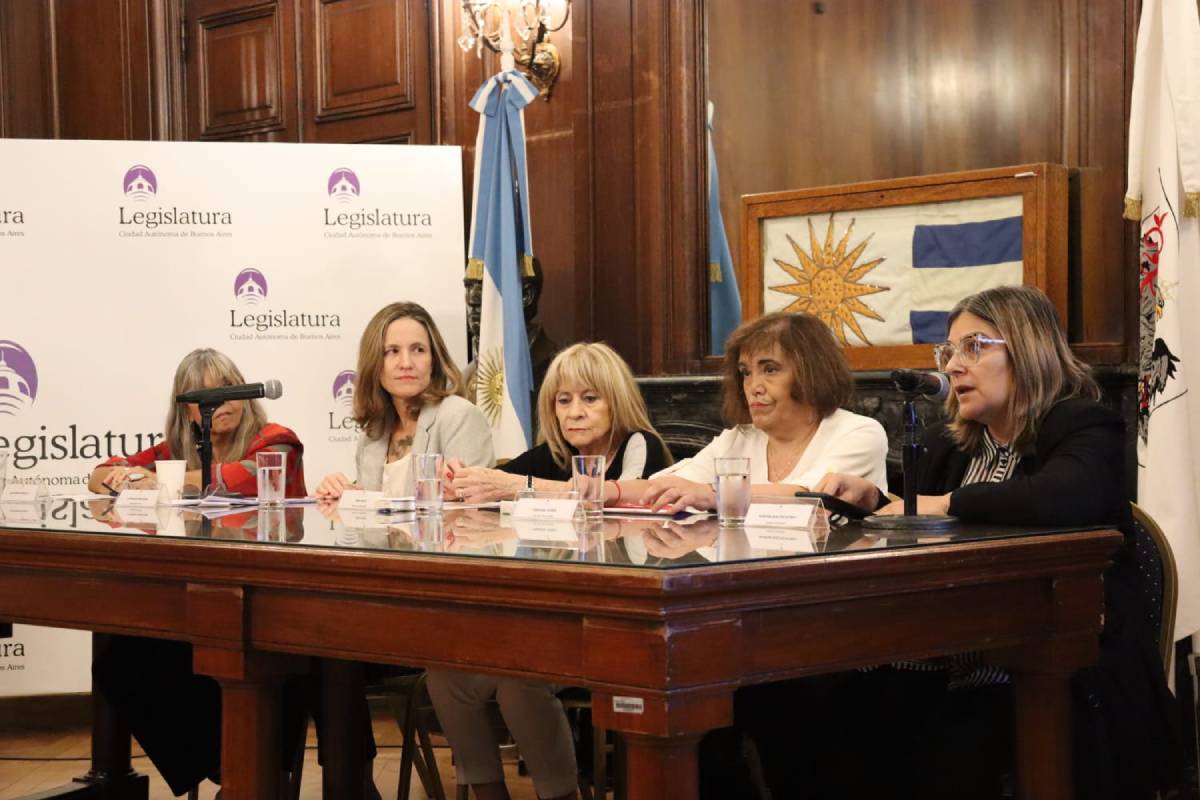
The “Adriana Marisel Zambrano” Femicide Observatory, of the Meeting House presented the 2025 Annual Report that covers between January 1 and December 31, 2025. According to these data, 262 fatalities were recorded due to gender violence. The figures were announced in the Montevideo Hall of the Buenos Aires Legislature, the 2025 Annual Report in a panel table in which Ada Rico, Fabiana Tuñez, Alejandra Benaglia, Karina Kalpschtrej and Florencia Mezzadra participated.
The figure indicates that, on average, there is one fatal victim due to gender violence every 33 hours and covers 238 femicides and linked femicides of women and girls, 1 lesbicide, 3 trans/transvesticides and 20 linked femicides of adult men and children.
The report provides statistics on “linked femicides”, that is, people with a family or emotional bond with the woman who were murdered by the femicide to punish her or destroy her psychologically, and those who were murdered while trying to prevent the femicide or were trapped “in the line of fire”; and about the children, collateral victims of these crimes: in 2025, 260 sons and daughters will be left without a mother.
On Wednesday, March 4, within the framework of 8M, the Presentation of the Annual Femicide Report for 2025, carried out by the “Adriana Marisel Zambrano” Observatory, took place in the Legislature of the Autonomous City of Buenos Aires. pic.twitter.com/W534RRgnb2
— La Casa del Encuentro (@Casadelencuentr) March 7, 2026
“Preparing reports on femicides involves much more than compiling statistics. It means assuming the responsibility of naming them, of remembering that they are not numbers or figures. Behind every murdered woman there is a life project that will not materialize, dreams that were never fulfilled, hugs that will no longer be there. Each report is memory. It is visibility. It is denunciation. But it is also commitment,” tosigned Ada Beatriz Rico, President of the La Casa del Encuentro Civil Association.
He also highlighted that “18 years after our first report on femicides, from La Casa del Encuentro we continue working to strengthen prevention, demand effective public policies and guarantee support for those who go through situations of violence. Because every life matters, every absence hurts us and because our fight is for a more equal society for all people.”
What the report says
According to the data prepared by the observatory, the report indicates that 39.7% of the victims were between 31 and 50 years old, 32.2 between 19 and 30 and 11.2 between 51 and 65. The femicides were between 31 and 50 (40.5%), between 19 and 30 (20.7%) and between 51 and 65. (12.8%).
Regarding the links between the victim and the perpetrator, in 37.6% of the cases they were a couple, in 21.5% they were ex-partners and in 12.8%, acquaintances or neighbors.
29.3% of the victims were shot dead, 18.6 were beaten and 14.5 were stabbed. 36.4% of femicides occurred in the victims’ home, while 21.9% occurred in shared housing, and 10.7% occurred on public roads.
With respect to the provinces, the rate of femicides per 100,000 inhabitants shows that Neuquén occupies first place, with 1.13; Misiones the second, with 1.09; Chaco is third, with 1.06. Buenos Aires, the most populated in the country, ranks 12th, with 0.50.
There were 260 girls and boys who were left without a mother. And regarding access to Justice, 42 victims (17.4% of the total) had filed complaints against their femicides and 15 of these (6.2%) had restriction measures.
Inequality is violence
The report on femicides also included a presentation on the Violence Index against Women of the Natura and Avon Institute Foundation (2025) revealed that 30% of people still believe that what happens in the couple, stays in the couple, keeping violence locked within four walls. However, the privacy of the home is where the majority of femicides are perpetuated: more than 58% of women were murdered in their own or shared home. Furthermore, 83.5% of the victims had some type of link with the femicide and more than 50% were their partners or ex-partners.
“We have in our hands a collective tool that allows us to see, name and understand a reality. Sustaining data over time is acting. Today we know that only 27% of the population reaches high levels of awareness about gender violence, and that almost five out of ten people have little or no information about how to accompany those who go through it. Therefore, in addition to strengthening institutional responses, we have to strengthen the human fabric that supports, listens and accompanies, amplifying this expert knowledge and working as a network,” said Florencia Mezzadra, Foundation Manager Nature Institute.
More victims, a consequence of the abandonment of the State
During the presentation of the report, the organizations highlighted the need to comply with the public policies that are framed in the Comprehensive Protection Law to Prevent, Punish and Eradicate Violence against Women (Law 26,485).
They asked to determine a governing body that, in addition to guaranteeing compliance with the law, reviews an action plan for the prevention of violence, given the budget reduction. In addition, they demanded to strengthen Line 144, today almost dismantled.
Among other demands, they raise the effective implementation of the ENIA Plan (also dismantled by this government), comply with the Law on the Prevention and Punishment of Human Trafficking and Assistance to Victims, guarantee free sponsorship, guarantee the law of economic reparation for children of victims of gender violence, comply with the Accompany program and with the implementation of the ESI, among others.
From the Casa del Encuentro they also highlighted that after the absence of the Télam Agency and the lack of gender areas in the media, the work of data collection is much more difficult.