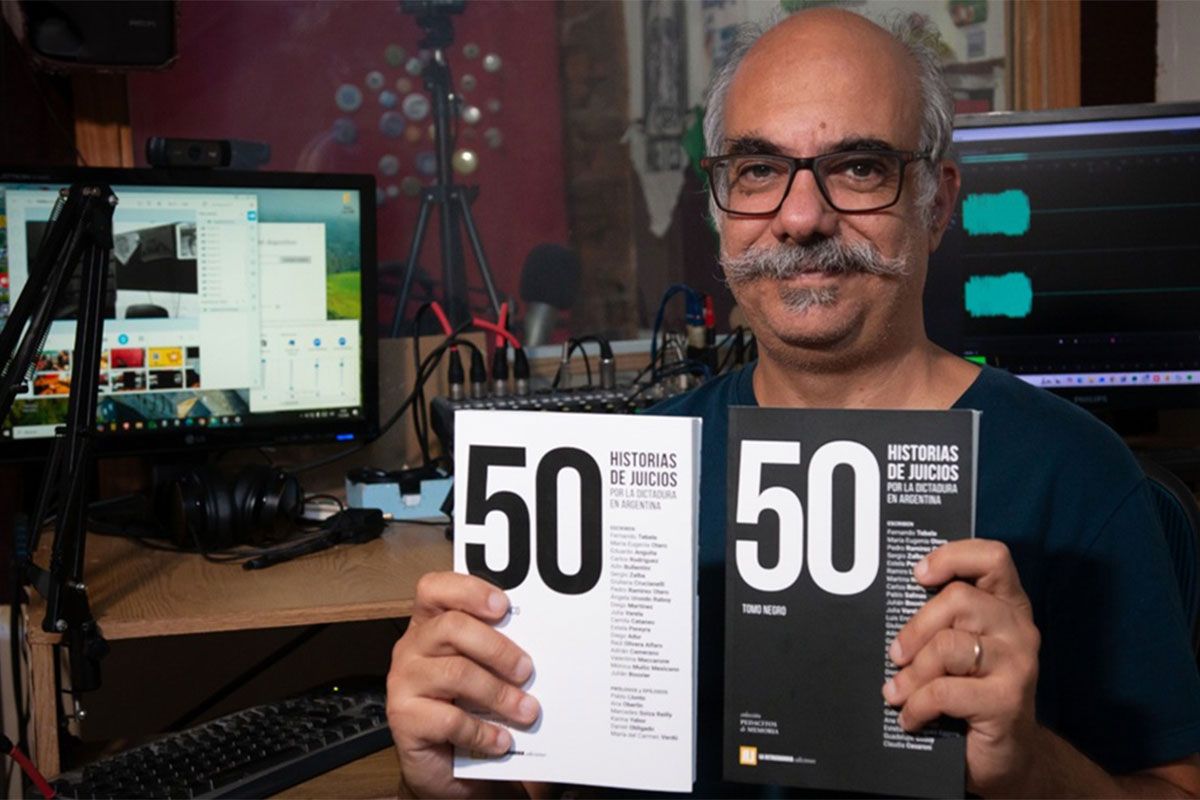
The story of Víctor Basterra, the ESMA survivor whose photos allowed the genocidaires to be identified; the ordeal of “Negrito” Avellaneda, a life cut short for just 15 years; the long genocidal arm that crossed the borders devastated the Molfino family; the repression against childhoods, embodied in “the Koncurat boys”; the vital drive of “Tota” Novillo Corvalán, the militant launched from the flights of death that no one could make disappear. These are just some of the stories – some well-known, others not so much, all essential – to understand what happened to us during the last dictatorship – and which emerge 50 years after the coup in two indispensable books, published by the La Retaguardia collective.
Unprecedented things happened during the pandemic. For example, a popular communication group with 17 years of experience began to broadcast the trials for crimes against humanity committed by the last dictatorship. To date, no less than 75 have been transmitted, but they are not satisfied: 50 years after the Coup, they released two books that tell those stories and that make up an invaluable archive of the process of punishing the genocidaires that distinguishes the country in terms of human rights.
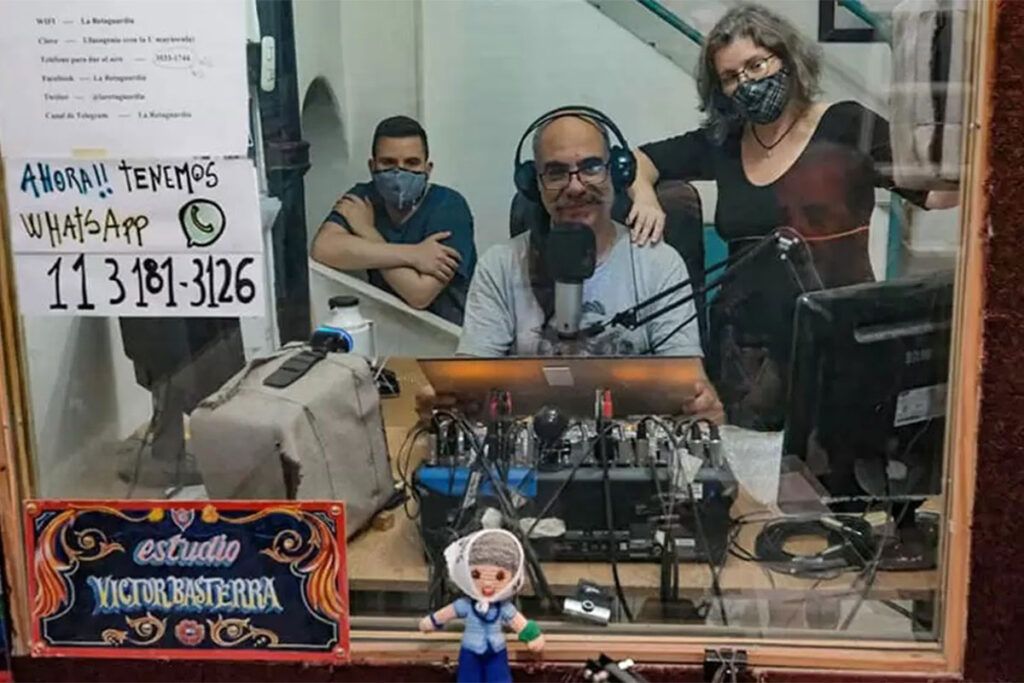
In the heat of the post-2001 social mobilization – times when changing everything seemed possible – La Retaguardia was born as a radio program and quickly added a blog. Later, when no one used the word streaming, he began transmitting online radio, and even edited a monthly paper magazine.
But the pandemic acted as a turning point: in that unforgettable March 2020, the group began to broadcast trials for crimes against humanity, an unprecedented move at least in this degree of systematicity, which was not free of tensions and resentments from locals and strangers. “From the beginning of the live coverage until here, the road was hard. The first year, very few courts allowed us to broadcast the testimonies; in 2021 the proportion began to even out, and then it turned in our favor,” Fernando Tebele, editor of La Retaguardia, compiles six years later. Another watershed, the journalist points out, occurred in 2025: “in the ‘Retaguardia ruling’ Cassation resolved the point by pointing out that the trials must be televised, as guaranteed by the new Procedural Code.”
The entire process “was a path that we traveled with quarrels from relatives whose trials were left unregistered, which also generated anguish, but luckily it is now a thing of the past, because we have managed to modify the history of the communication of trials in Argentina. And soon this will be applied to all cases, not just those in which we requested it,” he concluded.
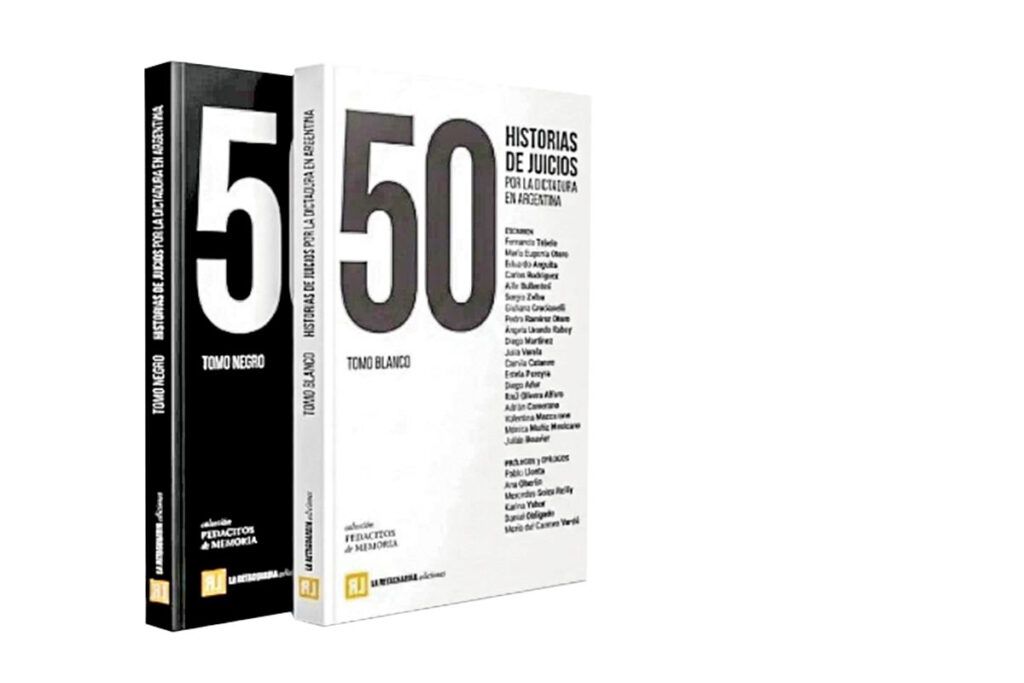
The double book with the chronicles of trials for crimes against humanity brings 50 stories that revolve around the cruelest Argentine dictatorship. This is a selection of chronicles and stories, written by journalists – and not only – who cover different trials covered by La Retaguardia throughout the country, from that pandemic March to this part. “We chose these 25 stories per book to try to cover the different problems that the genocide poses to us: from torture to the theft of babies, as well as the systematic rape of women and the acts of resistance that were recorded within the concentration camps,” Tebele completes. “The stories belong to the section of trials that we have televised, but there are exceptions, certain stories that we did not want to leave out and that belong to the period prior to televising. We also wanted to include the Trials for Truth and the Trial of the Juntas, for what they have meant along the way,” the editors indicate in the introduction.
The works have prologues and epilogues by Ana María Careaga and the lawyers Pablo Llonto, Ana Oberlin, María del Carmen Verdú, Guadalupe Godoy and Claudia Cesaroni. Judges and prosecutors also contributed texts, while the stories were traced by the pens of Eduardo Anguita, Carlos Rodríguez, Ángela Urondo Raboy, Diego Martínez, Martina Noailles and Pablo Salinas, among many others.
For the journalist and researcher Eduardo Anguita, the value of the books lies in the fact that “they are the product of a collective effort, in an era in which individualism prevails. That is its greatest merit: La Retaguardia faces this not only through a historical record, but in a collective key.”
The co-author of the magnanimous and pioneering work “The Will” He also takes care to emphasize that “The Rearguard has found a way to construct the past; not for a nostalgic reason, but as something indispensable for the future. This is more poetic, but in the 70s we talked about the avant-garde, and now we realize the role that the rearguard has.”
Research and documentaries have been made with La Retaguardia’s audiovisual material, and the videos are also used in schools, for pedagogical purposes. Televised via a YouTube channel, the trials are followed in different parts of the world, with a preponderance of views from Colombia, Spain, the United States, Italy and Uruguay. Like any self-managed means, these days it is experiencing great difficulty in sustaining a task that requires many hours and mental and emotional commitment.
The books “50 stories of trials due to the dictatorship in Argentina” They consist of 262 pages each and can be purchased online.