World War III has been here for a long time. Pope Francis had already warned: it is a war in installments. Which is not similar to the first or second global war but rather inaugurates a new genre that combines total war with artificial intelligence. The different fronts have their moments of media attention, as in Ukraine; of silence, as in Africa; of horror, like in the Middle East. Tendencies and tensions specific to each moment and place appear.
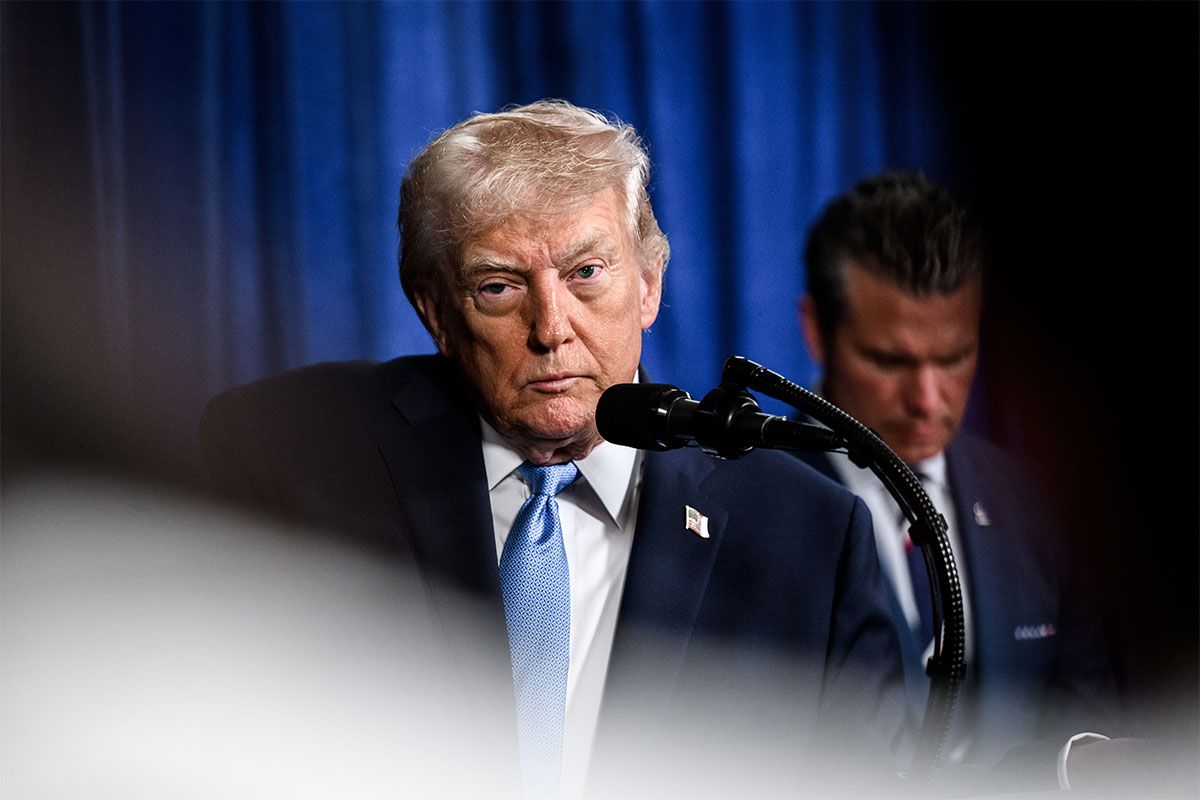
For example, the United States is experiencing structural tension. He still doesn’t know why he attacked Iran. He may want to turn the Islamic Republic into a secular state, but then there will be a civil war before he will accept an imitation of the Shah. At the same time, Trump said he wanted to participate in the election of Iran’s new religious leader, a rather impossible wish, but one that will not lead to “regime change.” Will he want to dismember that ancient nation? Thus they suggest that they promise the Kurds of Iran an independent country in exchange for fighting Tehran. They assume that the Kurds do not know that the promise of the great state that the Europeans promised the Arabs for the first post-war period did not work out too well. He may also want to destroy Iran’s military capabilities, especially the “intercontinental rockets that will target the United States” that do not exist or the nuclear weapons that Iran does not have. That is why, among other cities, it bombs Tehran (10 million inhabitants). The United States wages a war without objectives.
The one that is clear about the objectives is the State of Israel. The person who best defines them is Mike Huckabee, the current United States ambassador to Israel. “Israel has the biblical right to take over the entire Middle East,” as quoted by the newspaper Guardian. This former Arkansas governor and Baptist preacher insists: “Israel is the land that God gave, through Abraham, to the people he chose. It is a people, a place and a purpose.” After the relative scandal caused, Huckabee said he said “hyperbole,” a figure of rhetoric that exaggerates a certain position. What a clarification! In a world where metaphor no longer exists and literal interpretation prevails, there is a dangerous tendency to confuse sacred scriptures with property deeds.
For Israel, the Gaza campaign has been profitable. The destruction of cities and the massacre of the population, with the consequences of displacement, hunger and disease, have shown that such things do not matter to the West. On the contrary, the mix of total war and artificial intelligence fascinates. Morbid envy? Israel now seeks to Gazanize Lebanon. The script is the same.
In the name of the Lebanese army’s slow disarmament of Hezbollah, Israel intervenes again. Although he does not respect it, he demands compliance with the ceasefire that implies the neutralization of the militia, and threatens to invade Lebanon. The problem for the Lebanese army is that it cannot disarm a force fighting Israel while Israel bombs the country and especially Beirut (3.5 million inhabitants), especially the displaced. Even if he tried by force, a confrontation between Lebanese would lead to another civil war. One day we will talk about Lebanon.
On the other hand, Israeli commitments are of variable geometry: it destroys Gaza due to the presence of Hamas, although not all Gazans belong to that organization. Attack Lebanon and bomb Beirut, as if all Lebanese were Hezbollah. In the West Bank, where neither Hamas nor Hezbollah exist, Israeli settlers supported by the army practice ethnic cleansing of Palestinians. The Israeli Human Rights organization B’Setelem has already counted 90 villages destroyed since 2023, with olive trees cut down, livestock stolen and water wells cemented. The West Bank is governed by what remains of the Palestine Liberation Organization (PLO), which renounced the armed struggle and recognized the State of Israel in 1993. In this context, the incentives to negotiate with Tel-Aviv are more than blurred. Or it is no longer negotiated.
Because the attack on Iran was carried out at a time when there were ongoing negotiations in the city of Geneva, precisely on the nuclear issue. With the usual technological expertise, Israel and the United States carried out the usual precision attacks to behead the Iranian leadership as well as terror bombings to undermine the adversary’s will to fight (universities, hospitals, civilians). What Palantir and the like say. However, there seems to be some surprise on the Western side at Iran’s capabilities in response. In an asymmetric war, the weaker must inflict damage that the stronger cannot bear. If they can endure the internal tensions, it is better for them to prolong the conflict. It is enough for them not to lose. The strongest must wage a quick war of extermination (which is what Artificial Intelligence is for). They cannot not win, unless they suffer the passage of time, whose tendency leads to logistical, military and moral wear and tear of the great powers. «