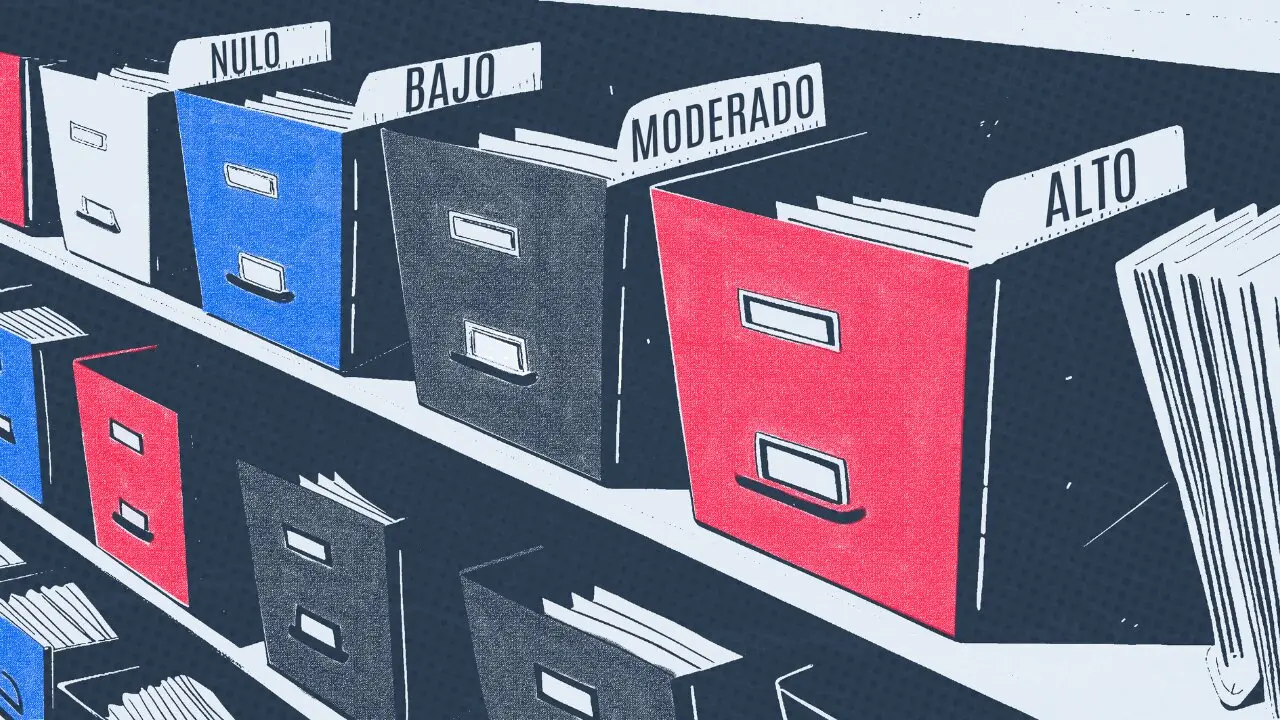
Six out of 10 deregulations promoted by the Milei government have so far had a moderate or low impact, while 12% of the analyzed regulations are held back by judicial decisions, according to an investigation carried out by Checked and elDiarioAR on the analysis of 160 standards published in the Official Gazette between December 10, 2023 and May 31, 2025.
The result of this research was analyzed and captured in a display within the framework of the Data Journalism Visualization (DJV) Bootcamp project of the Argentine Journalism Forum (FOPEA).
Chequeado and elDiarioAR They consulted the press area of the Ministry of Deregulation and Transformation of the State, and the Secretariat of Communication and Press for this investigation, but did not receive a response.
High impact: Rental Law
President Javier Milei repealed the Rental Law through the DNU 70/23. Among the main changesit was established that the owner and the tenant may “freely agree” on the method of payment of the rent.
The president of the Argentine Real Estate Chamber (CIA), Nancy Vieitez, pointed out DiarioAR that “the real estate market regained dynamism: the supply of rental properties grew significantly, and conditions became more flexible again, with terms, currencies and adjustments negotiated between parties.”
The real estate ad portal Zonaprop published 104% more rental ads in 2024 than in 2023, and in the first 9 months of 2025 they increased 69% compared to the same period last year.
Deregulations by Javier Milei’s government: 6 out of 10 have so far had a moderate or low impact and 12% have been stopped
Furthermore, according to official data from the Buenos Aires Government (which take the information of the Argenprop real estate management system), the average rent fell 30% in October 2025 compared to December 2023 (prior to the application of the new regime).
On the other hand, the INDEC registered increases above inflation. The difference It is explained because the Buenos Aires organization collects the publication data on real estate portals and the INDEC measures the prices actually paid by tenants, whose contracts were drawn up under the different laws applied in recent years.
However, the organization Inquilinos Agrupados indicated, based on the results of a surveythat 66% of tenants allocate between 30% and 60% of their salary to pay rent, and that more than half face increases every 3 or 4 months.
High impact: open skies
DNU 70/23 also introduced changes to the Aeronautical Code, allowing aircraft with foreign crews to operate in the country. It also enabled the entry of new providers to all Argentine cities; authorized the operation of airplanes with up to 19 seats for the transport of passengers and deregulated access to the ramp service.
Fernando Dozo, professor of Air Policy at the Institute of Aeronautical Law, told Checked that the measure “consolidates the opening of the international market, through the investment of companies that provide more services to and from Argentina. Most companies increased frequencies and destinations, which ensures a much more acceptable international connection.”
Regarding the cabotage market, the specialist pointed out that the impact was minor given that “it has not been fully defined what the State is going to do with Aerolíneas Argentinas, which does not allow investors to project their role in the market.”
The number of total flights grew 9.3% in the first 9 months of 2025 (5.9% in cabotage and 15.1% in international), according to data from the National Civil Aviation Administration (ANAC). And the number of passengers transported rose 15% (10.7% in domestic flights and 20% in international flights).
Moderate impact: over-the-counter medications at kiosks
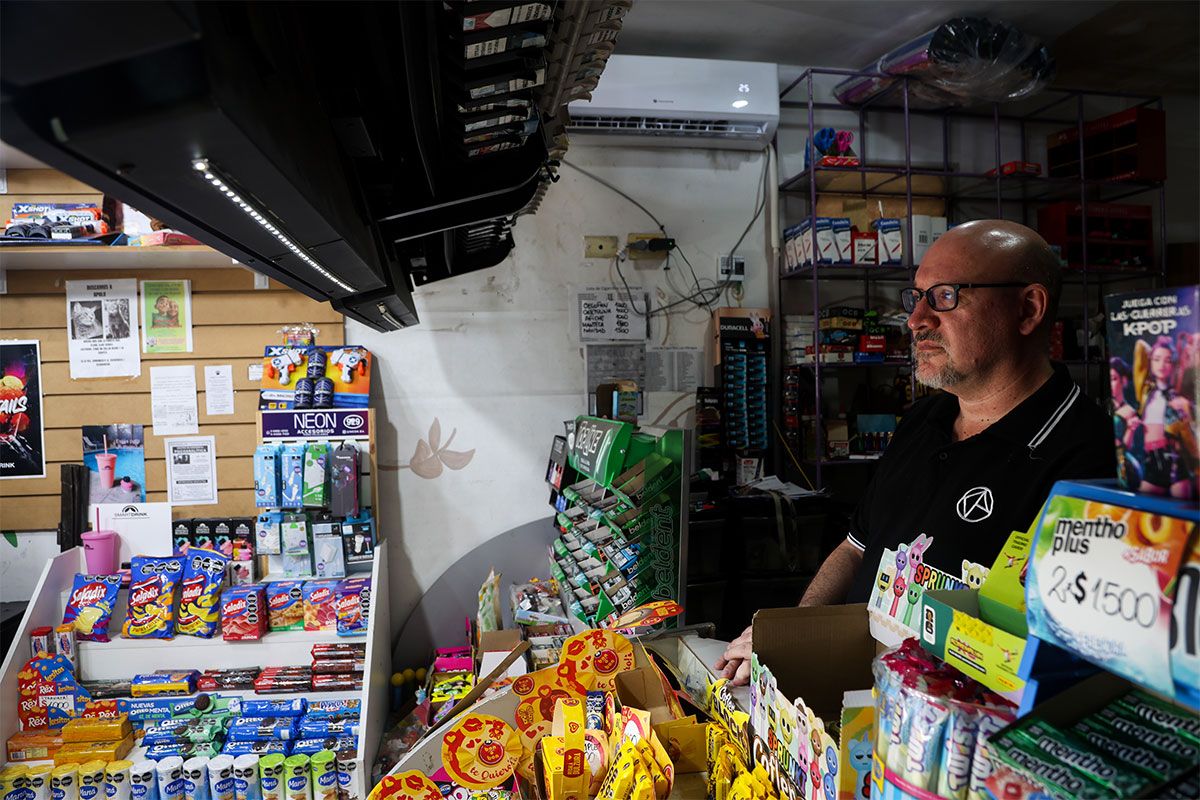
The national government authorized pharmacies to display over-the-counter medications on shelves so that the public can access them directly. It also enabled kiosks, supermarkets and other businesses to sell antacids and pain relievers.
“This rule grants greater access to consumers, but maintains the health security framework because the products offered on shelves must be sold in a closed box (that is, the expense cannot be fragmented), with their respective prospectus and only to those over 18 years of age,” highlighted Agostina Ambrosi, economist at the Argentine Institute for Social Development (IDESA), when asked by Checked.
For her part, Graciela Lovece, co-director of the Health Law and Medical and Institutional Liability degree at the University of Buenos Aires, assured that the measure encourages a process of “medicalization of daily life, which is seen in the media where 90% of advertisements refer to health and medication issues.”
On the other hand, the Government established that pharmacies They must have a QR code that directs you to the list of updated prices for prescription medications that are available. In response to the query of CheckedIDESA sources highlighted that: “In practice, the measure was partially implemented since recent inspections revealed that 88% of the inspected pharmacies correctly displayed the QR, while some were fined or ordered to correct their systems.”
Low impact: the Gondolas Law
DNU 70/23 also repealed the Gondola Lawwhich established regulations on the quantity of products displayed both on shelves and in virtual locations of retail and wholesale supermarkets.
The president of the Mar del Plata delegation of the Association of Small and Medium Enterprises (Apyme), Gustavo Casciotti, assured DiarioAR that “the repeal implied the loss of a tool in a battery of measures that aimed to disarm the dominant position; to democratize the supply of food products and to try to discipline the prices of the big players.”
However, he acknowledged that the Gondola Law “had relative weight because State control at points of sale became complex. Supermarkets knew how to find mechanisms to circumvent or violate compliance with the law.”
Zero impact: public limited companies in football
The national government enabled sports entities to assume the legal figure of Sports Joint Stock Companies (SAD) and that operate for profit (unlike non-profit civil associations).
The governing organizations of sport in our country – such as the AFA – prohibit the affiliation and participation in the tournaments of a club that is a SAD. However, the DNU obliged these organizations to modify their statutes to allow the affiliation of public limited companies.
However, the federal judge of Mercedes, Elpidio Portocarrero, made room for a precautionary measure requested by the AFA and suspended the scope of the decree in the case of football.
Rodolfo Paverini, president of the Argentine Sports Confederation (CAD), explained that the DNU “is in force in its effects for the sports community with the exception of football and the entities that are part of the AFA, until the judicial conflict is resolved.”
For his part, Mariano Bambaci, lawyer and specialist in sports law, explained to this medium: “the State previously recognized the autonomy of each federation in relation to whether or not it accepted the SAD. That article was eliminated and now it is established that there can be no discrimination. That is, it violates the autonomy of the national federations because now we must comply with that.”