Run between the police. He knows nothing about that world, nor about politics, nor about photography, but his fascinated eyes understand that that day is historic for his life and for what is to come. It is 1966. Marta Strasnoy walks with Pedro Roth, her partner, in the mobilization. They go between the police and the cavalry, in the midst of tear gas, but they manage to sneak along Avenida Córdoba until they reach the Faculty of Medicine. A childhood friend opens the door to the building and, surprised, asks: “What are you doing here?” They run in. He beats the troops behind him, with heels and miniskirts, at a time when miniskirts were not worn. That day they take that faculty and the Economics faculty. In the run-up to Night of the Long Staffs She feels an inner click: “How nice it is to be a photographer.”
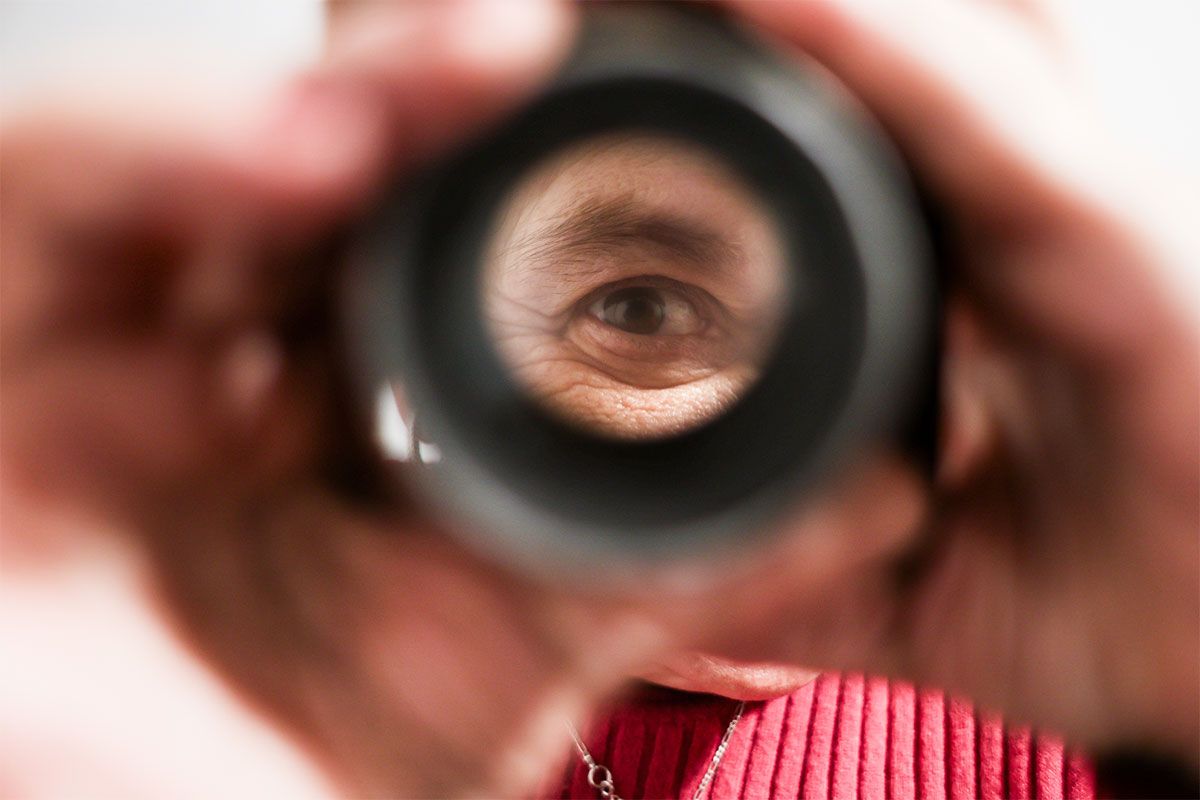
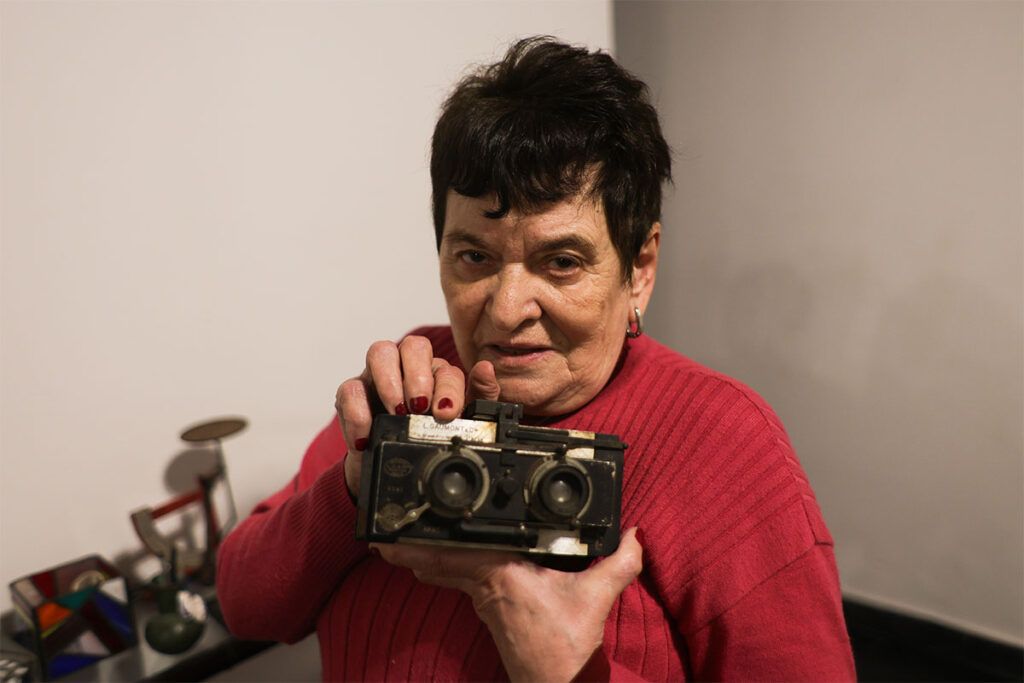
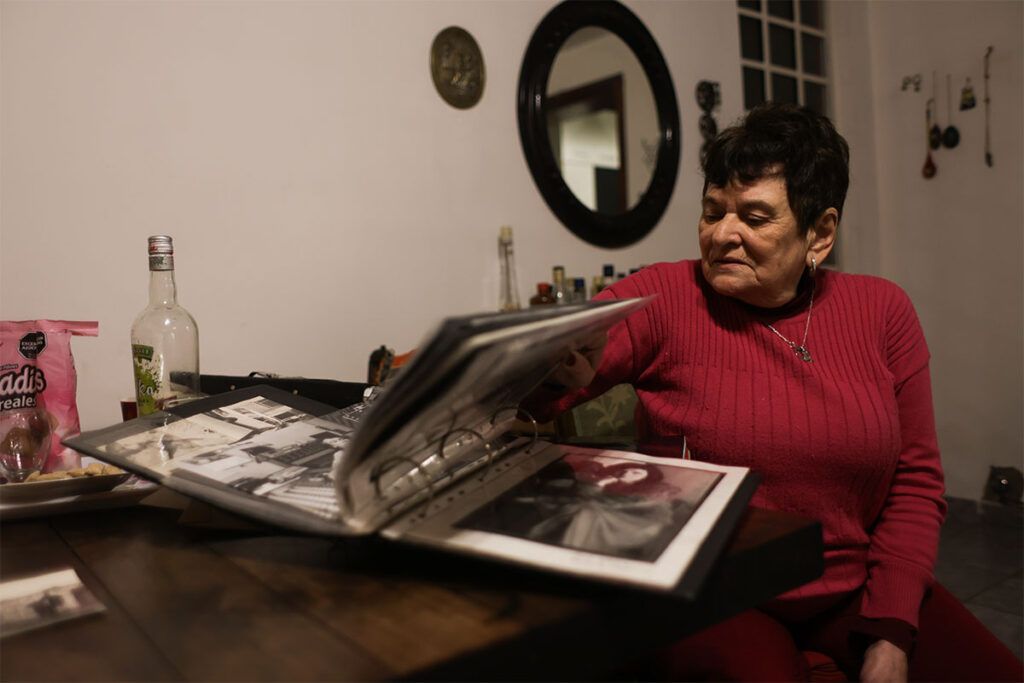
Marta Strasnoy is 81 years old today and has an eye that got tired of looking. He was born in the Almagro neighborhood, in Buenos Aires in 1944. He photographed Freddy Mercury, Cortázar, Borges, Alfonsín, la “Negra” Sosa, Hebe de Bonafini and countless historical events and characters from the second half of the 20th century, both in Chile and Argentina, photos that are not on Google or ChatGPT, but that are part of our collective memory. He had cancer and recovered thanks to public health and keeps a stack of folders full of credentials, photos, documents, note clippings and memories.
After that event he told Pedro, who was already working as a photojournalist for the fledgling Gente magazine, about his desire to start taking photos. He gave him a Contarex and told him: “here is the aperture and here is the speed. Go and take photos.” And it was. As a wink along the way, he managed to sell that first photo he took in Plaza Francia of a girl eating chocolate ice cream. The grandmother had run to ask her for it. “If it comes out, I’ll sell it to you. And it came out.”
A one-way trip to photography
After separating from Pedro, she continued with photography, finished night high school and entered the La Plata film school. His political militancy grew little by little. Years later, a group of filmmakers recovered their first film The End of Time (1970), a short that allows them to reflect on that and this time.
She was the first woman member of aRGra, the Association of Argentinian Graphic Reporters. “The 512,” he says.
–Just at 512 was there a woman?
-Yeah. At that time there were officially none. I was given the credential in 1973 along with Cristina Bettanin, who I will never stop naming. She is missing. We were in antagonistic political camps. At that time I was a gorilla for her, because I was in the PRT with Nuevo Hombre magazine and she was with Descamisados, but we always met in the same places and neither of us had credentials.
–You collaborated in many magazines, but they didn’t take you because you were a woman?
–They always told me the same thing: “your photos are good, but we don’t take women.” That was the motto. ’73 is far away, but not that far. I was recommended to the Abril publishing house by Yuyo Noé because I told him that I wanted to be a photojournalist. A man greeted me, I don’t remember his name, he looked at my photos and told me, “your photos are good, they lack a bit of profession, but we didn’t take you because you are a woman.”
–Were you already a mother?
–My daughter was born in 1976. But it was not because of a mother, it was because of a woman. That thing that a woman can’t be everywhere. But I did everything, I did soccer, boxing, golf, tennis, political events, mobilizations, villas, rock, I was in the famous box when Perón returned in ’73. I did portraits, weddings, everything one does to survive and pay the rent. And if I couldn’t afford it, I worked as a temporary secretary. He knew how to type very well. He did what he could.
When she became pregnant, Marta worked at the Chilean magazine Pluma y Pincel, reporting on artists and painters. During the nine months that the pregnancy lasted, she went from house to house trying to protect herself. “I should have left the country, but I didn’t because I was the first daughter, the first granddaughter. That time was horrible,” she remembers.
He went back to freelancing pretty quickly and in a bookstore in Once. Many times she carried her daughter in a backpack, or made her play with the children of the people she photographed, but she says it was difficult. She then separated from her daughter’s father, Jorge Vilariño, who died a few years ago. “A first-class photojournalist. When I met him he was head of Noticias Argentinas, where I also worked. Because I started dating him and they gave me a place,” he says, laughing.
–Like “the girlfriend of”?
–No, I already had my credential there. We barely paid the rent. I have friends who were photojournalists and stopped being one because they didn’t give you work. I continued, knocking on doors. I got a job at EMI-Odeón until they closed. Then I was the only woman in Perfil, and I was not a permanent member, I was a collaborator. That was already in ’82.
–When do you feel that changed?
–I think not much has changed. I don’t know how many reporters today have regular jobs. For example, I was never paid retirement contributions anywhere. When I wanted to retire, thanks to Cristina’s moratorium, I had a stack of receipts from my jobs and nothing was listed in Anses. There were three years of contributions – at most – from the province of Buenos Aires when I was a teacher, the Avellaneda school had just been set up. They had not paid me contributions either as a reporter or as a secretary. Without that moratorium I would not have been able to retire.
It is Wednesday and we are attentive to the news of what is happening in Congress. She is also retired and imagines all those women who will not be able to retire with the repeal of the moratorium.
–In 1994 she resigned from being a reporter…
–I went to make a note, they were all standing guard because Menem had been hospitalized. Corach came out to give the report and suddenly I see a swarm of photographers who are killing themselves to take a photo of him. When I saw that scene I went back. I came this far. I didn’t do everything I did to kill myself and my colleagues for a photo of Corach and then I gave up. 20 years as a reporter, enough.
He left, but began teaching classes and organizing photographic safaris where he found a new facet. Be a teacher. “I loved safaris, I loved being a teacher. They still tell me why I don’t do them anymore. I look at these folders and say: I’m 81 years old, I gave everything I could.”
–Do you think that the advance of feminism changed something in photojournalism?
–I like that there is a plurality of voices in all possible areas and obviously of perspectives. For me, women and dissidents have a different perspective, I am convinced of that. I don’t really know how to explain it, or if it’s politically correct, but there is something else in the look.
–Is there any photo you have taken that you say “this is why it was all”?
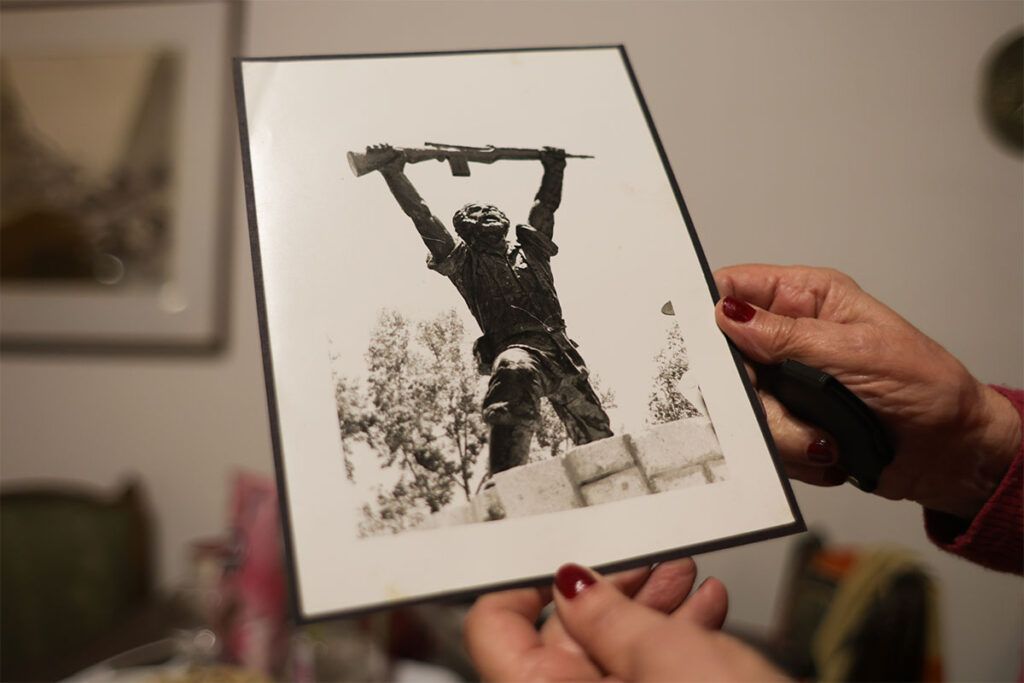
–The monument to Che Guevara in Chile, in the commune of San Miguel. It was the first monument made to Che and it was the first thing Pinochet threw away. That photo is a monument, it doesn’t say anything, but for me it condenses the adventures, my ideology, my history of struggle, of being a photographer, of being ahead, of being a combatant, even if I haven’t been a guerrilla. I wanted the world to be socialist. «