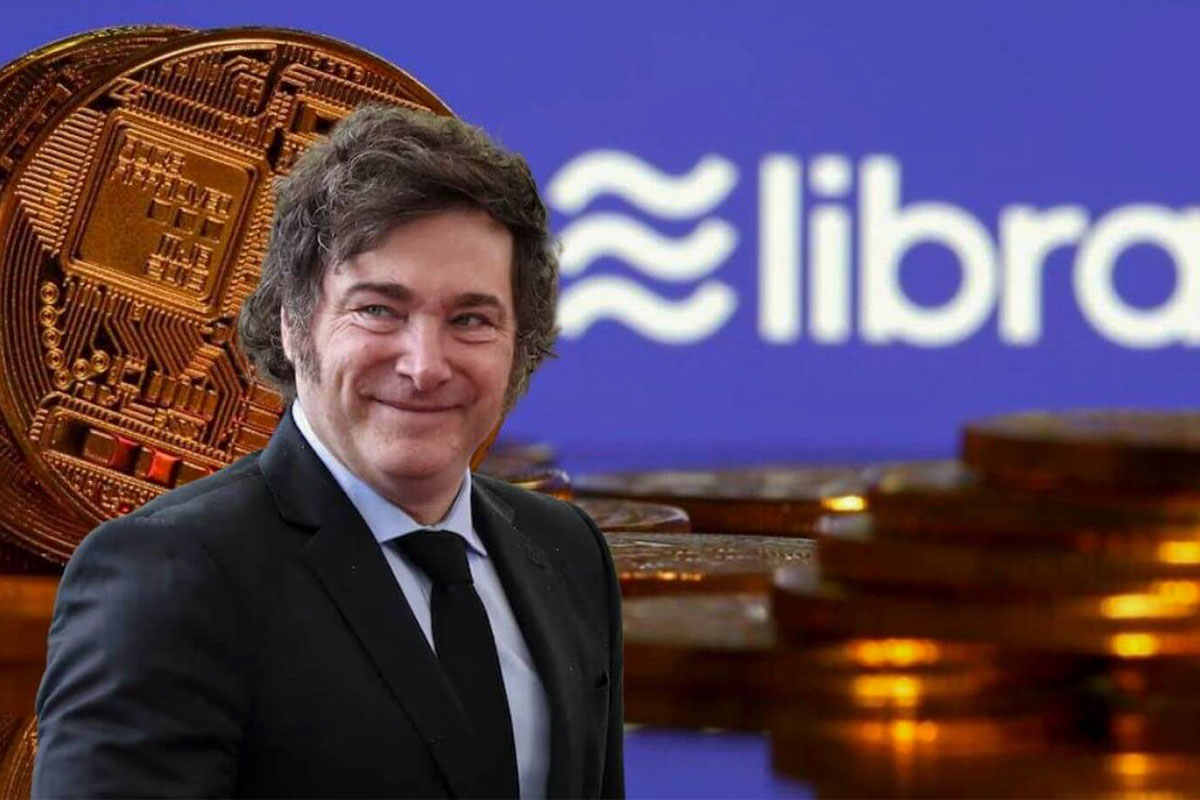
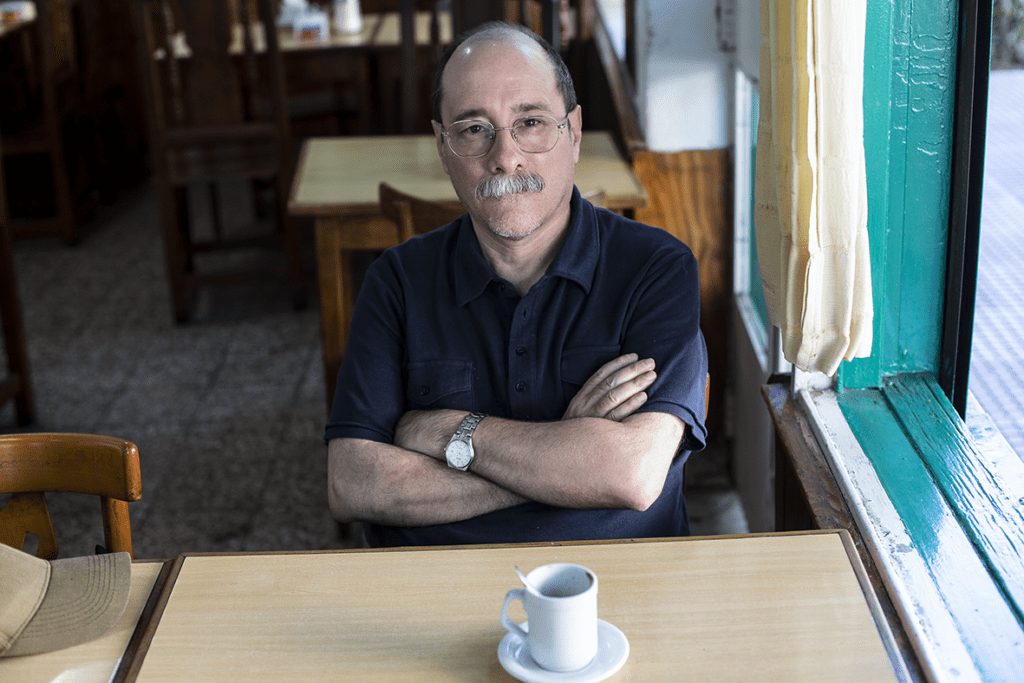
On the other side of the phone, Juan Alonso speaks fluently. Each sentence he utters contains a journalistic fact about one of the most important political and judicial scandals in recent years. A plot that has the president as its protagonist Javier Milei and that he researched, analyzed and studied in depth for several months. The result of all that time of work was captured in $Libra, story of a trapby Editorial Planeta, a book to understand the logic of the core of libertarian power through what triggered the presidential diffusion of a crypto token that promised prosperity for the productive sector but, everything indicates, ended up being a great scam that the Judiciary is still investigating.
Throughout 237 pages, this journalist and professor of the Faculty of Journalism and Communication of the National University of La Plata (UNLP) set out to reconstruct the x-ray of a “dystopian” era, as he told Time. An era that has among its most important chapters the accusation of the president and his sister Karina Milei in a plot of possible crypto scams that left million-dollar profits in dollars for a handful of people to the detriment of thousands of investors.
Eleven years after the publication of his first book, Who killed Aramburuabout the assassination in 1970 of former de facto president Pedro Eugenio Aramburu, the investigative journalist returned to bookstores with a work of political resonance that refutes the explanations that the president gave about his involvement in the $Libra case.
He did this through a detailed reconstruction of a complex plot. A narrative quality full of data that allows us to take dimension of the magnitude of the scandal and its protagonists, through revelations such as the pressures perpetrated by American agents in a Buenos Aires hotel to direct their eventual judicial statements. “It was a challenge for me, because it was writing a book in real time. I closed it in December, in the middle of the month, after 10 months of work. The last ones were with 12 or 14 hour days, and many at dawn,” he said.
-What was it that caught your attention about the case?
The president’s tweet surprised me a lot. I realized that there was something strange, a management of digital assets that I had no idea what it was about until I began to notice the reactions of journalists who were specialists in software, in this type of assets. One of the first people I spoke to was Laureano Bielsa, who is also a lawyer. Also with Fernando Molina, who wrote the dictionary of crypto terms with which the book opens. He explained to me things that are very complex such as the traceability of Hayden Davis’ transfers.
-Beyond dedicating itself to the Libra case, in the book there is a lot of information about the history of Milei and other scandals that turned into judicial cases that have marked the days of the libertarian government. What was the search?
-In addition to the explanations of the specialists, I was also struck by the coverage that the world’s major news networks did of the case. And all of this helped me make a kind of photograph or x-ray of a dystopian era. This is a book that attempts to dialogue with others on philosophy, history and journalism, such as Milei’s Arkby Valeria Di Croce (Futurock Editions); The Fool and The Forces of Heavenby Juan Luis González (Planeta); Karinaby Victoria Di Masi (South American) and The Monkabout the story of Santiago Caputo, by Manu Jove and Maia Jastreblansky (Planeta).
-How do you characterize Milei’s role in Libra?
-In this very rare operation the president lied to the Argentines, he cheated. The first trap was the 44 alphanumeric character contract that no person on planet Earth had before he published it, even though he said he found it on the internet. Milei was the only person to publish it, the only president to do so. And he never explained where he got that contract from. Now we know from the expertise on Mauricio Gaspar Novelli’s cell phone that it would have been given to him by Novelli himself, with whom Milei had conversations before, during and after the launch.
-In addition to Milei’s role, Libra’s background also has scenes that are not so well known and that appear in the book, such as the “tightening” chapter. What can you say about that?
-I had access to confidential sources who told me that there were agents from the United States Embassy who pressured witnesses in the Libra case so that they did not testify before the Argentine Justice system but rather did so in the United States, with the indication to moderate their criticism of President Javier Milei and his sister.
-That is one of the data that allows us to have the magnitude of the scope of the case…
-Sealed room at the Sheraton Hotel, at least three people, two men and a woman… cell phone jammer… that’s part of the episode.
-Other characters such as José Luis Espert or the Andis case also appear in the book. How are they characterized in this photo from the “dystopian era” you speak of?
-I talk about “libertarian symptoms” referring to the Andis case, that of Fred Machado and that of Espert. They all have their connection with Libra. Adorni is even complicated because everything indicates that he was with the president at the Quinta de Olivos when he published the token contract. That is why the Chief of Staff would have to give explanations. What’s more, I would put him in the suspect circuit also taking into account the illicit enrichment that Justice is investigating. The timeline also coincides with February 14 of last year, when Milei promoted Libra.
-Why do you think that Justice has not delved into him, who was a speaker at the 2024 Tech Forum, or Espert, who also shared the $Libra contract?
-Do you remember what was once known as creative right, the Bonadío-Stornelli line? There is a creative right to accuse the Peronist, Kirchnerist or left-wing opposition, but there is no validation to deepen the criminal investigation by the representative of the Public Ministry. I had that discussion with (the prosecutor, Eduardo) Taiano. I told him: “Look, doctor, you are the representative of the Public Prosecutor’s Office and I don’t see any major actions to promote the case.” The guy answered me something unusual. He told me: “These are things that happen in Argentina… you are a very insistent journalist.” The cause depends on him.
– It is known that Libra was not the first time that Milei was involved in a failed crypto project or with accusations of fraud. What was the difference with Libra that ended in scandal?
-Milei was an employee hired by the agency of Mauricio Novelli and Manuel Terrones Godoy, who began paying him 2,000 dollars a month and then 4,000 for Karina, according to the expertise recently incorporated into the case. Milei donated his salary as a legislator, but with another hand he received fees from that agency. In addition, Hayden Davis arrives in the presidential environment after having promoted the $Trump and $Melania cryptocurrencies, launched before Donald Trump’s inauguration. The difference here is that Milei promotes Libra as president of the Nation.
-How do you see the judicial case opened in Argentina?
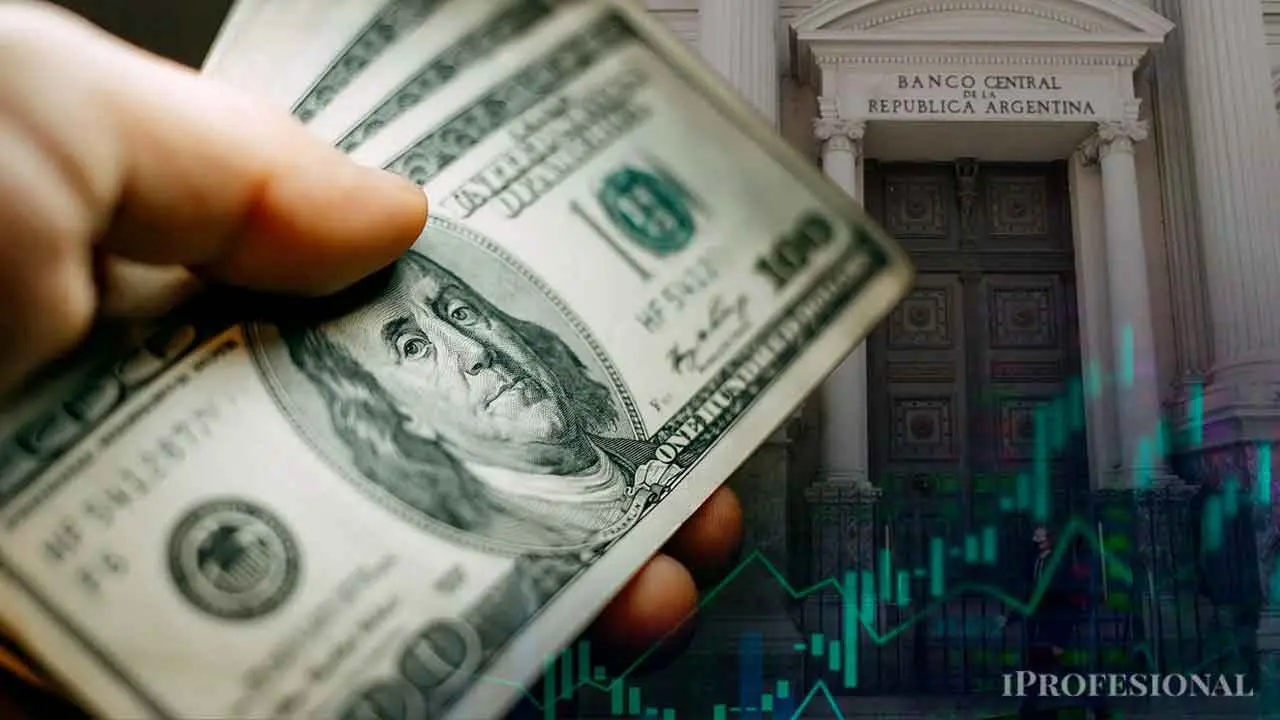
-Prosecutor Taiano and Judge Marcelo Martínez de Giorgi have to promote the file. They have to, at the very least, investigate Novelli. And most of all, to Milei. The investigation is an act of defense, the judicial official who determines it has semi-full proof that the person cited is presumably guilty of what he is doing. And here is all the factual evidence in relation to the traceability of Davis’s money, of the 100 million dollars that Davis said was Argentina’s money. There are 85 thousand victims in the world in a business of 300 million dollars, of which 100 million remained in the hands of Avis, linked to Trump and the libertarian conservatism of Argentina. They are not extinguishing but they are dilating. Milei has to explain why she spoke to Novelli before and after the launch. He lied when he said that the project was going to benefit small and medium-sized businesses. He also lied by saying that there were no Argentine victims, when only Ripio informed the Congressional Investigative Commission that there were 1,329 victims. According to the cryptographic experts I consulted, there are 85 thousand victims in the world.