The race to bring AI data centers to space accelerates. While giants such as SpaceX, Amazon and Google have already made public their intention to install a series of satellites, powered by solar energy, a startup He presented his plan and set the date for his first mission.
Orbital, founded by entrepreneur Euwyn Poon (42)is moving forward with a plan to build and operate computing infrastructure in low-Earth orbit, powered by continuous solar energy and cooled by direct radiation of heat into a vacuum. The bet seeks to solve two of the main bottlenecks of AI on Earth: access to electricity and thermal management of systems.
Backed by the a16z Speedrun fund, The company confirmed that its first test mission, Orbital-1, will be launched in April 2027 aboard a SpaceX Falcon 9 rocket. The goal is to validate the sustained operation of GPUs (specialized chips designed to accelerate image, video and graphics processing) in space, measure their radiation resistance and, in an early stage, run AI inference workloads for commercial purposes.
The project is based on a specific technical logic: while the training of large models requires thousands of interconnected chips with minimum latency (the time delay between a component requesting data and the destination component delivering it) – something that is not feasible in orbit – inference (the ability of an AI model to infer or extrapolate conclusions from new data) allows tasks to be distributed across multiple independent nodes. This is where Orbital sees the opportunity to scale, through a constellation of satellites that operate in parallel.
Each unit will be equipped with small state-of-the-art GPU clusters, powered by solar panels and designed to operate without interruptions in sun-synchronous orbits, where energy is available 24 hours a day. In parallel, the company inaugurated Factory-1, its research and development center in Los Angeles, from where it seeks to advance towards scale manufacturing.
The challenge is not minor. The company plans a constellation of up to 10,000 satelliteswith an estimated cost of US$5 million per unit, which implies a potential investment of US$50,000 million. Along this path, it also began negotiations with the Federal Communications Commission (FCC) to obtain the necessary authorization to deploy this new infrastructure.
Before founding Orbital, Poon – born in Singapore – built an unconventional career: he was a corporate lawyer, spent at Y Combinator and created Spin, a micromobility company that ended up being acquired by Ford. Later, by investing in traditional data centers, it detected the energy limit that today it seeks to solve from space.
“The economics of data centers are dominated by electricity and cooling, and both are increasingly difficult to manage. In orbit, solar power is continuous and cooling is fundamentally different. Orbital is building a computing infrastructure that eliminates the energy limit and accommodates the potential of AI,” Poon said.
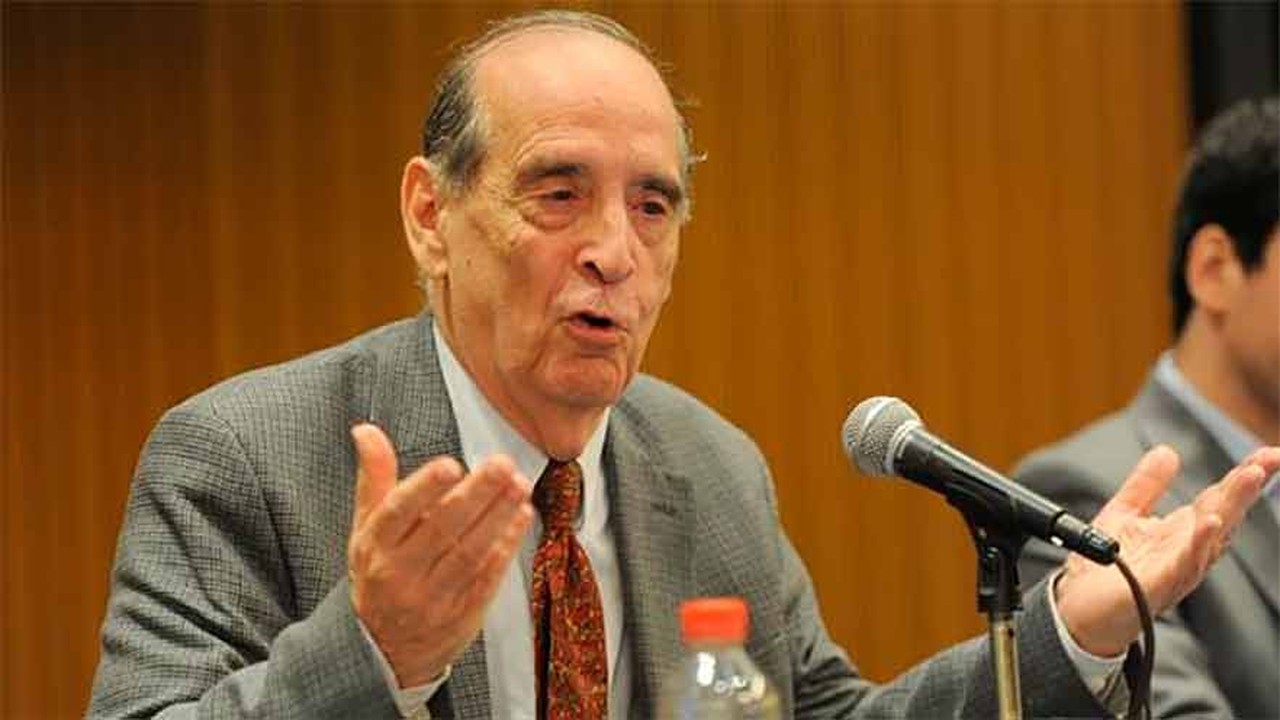
In dialogue with THE NATIONEuwyn Poon details the objectives of the first mission, the technical and regulatory challenges, and the commitment to a new layer of global infrastructure.
-What objectives will the first test mission have, scheduled for 2027?
-The objective will be to discover unknowns and, above all, test the biggest of them: the effects of radiation on GPUs and chips in space. It is a very new frontier for everyone. There are small failures that can arise from the radiation that hits the GPUs and, from there, it is more of a systems test in which we want to demonstrate the viability of everything that, in theory, works. We will also evaluate whether we can execute inferences, the latency involved and other aspects. It is, in short, an integration test: sending data, processing it and, ideally, producing an economically viable result. It will be a small thing, but generating revenue from that server in space would be a milestone.
-What metrics would indicate success?
-For us, success would be generating real income, even if it is minimal, from a single server. Getting the whole test to work would be a very positive result. The thesis is that we can turn solar energy in orbit into an economically useful outcome, measured in dollars, in this case through artificial intelligence and AI tokens.
-What other technological partners, in addition to SpaceX, are collaborating with you?
-We are working with other partners, although we have not revealed them yet. They will be announced later. We are designing and manufacturing our own servers, which is the main focus of our company. In this initial stage, we will install those servers on a partner’s satellite platform to save time, while we design and manufacture our own platforms in Los Angeles. The ultimate goal is to focus on manufacturing. That is the core of the project. My background is in computer engineering and manufacturing, and we have partners who are in charge of areas such as launch, where SpaceX participates. We are also part of the Nvidia Inception program, and are considering using their latest architecture for our future missions. It’s a broad ecosystem, ranging from chip suppliers and launch partners to local storage space. Regarding robotics, we are considering incorporating some partners. Robotic assembly will be key, with the idea of building a largely autonomous plant in Los Angeles to manufacture satellites at scale.
-How much will it cost to install the complete constellation?
-Today we estimate about US$5 million per satellite. With about 10,000 units, we would be talking about US$50,000 million. It is an infrastructure of enormous scale, which will be developed progressively. I have previous experience in large investment industrial projects. At Ford I worked on initiatives with investments of hundreds of millions; I led a project where we designed, manufactured and deployed hundreds of millions of electric skateboards around the world, in the United States and Europe, for example. This is the next challenge.
-What deadlines do you have to obtain authorization to deploy the satellite constellation?
-This week we will present the request and then we estimate a few months to receive a response. This is more of a preliminary authorization than an operational permit. Today space, beyond low orbit, is poorly regulated. This step ensures that we do not interfere with other communication systems.
-Do you foresee other regulatory challenges?
-This is a field that will be defined in the coming years. There are currently about 12,000 satellites in orbit, but that number will grow significantly. With more actors and more satellites, international coordination will be necessary. Regulations usually appear when the need arises, and we believe that will happen. Personally, I am interested in that process. I have been involved in the regulatory development of micromobility in the United States in the past, and I look forward to the day when we begin to have conversations with the various space agencies around the world about how we can allocate space.
-How do you see the international competition to dominate AI infrastructure?
-We will see initiatives from many countries. Intelligence is becoming an essential service, like electricity. Therefore, each country will want to have its own capabilities. I am sure that Argentina, for example, will want to control its own computing, have access to its territory and also to space. We will probably see multiple constellations operated by different countries, in the United States, in Europe and in Latin America, and there could even be international initiatives. It will be interesting to see how it evolves.
-What risks do satellites face and how do they address them?
-The main challenge is that there is no possibility of repair in orbit. Therefore, everything depends on extensive testing on the ground. The estimated useful life of the satellites is about five years. Then, they are disintegrated in the atmosphere in a controlled manner to avoid space debris. The system is designed to be as sustainable as possible.