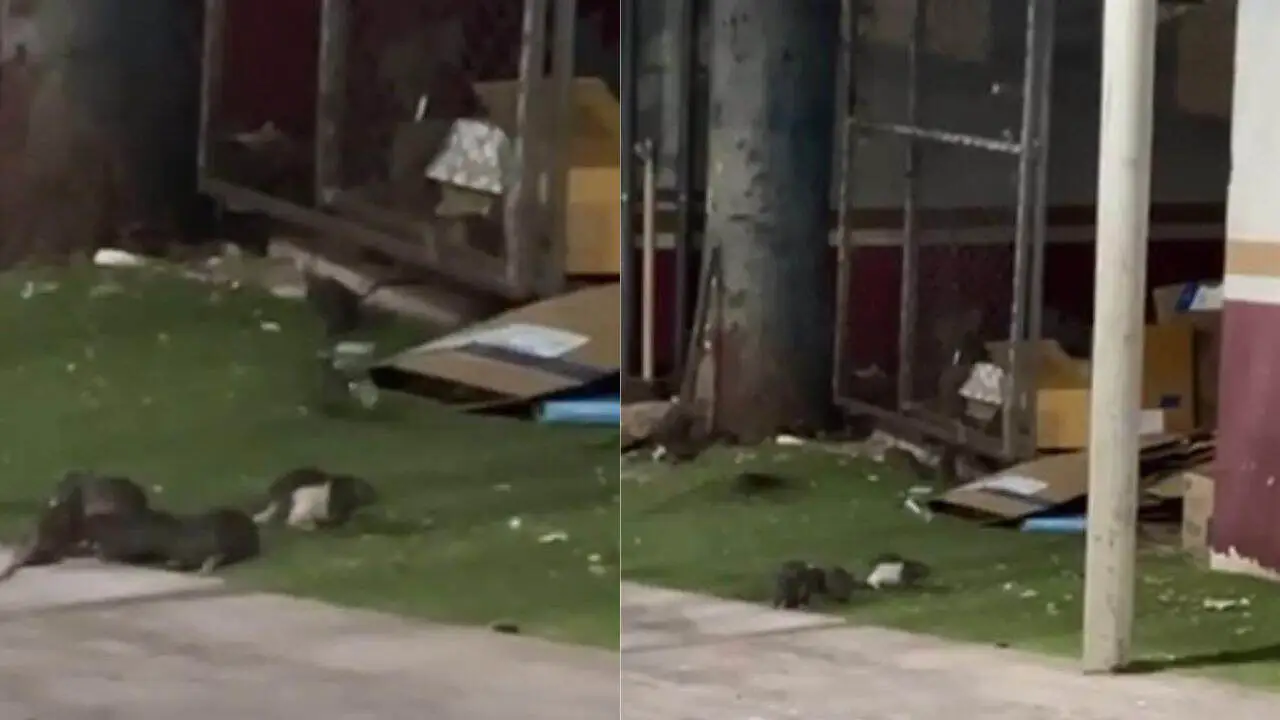
The Dr. Manuel Cárdenas de la Vega hospital unit faces a critical unhealthiness crisis after a massive infestation of rodents was detected in emergency areas. This situation compromises the safety of patients and staff, forcing the immediate implementation of extermination and deep sanitation measures to mitigate zoonotic risks.
You may also be interested in: Chaos in the CDMX Metro due to union strike: critical routes and delays today
Collapse of biological security in critical areas of Sinaloa
The presence of harmful fauna in the ISSSTE of Culiacán transcends the aesthetic deficiency to become a severe epidemiological risk. Recent audiovisual documentation confirms that rodent traffic is not limited to external garbage deposits, but has penetrated immediate care corridors and hospitalization areas. This scenario represents a systematic violation of the sterility and health protection standards that govern public health institutions.
The severity of the finding lies in the exposure of immunocompromised patients to highly dangerous pathogens, increasing the probability of outbreaks of diseases such as leptospirosis, salmonellosis and other conditions transmitted by mechanical vectors.
Operational determinants of systemic infestation
The crisis is the result of an intersection of negligence that has allowed the problem to escalate over the last year. Among the critical factors are identified:
- Deficiency in waste management: The extended permanence of biological and institutional waste in perimeter containers acts as a permanent focus of attraction for pests.
- Structural vulnerability: The porosity in the building and the lack of preventive maintenance facilitate the access of animals from the outside to ventilation ducts and ceilings.
- Budget discrepancy: There is a significant gap between the resources allocated for cleaning services and the actual implementation of specialized deratization programs.
- Operational saturation: The volume of beneficiaries exceeds the response capacity of current maintenance crews.
Administrative response to public scrutiny
After months of inaction and ignored internal reports, the hospital management broke its silence after the crisis went viral on digital platforms. Last Thursday, April 9, the institute formalized the start of a day of exhaustive cleaning and the application of hospital-grade chemicals to exterminate rodent colonies. This implicit recognition of the problem marks the end of a period of administrative opacity that allowed a sporadic presence to transform into a systemic plague.
Projections and immediate health surveillance
In a horizon of seven to ten days, regulatory actions are anticipated that will determine the operational viability of the clinic:
- COPRISS inspection: The State Commission for the Protection against Sanitary Risks of Sinaloa will initiate ex officio verifications to validate compliance with current regulations on pest management.
- Duct and roof audit: It will be evaluated whether the announced control is comprehensive or if it is limited to visible areas, leaving sources of infection in the internal structures of the Emergency Department.
- Administrative responsibility: Evidence of a year of omissions could lead to replacements within the coordination of general services due to non-compliance with basic maintenance tasks.
Roots of deterioration: The symptom of a structural crisis
The situation at the Dr. Manuel Cárdenas de la Vega unit is the epitome of institutional wear and tear accumulated since the 1970s and 1980s. The ISSSTE infrastructure in Sinaloa has reported recurring failures in air conditioning systems, shortages of basic medical supplies, and chronic overcrowding that makes hygiene protocols difficult.
The transition to centralized health models has created gaps in the hiring of external cleaning companies, leaving local units in a state of extreme operational vulnerability. The priority of administrative bureaucracy over preventive maintenance has relegated basic sanitation, turning the appearance of rodents into the most visible symptom of a system that requires profound intervention.
Actors and sectors at biological risk
The resolution of this crisis directly impacts two fundamental groups. On the one hand, beneficiaries and medical personnel who require immediate recovery from an aseptic work environment. On the other hand, hospital administration and outsourced cleaning companies face possible contract terminations and legal sanctions for the negligent exposure of patients to avoidable biological risks during their hospital stay.