The wholesale inflation It accelerated again in March and marked a break in the deceleration trend that had been insinuating since the beginning of the year. After having hit its lowest level since May 2025 in February, the index recorded an increase of 3.4%in line with retail inflation for the same period.
The data was disseminated by the National Institute of Statistics and Censuses (Indec) through the Internal Wholesale Price Index (IPIM), where it was detailed that the result was driven mainly by the 3.5% increase in national productswhile the imported ones advanced 1.1%.
Wholesale inflation accelerated, driven by oil
Unlike the consumer price index (CPI), which reflects both goods and services at the final level, wholesale inflation is calculated exclusively on goods, which explains part of the differences in their dynamics and composition.
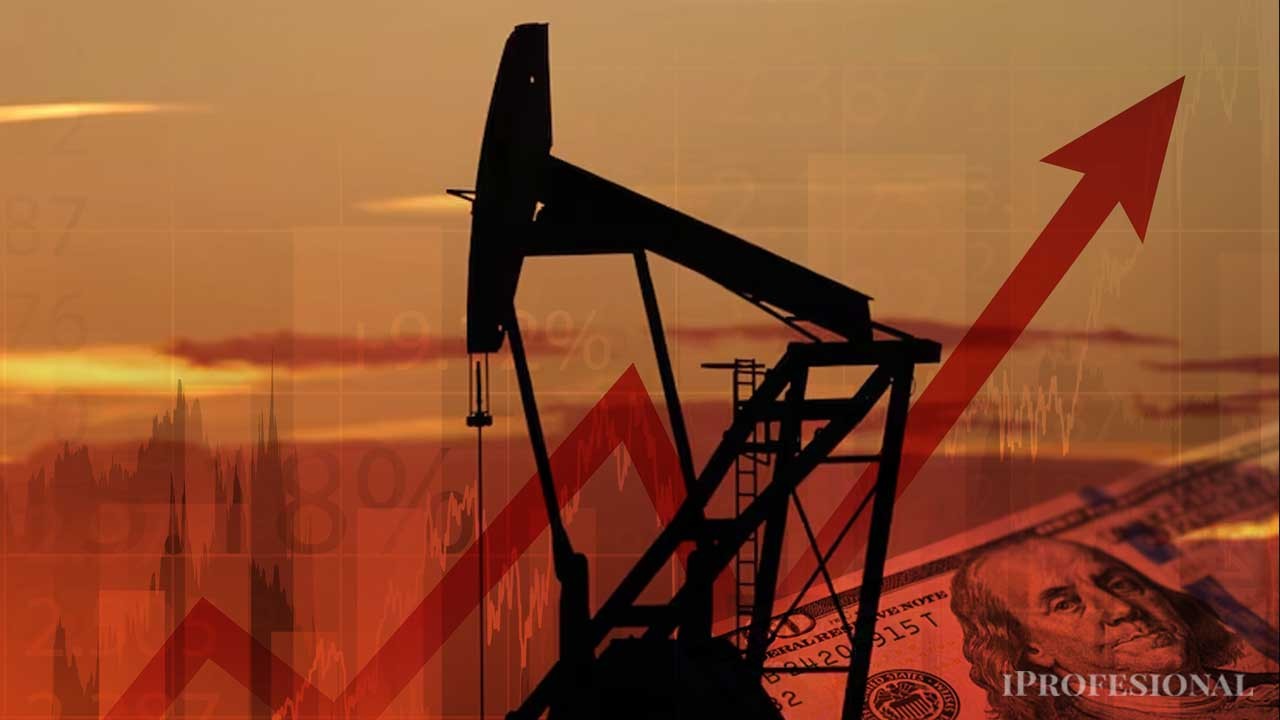
Within national products, the greatest impact came from the energy sector. The crude oil and gas segment recorded a jump of 27.3% compared to Februaryin a context crossed by the rise in international energy priceslinked to geopolitical tensions in the Middle East.
According to the official report, the sectors that most affected the variation of the index were “Crude oil and gas”, with 2.02%; “Refined petroleum products”, with 0.77%; “Food and beverages”, with 0.31%; and “Substances and chemical products”, with 0.13%. In the opposite direction, “Agricultural Products” provided a moderating effect of -0.40%.
The impact of rising energy prices was also highlighted by economist Sebastián Menescaldi, from EcoGo, who explained: “This caused primary products to have an increase of 7.8% and that the rise of 6.6% of refined petroleum productswith an impact on the prices of manufactured products that increased 2.3%, after several months of lethargy.”
In this way, the dynamics of March reflected how external shocks, especially in the energy market, can be quickly transferred to the cost structure of the local economy, interrupting deceleration processes that seemed to be consolidated in the previous months.
Retail inflation was also 3.4%
The wholesale inflation coincided with the retail inflation of March, which, as INDEC reported on Tuesday was located in the 3.4% and, as the market and even himself had anticipated, Luis Caputoaccelerated again after two consecutive months at 2.9%. This way, recorded the highest increase in a year: the figure for March 2025 had been 3.7%.
In this way, the inflation toaccumulated in the first three months of 2026 reached the 9.4%while year-on-year inflation was 32.6%.
In this way, inflation continued with a clearly upward trend. The CPI began to climb from May 2025when it registered an increase of 1.5%. After the 1.6% in June, had a variation of 1.9% in July and August, while it was 2.1% in September, 2.3% in October, 2.5% in November, 2.8% in December and finally 2.9% in January and February.
According to INDEC, at the category level, the Regulated prices (5.1%) had the largest increase due to adjustments in public service, transportation and education ratesfollowed by the core CPI (3.2%) – with a variation slightly lower than the general level – and Seasonal (1.0%), with increases linked to tourism and the change of season in clothing that compensated for the falls in prices of vegetables and fruits.
The division of greatest increase in the month was Education (12.1%): like every year, this increase coincides with the start of classes. The second division with the greatest increase was Transportation (4.1%) due to fuel, public transportation and air tickets.
The division with The greatest impact on the regional monthly variation was Food and non-alcoholic beveragesmainly due to the increase in Meat and derivatives (6.9% in GBA).
The two divisions that recorded the smallest variations in March 2026 were Miscellaneous goods and services (1.7%) and Home equipment and maintenance (1.3%).
Julian Neufeld, Economist from the Libertad y Progreso Foundation analyzed last month’s CPI: “The March data is overwhelming, 3.4% marks an inflation that has not fallen for 10 months. However, it is necessary to distinguish the incidence of phenomena external to monetary policy (of a transitory nature) from the component directly related to the dynamics between supply and demand of pesos. Within the first group we have as the main protagonist the effect of the war conflict in the Middle East, which had a full impact on national fuel prices, triggering the index towards the end of the month.”
“We can expect this impact to continue in the coming month, as the increase in oil prices spreads throughout the production chain. In view of the second group, for another month the regulated ones had a hard impact on inflation as a result of the policy of real appreciation of rates in CABA and greater Buenos Aires. In this way, the diagnosis remains the same: although current events may delay the disinflation process, to the extent that the BCRA maintains a restrictive monetary policy, we should observe an improvement towards the second half of this year,” he added.