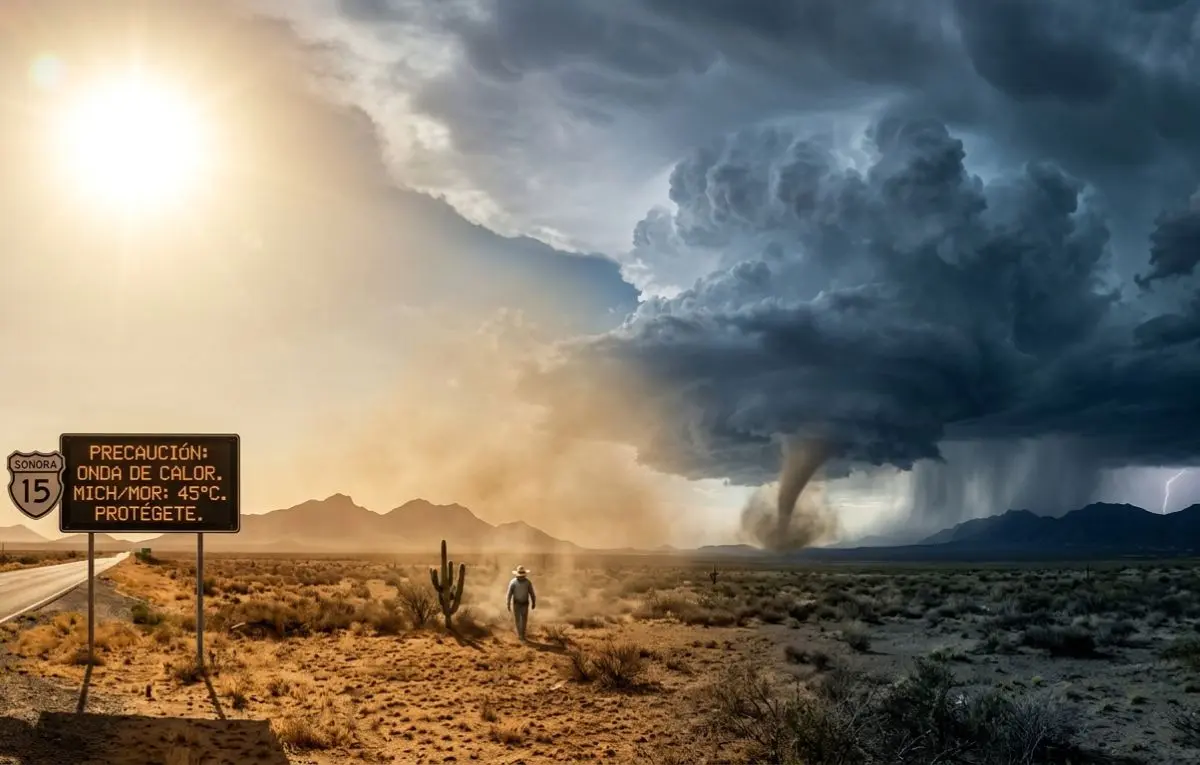
Cold front number 45 crosses the north and northeast of Mexico on April 18, 2026, interacting with a polar air mass that generates severe storms, risks of tornadoes on the northern border and a drastic thermal drop, while the center and south face thunderstorms and extreme heat.
You may also be interested in: Avoid suspension of your mobile line before June 30
The movement of frontal system number 45 over the national territory this Saturday, April 18, 2026 marks a day of high meteorological complexity. The polar air mass driving this front is producing a critical contrast: while the northern and northeastern regions experience dangerous gusts of wind and solid precipitation, the central and southern areas of the Republic remain under the persistence of a heat wave that raises thermometers before the arrival of humidity.
Immediate impacts of the frontal system on the territory
The interaction of atmospheric systems today results in risk conditions for multiple entities, highlighting the following main effects:
- Storms and Precipitation: Accumulated very heavy punctual rains are projected, ranging between 50 and 75 mm, specifically in the northern region of Nuevo León and the western sector of Tamaulipas. Entities such as Coahuila and Chiapas will register showers of considerable intensity.
- Risk of Surface Cyclones: The authority has issued alerts for wind gusts of 70 to 90 km/h, with favorable conditions for the formation of whirlwinds or tornadoes in the border areas of Coahuila, Nuevo León and Tamaulipas.
- Thermal Fall and Frost: The influence of the polar mass translates into frigid temperatures, with records of -5 to 0 °C and the presence of frost in the mountain areas of Baja California, Chihuahua and Durango.
- Development of the North Event: On the coast of Tamaulipas and Veracruz, the start of a “North” event is anticipated with speeds of 60 to 80 km/h as the system enters the waters of the Gulf of Mexico.
75mm max
Zones: N. León (North), Tamaulipas (West), Coahuila and Chiapas.
90km/h
Alert: Border strip of Coahuila, Nuevo León and Tamaulipas.
-5°C to 0°C
Frost: Mountain areas of Baja California, Chihuahua and Durango.
“North” event: Early start on the coast of Tamaulipas and Veracruz (60-80 km/h). Extreme caution in navigation.
`; shadow.innerHTML = html; // Animation of Risk Bars const observer = new IntersectionObserver((entries) => { entries.forEach(entry => { if (entry.isIntersecting) { setTimeout(() => { shadow.getElementById(‘rain_bar’).style.width=”75%”; shadow.getElementById(‘wind_bar’).style.width=”90%”; shadow.getElementById(‘cold_bar’).style.width=”60%”; observer.unobserve(container); observer.observe(container); })();
Weather outlook for major metropolises
The conditions for this April 18, 2026 show an absolute disparity in the three largest cities in the country due to the proximity of low pressure channels and frontal instability.
Monterrey: Instability and hail alerts
Monterrey presents the most volatile forecast of the day due to its proximity to the frontal system. Heavy rains accompanied by electric shocks are expected. There is a latent risk of hailstorms and the formation of whirlwinds in the metropolitan area, with gusts of up to 70 km/h. The maximum temperature will reach 33 °C, but a marked temperature drop is expected towards the evening.
Mexico City: Humidity and afternoon showers
The country’s capital will experience indirect effects from the front. The sky will remain partly cloudy to cloudy with a high probability of scattered rain and hail intervals during the afternoon. Temperatures will range between a maximum of 30 °C and a minimum of 14 °C, although in high areas such as Ajusco or Milpa Alta, the thermometer could drop to 5 °C during the early morning.
Guadalajara: Persistent extreme heat
Jalisco remains an area of minimal impact from the cold front. A very hot environment prevails with zero probability of rain. The sky will remain clear with maximum temperatures of up to 37 ° C, feeling only light winds towards the end of the day.
Effects on the coast of the Gulf of Mexico and the Southeast
The advance of cold front 45 towards the southeast during the weekend of April 18 and 19, 2026 will intensify the “North” phenomenon and rains in the coastal states.
- Tamaulipas: Immediate effects with winds of 55 to 70 km/h and waves that could reach 2.5 meters in height.
- Veracruz: The effects will be more evident on Sunday the 19th, with gusts of 60 to 80 km/h on the coast, fog banks in the mountains and a gradual drop in temperature.
- Tabasco: Very heavy occasional rains are forecast due to the shock of humidity, with winds of up to 60 km/h and waves of 3 meters.
- Yucatan Peninsula: Before the arrival of the system, Campeche, Yucatán and Quintana Roo will maintain temperatures above 40 °C. Subsequently, heavy rains and storm surges are expected on the Caribbean coasts.
Risk analysis and civil security
The severity of the climate demands specific preventive actions depending on the geographic region.
- Risk management in the North: It is essential to ensure light structures against the wind and avoid areas of sudden flooding or crossing of channels in Monterrey and border municipalities.
- Prevention in the Altiplano: It is recommended to wear rain protection in Mexico City due to the collision of air masses that generate sudden storms.
- Health and radiation in the West: In Guadalajara, the priority is hydration and protection against extreme levels of UV radiation (index 13+).
Critical indicators in the Gulf:
The “North” event will maintain intensities of 60 to 80 km/h in the critical areas of Tamaulipas and Veracruz. High waves will represent a danger to minor navigation from the coasts of Tabasco to Tamaulipas, with crests of up to 3 meters. The accumulated rainfall of 50 to 75 mm in the south of Veracruz and Tabasco could generate soil saturation. The population is urged to strictly follow the instructions of the Harbor Master’s Office and local Civil Protection units.
Soil saturation: Risk of landslides in the south of Veracruz and mountainous areas of Tabasco due to accumulations of 75 mm.
`; shadow.innerHTML = html; // Entry animation with sequential delay const observer = new IntersectionObserver((entries) => { entries.forEach(entry => { if (entry.isIntersecting) { const cards = shadow.querySelectorAll(‘.risk-card’); cards.forEach((card, i) => { card.style.opacity = ‘0’; card.style.transform = ‘translateY(15px)’; card.style.transition = ‘all 0.4s ease-out’; setTimeout(() => { card.style.opacity = ‘1’; card.style.transform = ‘translateY(0)’; }, i * 150); observer.unobserve(container); observer.observe(container); })();