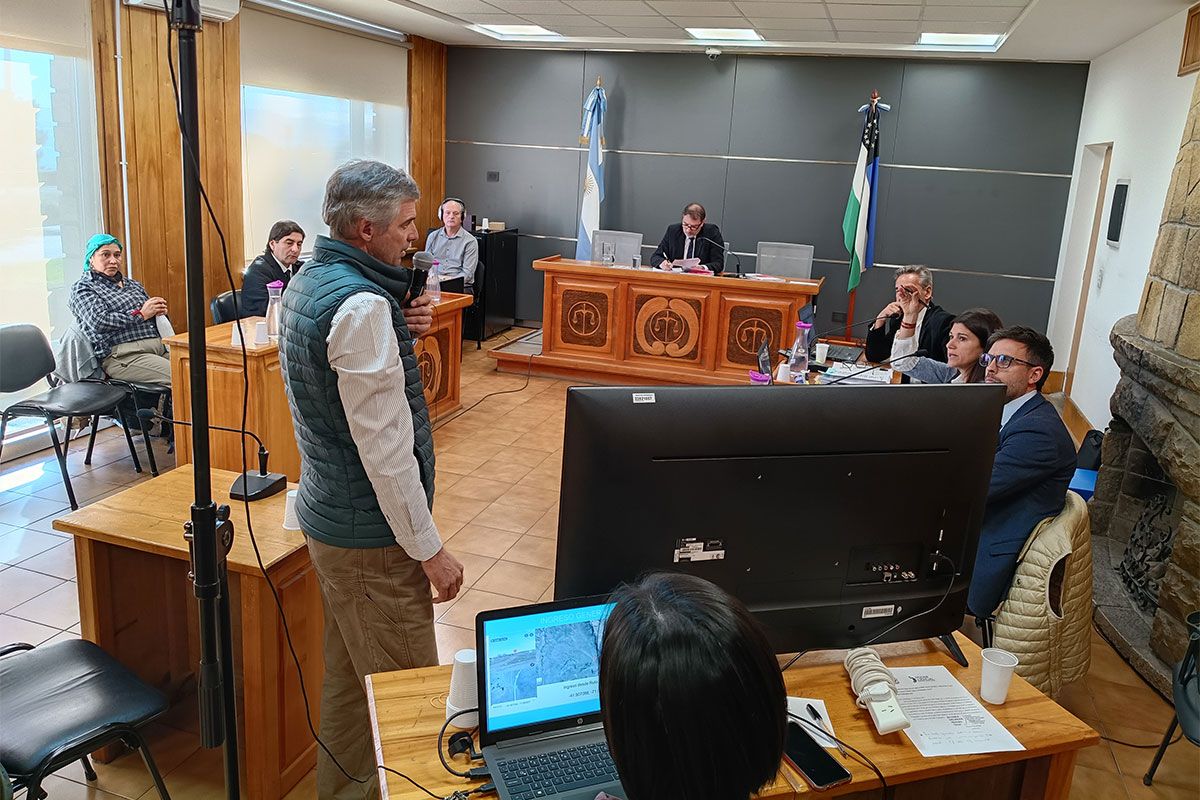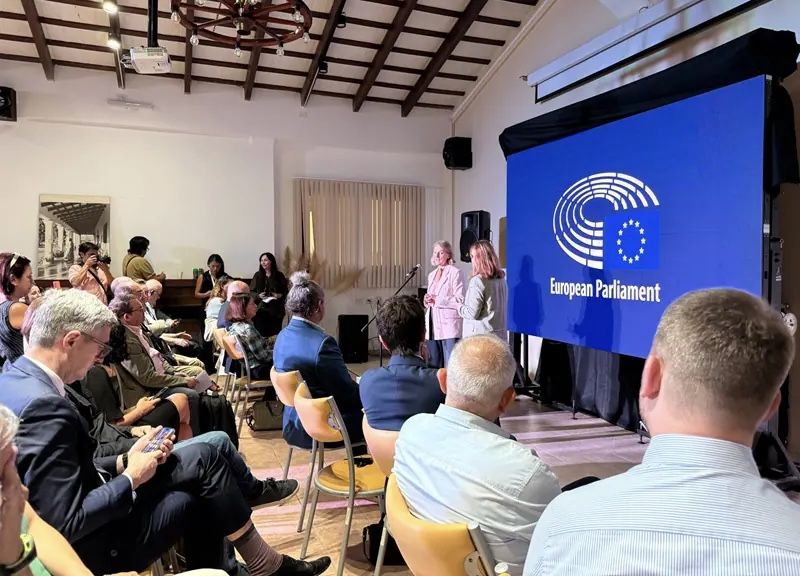
MEPs Manon Aubry, from La Francia Insumisa, and Saskia Bricmont, from the European Green Party, held a meeting on March 31 with the Argentine Agri-Food Roundtable (MAA), where strong criticism of the treaty was expressed from a perspective that puts those who produce food at the center.
From the perspective of the peasant organizations, the focus of the meeting was on how These types of treaties reinforce a concentrated agro-export model, with direct effects on food sovereignty, regional economies and the production conditions of small and medium-sized producers..
The organizations of the field that feeds criticized the way in which this agreement deepens the negative impact that the agro-export model has had in the region for three decades, with special emphasis on the expansion of agribusiness based on transgenic crops and the intensive use of agrotoxins. Diego Montón, representative of the National Indigenous Peasant Movement – Somos Tierra, warned that the use of these inputs grew “1,500% in that period, at the same time that the clearing of 9 million hectares of native forests was recorded, along with a sustained increase in rural poverty and debt”.
For peasant organizations, these data are a direct consequence of a productive model “subordinated to financial capital and large transnational corporations.” As expressed by the MAA, this same scheme is what the agreement with the European Union tends to consolidate. “While on both sides of the ocean, family farming and food sovereignty will be even more deteriorated,” they noted.
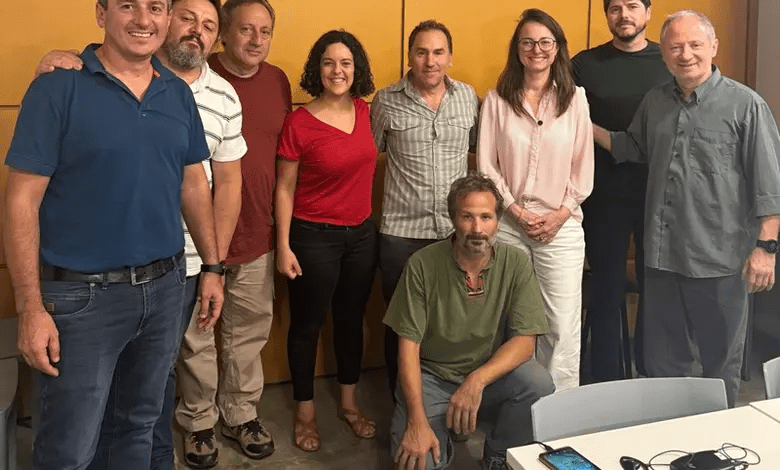
Nahuel Levaggi of the Union of Land Workers (UTT) indicated that during the meeting they warned about “the negative impact on regional economies, which would be exposed to greater unequal competition against European productsand at the same time more pressured to deepen extractive schemes oriented to export.” In that sense, the agreement is read as another step in the primary specialization of the region, centered on complexes such as soybeans and their derivatives, where the main global agribusiness corporations operate.
More criticism of the Mercosur-EU agreement
Criticism also reaches the regulatory level. During the meeting, the possible impact of the agreement on seed legislation, a sensitive point for small and medium producers, was discussed. The organizations warn that a legal framework favorable to the privatization of genetic resources and corporate control of seeds could be reinforced, “affecting historical practices of reproduction and exchange typical of peasant agriculture.”
In this scenario, the MAA stated that the main beneficiaries of the agreement would be “transnational companies, both in the agroindustrial and financial sectors, while the losers would be the people and nature.” The financial valuation of natural assets and the concentrated appropriation of income appear as central axes of this criticism.
The positions of Aubry and Bricmont speak to these concerns. Both MEPs are part of sectors that, within Europe, also question the treaty due to its environmental, social and economic implications. The coincidence with the organizations of the Argentine countryside reveals that the debate transcends borders and puts into tension the very meaning of trade agreements in the current context.
In parallel to this meeting, the European delegation developed an institutional agenda that included meetings with authorities from the National Congress, the Argentine Foreign Ministry, union organizations such as the CGT and the Workers’ CTA, and human rights organizations, in a visit that sought to gather different perspectives on the agreement.
Far from a technical or merely tariff discussion, what is at stake, according to the perspective of the peasant organizations, is the production and food model. In this dispute, the “field that feeds” warns that the European Union-Mercosur agreement could deepen an already known path: more concentration, fewer producers and a growing distance between those who produce food and those who consume it.